Vole Damage Atlanta Lawns: Bermuda and Zoysia Guide
When vole damage Atlanta lawns , the first signs often look like thin grass, shallow trails, or small bare patches. These low, mouse-like rodents can feed along the surface and disturb turf roots, especially where dense thatch, mulch, or tall grass gives them cover.
Bermuda and Zoysia lawns need different recovery timing than cool-season grass. Accurate identification comes first, because voles, moles, insects, drainage problems, and lawn disease require different solutions. This guide covers how to inspect the damage, reduce vole activity, treat the problem, and help your turf return.
Key Takeaways
- Voles leave narrow surface runways, clipped grass, small openings, and gnaw marks near plant crowns or roots.
- Moles create raised soil tunnels, while voles usually travel through vegetation and thatch above or near the soil surface.
- Remove hiding places before treatment by mowing correctly, clearing debris, and managing dense mulch.
- Use traps or professional pest control when activity continues after habitat changes.
- Bermuda and Zoysia recover best during active growth, with proper mowing, watering, and limited foot traffic.
How to Identify Vole Damage on Bermuda and Zoysia
Voles are small rodents with rounded bodies, short tails, and compact ears. They often remain hidden under grass, mulch, leaves, and groundcover. In Atlanta, their activity may become easier to notice during cool weather when turf grows slowly and protective cover stays thick.
The clearest sign is a narrow runway through the grass. These paths may look like shallow grooves, usually a few inches wide, where voles repeatedly travel between shelter and feeding areas. You may also see clipped grass, small holes, or dark droppings along the route.
Voles can chew grass crowns and roots, but they also target ornamental plants, bulbs, groundcovers, and tree bark. Look closely around the base of young trees and shrubs. Gnawed bark, especially near ground level, can indicate rodent activity.
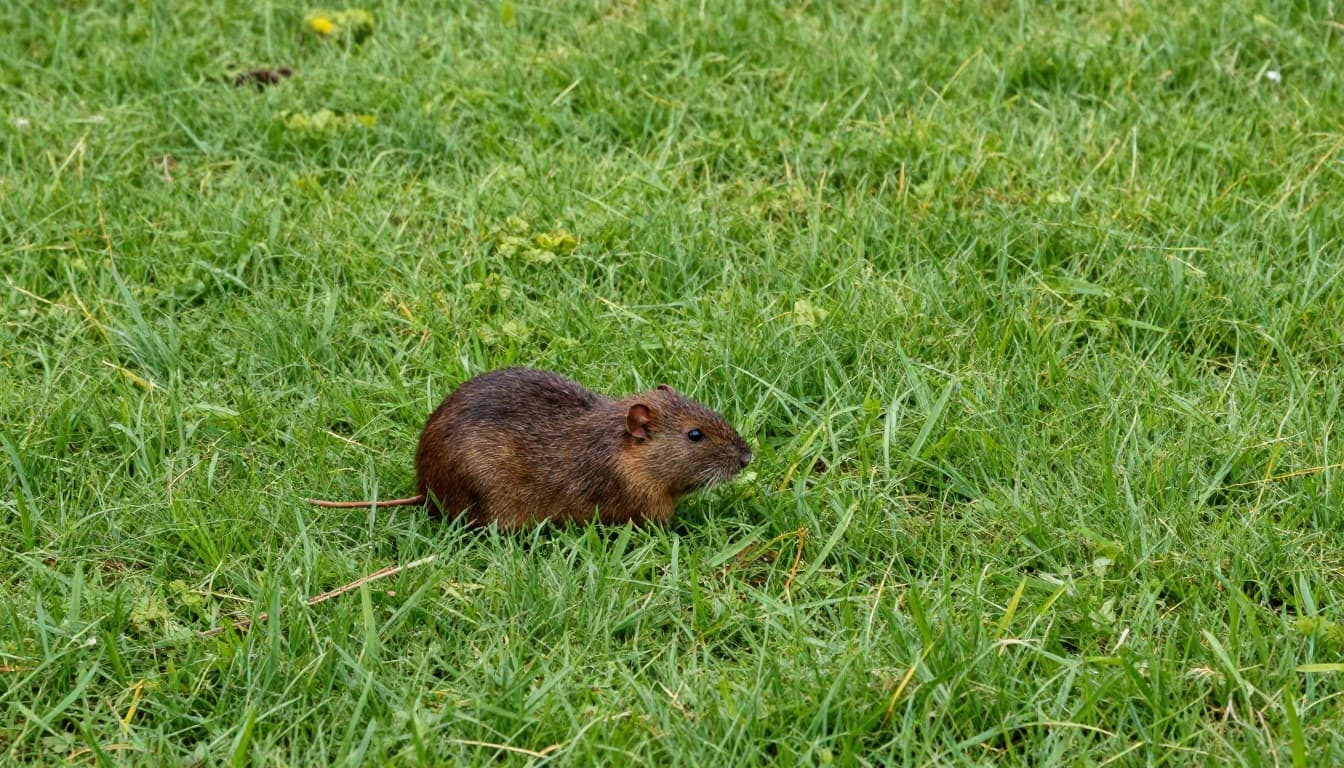
A lawn with vole activity may thin in irregular strips rather than in clean circular patches. The grass can also appear matted where animals travel beneath cover. In severe cases, roots become loose and sections of sod lift easily.
Voles versus moles
Moles and voles cause different types of damage. Moles are insect-eating mammals that tunnel through soil. Their activity creates raised ridges, pushed-up earth, and sometimes cone-shaped soil mounds. Voles are rodents that feed on plants and use surface runways or shallow paths.
Earthworms and soil insects may attract moles, but they don't explain chewed stems or bark. Likewise, a raised tunnel is not proof of vole damage. Before applying any product, inspect the soil, turf surface, and nearby plants together.
A simple test helps: if you can brush aside grass and find a clear runway without a raised soil ridge, voles are more likely than moles.
Other problems can look similar. White grub damage may cause loose sod and thinning turf, while fungal disease can create discolored patches without trails or chewing. Poor drainage, compacted soil, and scalping can also weaken Bermuda and Zoysia.
Inspect for Voles Before Choosing a Treatment
A careful inspection prevents wasted treatments. Walk the property during daylight and check lawn edges, fence lines, planting beds, woodpiles, sheds, and areas beneath low branches. Voles often use protected routes rather than crossing open, closely mowed turf.
Start with a slow pass around the damaged area. Move leaves and excessive thatch with a rake. Check for runways, droppings, gnawed vegetation, and small openings at the edge of the turf. Fresh tracks may show flattened grass and exposed soil, while older paths can fade after mowing or rainfall.
Use this inspection checklist:
- Mark every damaged patch with a temporary lawn flag or note on a property sketch.
- Check whether paths connect to mulch beds, dense groundcover, compost, or stored materials.
- Look for chewed bark on young trees and shrubs near the affected grass.
- Inspect loose sod for root feeding, grubs, or signs of poor soil contact.
- Search for raised soil ridges that could point to moles instead.
- Recheck the area after two or three days to see whether new trails appear.
Fresh damage matters more than old discoloration. If no new paths appear, the original cause may have ended, or the turf may be recovering slowly. Bermuda and Zoysia can remain brown or thin after injury even when the animals have moved elsewhere.
Atlanta's seasonal pattern also affects what you see. Warm-season grasses slow down in fall and enter dormancy during winter. Vole damage can become more visible during that period because the grass can't fill gaps quickly. Spring growth may hide minor injury, but extensive root damage still needs attention.
A lawn service can also help separate pest damage from mowing and soil problems. Routine care, including proper mowing height and edging, supports healthier turf. RW Lawn Co provides residential lawn care and mowing for Atlanta properties that need consistent maintenance while pest concerns are addressed.
Prevent Vole Damage in Atlanta Lawns
The most effective prevention step is to reduce cover. Voles prefer protected paths through tall grass, thick thatch, heavy leaf litter, and overgrown beds. They are less comfortable crossing open areas where predators can see them.
Keep Bermuda and Zoysia at the correct height for the season and grass type. Avoid cutting more than one-third of the blade at a time. Scalping weakens turf and exposes soil, but allowing grass to become excessively tall near beds can create shelter. A regular mowing schedule provides a better balance.
Clear hiding places along lawn borders. Remove fallen branches, piles of leaves, unused containers, and dense weeds. Keep mulch pulled back from tree trunks and avoid creating deep, continuous mulch strips that connect planting beds to the lawn.
Watering also affects turf strength. Deep, infrequent irrigation is usually better than frequent light watering, provided the soil drains well. Fix leaking irrigation heads and low spots that stay wet. Although moisture doesn't cause vole activity by itself, poor drainage can weaken grass and make damage harder to diagnose.
Protect vulnerable plants by keeping weeds down around their bases. Hardware cloth can help protect young trees and shrubs when rodents are chewing bark. Use small openings and bury the lower edge several inches into the soil, while leaving enough space around the trunk for growth. Do not wrap trunks tightly or trap moisture against the bark.
Prevention works best as a property-wide routine:
- Mow regularly and keep lawn edges visible.
- Rake excess leaves and remove dense thatch.
- Trim groundcovers and weeds beside turf.
- Store firewood, lumber, and yard materials away from grass.
- Seal gaps beneath sheds and other structures where practical.
- Check damaged areas again after mowing and rainfall.
These changes may reduce activity, but they won't always remove an established population. Continued fresh trails call for a treatment plan.
Treatment Options for Active Vole Damage
Treatment should match the size of the problem and the location of the activity. For a small lawn area, habitat cleanup and trapping may be enough. Larger properties, repeated damage, or activity near valuable plants may require professional pest management.
Snap traps can work when placed beside active runways and protected from pets and children. Set them near cover rather than in the middle of open grass. Peanut butter or small pieces of apple are common bait choices, but local conditions affect results. Check traps frequently and follow all safety requirements.
Repellents may provide temporary help, but rain, irrigation, and new plant growth can reduce their effect. Some products also have restrictions around edible plants, pets, or wildlife. Read the label before use, and never apply a product to turf or beds unless the label lists that site.
Rodenticide requires extra care. Baits can harm pets, children, and wildlife if placed incorrectly. Predators may also be exposed after eating poisoned rodents. Use only products registered for the intended use, follow the label exactly, and consider a licensed pest professional for recurring activity.
Avoid flooding runways, filling holes without removing the cause, or applying broad insecticides for suspected vole damage. These steps rarely solve the problem. Voles are rodents, so a grub treatment won't address them unless a separate insect problem exists.
Call for professional help when:
- New damage appears across multiple lawn areas.
- Voles are chewing bark on young or valuable plants.
- Pets or children make bait placement unsafe.
- Trapping has failed after repeated, careful placement.
- You can't distinguish vole damage from mole tunnels or turf disease.
A qualified provider can identify activity, recommend lawful control methods, and reduce risks around the property. Treatment should also include habitat changes, or new voles may use the same cover later.
Bermuda and Zoysia Lawn Recovery Checklist
Repair timing matters because both Bermuda and Zoysia are warm-season grasses. They recover most actively during Atlanta's late spring and summer growing season, when soil temperatures support spreading and new growth. Winter repairs may remain visible until spring.
First, remove the source of damage and rake away loose debris. Don't tear up healthy sod simply because it looks thin. Test the soil contact by pressing damaged areas gently. If the roots still hold, the turf may fill in with proper care.
Use this recovery checklist:
- Rake lightly to remove matted grass and expose the soil surface.
- Fill shallow depressions with a thin layer of compatible soil.
- Avoid heavy fertilizer until the grass resumes active growth.
- Water deeply when needed, but let the surface dry between irrigation cycles.
- Keep vehicles, pets, and repeated foot traffic off weak areas.
- Mow with a sharp blade at the correct height for the turf.
- Reseed only when the grass type and season make seeding practical.
- Patch larger bare areas with matching Bermuda or Zoysia sod.
Bermuda spreads aggressively through stolons and rhizomes during active growth, so small gaps can close with time. Zoysia spreads more slowly, and damaged sections may need longer to fill. Patch severe areas rather than waiting through an entire growing season.
Don't apply excessive nitrogen to force recovery. Fast, soft growth can increase mowing stress and create more cover along lawn edges. A balanced soil plan, good drainage, and consistent mowing give the turf a better chance to rebuild.
Conclusion
Vole damage Atlanta lawns by creating runways, chewing roots, and exposing weak patches in Bermuda and Zoysia turf. The right response starts with identification, especially when raised tunnels, grubs, disease, or drainage issues could point to another cause.
Mow and clean the property to reduce cover, protect young plants, and monitor for fresh activity. Once the voles are gone, careful watering and warm-season recovery practices can help the lawn regain density without unnecessary treatments.