Atlanta Crape Myrtle Aphids: Sticky Leaves and Sooty Mold
Sticky leaves on a crape myrtle usually point to Atlanta crape myrtle aphids , not a dying tree. These tiny pests feed on fresh growth and leave behind a sugary film called honeydew, which can drip onto leaves, patios, sidewalks, and even parked cars.
That sticky layer often turns black when sooty mold grows on top of it. The good news is that this problem is often more ugly than harmful, especially on healthy, established trees. The next few sections show how to spot it, rule out lookalikes, and handle it with simple steps that fit North Georgia yards.
How aphids make crape myrtle leaves sticky
Aphids have needle-like mouthparts that let them tap into soft plant tissue. They pull out more sap than they need, then excrete the excess sugar as honeydew . That is the sticky residue most people notice first.
Once honeydew builds up, sooty mold spores can settle on it and spread across the leaf surface. The mold looks like soot, but it is only using the sugary film as a base. It does not usually invade the leaf itself.
Honeydew is the giveaway. If leaves feel tacky and ants are nearby, aphids are high on the list.
On a mature crape myrtle, this often stays in the cosmetic category. Leaves may look dirty, yet the tree keeps growing and blooming. Younger trees, stressed trees, or trees hit year after year may need closer attention.
Signs your Atlanta crape myrtle has aphids
Aphids are easiest to find on soft new growth. In Atlanta, they often show up from late spring into midsummer, when crape myrtles push out tender leaves and flower buds. Look at the tips of the branches first, then check the undersides of the newest leaves.
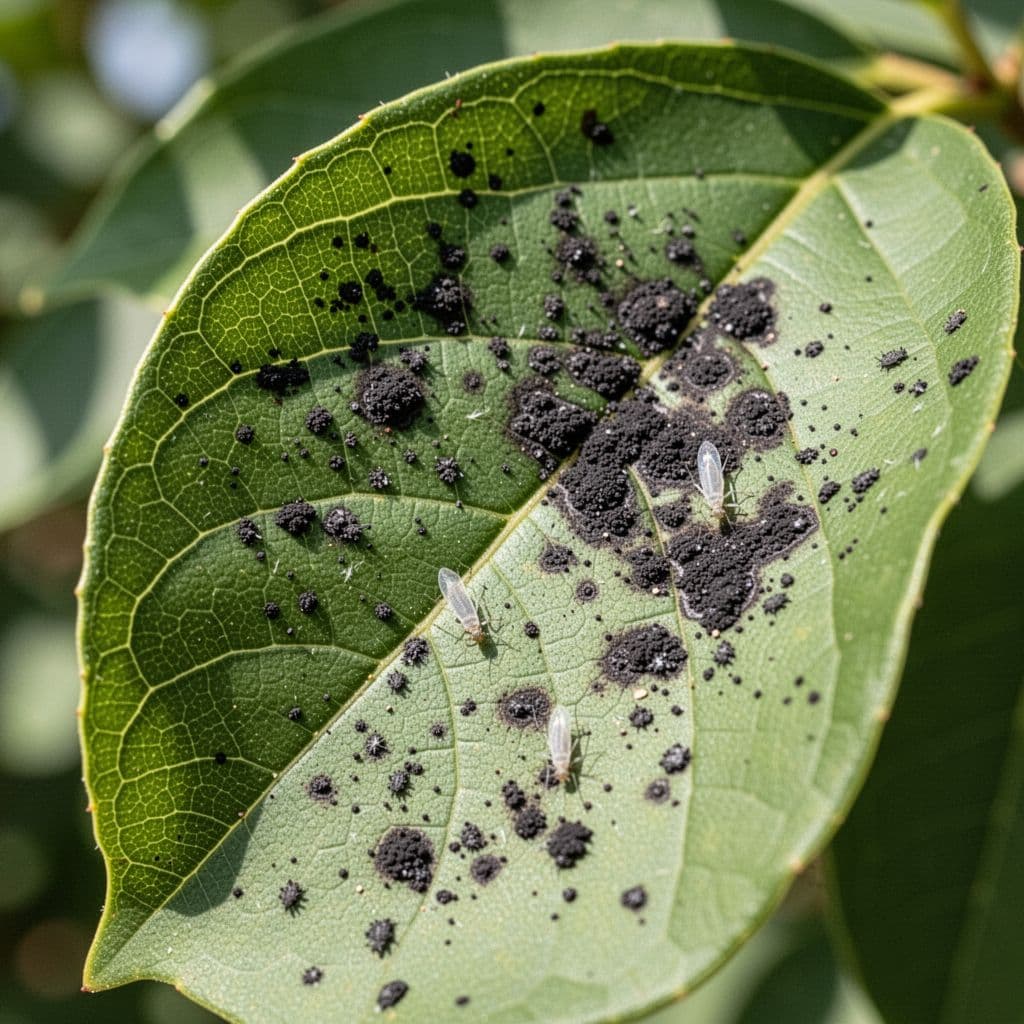
The insects themselves are tiny, often yellow, pale green, or black. You may not spot them right away, but the clues pile up. Leaves curl a little, ants travel up and down the stems, and a branch may feel tacky when you touch it.
A simple check helps. Tap a branch over white paper and watch for tiny moving specks. If you see them fall off, you probably found aphids. Another clue is black film on upper leaves, railing, or patio furniture below the tree. That black coating is usually the mold that followed the honeydew.
Sticky residue on its own does not prove the tree is sick. The pattern matters. Sticky leaves plus ants plus tiny insects on new growth points to aphids, while black specks without any stickiness often point somewhere else.
Other causes of black residue and sticky surfaces
Black leaves are not always a pest problem. Sometimes the surface is coated, not damaged. Other times the stain comes from a nearby source instead of the crape myrtle itself.
Use this quick comparison when you are checking a tree.
| What you notice | Likely cause | Quick clue |
|---|---|---|
| Sticky leaves, ants, and black film on nearby surfaces | Aphids and honeydew | Tiny insects hide on new growth and leaf undersides |
| Black coating that wipes off with a damp cloth | Sooty mold | The mold grows on sticky residue, not on leaf tissue |
| Bumps or shell-like spots on stems with sticky runoff | Scale insects | The pests stay fixed in place and do not move much |
| Black streaks on hard surfaces, but leaves look clean | Soot, dirt, or another source | The tree may not be the problem at all |
If the black layer rubs off easily, that is a strong sign of sooty mold, not leaf disease. If the leaves themselves are spotted, browned, or distorted before the black film shows up, the cause may be something else. The stain tells part of the story, but the underside of the leaf usually tells the truth.
Low-impact control that works in North Georgia
The best first step is to check trees often, especially during late spring and early summer. A quick weekly look is enough for most yards. Focus on new shoots, leaf undersides, and any branch that feels sticky.
A strong spray of water from the hose can knock aphids off the plant. Aim at the undersides of the leaves, and do it early in the day so the foliage dries fast. Repeat if you still see active clusters.
After that, give the good insects a chance to help. Ladybugs, lacewings, and parasitic wasps all feed on aphids or their eggs. A healthy yard keeps them around longer.
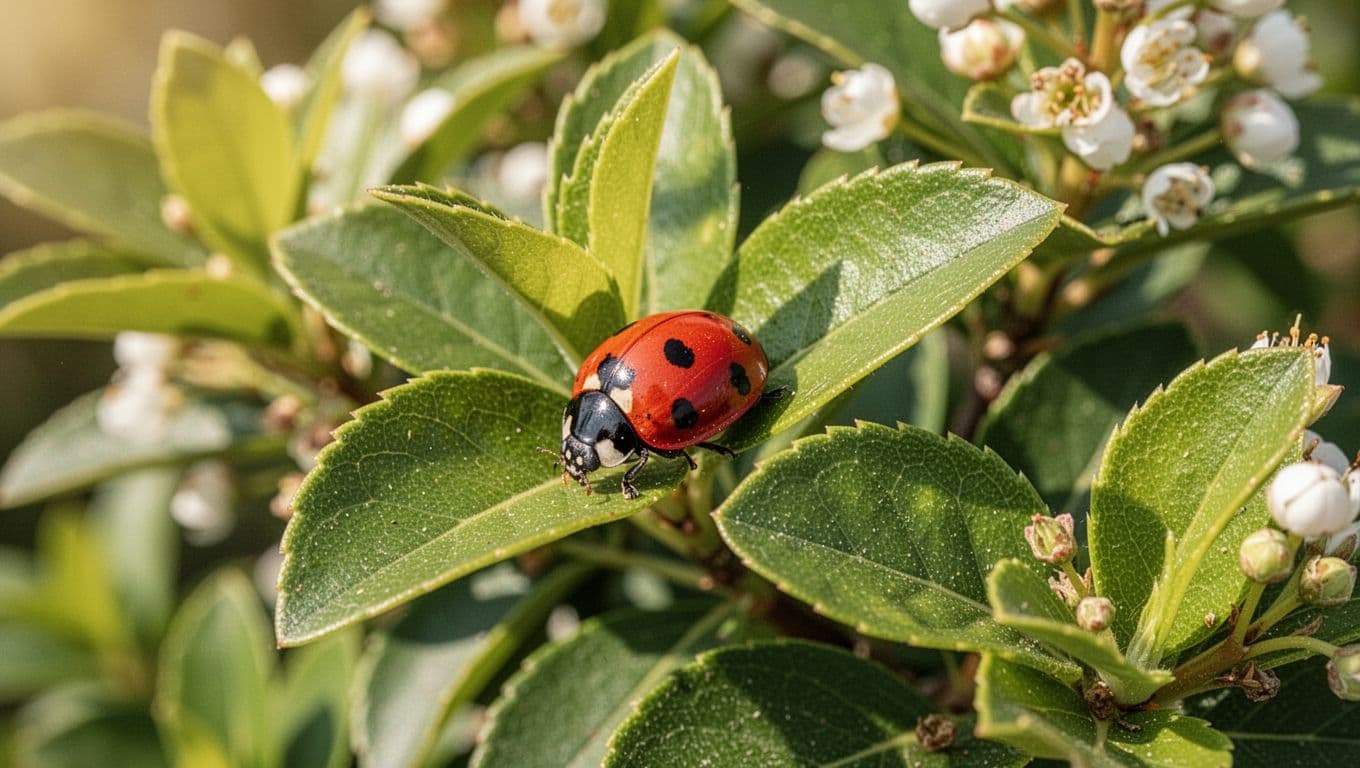
Avoid broad insecticides unless the problem is heavy and keeps returning. Those products can wipe out the helpful insects that are already doing part of the work. On crape myrtles, that can make aphids come back faster.
A few more habits help too:
- Skip heavy nitrogen fertilizer, since soft new growth attracts aphids.
- Avoid hard summer pruning, because fresh shoots are easy targets.
- Wash sticky leaves when the weather is dry, then let the plant recover.
- Keep nearby beds and turf tidy so you can spot changes early.
Keeping the base of the tree open and easy to inspect also helps. That is one reason routine lawn maintenance for Atlanta homes can make pest checks simpler around busy properties.
When aphids are a nuisance, not a crisis
Most healthy crape myrtles can handle a light aphid cycle without long-term trouble. The leaves may look messy, the car may get spotted, and the patio may need a rinse, but the tree often recovers on its own once the aphid count drops.
The bigger concern is repeated heavy pressure. Young trees, drought-stressed trees, and trees planted in compacted soil can struggle more. If you keep seeing curled growth, weak blooms, or thick black coating year after year, it helps to look beyond the insects and check the tree's overall condition.
Ants are another clue. A few ants are normal in a warm Atlanta yard, but constant ant trails up the trunk usually mean honeydew is available. That tells you aphids or scale are active somewhere on the plant.
If you are unsure, compare what you see with the table above. Sticky leaves plus insects on the tender tips point toward aphids. Black residue with no stickiness may be dirt, soot, or mold left behind after the honeydew dried. Clear clues beat guesswork every time.
Keeping crape myrtles clean and healthy
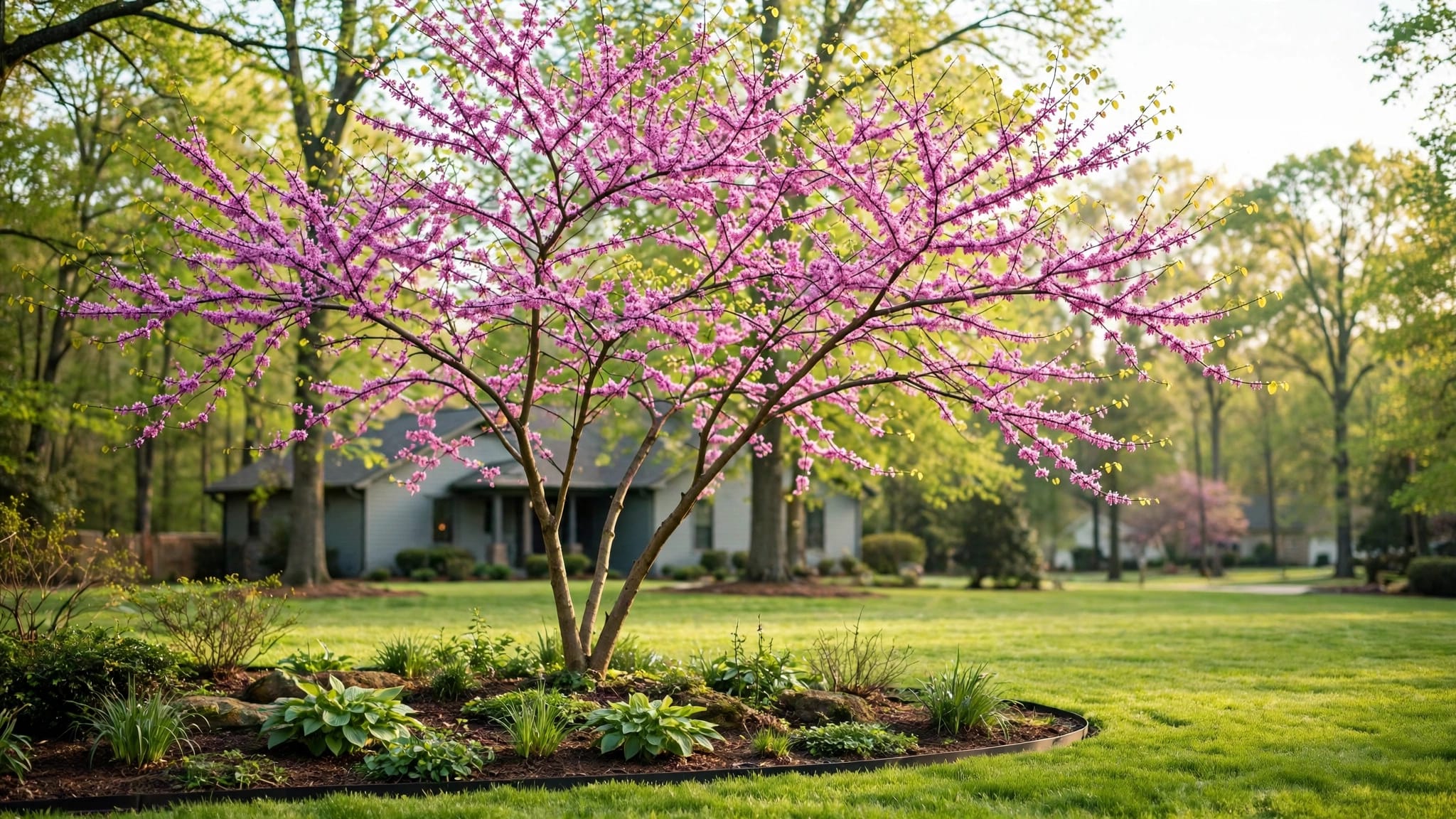
Sticky leaves around a crape myrtle can look worse than they are. In many Atlanta yards, the real story is simple: aphids feed on new growth, honeydew drips down, and sooty mold follows the sugar.
Once you know that pattern, the fix gets easier. Check new growth, wash off light infestations, protect beneficial insects, and avoid the kind of spraying that creates more problems than it solves. Most of the time, that is enough to keep the tree in good shape and the mess under control.