Atlanta Lawn Slime Mold on Bermuda and Zoysia Lawns
Gray patches on a lawn can look ugly fast, especially when you've put time into Bermuda or Zoysia. The good news is that lawn slime mold usually sits on top of the grass instead of eating into it. In Metro Atlanta, humid weather, frequent watering, shade, thatch, and weak airflow give it plenty of chances to show up. A few quick checks can tell you whether you're dealing with a surface film or a deeper lawn problem.
What lawn slime mold looks like on Atlanta turf
On many lawns, slime mold starts as a thin gray, white, tan, or even purplish coating. It may look like dust, ash, or a dried spill across the leaf blades. Because it lives on decaying organic material, it often shows up after wet weather or when sprinklers run too often.
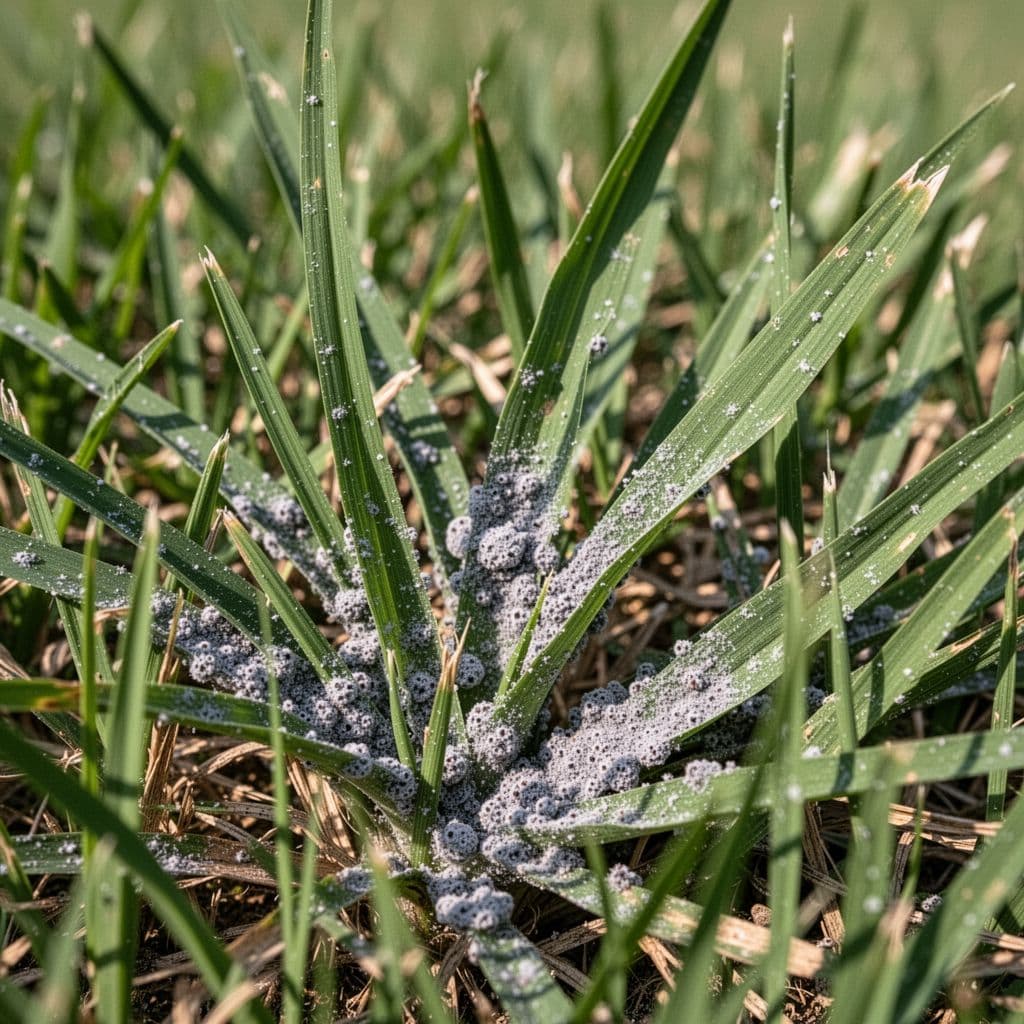
If you brush it with your shoe, a rake, or a hose spray, it comes off easily. The grass under it usually stays green. That is the big clue.
If it wipes off and the turf beneath is still healthy, you're probably looking at slime mold, not a grass disease.
A few common signs make it easier to spot:
- A powdery film on top of the blades
- No smell of rot, even when the patch looks bad
- A sudden appearance after rain, dew, or heavy watering
- Grass that looks coated, but not dead
When the coating stays put and the turf beneath turns brown or mushy, the problem is probably something else.
Why humid weather brings it back
Atlanta weather gives slime mold a long runway. Warm nights, morning dew, and humid afternoons keep blades damp. Add overwatering, low spots, compacted soil, or a thick thatch layer, and the top of the lawn stays wet for hours.
Shade and tight shrubs make the drying time even longer. Slime mold likes that slow-drying surface because it feeds on decaying bits in the turf, such as old leaves, pollen, and other organic matter. It does not pull nutrients from healthy grass the way a true disease does. That is why it looks worse than it is.
Heavy nitrogen can also make the problem hang around longer because soft, dense growth traps moisture. A balanced plan like this Atlanta lawn fertilizer schedule for Bermuda and Zoysia helps avoid that tender growth.
For homeowners who keep seeing the same wet spots, irrigation timing matters too. Watering late in the day leaves the lawn damp overnight, which gives slime mold a better start the next morning.
Bermuda and Zoysia handle it a little differently
Bermuda and Zoysia both get slime mold, but they do not show it the same way. If you're still weighing those grasses, this Bermuda vs Zoysia lawn comparison guide covers sun needs, mowing, and recovery in Metro Atlanta.
| Grass type | Common setting | What you may notice | What helps |
|---|---|---|---|
| Bermuda | Full sun, lower mow height, faster growth | Coating may stand out on short, open turf after rain or irrigation | Reduce watering, mow when dry, keep the canopy open |
| Zoysia | Part shade, denser growth, more thatch | Moisture lingers longer, so the coating can stay visible for days | Improve airflow, manage thatch, avoid overwatering |
Bermuda often dries faster because it is usually kept lower and gets more sun. Zoysia tends to hold moisture longer because the canopy is thicker and the thatch can act like a sponge. In other words, Bermuda may look messy for a day, while Zoysia can hold onto the coating a little longer if the yard stays shaded or damp.
That difference matters when you plan cleanup. A Bermuda lawn often clears up with a simple dry-out period. Zoysia may need a little more attention to thatch and airflow.
Simple fixes that work the same week
If you're sure it's slime mold, start with the moisture. A fungicide usually isn't the answer because the issue is sitting on the surface, not invading the grass.
- Let the lawn dry before you touch it.
- Brush, rake, or hose off the coating.
- Skip extra watering for a few days.
- Mow only when the grass is dry.
- Clear leaves, clippings, and other debris.
After that, look at the site itself. Low branches, tight hedges, and heavy shade slow drying. Trimming them back can help more than any spray. On Zoysia, a thick thatch layer can hold water near the crown, so plan for dethatching or core aeration when the grass is actively growing. On Bermuda, keep mowing at the right height so sunlight and air can move through the canopy.
If your lawn stays wet after a normal irrigation cycle, the system may be putting down too much water. That problem can look small at first, then keep feeding the same patch of slime mold every few weeks.
When the problem is something else
A lawn that keeps turning brown after you remove the film needs a closer look. Slime mold leaves the blades intact. If the grass itself is dying, something deeper is going on.
Large patch, take-all root rot, and spring dead spot can all show up on warm-season turf in Metro Atlanta. Those issues do more than coat the blades. They damage crowns and roots, so the grass does not rebound after cleanup. If the patch expands in a ring, feels soft underfoot, or pulls up too easily, it's probably not slime mold.
Leaf spotting is another clue. When the blades have lesions, streaks, or a burned look, you may be dealing with a foliar fungus instead. And if the damage follows sprinkler heads or dry corners, the issue may be irrigation coverage rather than disease at all.
Traffic and compaction matter too. Thin, worn spots near walkways or play areas can hold moisture in strange ways. Those areas can collect slime mold, but they may also need soil loosening and better drainage.
How to keep it from returning
The best defense is a lawn that dries faster. Water early in the morning so the blades have time to dry before nightfall. Keep mower blades sharp, because ragged cuts stay wet longer. Rake leaves and pine straw before they sit and break down on top of the turf.
You should also keep an eye on thatch and shade. Zoysia needs regular thatch control when it gets thick. Bermuda does better with open sun and a clean mowing pattern. If trees, shrubs, or fence lines block too much air, the damp spot will keep coming back after every wet spell.
Too much fertilizer can make the canopy thick and tender, so a steady feed schedule matters. A monthly nitrogen application guide for Atlanta lawns helps keep Bermuda and Zoysia growing without pushing soft, moisture-holding growth.
Conclusion
A sudden patch of lawn slime mold can look alarming, but it usually points to excess moisture, not a lawn that's dying. Once the surface dries and airflow improves, the coating often fades on its own.
Bermuda usually clears faster, while Zoysia may need more help with thatch and shade. If the spot won't brush off, or the grass underneath is brown and thinning, treat it as a different problem and look deeper.