Powdery Mildew on Crape Myrtles in Atlanta: What to Watch For and What to Do
White dust on crape myrtle leaves can look minor at first. Then the new growth curls, the blooms thin out, and the tree starts to look tired by midsummer.
Atlanta weather makes this problem easier to spot and easier to repeat. Warm days, humid nights, crowded plantings, and too much shade give crape myrtle powdery mildew a good place to spread. The good news is that most cases are manageable once you know what you are seeing.
How to spot powdery mildew on crape myrtles
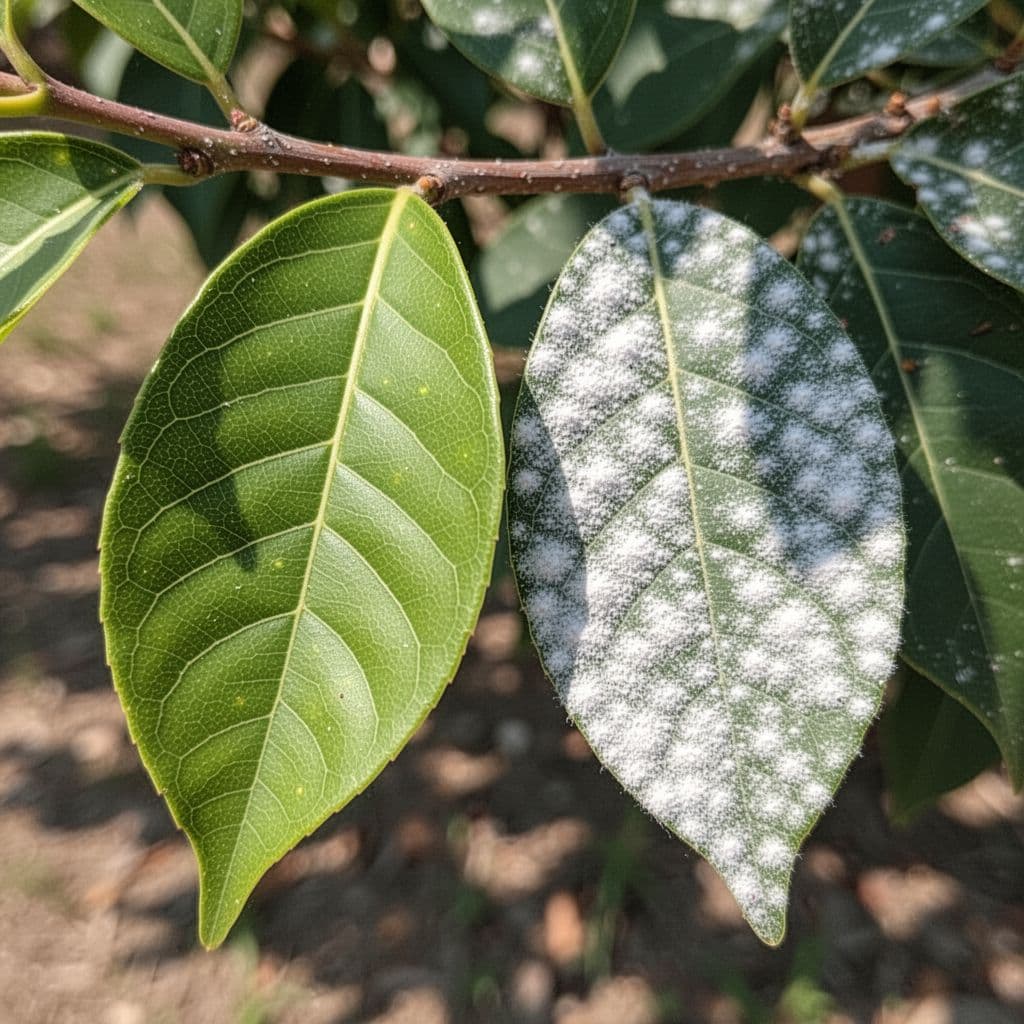
Powdery mildew usually shows up as a white or gray coating on leaves, tender shoots, and sometimes flower buds. It often starts on the freshest growth first. If you rub a leaf between your fingers, the coating may come off like chalk dust.
The leaves may twist, curl, or look dull instead of glossy. In heavier cases, new leaves can look stunted, and the tree may drop some of them early. That can reduce blooming, but it usually does not kill a healthy crape myrtle.
Powdery mildew vs. common crape myrtle problems
A few other issues get confused with mildew because they change how the tree looks. This quick comparison helps narrow it down.
| Problem | What you usually see | Clue to look for |
|---|---|---|
| Powdery mildew | White or gray dust on leaves and new shoots | Powder rubs off, and leaves may curl |
| Aphids | Sticky leaves, curled growth, tiny insects | Ants often show up, and honeydew feels tacky |
| Sooty mold | Black film on leaves | It grows on sticky honeydew from aphids or scale |
| Drought stress | Wilting, leaf scorch, early drop | Leaves look dry or browned, not dusty |
| Normal bark shedding | Tan, gray, or cinnamon bark peeling in strips | Bark changes are even and natural on mature trees |
The key detail is simple. White dust on leaves points toward mildew. Sticky leaves point toward sap-sucking insects. Peeling bark is usually normal, not a disease.
If the trunk looks pale or crusted instead of the leaves, take a closer look. That may be a separate issue, such as crape myrtle bark scale problems.
Why Atlanta crape myrtles get powdery mildew
Atlanta summers bring plenty of heat, but many yards also hold moisture longer than people expect. Shade from houses and larger trees slows drying. Dense shrubs, tight beds, and poorly timed watering make things worse.
Powdery mildew likes soft new growth. That means crape myrtles that get too much nitrogen often grow fast, stay tender, and become easier to infect. Overhead sprinklers can add to the problem because leaves stay damp longer in the morning.
Crowded pruning is another common cause. Topping a crape myrtle creates a flush of thin shoots at the cuts. Those shoots look tidy for a while, but they make a thick canopy that traps humidity. A tree with poor air movement is like a porch with no breeze on a July afternoon, warm and still.
North Georgia weather adds one more layer. Mild spring nights with humid air are ideal for fungal growth. Once mildew gets started, it can keep spreading through the season if the site stays shaded and packed.
What to do when you see it
The best response depends on how far the mildew has spread. A light case calls for cleanup and better care. A heavy case may need a labeled fungicide and a pruning plan.
- Remove the worst infected shoots.
Clip out the most distorted tips if the infection is still limited. Use clean pruners and make smooth cuts. Do not shear the whole plant. - Rake up fallen leaves and debris.
Old plant material can hold spores and keep the cycle going. A clean bed helps more than many homeowners expect. - Water at the base, not overhead.
Deep watering in the morning is better than frequent sprinkling. Wet leaves plus warm nights give mildew more time to spread. - Improve sunlight and airflow.
Thin out crowded limbs during the right season. Remove crossing branches and suckers at the base. Let air move through the canopy. - Use a labeled treatment if the problem keeps returning.
Choose a product labeled for powdery mildew on ornamentals and follow the directions exactly. Spray early in the season, because once a tree is heavily covered, treatment works less well.
If you only make one change, start with watering and airflow. Those two habits do more long-term work than a one-time spray.
How to keep it from coming back next season
Prevention starts before the first white patch appears. A crape myrtle planted in full sun with room around it has a better chance of staying clean through summer. A tree squeezed between a fence and a hedge usually struggles more.
Proper pruning matters too. Late winter or very early spring is the best time to open the canopy and remove weak growth. Focus on structure, not size reduction. Topping can trigger dense sprouting and more mildew later.
Fertilizer also deserves a second look. Too much nitrogen pushes soft growth that fungi love. A crape myrtle that already has a strong shape often needs very little feeding. If the tree is in a lawn, nearby turf fertilizer may already be providing enough nutrients.
Mulch helps when it is used well. Keep a 2- to 3-inch layer around the root zone, but pull it back from the trunk. Mulch that touches the bark traps moisture where you do not want it.
Plant choice matters the most if you are replacing a tree or adding new ones. For North Georgia, look for cultivars with better powdery mildew resistance, such as Acoma , Natchez , Tonto , Muskogee , Sioux , or Zuni . No cultivar is perfect in every yard, but resistant types give you a much better starting point.
When professional help makes sense
A homeowner can handle a mild case in many yards. Professional help makes sense when the problem keeps returning, spreads to several crape myrtles, or shows up with other issues like bark scale, leaf drop, or branch dieback.
A good landscape crew can spot site problems that are easy to miss. Maybe the tree needs selective pruning, not a hard cut. Maybe the bed stays too shaded. Maybe the irrigation pattern is soaking the foliage at the wrong time. Sometimes a small change solves the issue. Other times, the plant needs a more serious reset.
For larger properties, coordinated maintenance helps keep the whole yard cleaner. Regular mowing, pruning, bed care, and seasonal cleanups reduce the clutter that holds moisture. That matters for shrubs and trees, not just the lawn.
Conclusion
A white coating on a crape myrtle leaf usually means you're dealing with powdery mildew, not a major tree emergency. The fastest fix is to improve airflow, water at the base, and avoid pushing soft growth with too much fertilizer.
If your Atlanta crape myrtles keep getting hit every year, the site may be telling you something. More sun, smarter pruning, and a mildew-resistant cultivar can make a big difference the next time summer humidity rolls in.