Atlanta Irrigation Startup Checklist for a Healthier Spring Lawn
A sprinkler system can waste hundreds of gallons before you notice a broken head or split pipe. A careful Atlanta irrigation startup helps you find winter damage early, protect your lawn, and avoid soaking sidewalks or flower beds.
Spring weather around Metro Atlanta can shift fast. Rain, clay soil, grass type, and current water rules should shape every setting on your controller. Start slowly, watch each zone, and let your yard tell you what it needs.
Choose the Right Time to Start Your System
Don't turn the system on after the first warm afternoon. Atlanta often gets late cold snaps, and water left in exposed parts can freeze overnight.
Wait until the ground has thawed and the forecast shows several nights above freezing. If your backflow preventer sits outside, inspect its insulation and fittings before water reaches it.
Check the controller and power supply
Open the irrigation controller before restoring water. Confirm that the display works, the date and time are correct, and no zone has an unexplained run time.
Replace a weak backup battery if your controller uses one. A power outage can erase programming, which may cause a system to run at the wrong time or not run at all.
Clear winter debris before testing
Pine needles, leaves, mulch, and loose soil can bury sprinkler heads. Clear them away so each head can rise and retract freely.
A seasonal yard reset also makes irrigation inspections easier. If beds and lawn edges need attention, Atlanta spring and fall cleanup services can remove the debris that blocks spray patterns and hides wet spots.
Inspect Every Visible Part Before Adding Pressure
A spring irrigation check begins with your eyes, not the controller. Walk the property while the system is still off and look for cracked fittings, sunken heads, chewed wires, and shifted landscape edging.
Pay close attention to areas near driveways, retaining walls, and newly planted beds. Soil movement and winter foot traffic can damage lines below the surface.
Look at the backflow preventer and main shutoff
The backflow preventer keeps irrigation water from flowing back toward your home's drinking water. Check its valves, fittings, and body for cracks or corrosion.
If you see a split fitting, loose connection, or signs of water from a previous leak, don't turn on the supply. Call an irrigation technician or plumber. Forcing water through damaged equipment can flood the valve area quickly.
Locate the irrigation shutoff valve too. You need to know where it is before testing, not after a pipe breaks.
Check heads, nozzles, and valve boxes
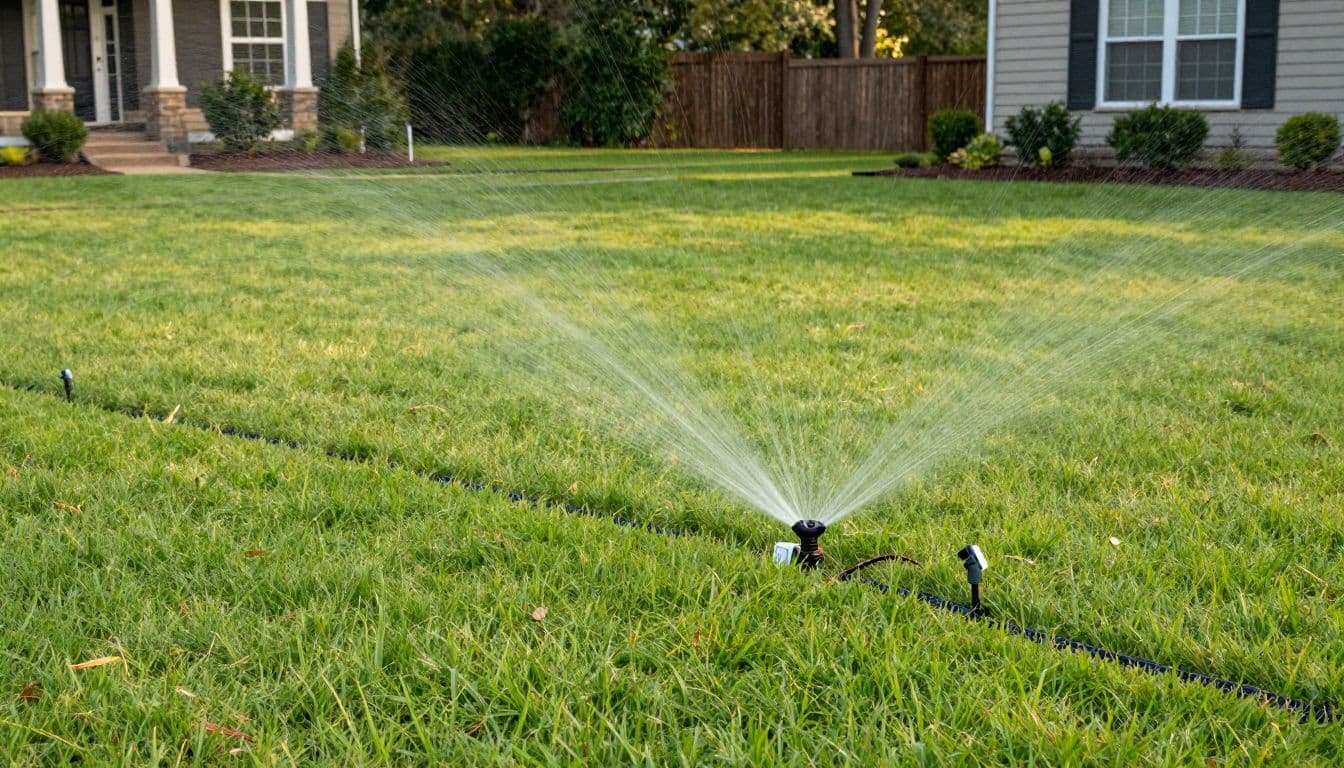
Walk each lawn zone and lightly brush dirt away from sprinkler heads. Heads should sit level with the soil, not below it. A low head gets clogged and may spray a weak, uneven stream.
Then inspect valve boxes for standing water, ants, roots, or broken lids. Remove loose debris carefully. Don't pull on valve wires, since old wire connections can fail when disturbed.
Handle an Atlanta Irrigation Startup Slowly
Opening the water supply too quickly can create a pressure surge. That sudden rush may crack weak fittings or expose damage that could have been managed with a slower test.
Start at the irrigation shutoff, not the controller. Turn the valve gradually until it is fully open. Listen for hissing, rushing water, or a steady sound that continues after pressure builds.
Let the main line fill before running zones
Give the system a few minutes to pressurize. During that time, inspect the backflow assembly and nearby ground for leaks.
A small drip at a threaded connection may need tightening, but don't overtighten plastic fittings. Plastic becomes brittle over time, and a wrench can turn a minor repair into a broken part.
A dry valve box does not rule out a leak. A cracked lateral line may only show itself when its individual zone starts.
Program a short manual test
Set each zone to run manually for two or three minutes. Short tests reduce water waste while giving you time to inspect the spray pattern.
Stay outside during this process. Don't start a full automatic cycle and assume everything is fine. A damaged rotor can spray a window, fence, or driveway for an entire watering period.
Test Zones for Coverage, Leaks, and Runoff
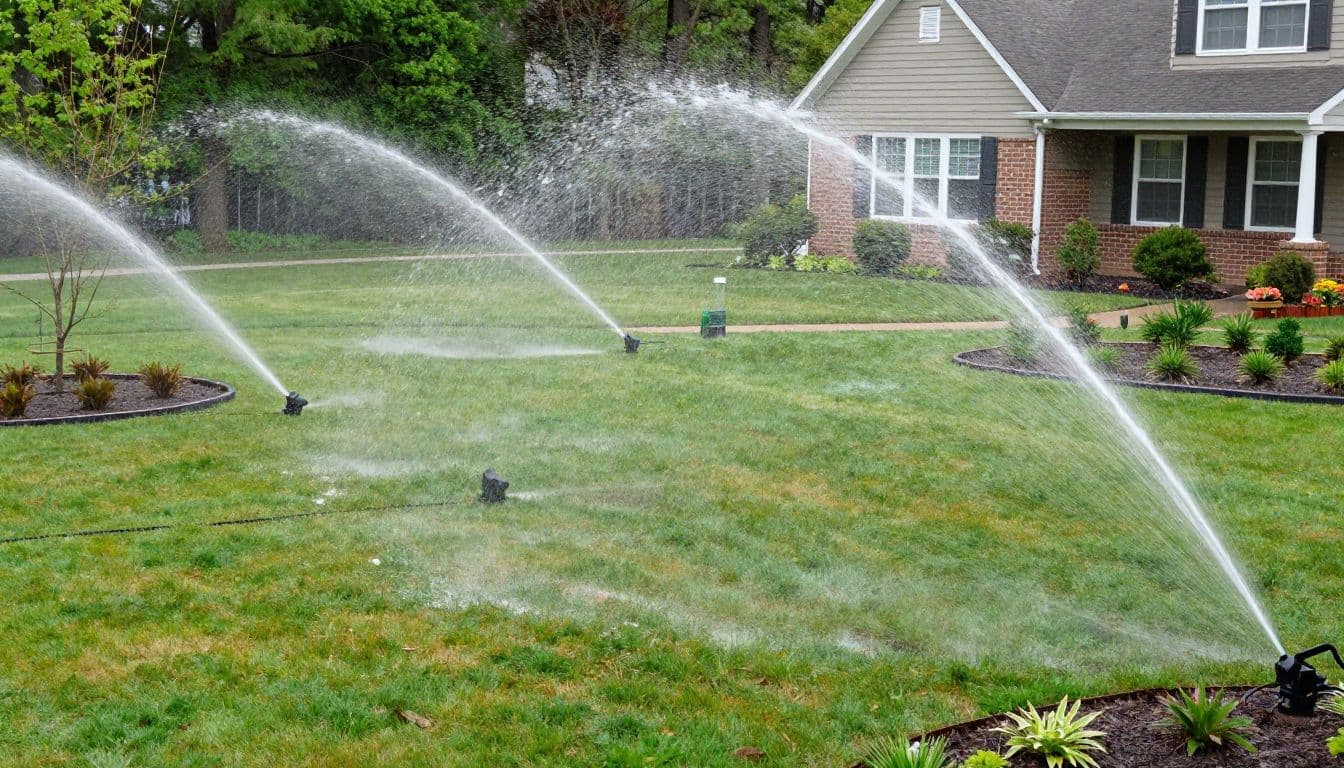
A good sprinkler pattern overlaps slightly from head to head. That overlap prevents dry strips between sprinklers. However, water should stay on plant roots and turf, not pavement.
Run one zone at a time and walk its full area. Watch the system long enough to spot slow leaks or a head that stops rotating after the first minute.
Adjust spray away from hard surfaces
Turn sprinkler heads so they cover grass and beds, not sidewalks, siding, vehicles, or patios. Besides wasting water, constant spray on hard surfaces can create slippery areas and stain fences.
Replace a damaged nozzle rather than trying to make a broken stream behave. Nozzles are inexpensive, and the right one improves distribution across the zone.
Look for these common problems during the test:
- Water bubbling from the soil often points to a broken lateral line or fitting.
- A sprinkler that won't rise may have dirt packed around its body or a damaged internal seal.
- A misty cloud instead of defined streams can mean pressure is too high or a nozzle is worn.
- A soggy patch near a head may mean it is tilted, cracked, or leaking at the connection.
Watch slopes and Atlanta clay
Metro Atlanta's clay-heavy soil absorbs water slowly when it is compacted or dry. Long run times can send water downhill before it reaches the root zone.
Use cycle-and-soak watering on slopes. For example, run a zone for several short cycles with time between them, rather than one long session. Water has time to soak in, and you will see less runoff at curbs and drains.
Set a Spring Schedule Around Your Yard
A controller's default program is rarely right for an individual property. Your lawn may need little supplemental water during a rainy week, while a sunny slope can dry out sooner.
For most lawns, the goal is deep watering when the grass is actively growing, not daily shallow watering. Adjust every schedule for rainfall, soil conditions, plant needs, and current local restrictions.
Match watering to grass and planting areas
Bermuda and zoysia often remain partly dormant early in spring. Extra water won't force a healthy green-up, and saturated soil can encourage disease.
Tall fescue is active in spring, yet it still needs restraint after steady rain. Shrubs, annual flowers, and newly installed plants may need their own drip zone or hand watering schedule.
For practical timing guidance by turf type, review this Atlanta lawn watering schedule. Measure your own sprinkler output with shallow, straight-sided containers before copying a run time from a neighbor.
Follow current watering rules
During spring 2026, Georgia's Level 1 Drought Response called for voluntary conservation. It did not add mandatory watering limits in Atlanta, Fulton County, or Marietta beyond the statewide rule.
The statewide permanent rule allows landscape watering from 4 p.m. to 10 a.m. Water early in the morning whenever possible, since evening watering can leave foliage wet for longer.
Rules can change by utility area or drought level. Check your city, county, or water provider before setting a repeating program. Drip irrigation, soaker hoses, and hand watering with an automatic cutoff nozzle may follow different allowances.
Keep Landscape Beds From Stealing Lawn Water
Irrigation needs change after bed work, mulch installation, shrub trimming, or new plantings. A sprinkler head that once cleared low groundcover may become blocked by mature shrubs or fresh mulch.
Keep mulch away from sprinkler heads. Thick material can trap water around the body, block movement, and change the direction of the spray.
Separate lawn and bed watering when possible
Turf, shrubs, and flowers don't use water at the same rate. Spray heads work well for lawn areas, while drip irrigation places water closer to shrub and flower roots.
If one zone waters both grass and landscape beds, use the shortest practical duration and monitor the results. Overwatered shrubs can decline just as easily as dry grass.
A refreshed bed line can also expose heads that have become buried over time. Residential landscaping and mulch services can help keep beds defined without covering irrigation equipment.
Know When a Repair Needs a Professional
Some startup problems are simple, such as replacing a nozzle or straightening a tilted head. Others involve water pressure, electrical wiring, or underground pipe repairs that need trained help.
Turn the irrigation shutoff off if you find a major leak, a cracked backflow device, or water pooling near the foundation. Don't keep testing the zone to confirm the problem.
Warning signs that should not wait
A zone that will not shut off may have a failed valve diaphragm or controller issue. Shut off the irrigation supply if the water keeps flowing.
Call for service when you notice any of these conditions:
- The water meter moves while the irrigation system is off.
- A valve box fills with water during every cycle.
- Several zones lose pressure at the same time.
- The controller trips a breaker, shows a wiring fault, or has damaged wires.
- Water sprays toward electrical equipment, the house, or a neighbor's property.
A well-planned Atlanta irrigation startup takes less time than cleaning up a leak. Once the system runs evenly, check it again after the first mow and after heavy spring rain.
Final Thoughts
Spring irrigation should support your lawn, not replace rainfall or hide a system problem. Start slowly, inspect each zone, and give water only where the grass and plants need it.
The best schedule changes with the weather, your soil, and your property's exposure. A watched sprinkler system wastes less water and protects a healthier Atlanta yard.