Atlanta Sprinkler Valve Replacement Cost Guide for 2026
For Metro Atlanta homeowners, the sprinkler valve replacement cost in 2026 is typically $125 to $300 for an accessible residential valve. Labor, excavation, wiring, and damaged plumbing can raise the final bill.
The valve itself is usually affordable. Finding it, digging through compact Georgia clay, repairing wires, or fixing damaged connections is where the work expands.
A clear diagnosis helps distinguish a repairable component from a full replacement, so you don't replace a part that still works.
Key Takeaways
- In 2026, replacing an accessible residential sprinkler valve in Metro Atlanta typically costs $125 to $300 .
- Diagnostic fees or service calls commonly range from $95 to $165 , while component-level repairs often cost about $100 to $225 .
- Buried valves, dense Georgia clay, damaged wiring, cracked manifolds, and difficult access can raise the total to $300 to $600 or more .
- Test the controller, wiring, solenoid, valve body, water pressure, and zone before approving a full replacement.
- Compare written estimates that clearly list excavation, materials, testing, restoration, warranty coverage, and any diagnostic or emergency fees.
Atlanta sprinkler valve replacement cost in 2026
A typical single-zone irrigation valve replacement in Metro Atlanta costs about $125 to $300 . This practical 2026 Metro Atlanta estimate assumes a visible, accessible valve box, standard residential plumbing, and no serious wiring issue. It isn't a guaranteed quote.
Many companies also charge a diagnostic fee or trip charge, with local service models commonly ranging from $95 to $165 . Some include the first hour of labor, so ask whether the charge applies toward repair labor or appears separately on the invoice.
The following ranges offer a practical starting point, not a guaranteed quote.
| Type of valve work | Typical 2026 Atlanta cost |
|---|---|
| Diagnostic visit or service call | $95 to $165 |
| Solenoid, diaphragm, or minor valve repair | $100 to $225 |
| Accessible single-valve replacement | $125 to $300 |
| Difficult-access valve or damaged control wiring | $300 to $600+ |
| Several valves replaced during one visit | $100 to $200 per valve, plus manifold work |
| Larger multi-zone valve project | $600 to $1,500+ |
Materials, including the valve and fittings, are often a smaller part of the bill. Labor covers locating, excavating, cutting, reconnecting, testing, and restoring the area.
A straightforward replacement stays near the low end when the valve is visible and accessible. A buried valve, compacted clay, poor valve accessibility, damaged control wiring, or deteriorated manifold plumbing can raise the price. Unusual water pressure may require additional testing.
The lowest figure usually assumes the technician can identify the fault without excavation beyond the immediate access area.
A $150 valve job can become a $500 repair when the valve is buried, the manifold has cracked, or damaged control wire runs through the yard.
For broader issues, the overall sprinkler repair cost may exceed a valve-only estimate, so compare the scope with this Atlanta irrigation repair cost guide. A broken head, underground pipe leak, controller failure, and valve problem can look similar at first.
What the estimate should include
A reliable estimate separates diagnosis, materials, labor, testing, and restoration. A 2026 Atlanta invoice may include the valve, fittings, connectors, PVC cement, excavation, backfill, zone testing, and cleanup. A complete irrigation valve replacement should show that scope from water shutoff through zone testing.
Parts are only one piece of the bill
The material portion can be modest because a residential electric valve, solenoid, fittings, wire connectors, and PVC cement may cost less than labor. A hunter pgv valve or rain bird dv may be a common residential comparison, but neither should be selected without checking compatibility. A solenoid replacement may address a parts-level fault, but testing should confirm which component is needed.
The technician must still shut off water, cut out the old valve, rebuild connections, reconnect the zone wire, test operation, and restore the excavation. When comparing replacement parts, matching dimensions and availability matter more than buying the cheapest component.
If the existing manifold uses another valve brand or a nonstandard connection, a wrong valve can cause pressure loss, poor seals, or another repair visit.
Labor depends on the repair method
Some Atlanta providers include an initial hour in the service call. Others bill diagnosis separately as a diagnostic fee, then charge an hourly labor rate, often $85 to $165 locally. A professional irrigation company should identify whether the initial fee covers the first labor hour, electrical testing, or only the visit.
Electrical troubleshooting and wiring repair can cost more when the technician must trace a damaged zone wire between the controller and valve.
Ask these questions before approving work:
- Is the service call or diagnosis charge credited toward the final repair price?
- Does the estimate include excavation, backfilling, restoration, and valve box cleanup?
- Will the contractor test the zone at both the controller and the valve?
- Which listed parts are covered, and what warranty applies?
Clear answers prevent surprises after the trench is already open.
Why some valve replacements cost more
The visible valve is only part of the job. Atlanta yards often hide irrigation components beneath dense turf, mulch beds, tree roots, settled soil, and heavy clay. Assess accessibility before quoting, because those conditions add labor even when the replacement part is standard.
Buried valves and Georgia clay add time
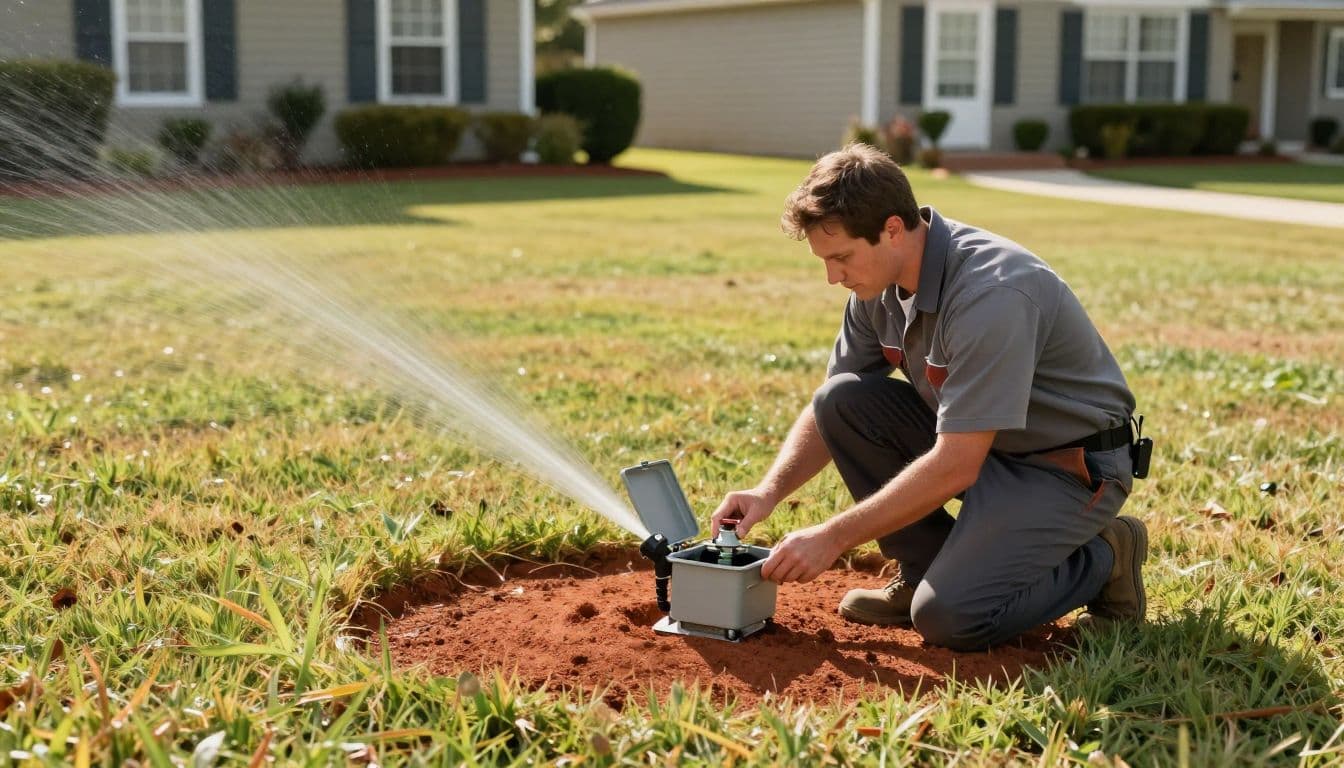
A buried valve may sit below grade after years of mulch, soil movement, and lawn growth. Before replacing anything, a technician may need to locate the valve box with a locator or follow wiring from the controller.
Clay-heavy soil can be hard to dig when dry and messy when wet. Roots may also wrap around the box or press against PVC connections. Careful excavation protects nearby pipe, drip lines, and landscape plants, but it takes longer than a simple swap.
If runoff repeatedly collects near irrigation boxes, correcting the grade may protect the area better than repeated patchwork. Atlanta drainage and grading services can address uneven terrain that directs water toward beds, boxes, and foundations.
Manifold damage changes the scope
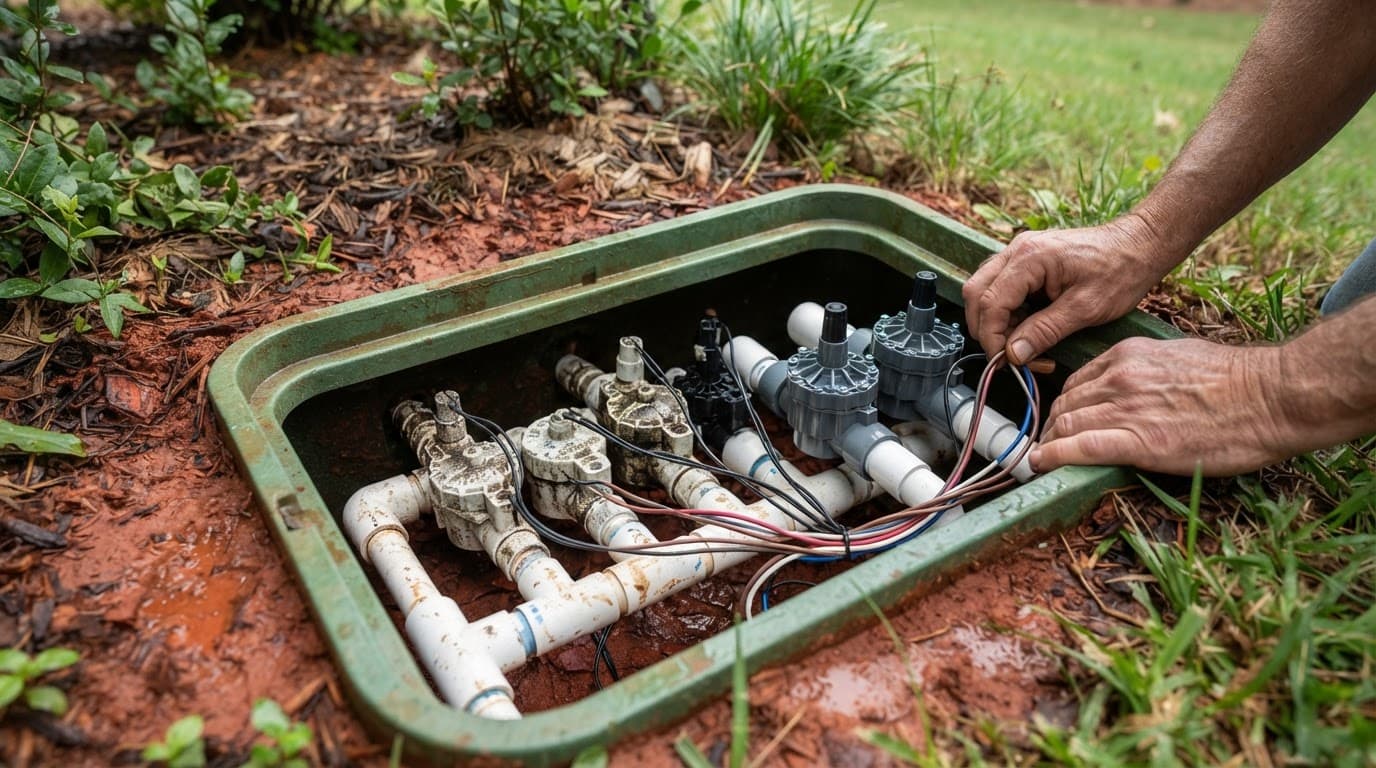
A manifold is the cluster of pipes that feeds multiple valves. When one valve cracks at a fitting, the technician may be able to replace that piece alone. However, brittle PVC, a cracked header pipe, or tightly grouped valves can require work on the manifold plumbing.
Multi-valve work often lowers the per-valve labor component because the excavation is already open. The total 2026 Atlanta bill still rises with every fitting, splice, excavation area, and test. Show any multi-valve discount separately from manifold or restoration charges, and request a written estimate for three- or six-valve work.
Wiring, controller, and pressure problems can mimic a bad valve
A valve that won't open may have a failed solenoid. It could also reflect a loose common wire, a controller output problem, a damaged zone wire, or a smart controller setting.
Likewise, a zone that stays wet may come from a leaking valve diaphragm, a damaged pipe downstream, a broken sprinkler head, or debris. Confirm whether the diagnostic fee includes locating, electrical testing, and pressure testing.
Water pressure creates another variable. Excessive pressure can strain fittings, while low pressure may point to a supply, backflow, or zone-flow problem. If the backflow assembly itself is defective, backflow preventer replacement is a separate scope, not interchangeable with valve replacement.
Diagnose the entire zone before approving irrigation valve replacement. Otherwise, the job may be broader sprinkler system repair involving valves, wiring repair, pipe, heads, or backflow components.
Test the valve before replacing it
A good diagnosis follows both the water and electrical paths. First, confirm that the controller sends a command to the zone, then check the wiring, solenoid response, and valve body. Homeowners shouldn't rush to replace sprinkler valve assemblies until those checks identify the fault. Ask what testing is included in the diagnostic fee before approving work.
Signs a sprinkler valve is failing
Valve stuck open: A zone that runs when the controller is off suggests the valve may be stuck open. Water pooling inside the irrigation enclosure, a faint hiss, or a constant trickle can indicate debris under the diaphragm. Continued weeping after the scheduled cycle ends suggests the valve isn't closing fully.
Valve not opening: Sprinklers that fail to rise, or a zone that never turns on, can indicate a failed solenoid or electrical fault.
Possible non-valve symptoms: Brown turf in one area can signal a valve problem. Clogged nozzles, a broken sprinkler head, and restricted flow deserve inspection too.
Separate solenoid faults from controller faults
Check controller output, programming, and schedules before manually opening a valve by turning its solenoid or bleed screw slightly. A smart controller can have programming, scheduling, communication, or output issues that imitate a valve fault. Conventional controllers can have similar programming or output problems.
If water flows normally after manual activation, the valve body may be fine, and the trouble may lie in the solenoid, wire, or controller.
A multimeter can check voltage at the controller and valve. Power at the controller but not at the valve suggests a damaged wire or splice. If the valve receives the correct signal but stays closed, suspect the solenoid or valve body. If it opens but the zone lacks adequate water pressure, investigate flow restrictions.
Don't leave a manually opened valve unattended. Shut it off or restore normal operation promptly, because it can run continuously and soak the lawn.
Repair or replace the sprinkler valve?
Replacement isn't always necessary. Many valves can run properly again after a solenoid replacement, diaphragm rebuild, spring, or seal. Cleaning debris can also restore a zone that won't close completely, so a sprinkler valve repair may be enough.
For many Atlanta homes in 2026, a component-level repair may cost about $100 to $225. That lower range generally reflects labor and a small component, while a diagnostic fee may be listed separately. An accessible complete replacement often falls around $125 to $300. Difficult excavation, manifold access, or wiring work can push the job to $300 to $600 or more. That higher range may include fittings, testing, and surface restoration.
When a rebuild makes financial sense
Choose a rebuild when the body is intact, the problem is isolated, and compatible replacement parts are available. For example, a hunter pgv may have compatible internal components, though availability varies. Some jar-top valves may be less convenient to service, so construction and parts availability affect the economics.
Repair also makes sense when the valve is part of a sound manifold. Replacing one inexpensive internal component can avoid cutting into several aging PVC connections. Before choosing, compare the cost of another repair visit with a new valve.
When full replacement is the better choice
The case for a full replacement is stronger when you need to replace sprinkler valve assemblies. Choose it when the body is cracked, threads have failed, fittings leak repeatedly, or internal parts are unavailable. A valve repaired several times may also cost more in repeat visits than a new unit. A buried valve or inaccessible access point can push the job toward replacement or a larger scope.
Complete irrigation valve replacement may include the new body, fittings, excavation, testing, and surface restoration.
Older systems sometimes have mixed valve types, faded wiring, and crowded access points. In those cases, a contractor may recommend replacing several adjacent valves while the plumbing is exposed. That isn't automatically an upsell. Confirm whether adjacent valves are actually failing, and request the added labor for each option.
Can you replace a valve solenoid yourself?
A homeowner with basic irrigation experience can often change an accessible solenoid or another simple component. Shut off irrigation water first, photograph the wire connections, and use waterproof connectors rated for direct burial. Verify smart controller settings and compatibility before assuming the valve failed, then test the zone before closing the enclosure.
DIY work becomes risky when the job involves cutting PVC, rebuilding a manifold, tracing underground wiring, or diagnosing a controller. That broader scope is sprinkler system repair, not a simple homeowner task. Stop and hire a contractor if you can't identify the fault or access the component safely.
DIY can save labor on an accessible solenoid. A poorly sealed fitting can leak underground for weeks and create a much larger 2026 repair bill. When buried components are involved, professional labor, testing, and surface restoration usually make up most of the cost.
Protect the lawn during any repair
Keep excavated clay on a tarp rather than scattering it through turf or mulch. After the repair, backfill carefully, set the valve box level with the surrounding grade, and keep soil off its lid. It should remain visible and easy to find for future service.
Avoid mowing over a sunken or uncovered box. Routine lawn care can keep turf neat around irrigation components, but the cover should remain secure and visible at ground level.
Full winterization isn't necessary for every Atlanta yard. Homeowners who winterize sprinkler system components should follow the equipment manufacturer's guidance and avoid trapping water in vulnerable components.
How to compare Atlanta irrigation repair quotes
Choose a professional irrigation company that diagnoses the failed zone before naming a replacement price. All quoted figures are 2026 Metro Atlanta estimates. A phone price can change after the technician finds the valve, opens the box, tests the zone, or discovers damaged plumbing.
Request a written estimate listing the diagnostic fee, hourly labor rate, service-call terms, first-hour policy, and labor billing structure. Confirm the proposed method for irrigation valve replacement, including the valve brand and size. Ask whether the quote covers sprinkler system repair beyond a component swap. The scope should include controller, wiring, pipe, heads, pressure, and valve testing, plus testing or identification of any smart controller.
If excavation is likely, ask how the crew will protect and restore sod, mulch, and nearby plants. Confirm waterproof wire connectors, pressure testing, warranty coverage, cleanup, and a clean box after the work. Ask whether an emergency callout fee applies and whether a multi-valve discount is available.
Compare a valve-only quote with a broader estimate to understand the sprinkler repair cost. The lowest estimate isn't always the least expensive outcome. Spring and summer appointments can fill quickly because heat exposes weak coverage and leaks. Schedule nonurgent work before a small leak creates a muddy section of lawn, since emergency or after-hours service may cost more.
Frequently Asked Questions
How much does sprinkler valve replacement cost in Atlanta?
An accessible residential valve replacement typically costs $125 to $300 in Metro Atlanta in 2026. Buried valves, damaged wiring, manifold repairs, and difficult excavation can increase the price to $300 to $600 or more.
Is it cheaper to repair or replace a sprinkler valve?
A component-level repair, such as a solenoid or diaphragm replacement, may cost about $100 to $225 . Full replacement is usually the better value when the valve body, fittings, or manifold are cracked, repeatedly leaking, or difficult to repair.
Does the sprinkler valve replacement price include diagnosis?
Not always. Many irrigation companies charge a separate diagnostic or service-call fee of about $95 to $165 , so confirm whether that fee is credited toward labor and whether testing is included.
Can I replace a sprinkler valve myself?
A homeowner with basic irrigation experience may be able to replace an accessible solenoid or simple valve component. Cutting PVC, rebuilding a manifold, tracing underground wiring, or diagnosing controller and pressure problems is better handled by a professional irrigation company.
A practical final cost decision
For most accessible Atlanta zones, a valve job commonly stays around $125-$300 in 2026. Component repairs may cost about $100-$225, while difficult excavation, manifold, or wiring work may reach $300-$600 or more. These figures are estimates, not guarantees, because diagnosis, access, labor, materials, and restoration affect the total.
Sprinkler valve repair can save money when the valve body is sound. Cracked plumbing, recurring leaks, failed electrical components, or unresolved water pressure may require broader restoration. Start with a diagnosis first, then confirm the diagnostic fee and what it covers, including the failed part, labor, materials, planned repair or replacement, and testing that confirms the zone works.