Atlanta Irrigation Zones: A Mapping Guide for Complex Yards
A timer can't tell the difference between a shaded fescue strip, a sunny Bermuda lawn, and a thirsty new shrub bed. Your Atlanta irrigation zones need to make those distinctions before water starts flowing.
A simple map helps you water grass and plants where they need it, while keeping water off driveways, walls, and foundations. It also makes dry patches, runoff, and surprise water bills much easier to diagnose.
Start with a walk around the yard, then turn what you see into a practical zone plan.
Why complex Atlanta yards need separate irrigation zones
Many Atlanta properties pack several growing conditions into one lot. A front lawn may bake beside a driveway, while the backyard stays shaded under mature hardwoods. Slopes, red clay, retaining walls, patios, and foundation beds add more variables.
When one valve waters areas with different needs, one part of the yard usually gets too much water. Another part gets too little. That imbalance wastes water and can create disease pressure, erosion, or runoff toward the house.
One zone should have one watering job
Each irrigation zone should cover plants with similar water needs, sun exposure, soil conditions, and sprinkler equipment. A sunny turf area needs a different approach than azaleas beneath a tree canopy.
For example, a practical map might include:
- Zone 1: Front Bermuda lawn
- Zone 2: Shaded side-yard fescue
- Zone 3: Foundation shrub bed
- Zone 4: Sunny backyard zoysia
- Zone 5: Sloped retaining-wall plantings
Those names make controller adjustments easier than trying to remember what "Station 4" covers.
Atlanta clay changes the plan
Georgia clay can hold a lot of water, yet it often absorbs water slowly. If sprinklers apply water faster than the soil can take it in, the excess runs down the slope or across pavement.
A map helps identify where shorter watering cycles and soak periods make sense. It also shows where drip irrigation can replace spray heads in planting beds or on steep grades.
Walk the property before drawing the map
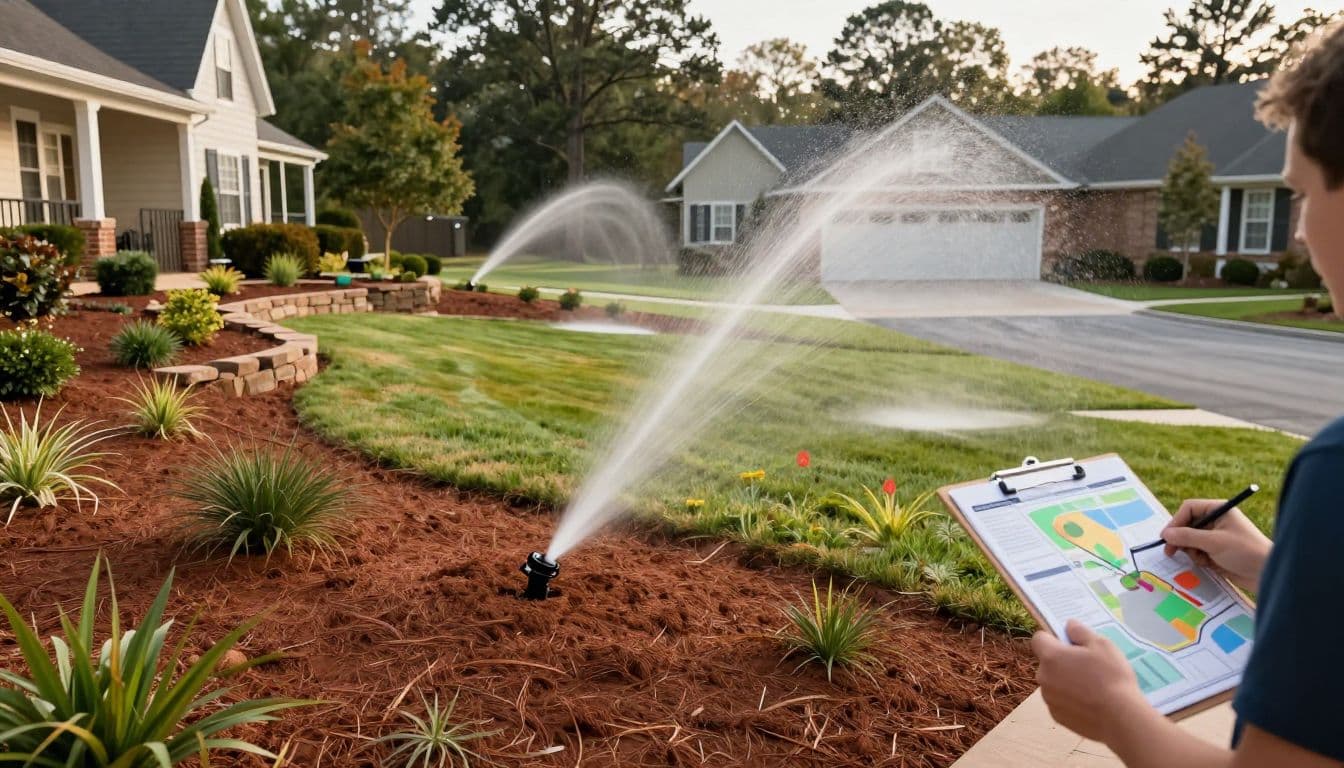
You don't need design software to create a useful irrigation map. A clipboard, graph paper, measuring tape, and a phone camera are enough. Begin when the system is off so you can see every sprinkler head, valve box, bed edge, and hardscape boundary.
Draw the house, driveway, walks, patio, deck, retaining walls, large trees, and lawn areas first. Then add sprinkler heads and mark each one with the controller station that operates it.
Mark changes in sun, slope, and plant material
Pay close attention to conditions that change how fast soil dries. A lawn strip beside a south-facing driveway may need more water than a lawn behind the home. However, shade can keep grass damp longer and increase disease risk if you run the same schedule.
Mark these features on the sketch:
- Full-sun turf and mostly shaded turf
- Downhill areas where water moves after rain
- Mulched beds, annual containers, trees, and shrubs
- Pavement, siding, windows, fences, and retaining walls
- Low areas that stay wet after storms
Use arrows to show the direction water naturally travels. That small detail can prevent a sprinkler schedule from adding to an existing drainage problem.
Build a clear map of Atlanta irrigation zones
Give every valve a zone number and a plain-language name. Keep the map near the controller, then save a photo on your phone. If a landscaper or irrigation technician needs to make a repair, the map saves time and reduces guesswork.
A simple table can turn your sketch into a working reference.
| Zone name | Area covered | Equipment | Conditions to note |
|---|---|---|---|
| Front lawn | Bermuda beside driveway | Spray heads | Hot afternoon sun, pavement edge |
| Side lawn | Fescue under trees | Spray heads | Shade, tree roots, slower drying |
| Rear lawn | Zoysia recreation area | Rotors | Open sun, broad coverage |
| Front beds | Shrubs and perennials | Drip line | Mulch depth, foundation clearance |
| Slope bed | Retaining-wall planting | Drip line | Runoff risk, exposed soil |
Keep descriptions simple enough that anyone in the household can use them.
Add head locations and spray directions
Draw a small circle for each head and a curved line to show its arc. A full-circle sprinkler waters all around itself. A half-circle head waters 180 degrees. Quarter-circle heads often sit at corners.
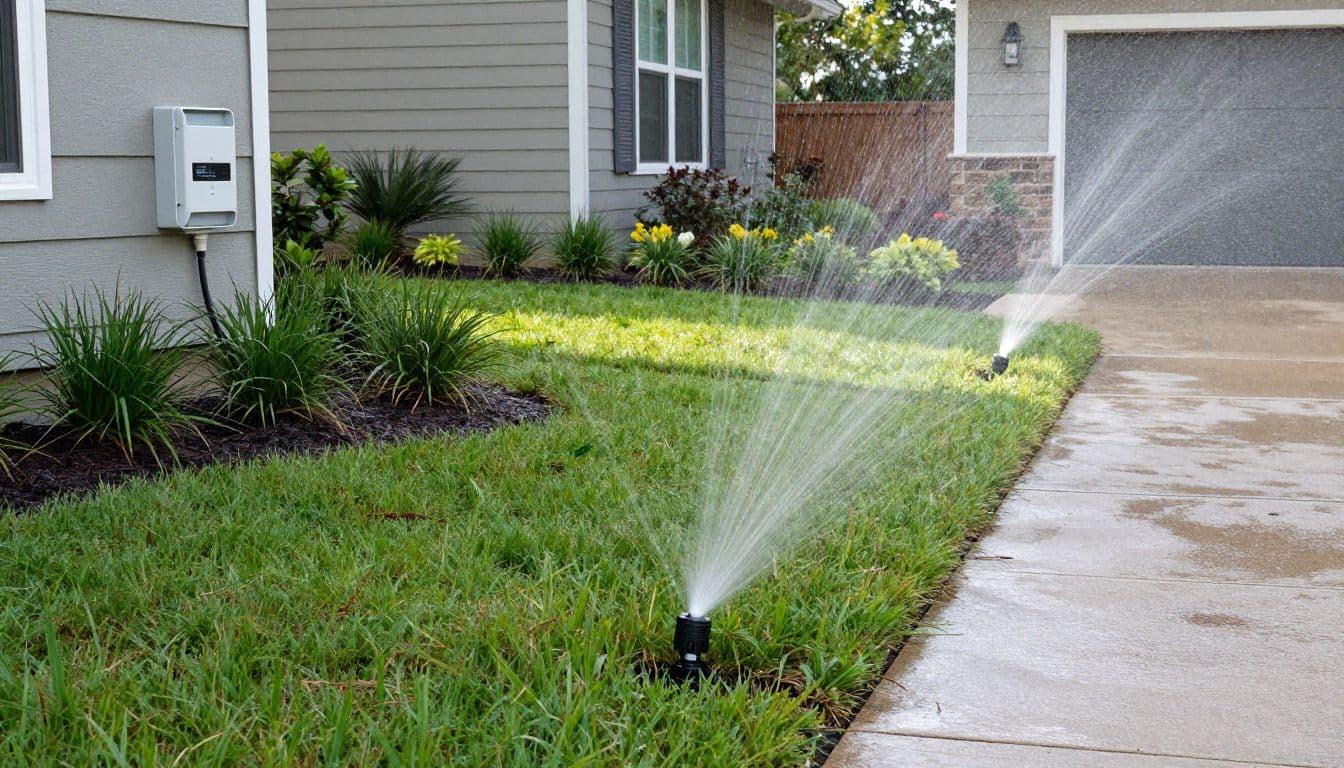
The arc matters because every head should water its assigned area, not the driveway or a brick wall. If a head sprays across the sidewalk, mark it in red. That note becomes a repair task, not a vague reminder.
A dry patch beside a soggy walkway often points to poor sprinkler placement, not a need for a longer run time.
Keep spray heads, rotors, and drip on separate valves
Different irrigation equipment applies water at different rates. Spray heads release water quickly. Rotors apply water more slowly over a larger area. Drip tubing places water near plant roots with little surface spray.
For that reason, don't run spray heads and rotors on the same valve. The spray area will receive too much water while the rotor area stays dry. Mixing drip with either sprinkler type creates similar problems.
Match the equipment to the area
Use spray heads for smaller turf sections where head-to-head coverage is possible. Rotors fit larger open lawns, though they need correct nozzle sizing and spacing. Drip irrigation works well in mulched shrub beds, around trees, and along slopes.
Hunter's standard MP Rotator nozzles, for example, apply water at a lower matched precipitation rate than conventional sprays. They can help on clay-heavy sites where fast application creates runoff. Still, nozzle choice must match the existing pressure, spacing, and zone design.
Plant beds near the home benefit from drip because the water stays in the soil instead of misting onto siding, windows, and masonry.
Test each zone before changing run times
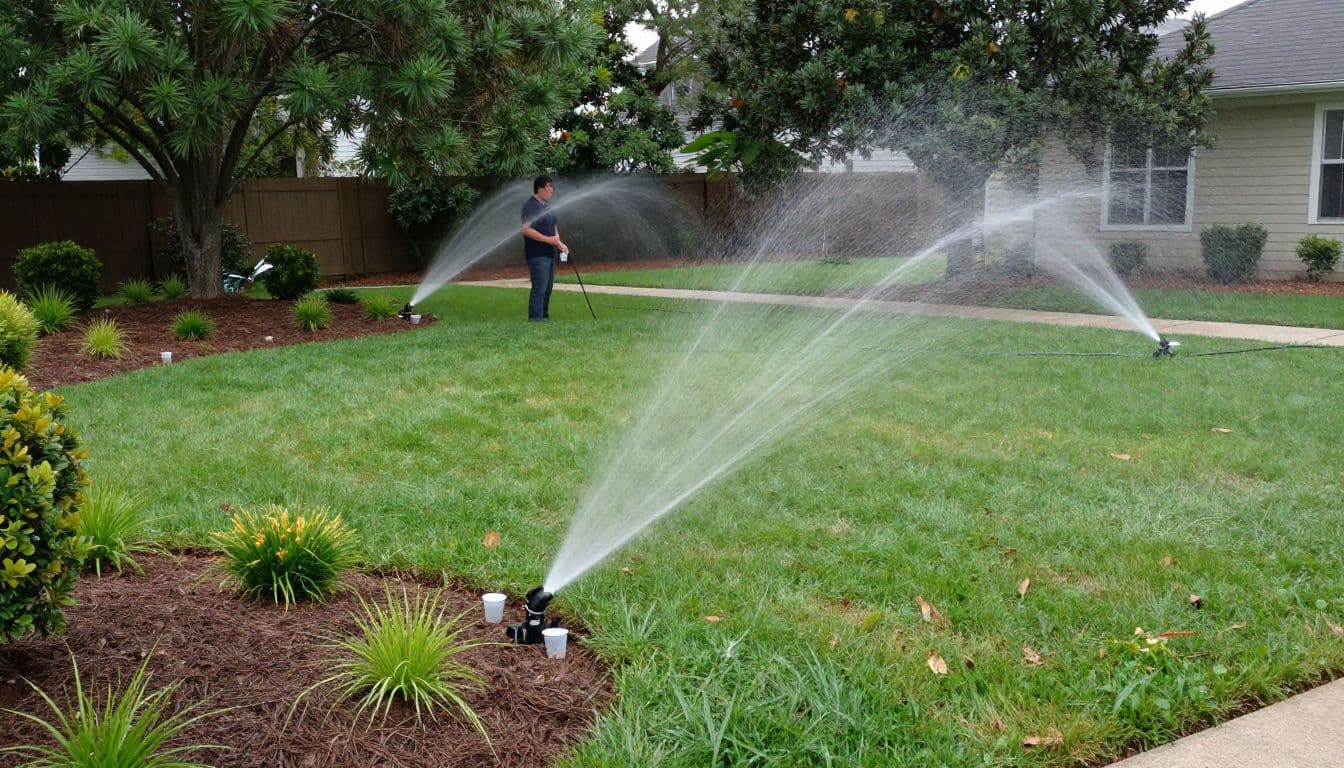
A zone map tells you where water should go. A catch-can test shows where it actually goes. Place several identical straight-sided cups around one turf zone, including near the heads, between heads, at edges, and beside any recurring dry spot.
Run that zone for 15 minutes. Then measure the water depth in each cup and calculate the average. If the results vary sharply, repair coverage before adding more minutes to the controller.
Record observations that lead to useful repairs
Write the test date, zone name, controller run time, and average cup depth on your map. Also record puddling, misting, blocked spray, low pressure, broken heads, and water reaching hardscapes.
Look for patterns. A dry wedge may mean a shrub has grown in front of a head. A wet circle around one sprinkler often means the nozzle is clogged, damaged, or set to the wrong arc.
For a deeper walkthrough of measurements and corrections, use this guide to catch-can sprinkler testing.
Check soil moisture below the surface
Surface color can fool you. Dig a small hole or use a soil probe after watering. Turf roots should receive moisture roughly 6 to 8 inches deep during active growth.
University of Georgia Cooperative Extension uses about 1 inch of water per week, including rainfall, as a summer starting point for most Georgia turf. That amount is roughly 600 gallons per 1,000 square feet. Your soil, grass type, shade, and sprinkler output determine the final schedule.
Use cycle-and-soak watering on clay slopes
Long watering sessions often send water downhill before it reaches the roots. Cycle-and-soak watering breaks one larger application into shorter cycles with time between them.
For instance, a sloped zoysia zone that needs 30 minutes may perform better with three 10-minute cycles. Give the ground 30 to 60 minutes to absorb the first cycle before starting the next one.
Let the yard, not the calendar, guide you
A fixed schedule ignores rainfall and changing temperatures. Instead, check the soil and turf before adding water. Grass that springs back after you walk on it usually has enough moisture. Footprints that remain visible can signal drought stress.
Rain sensors and soil-moisture sensors can pause unnecessary cycles. Adjust the controller after meaningful rain, during cooler spells, and when turf slows its growth.
For grass-specific timing, review this seasonal watering guide for Atlanta lawns. Bermuda, zoysia, and tall fescue do not need identical schedules.
Protect foundations, driveways, and hardscapes
Irrigation should wet soil and roots, not concrete, brick, siding, or windows. Overspray creates slick walks, stains hardscape, and wastes water. Repeated water against the foundation also deserves attention, especially if the grade already directs rain toward the home.
Set spray arcs carefully along driveways and sidewalks. A head near a wall may need a different nozzle, a lower trajectory, or a small adjustment to its position. Drip irrigation is often the better fit for narrow foundation beds.
Keep downhill water away from the house
Water traveling across the surface can carry mulch and soil toward drains, patios, and low foundation areas. If you see that movement during an irrigation cycle, shorten the run time and inspect the grade.
A sprinkler adjustment won't correct a yard that slopes toward the house. Persistent pooling or runoff may need Atlanta drainage solutions for soggy lawns, such as regrading, a swale, or a properly planned French drain.
Keep mulch 2 to 4 inches deep in beds, but pull it back from siding and tree trunks. Mulch holds moisture in the soil and reduces evaporation without soaking the home.
Troubleshoot dry spots and runoff by zone
Use your map to isolate the problem before changing every controller setting. Run only the affected zone and watch it from start to finish. Water should overlap evenly across turf and stay inside the zone boundary.
When turf stays dry
First, check for a clogged nozzle, tilted head, buried sprinkler, broken line, or low pressure. Next, look for physical obstructions. A grown shrub, parked vehicle, or low-hanging branch can block a spray pattern.
If a dry area sits between heads, spacing may be the issue. Turf sprinklers generally need head-to-head coverage, meaning each head throws water to the next head. Increasing runtime won't fix a zone that never reaches part of the lawn.
When water runs onto pavement
Runoff can result from excessive run time, fast spray nozzles, compacted clay, poor head adjustment, or a steep slope. Start with shorter cycles and longer soak periods. Then inspect the nozzle and arc.
Water that puddles around a single head may indicate a leak or a damaged riser. Water that drains from a whole lawn area points more often to application rate or grading. Add the finding to your map so the same issue doesn't return next season.
Check Atlanta watering rules before setting the controller
Georgia's statewide year-round outdoor watering window currently allows landscape irrigation between 4 p.m. and 10 a.m. The Georgia Environmental Protection Division maintained a statewide Level 1 drought response in August 2026.
Local limits can be stricter than the state baseline. City, county, and water-provider notices can change during drought conditions or system emergencies. Check your current provider guidance before running an automatic schedule, especially after a dry stretch.
Water in the lowest-loss window
Early morning is usually the most practical choice within the allowed window. Temperatures are lower, winds are often calmer, and leaves have time to dry after irrigation. Evening watering is permitted during the statewide window, but lingering wet foliage can encourage turf disease.
Avoid daily automatic watering. Atlanta irrigation zones work best when they apply measured water only after the soil needs it. Shut the system off during rain, and inspect the yard after each seasonal controller change.
A mapped system makes every gallon count
A useful irrigation map turns a confusing set of valves into a clear plan for turf, beds, slopes, and hardscape edges. It helps you spot mismatched equipment, measure output, and correct runoff before it harms the lawn or sends water toward the house.
The strongest schedules are based on soil moisture and measured coverage , not timer habits. When each zone has one clear job, your yard gets healthier with less wasted water.