Atlanta Lawn Dormancy: Is Your Grass Still Alive?
A brown Atlanta lawn may be dormant rather than dead. Bermuda and zoysia can turn straw-colored during a drought, then produce new growth when moisture returns and conditions support growth.
The difficult part is knowing when to wait and when to investigate. Brown blades alone don't give you the answer , so look at the weather, the pattern across your yard, and the grass at soil level before planning a repair.
What Drought Dormancy Looks Like
Atlanta lawn dormancy can begin during a dry stretch when grass slows its growth and loses color. Before it turns brown, the lawn may show signs that it needs water.
Look for blades that fold or curl, a dull blue-green or gray cast, and footprints that remain visible after you walk across the turf. Grass may wilt late in the day and still look stressed the following morning. Dry soil and a crunchy feel underfoot add context.
As the dry weather continues, Bermuda or zoysia can become tan and stop growing. Parts of the lawn in full sun, on slopes, or beside pavement may show stress before areas that retain more moisture.
Dormancy helps grass survive unfavorable conditions, but survival isn't guaranteed. Prolonged or repeated drought can damage living tissue and leave the lawn thinner even if some grass recovers. That's why it's worth looking beyond color and considering how long the lawn has struggled.
Bermuda and Zoysia Respond Differently
Both grasses grow most actively in warm weather, but they don't repair damage at the same pace.
Bermuda can fill thin areas faster
Bermuda spreads through aboveground runners and underground stems. When those growing points remain alive and conditions improve, the grass can send new growth into thin areas.
Repeated drought can still leave Bermuda patchy. A lawn that has lost grass along a hot driveway or heavily traveled path may need more than rain to look full again, especially if the same area keeps drying out.
Zoysia usually takes longer to fill in
Zoysia forms a dense lawn, but it generally grows and spreads more slowly than Bermuda. A stressed zoysia yard may therefore stay thin longer after conditions improve.
Give living turf time before deciding that every brown spot needs replacement. At the same time, watch areas with heavy traffic or persistent shade, where zoysia may struggle to regain density even after the drought ends.
Look at Grass at Soil Level
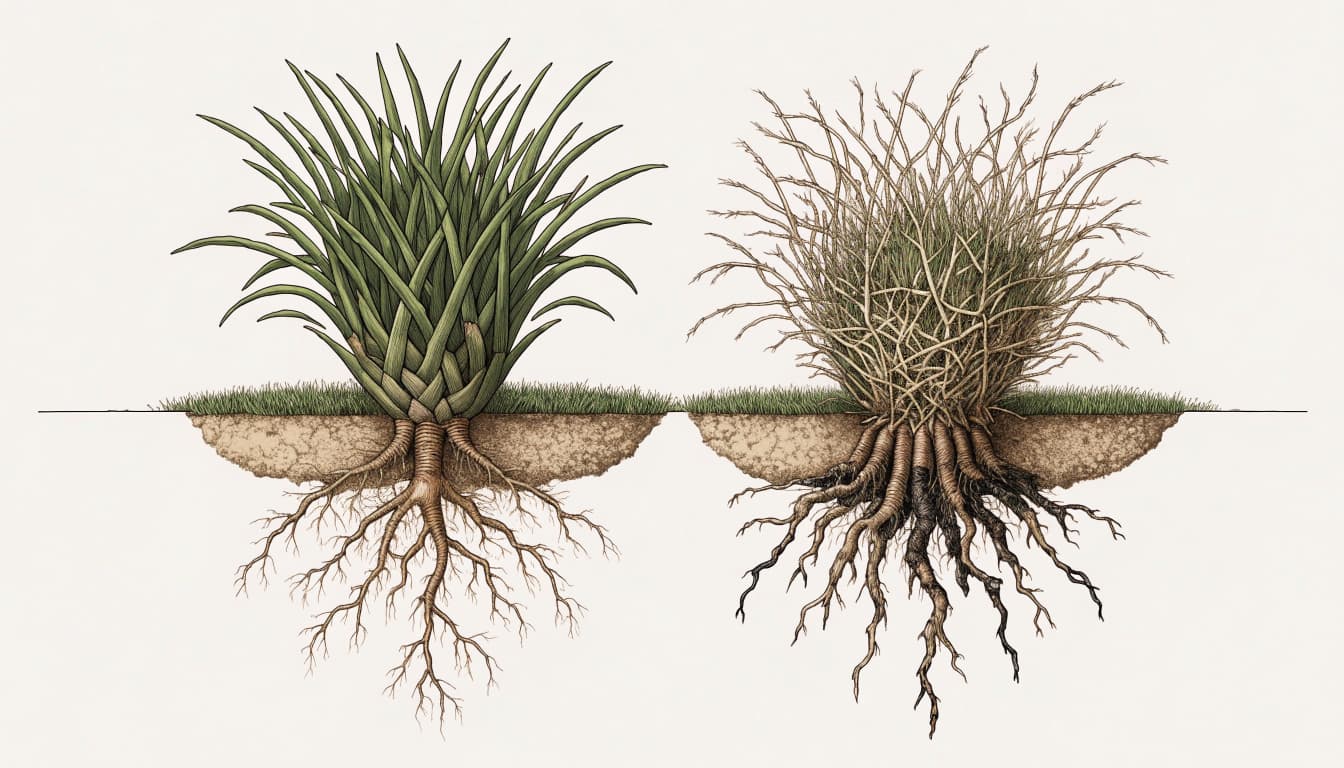
The base of the plant can tell you more than a dry leaf tip. The crown is the growing point near the soil surface, where shoots and roots meet. Brown blades can remain attached even when living tissue is present lower down.
Examine the crown
Part the grass and look closely at the base in several places. Compare a brown area with a healthier part of the same lawn. A firm base with some green near the crown can indicate living grass, even when the upper blades are tan.
A brittle, crumbling base gives you more reason to suspect damage. The illustration shows the plant's structure, but living dormant grass won't necessarily have green blades above the soil.
Gently tug a small sample
A gentle tug is another general way to examine turf. If a patch lifts easily or breaks apart at the base, take a closer look rather than assuming it's healthy. Loose turf can have several causes, including damaged roots or insects, so the tug alone doesn't establish what happened.
Use more than one observation before replacing grass. Our guide to Bermuda and zoysia winter damage covers similar crown checks during spring green-up, when cold injury can leave patches behind.
Rule Out Other Causes of Brown Grass
Drought isn't the only reason an Atlanta lawn loses color. The timing and shape of a brown area can help you decide what to investigate next.
Consider the season
Bermuda and zoysia normally turn brown as cold weather slows their growth. A tan lawn during an Atlanta winter is different from turf that loses color during a hot, dry summer.
Don't expect winter-dormant grass to turn green simply because you water it. As temperatures rise in spring, look for green-up across the lawn. Areas that remain brown while nearby grass grows deserve a closer look.
Study the pattern
Dry spots often appear where irrigation misses the turf or where pavement and slopes increase heat and moisture loss. Irregular spreading patches, discolored rings, or soft-looking areas can point toward disease instead.
Turf that pulls up like a loose carpet can also warrant a look for insects. Avoid applying a disease or insect treatment based on color alone. If the pattern keeps spreading or the cause remains unclear, ask a lawn-care professional for help identifying the problem.
Water Carefully When the Lawn Needs It
Rain or irrigation can support recovery when drought is the problem. The goal is to moisten the soil without creating runoff or keeping it soggy.
Look below the surface
Use a screwdriver or small hand tool to inspect the soil in both brown and greener areas. Compare how dry the soil feels and whether water has reached below the surface.
Atlanta's clay soils can absorb water slowly, especially on compacted ground or slopes. If water starts running onto the sidewalk before it soaks in, pause and let it absorb before continuing. Puddles are a sign to stop, not a sign that the lawn needs more water.
Adjust for rain and local rules
Water in the morning when irrigation is needed. Avoid frequent, shallow watering that only dampens the surface, and reduce irrigation when rainfall has already moistened the soil.
Follow applicable local watering restrictions during drought. Established turf and newly installed sod also have different needs, so don't treat a fresh patch like a long-established lawn.
Water won't revive grass whose growing points have died. It can, however, help living grass resume growth when the weather and soil conditions are suitable.
What Recovery Looks Like After Rain
Watch for new growth, not greener old blades
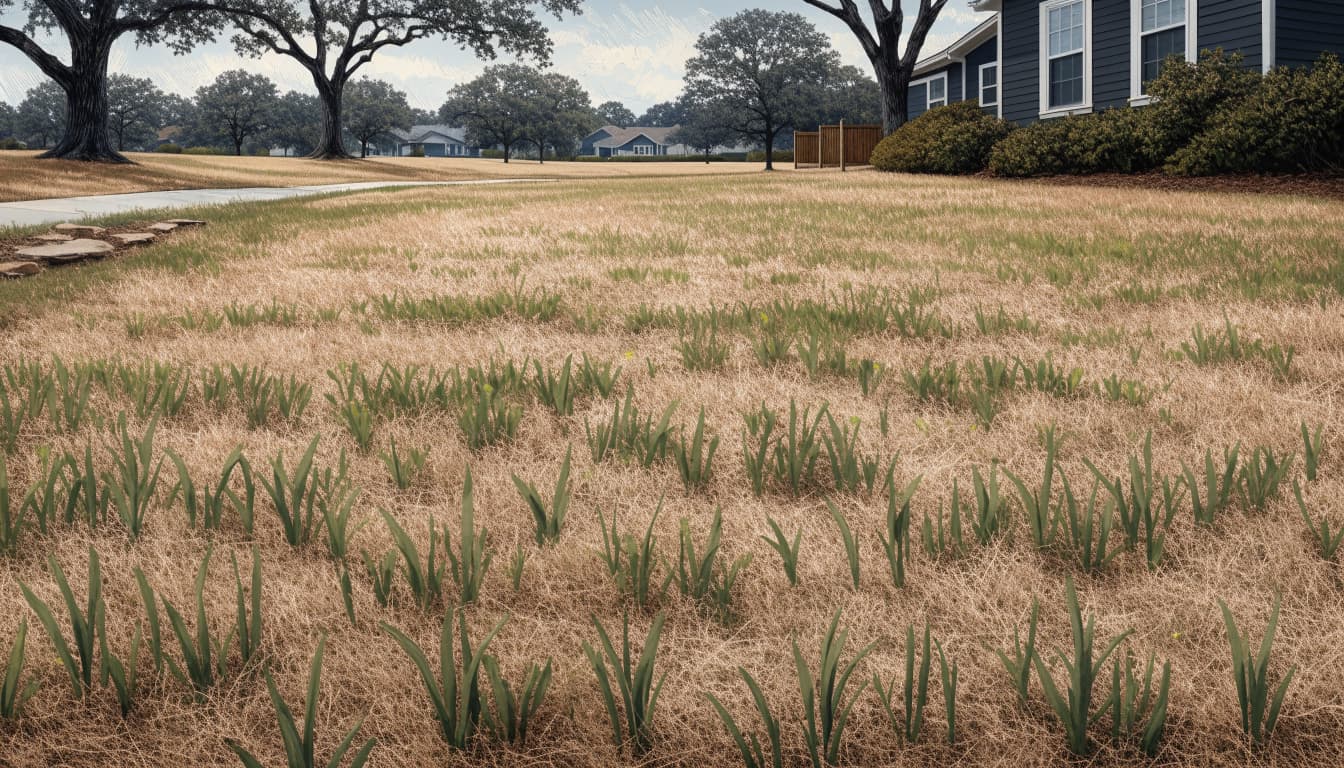
Dead-looking leaf tips don't need to regain their color for a lawn to recover. Instead, look near the base for fresh green shoots. Bermuda may also produce new runners when it's actively growing.
Recovery can be uneven. A sheltered area may respond differently from a dry slope, and zoysia can take longer to fill gaps than Bermuda. Soil moisture, sunlight, temperature, and the extent of damage all affect the response.
Reassess patches that stay bare
Compare struggling areas with nearby turf after conditions improve. If surrounding grass resumes growth but a patch remains bare and its plant bases are brittle, the area may need repair.
First look for a reason that section failed. A sprinkler gap, compacted soil, heavy shade, or repeated traffic can leave new grass facing the same problem. Fixing that condition gives a repair a better chance of lasting.
How to Care for a Dormant Lawn
A dormant or heavily stressed lawn needs protection more than aggressive maintenance. Give the grass room to recover instead of trying to force a quick change in color.
Mow only when growth calls for it
If the grass has stopped growing, leave the mower parked. When mowing resumes, use a sharp blade and avoid cutting the lawn too short.
During heat, a slightly higher cut within the appropriate range for your grass can leave more leaf surface and help shade the soil. Avoid mowing when the ground is soft or the turf is brittle enough to tear under the mower.
Our Atlanta lawn care and mowing services include scheduled mowing and attention to cutting height for local lawns.
Hold off on treatments and heavy traffic
Skip nitrogen fertilizer while the grass is brown and inactive. Fertilizer won't bring dormant turf back to life, and pushing growth during stress can make the lawn harder to manage.
Also postpone aggressive dethatching, core aeration, and other disruptive renovation until the grass is actively growing and able to recover. Keep vehicles, equipment, and repeated foot traffic off weakened areas. Remove heavy debris gently without raking hard enough to pull up living grass.
Decide When to Repair Thin or Dead Areas
Once you've identified a patch that isn't recovering, match the repair to the size of the damage and the conditions in that spot.
Small, thin areas next to healthy Bermuda may fill as runners spread during active growth. Zoysia can fill too, although its slower growth may make plugs or matching sod a more practical choice for a larger bare area.
For either grass, save major renovation for warm weather when the lawn is growing steadily. Before adding sod, address the cause of the original damage. For example, new turf beside a driveway will struggle if irrigation consistently misses that strip.
Consider sunlight as well. Bermuda generally needs more direct sun than zoysia, so a patch under dense tree cover may continue to thin even with adequate moisture. A lawn-care professional can help you assess persistent trouble spots and choose a practical repair.
Common Questions About Brown Atlanta Lawns
Can brown grass still be alive?
Yes. Bermuda and zoysia can have brown blades while living tissue remains near the soil line. Look for firm plant bases and new growth when conditions improve, rather than judging by color alone.
Should I fertilize a brown lawn?
Wait if the grass is dormant or heavily stressed. Fertilizer won't restore color to inactive blades. Resume feeding only after the lawn has returned to steady growth and its nutrient needs are clear.
Does tall fescue react the same way?
Tall fescue is a cool-season grass, so its care differs from that of Bermuda and zoysia. Our Atlanta tall fescue summer care guide covers its heat and drought stress signs.
Give Living Grass a Chance to Recover
A straw-colored lawn doesn't automatically need replacing. Look for signs of living grass, consider the season, and address dry soil without overwatering.
If bare patches remain after the surrounding turf resumes growth, focus on the cause before repairing them. Careful observation can help you protect surviving grass and avoid replacing more lawn than necessary.