Atlanta Magnolia Scale Guide for Sticky Leaves and Sooty Mold
Sticky leaves under a magnolia usually mean more than a messy tree. In Atlanta, that tacky coating often points to magnolia scale , a sap-feeding insect that drops honeydew onto leaves, patios, cars, and walkways.
That honeydew then feeds black sooty mold , which makes the tree look sick even when the mold is only sitting on the surface. Once you know the difference between an insect problem and a leaf disease, the fix gets much clearer.
Key Takeaways
- Sticky leaves usually come from honeydew , not from a fungal leaf disease.
- Black sooty mold grows on that honeydew, so the mold is a symptom, not the cause.
- Magnolia scale is easiest to treat when the tiny crawlers are active in late summer and early fall.
- Severe infestations often bring branch thinning, leaf yellowing, and heavy black coating on leaves and nearby surfaces.
- Atlanta heat, humidity, and stressed trees can make magnolia scale problems more noticeable.
How Magnolia Scale Makes Leaves Sticky and Black
Magnolia scale is a soft scale insect that feeds on sap from magnolia twigs and branches. As it feeds, it excretes a sweet liquid called honeydew . That sticky film falls onto whatever sits below the tree.
Leaves catch some of it, and so do driveways, deck boards, patio furniture, and parked cars. In Atlanta, where humid weather lingers and magnolias stay active for much of the year, the mess can build fast.
Sooty mold develops on the honeydew after it lands. The mold is black and powdery, so people often assume the leaves have a fungal disease. They usually do not.
The black coating is a surface growth on honeydew, not the original problem.
Leaf diseases damage the leaf tissue itself. They create spots, blotches, holes, or early drop. Sooty mold sits on top of the leaf and often wipes off with a damp cloth, while the tree underneath may still be covered in sticky residue.
How to Spot Magnolia Scale on Atlanta Trees
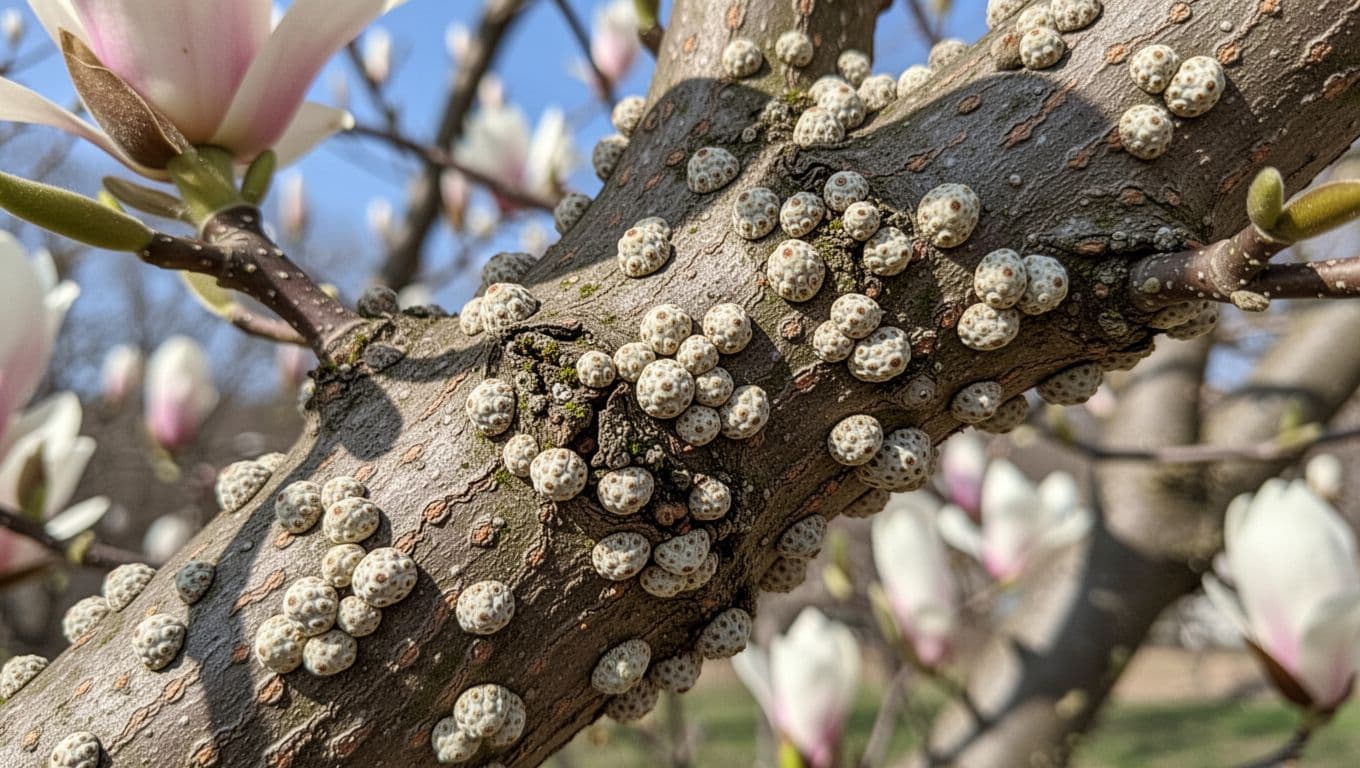
Magnolia scale hides in plain sight because the adults look like fixed bumps on twigs. They are often tan, brown, or grayish, and they cling tightly to the stems.
Atlanta homeowners usually notice the problem first by accident. A magnolia may leave sticky spots on the hood of a car, or black residue may show up on outdoor furniture after a humid week.
Look closely at the branches, especially on the lower and inner canopy. You may see:
- Rounded bumps lined up along twigs and small branches
- Sticky residue on leaves, bark, or anything under the tree
- Black sooty mold on the upper and lower leaf surfaces
- Ant activity around the honeydew
- Yellowing leaves or weak new growth on stressed trees
The crawler stage is the tiny, mobile stage that spreads the infestation. It is easy to miss without a close look. Adult scales are far more obvious, but by then the tree has usually been feeding the insects for a while.
What to Do Right Away
Start with a calm inspection, not a spray can. The first step is to confirm that the problem sits on the branches and stems, because that is where magnolia scale feeds.
A simple response plan looks like this:
- Inspect the stems and twigs. Check both the sunny side and shaded side of the magnolia. Look for fixed bumps, sticky residue, and black film on the leaves below.
- Clean the surfaces you care about. Rinse off cars, patio furniture, and walkways. That does not solve the pest problem, but it keeps the mess from spreading around your yard.
- Skip fungicide sprays. Fungicides do not remove scale insects, and they do nothing for honeydew. If the tree only has sooty mold, spraying for fungus still misses the cause.
- Avoid random pressure-washing. Strong spray can damage bark and push the mess around without fixing the infestation.
- Call for help when the tree is valuable or heavily coated. Mature magnolias in Atlanta yards often need a targeted plan, especially if the canopy is dense or the tree is stressed by heat.
Deep watering also helps if the tree has gone through a dry spell. A stressed magnolia is easier for pests to overwhelm, and a thirsty tree shows damage faster.
Best Magnolia Scale Treatment Timing in Georgia
Timing matters more than brute force. In Georgia, magnolia scale treatments work best when they match the insect's life cycle, not just the calendar.
Atlanta weather can shift the exact window a little, but the pattern is usually the same. Crawlers show up in late summer and early fall, and many control plans center on that stage because the insects are more vulnerable then.
| Season | What is happening | Best move |
|---|---|---|
| Late winter to early spring | Scales are still attached to twigs and branches | Inspect, prune only dead wood, and plan treatment if needed |
| Late summer to early fall | Crawlers emerge and spread | Treat at the right time, often with guidance from a pro |
| Mid-summer | Adults are well established and protected | Focus on scouting and tree health, not guesswork |
A licensed arborist may recommend a horticultural oil, a systemic treatment, or a combination plan depending on the tree and the infestation level. The right option depends on tree size, timing, and how far the scale has spread.
Because Atlanta stays warm longer than many places, crawlers can remain active into a broader part of the fall. That makes late-season inspection important. One missed window can mean another messy season next year.
When the Infestation Is Serious
A few sticky leaves are annoying. A heavy infestation can drain a tree and leave it looking thin and tired.
Use this quick guide to judge severity:
| Sign | What it usually means | Why it matters |
|---|---|---|
| Heavy black coating on many leaves | Honeydew is widespread | The tree is feeding a large scale population |
| Twig surfaces covered in bumps | Adult scale is well established | The infestation has likely been there for a while |
| Branch tips thinning or dying back | The tree is under stress | Growth and appearance can decline quickly |
| Sticky residue returning after cleaning | Scale feeding is still active | The problem is ongoing, not finished |
| Yellowing leaves or early drop | The tree is struggling | It may need treatment and closer monitoring |
If you see several of these signs at once, the issue is no longer cosmetic. A mature magnolia can still recover, but it needs the right treatment and better growing conditions.
Atlanta yards often place magnolias near sidewalks, driveways, or front entries, so the mess shows up fast. That is one reason homeowners notice the problem before they notice the insect itself.
Keeping Magnolias Healthier Through Atlanta Summers
Magnolias do best when the root zone stays cool, moist, and easy to inspect. That means steady watering during dry spells, a clean mulch ring, and room around the trunk for air movement and visual checks.
Fresh mulch helps the soil hold moisture, but keep it a few inches away from the trunk. A tidy bed also makes scale easier to spot early. If your yard needs regular cleanup around magnolia beds, residential landscape maintenance can keep that area clear and easier to monitor through the season.
Avoid heavy nitrogen fertilizing unless a soil test supports it. Fast, soft growth can make a stressed tree easier to manage in the short term, but it also creates more tender tissue for pests to target.
Crowded shrubs around the base can hide the first signs of infestation. They also trap moisture and make the tree harder to inspect. Atlanta heat, reflected pavement, and compacted soil add more stress, so a magnolia in a tight space needs extra attention.
A once-a-summer check is not enough for older trees. Late summer inspections catch the crawler stage and help you act before the honeydew starts dripping everywhere again.
Conclusion
Sticky leaves on a magnolia are usually a sign of magnolia scale , not a leaf fungus. The black film is sooty mold growing on honeydew, and the real fix starts with treating the insect.
Atlanta's heat and humidity can make the mess worse, especially when trees are stressed or the crawler stage goes unnoticed. If you focus on diagnosis, timing, and tree health, the problem becomes much easier to control.
A healthy magnolia starts with the right timing and a clear view of what is actually feeding on the tree.