Atlanta Drainage Swale Cost Guide for 2026
A drainage swale can solve a stubborn water problem fast, but the price can swing more than most Atlanta homeowners expect. One yard may need a few hours of shaping, while another needs grading, erosion control, and full lawn restoration.
That range makes sense when you look at Metro Atlanta conditions. Heavy summer rain, compacted clay, and uneven lots push water into the same low spots again and again, so the right fix has to match the yard, not just the budget.
Key Takeaways
- Most Atlanta drainage swale projects cost between $1,800 and $4,500 , with smaller jobs below that and harder sites well above it.
- Slope, soil, access, and restoration have the biggest effect on price.
- A swale works best when water needs a clear surface path and the yard already has room for runoff to move.
- If the soil stays wet, the slope is wrong, or the house is taking water, a different drainage fix may be a better fit.
- Sod, seed, mulch, and tie-ins to other drainage systems can add a meaningful amount to the final bill.
What a Drainage Swale Does in an Atlanta Yard
A drainage swale is a shallow, sloped channel that guides stormwater away from problem areas. In many Atlanta yards, it's a grassed dip that blends into the lawn and moves runoff without the look of a hard trench.
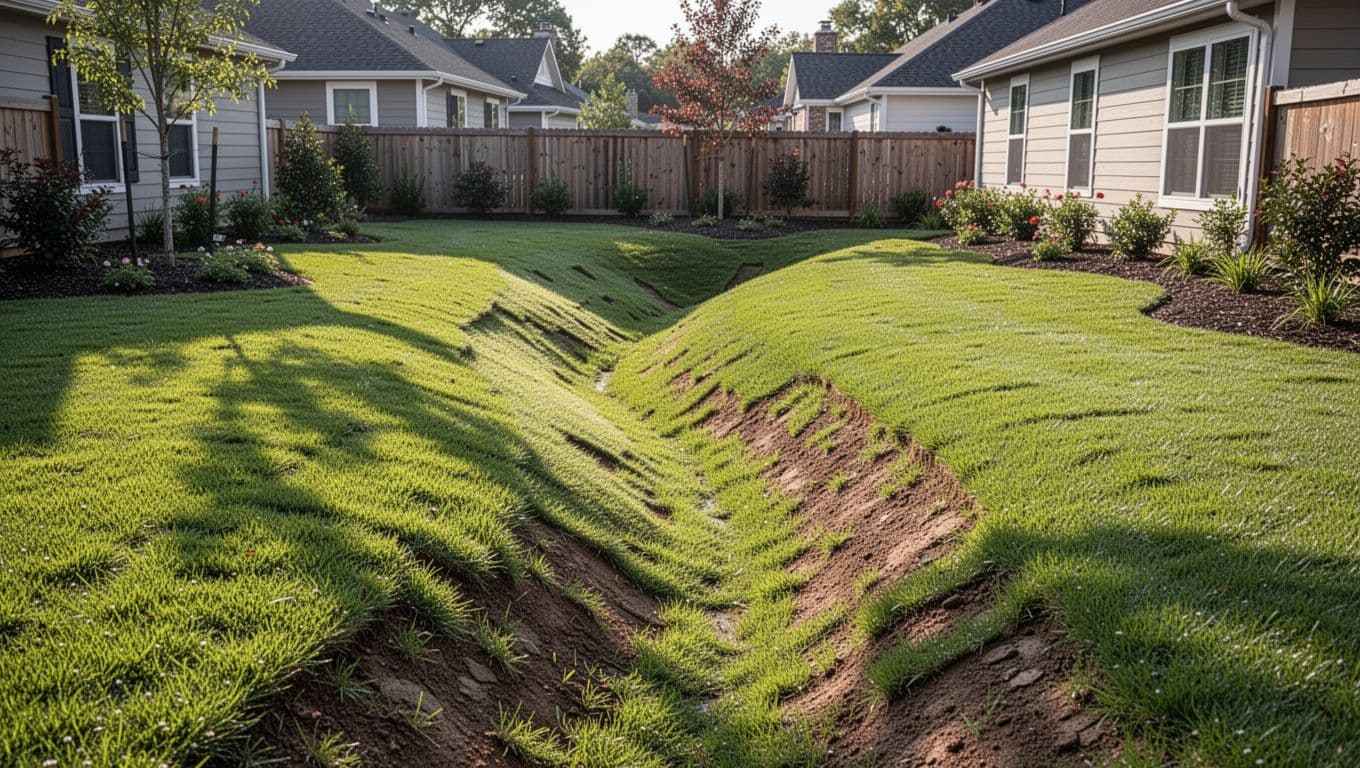
The shape matters as much as the location. Water needs enough slope to keep moving, but not so much that it cuts a channel during a storm. That balance is why a swale often starts with small grading adjustments, then finishes with topsoil, seed, or sod.
In Atlanta, swales are common because many properties deal with fast runoff. Clay soil sheds water instead of soaking it in, and that can leave low areas muddy after every downpour. A well-built swale gives the water somewhere to go before it reaches a patio, fence line, or foundation.
What Drives Drainage Swale Cost in 2026
The drainage swale cost depends on more than the length of the ditch. Two yards that look similar from the street can price very differently once the crew starts measuring slope and soil conditions.
A good quote usually reflects these factors:
- Slope and grading needs : If the yard already has the right pitch, the work is simpler. If the grade has to be rebuilt, the cost rises quickly.
- Soil type and compaction : Atlanta clay is dense and sticky, so it can take more time to excavate, shape, and compact.
- Accessibility : Tight side yards, fences, retaining walls, and limited equipment access all add labor.
- Drainage volume : A swale that handles roof runoff or a large uphill yard needs more capacity than one that only redirects a small puddle.
- Erosion control : Steeper sites may need stone, turf reinforcement, or other stabilization.
- Restoration : New soil, seed, sod, mulch, and cleanup can cost as much as the excavation itself.
- Tie-ins to other systems : Downspouts, French drains, dry creek beds, and discharge points can push the project into a larger drainage plan.
If the swale is part of broader slope correction, the numbers move closer to full grading work. The Atlanta yard grading cost guide gives a useful comparison when the project is bigger than a single drainage path.
Typical Atlanta Drainage Swale Price Ranges
Most homeowners want a simple answer, and the honest one is a range. Smaller, easier jobs can stay under $2,000, while complex projects can run much higher.
| Project type | Typical 2026 Atlanta cost | What it usually includes |
|---|---|---|
| Small swale repair | $900 to $1,800 | Light shaping, short run, basic seed or minor turf repair |
| Standard residential swale | $1,800 to $4,500 | Moderate excavation, grading, topsoil, seed or sod repair |
| Larger or more complex swale | $4,500 to $9,500+ | Longer run, heavier grading, erosion control, tie-ins, restoration |
A small repair may be enough for a low spot that catches runoff after a storm. A standard project is more common when water moves across part of the yard and needs a reliable route to the street edge or a safe discharge point.
The upper range usually shows up when the swale has to do more than guide water. Steep grade changes, long distances, stone work, or restoration across a larger lawn all raise the price.
When a Swale Is the Right Fix, and When It Is Not
A swale is a smart choice when water moves across the surface and needs a controlled path. It works best on yards that already have a natural slope, even if that slope is pointing the wrong way.
If the issue is a soggy strip of lawn that stays wet for days, a French drain may fit better. If water runs toward the foundation, the real issue may be grading, not drainage alone. If you want a visible surface channel that handles runoff and looks intentional, a dry creek bed can make sense.
The right call often comes down to soil behavior and flow pattern. For a side-by-side look at the main options, the guide to choosing the right drainage solution is a useful reference before you hire anyone.
If the water keeps showing up in the same place after every storm, the problem is usually slope, not just surface mud.
How Grading and Restoration Change the Bill
The digging is only part of the job. A swale has to blend back into the yard, and that restoration can add a lot to the final price.
If the crew cuts through an established lawn, the damaged strip needs to be rebuilt with topsoil and turf. On some Atlanta properties, that means fresh sod. On others, seed, straw, and erosion control blanket are enough. Either way, the finish work affects how natural the swale looks and how well it holds up.
Hauling away extra soil also adds cost. So does bringing in fill dirt where the grade needs correction. If the project includes reshaping a bigger section of the yard, the estimate starts to look more like professional residential grading services than a simple drain fix.
Homeowners often overlook this part because the swale itself is shallow. However, a shallow channel still has to be formed, compacted, and stabilized. On an Atlanta property, that can mean the difference between a quick fix and a lawn that looks torn up for weeks.
Getting a Quote That Matches Your Yard
A useful estimate should break out more than one number. It should show the excavation, grading, disposal, and restoration separately when possible. That way, you can see where the money is going.
Before you compare bids, gather a few details:
- Measure the approximate length of the swale.
- Note where the water starts and where it should exit.
- Take photos after a heavy rain.
- Point out any downspouts, retaining walls, fences, or tight access points.
- Ask whether the quote includes seed, sod, or erosion control.
These details help a contractor judge the job size before arriving, and they help you compare estimates fairly. A lower quote that skips restoration may look attractive, but the yard can cost more later if the finish work is ignored.
If your project includes wider slope correction, ask how the swale connects with the rest of the yard. Drainage works best when the route is planned as one system, not a set of separate patches.
What Atlanta Homeowners Should Budget
For a typical Metro Atlanta yard, a practical budget for a drainage swale is often around $2,000 to $5,000 . Smaller projects can come in below that, while long runs, steep slopes, and heavy restoration can push the price much higher.
The biggest cost swings usually come from grading, access, and restoration . Once you understand those three pieces, the estimate makes a lot more sense.
A swale is a solid fix when water needs a clean path and the yard can support the slope. When the problem is deeper, wetter, or tied to the foundation, the better answer may be grading, a French drain, or a combination of fixes.