Atlanta Shade Lawn Survival Guide for Mixed Sun Yards

RW Lawn Co • February 20, 2026

Share this article

If your yard gets sun in the front and shade in the back, you're not doing anything wrong. Metro Atlanta neighborhoods are full of big trees, tall fences, and houses that cast long shadows.

The trick is to stop treating the whole property like one lawn. A shade lawn Atlanta plan works best when you manage by zones, then match grass (or non-grass) to the light it actually gets.

This guide gives you practical rules of thumb for sun hours, mowing heights, and watering timing, plus what to do when turf simply won't last.

Start by mapping sun, shade, and "problem strips"

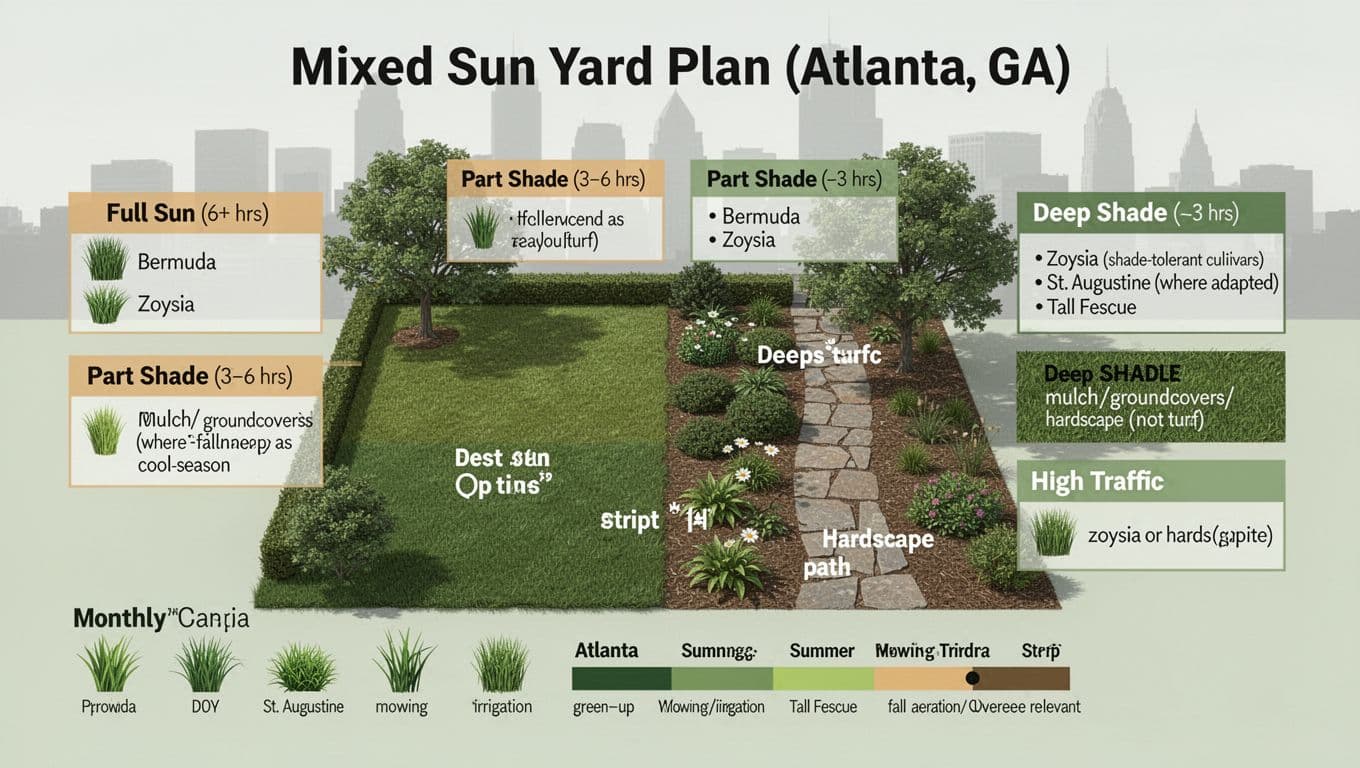
Educational infographic depicting a top-down suburban yard divided into full sun, part shade, deep shade, and high traffic zones with recommended turf options and a monthly care timeline for Atlanta, GA. An AI-created yard zoning plan that matches turf choices to sun, shade, and traffic.
Before you buy seed or schedule sod, measure light. Shade "feels" obvious, but it moves during the day and changes by season.

Use this quick, homeowner-friendly approach:

  1. Pick a normal week (not a stormy one) and check sunlight at three times: late morning, mid-afternoon, and early evening.
  2. Mark areas that get 6+ hours of direct sun, 3 to 6 hours , and under 3 hours .
  3. Circle "wear lanes" (dog runs, gate-to-garage paths, play routes). Traffic can kill shade turf faster than shade does.

Then decide what each zone can realistically support:

Yard zone Sunlight rule of thumb What usually works best in Atlanta What usually fails
Full sun 6+ hours direct sun Bermuda, Zoysia Tall fescue in summer heat
Part shade 3 to 6 hours direct sun Zoysia (more shade-tolerant types), tall fescue (managed carefully) Bermuda that never gets real sun
Deep shade Under 3 hours direct sun Mulch, paths, groundcovers Most turf, even "shade" mixes
High traffic Any light level Zoysia in sun to part shade, hardscape paths Thin turf in tight corridors

If an area stays damp, mossy, and thin every year, it's telling you the truth. Deep shade turf is usually a repeating disappointment.

For a science-based overview of grass selection in Georgia, keep UGA's Lawns in Georgia: Selection and Species bookmarked.

Choosing the right grass for mixed sun yards (warm-season vs tall fescue)

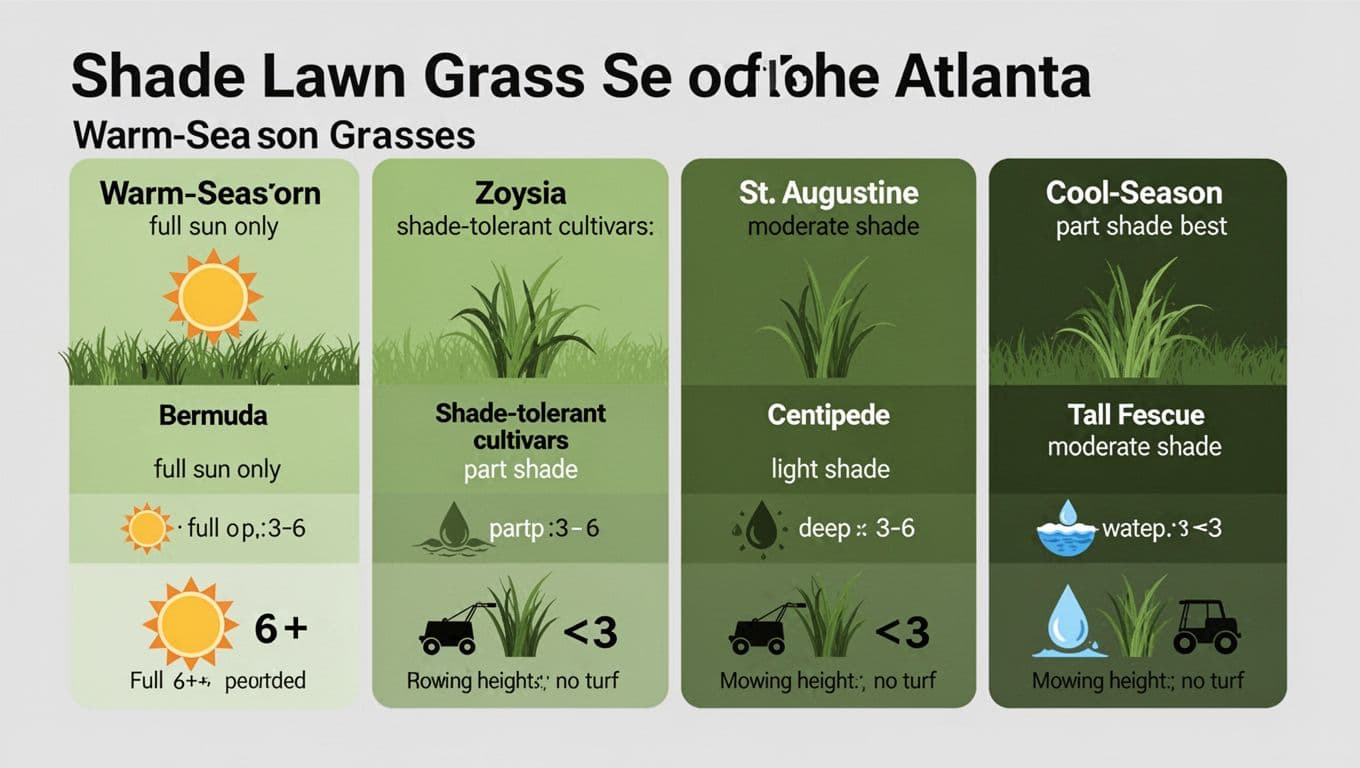
Modern flat infographic comparing warm-season grasses (Bermuda, Zoysia, Centipede, St. Augustine) and cool-season Tall Fescue for shade in Atlanta yards, with icons for sun hours, mowing heights, and water needs using green gradients. An AI-created comparison of common Atlanta turf choices by shade tolerance and care needs.
Atlanta lawns often mix warm-season turf (Bermuda, Zoysia, centipede, St. Augustine) with pockets where tall fescue makes sense. The "best" answer depends on what you want most: summer toughness, shade performance, or year-round green.

Warm-season lawns in shade (Bermuda, Zoysia, centipede, St. Augustine)

Bermuda is a sun lover. If your "shady" area only gets 2 to 3 hours, Bermuda will usually thin out and invite weeds. Save Bermuda for the brightest parts of the yard.

Zoysia is the most common warm-season compromise for mixed sun. In part shade, it can hold density better than Bermuda in many Atlanta yards, but it still needs real light. When you shop, ask about shade tolerance within Zoysia cultivars , because that varies. Don't rely on sales talk alone; ask your sod source what they recommend for your exact light level, and consider purchasing from certified sources listed in the Georgia Certified Turfgrass Buyers Guide (PDF).

Centipede can handle light shade, but it's not a great choice for high traffic. It also tends to look rough when it's pushed too hard with fertilizer.

St. Augustine is often used for warmer, humid parts of the South and can do well in moderate shade in the right site. If you're considering it in the Atlanta area, read UGA's context on St. Augustinegrass growing across Georgia , then match it to your maintenance style and winter exposure.

Tall fescue in shade (cool-season approach)

Tall fescue can be the best option in part shade , especially where warm-season turf struggles to get enough sun. The catch is summer. In Atlanta heat and humidity, fescue needs disciplined watering, mowing, and disease prevention habits.

If you want green in winter and can accept summer stress management, fescue can be a smart "shade zone" grass. If you want low input in July, it's a harder fit.

Shade lawn care rules that keep turf alive in Atlanta

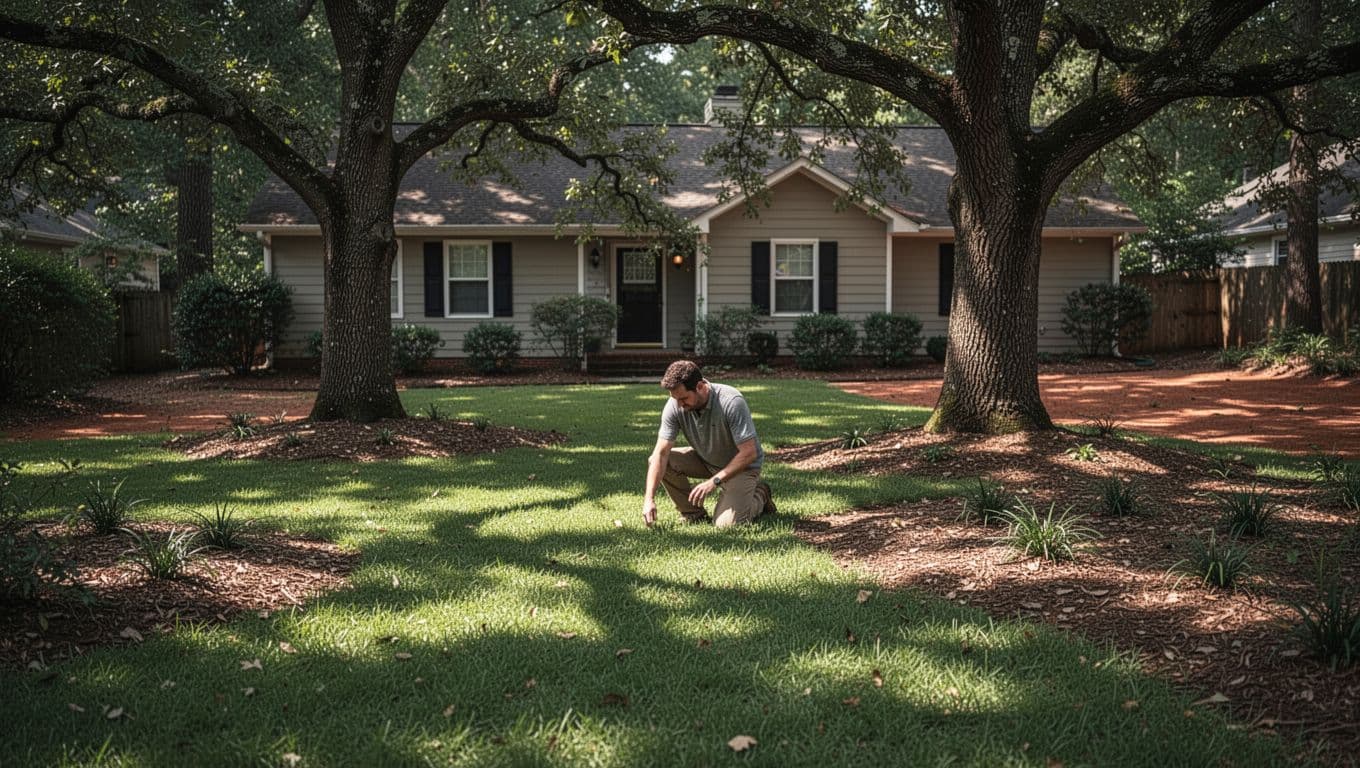
A detailed landscape of a shady Atlanta backyard featuring lush shade-tolerant Zoysia grass blending into mulch beds under mature oak trees, with dappled sunlight and a kneeling homeowner examining the lawn. An AI-created example of a mixed shade yard where turf transitions to mulch near tree trunks.
Once you commit to zones, maintenance gets simpler because you stop "over-fixing" the shade.

Mowing heights: taller isn't always better, but scalping is worse

In shade, you usually want a slightly higher cut than your full-sun areas. Taller leaf blades capture more light. At the same time, you still need airflow to avoid fungus.

A practical starting point is to follow a proven local range, then adjust slowly. Use RW Lawn Co's Atlanta mowing height guide for Bermuda grass, Zoysia, and tall fescue and keep these shade tweaks in mind:

  • Part-shade warm-season turf : stay on the higher end of the recommended range.
  • Tall fescue in shade : keep it tall enough to hold color, but don't let it get floppy and matted.

Also, stick to the one-third rule. If you remove too much at once, shade grass stalls.

Watering windows: shade needs less, and timing matters more

Shaded turf dries slower, so it often needs less frequent irrigation than sunny turf. Overwatering in shade is a fast path to shallow roots and disease.

Use these rules of thumb:

  • Water early morning , around sunrise, so leaves dry quickly.
  • Avoid evening watering in shade. Long leaf wetness invites problems.
  • Check soil, not the surface . Dig a small hole 3 to 4 inches deep. If it's cool and damp, wait.

If you keep seeing patchy thinning after rainy weeks, learn the common signs in the Atlanta summer lawn disease guide and fix moisture and airflow first.

In shade, "more water" rarely equals "more green." It usually equals more fungus.

Tree roots and soil health: don't fight the tree with a shovel

Tree shade often comes with surface roots and dry competition. Be careful with trenching, rototilling, or aggressive grading near mature trees. Damaging roots can stress the tree and create long-term safety issues.

Instead:

  • Keep mulch thin (often 2 to 3 inches), and don't pile it against trunks.
  • If roots are exposed, consider expanding a mulched bed rather than burying roots with soil.
  • Get a soil test before heavy fertilizing, because pH and nutrients change under trees.

A good shade lawn Atlanta setup often comes down to admitting where grass won't win, then making that spot look intentional.

When grass won't work: attractive deep-shade alternatives

If an area gets under 3 hours of direct sun, turf usually turns into a muddy, weedy cycle. Make it easier on yourself:

  • Mulch with stepping stones for access
  • Shade groundcovers and planting beds
  • Small hardscape sitting area or a defined path

Conclusion

Mixed sun yards are normal in Atlanta, so treat them that way. Map light by hours, pick turf that matches the zone, then follow shade-friendly mowing and watering habits. When an area stays in deep shade, choose a bed or path and make it look planned. With the right expectations, your shade lawn Atlanta plan can look clean, green where it counts, and low stress to maintain.

By RW Lawn Co February 25, 2026
A sharp bed edge is like a picture frame for your yard. It makes mulch look cleaner, plants pop more, and mowing feels easier. If you've tried bed edging atlanta style before, you already know the challenge: our heavy rains, fast-growing warm-season grass, and compacted soil c...
By RW Lawn Co February 24, 2026
Atlanta summers don't play fair. Warm nights, sudden storms, and heavy humidity can turn a healthy lawn into a spotted mess fast. That's why a good Atlanta lawn fungicide plan isn't about constant spraying, it's about timing, scouting, and fixing the conditions that keep grass...
SHOW MORE