Atlanta Lawn Disease ID Guide for Summer, brown patch vs dollar spot vs gray leaf spot (what to look for and what actually helps)
Atlanta summers can make a good lawn look guilty overnight. You go to bed after a thunderstorm, then wake up to tan circles, thin spots, or a patch that looks “melted.” In Metro Atlanta and North Georgia, heat plus humidity is the perfect setup for Atlanta lawn disease , but the fix depends on what you’re really seeing.
This guide helps you diagnose brown patch, dollar spot, and gray leaf spot at home using three clues: the patch pattern, the leaf-blade symptoms, and the site conditions. It also covers the most common look-alikes (drought stress, chinch bugs, dog urine, fertilizer burn), so you don’t treat the wrong problem.
Start with a 10-minute backyard diagnosis (before you buy anything)
Most summer lawn disease calls in Atlanta share one thing: the lawn stays wet too long. That can be from evening watering, poor drainage in clay, shade, thick thatch, or mowing too low (or too high) and trapping humidity in the canopy. If mowing height is a question mark, use this Atlanta mowing height guide for Bermuda, Zoysia, and Tall Fescue and adjust slowly.
Here’s the quick process that keeps you honest:
- Look at the pattern from 10 feet away. Circles, scattered coins, or irregular thinning tells you a lot.
- Check early morning (dew time). Some diseases show white, cottony growth only at sunrise.
- Pull a few blades at the edge of the damage. Disease symptoms usually show as lesions on the leaf. Drought stress usually shows as dry, crisp blades without distinct spots.
- Think about the last 7 to 10 days. Hot nights, frequent storms, heavy nitrogen, and long leaf wetness point to fungus.
Common “not-a-disease” imposters in Atlanta lawns:
- Drought stress: Large areas look off-color, footprints linger, blades roll, and the lawn perks up after a deep watering. No distinct lesions.
- Dog urine: Small, fairly round dead spot with a dark green ring around it (extra nitrogen at the edges).
- Fertilizer burn: Straight-line patterns from a spreader, or a sharp edge where product overlapped. Tips look scorched.
- Chinch bugs (often St. Augustine): Irregular yellowing in hot, sunny spots that doesn’t improve with watering. Part the grass near the edge and look for small bugs moving in the thatch.
Once you’ve ruled out the imposters, the leaf symptoms usually point to the real cause.
Brown patch vs dollar spot vs gray leaf spot: what to look for in Atlanta summer
The fastest way to tell these apart is to match patch size and lesion shape . Use the chart, then confirm by inspecting blades from the edge of the patch (not the dead center).
| Disease | Patch pattern in the lawn | What the leaf blades show | Most common Atlanta setup | What helps most |
|---|---|---|---|---|
| Brown patch | Round patches, often 1 to 3 feet wide, may show a darker “smoke ring” edge | Tan lesions with dark borders, water-soaked look | Warm, humid nights, long leaf wetness, lush growth | Reduce night moisture, improve airflow, targeted fungicide if spreading |
| Dollar spot | Small straw spots, 1 to 3 inches, can merge into bigger areas | “Hourglass” lesions, bleached center with darker edge | Warm days, cool dewy nights, low nitrogen stress | Morning-only watering, small nitrogen correction (grass-type dependent), fungicide if severe |
| Gray leaf spot | Irregular thinning patches, can look “scorched” | Narrow rectangular gray-tan lesions with dark margins | Hot, humid weather, high nitrogen, especially St. Augustine | Stop excess nitrogen, reduce leaf wetness, fungicide early if active |
Brown patch (common in tall fescue during humid spells)
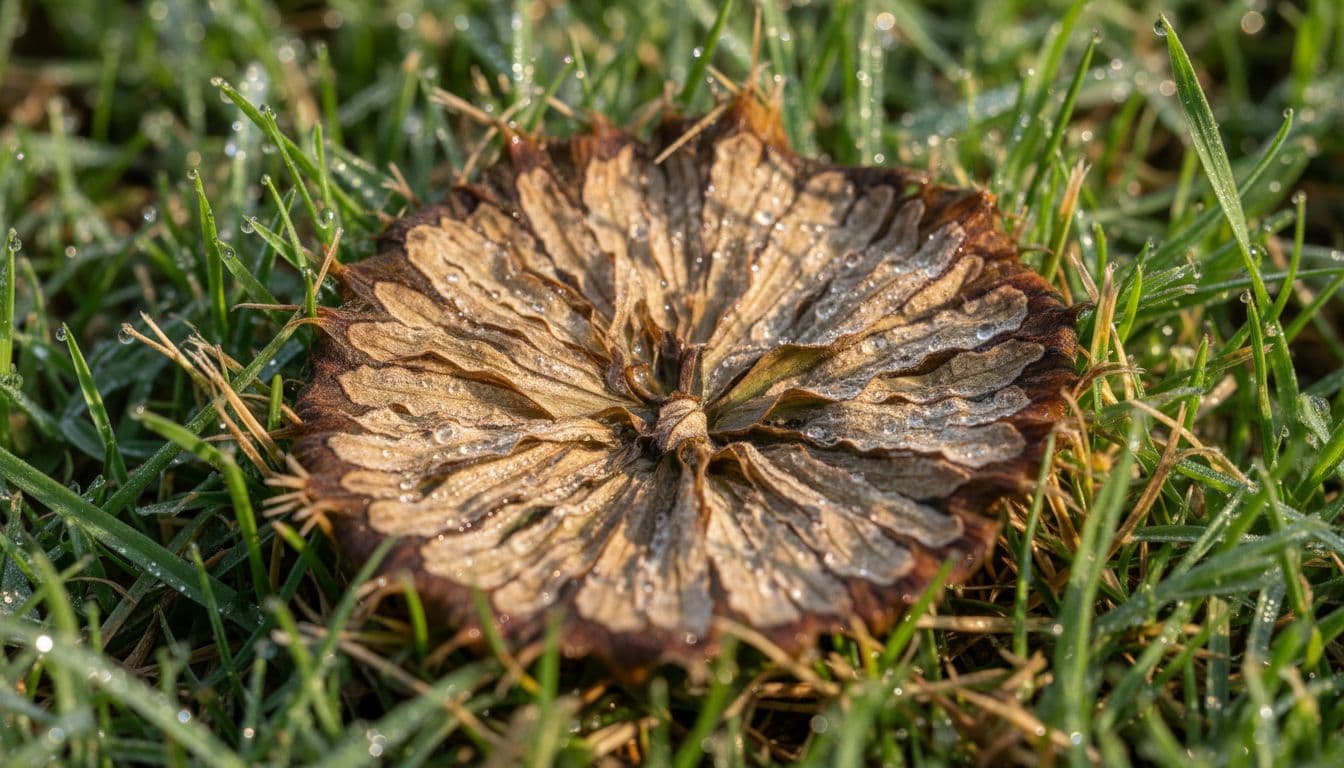 Brown patch often shows circular damage and leaf lesions with dark borders, created with AI.
Brown patch often looks like someone set a hot pot down on the lawn, a tan circle with a darker edge. In early morning dew, that edge can look like a faint smoke ring. Tall fescue in Atlanta is the usual victim because it’s already heat-stressed in summer, and stress makes disease easier.
If you see matted, wet-looking blades and lesions that start as dark spots then turn tan, brown patch climbs to the top of the list. For science-based background, see Clemson’s overview of brown patch lawn symptoms and causes.
Dollar spot (small “coins,” fast to multiply)
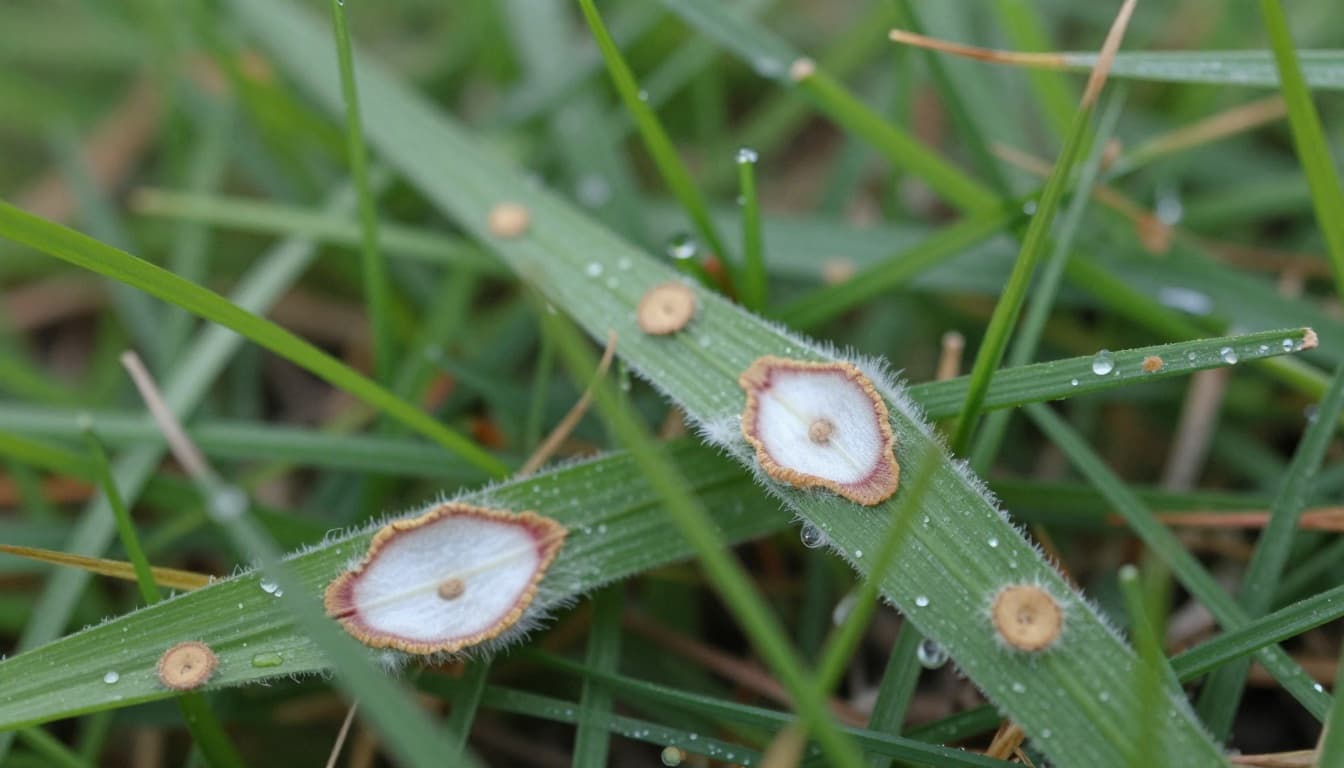 Dollar spot lesions often have a bleached center and darker border, created with AI.
Dollar spot starts small, like someone flicked straw-colored coins across the yard. In the morning, you might spot fine white threads (mycelium) on the blades. The leaf giveaway is the classic hourglass shape, a pale center with a darker reddish-brown margin.
Dollar spot can hit many turf types in Georgia, and it tends to show up when growth is a bit weak. A deeper read on local conditions is in UGA’s dollar spot identification and control guide.
Gray leaf spot (watch St. Augustine in hot, wet weather)
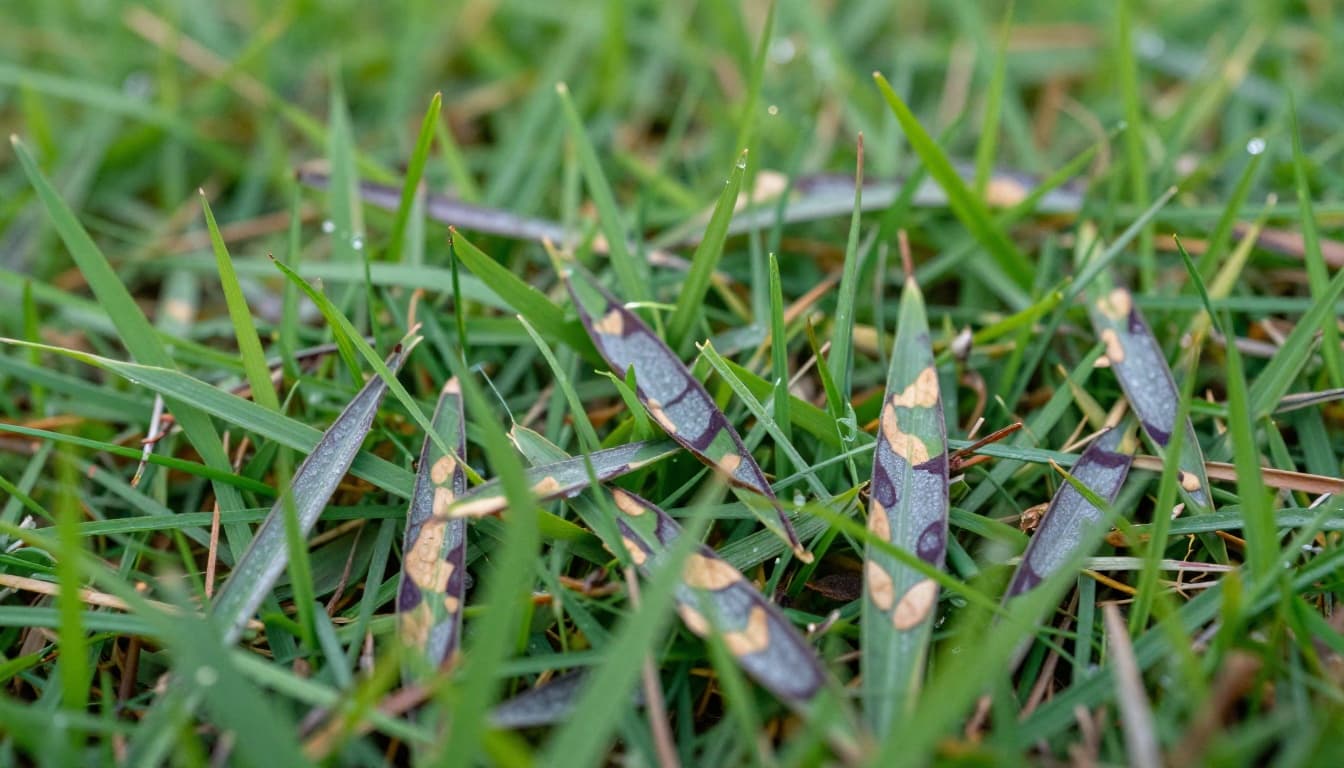 Gray leaf spot commonly affects St. Augustine and creates narrow rectangular lesions, created with AI.
Gray leaf spot is a big one for Atlanta lawns with St. Augustine, especially when summer storms keep the lawn damp and nitrogen is high. The patches often look irregular and thinned, not neat circles. Up close, the lesions are narrow and rectangular, gray to tan in the middle, with a darker margin.
UGA has a clear reference for gray leaf spot symptoms in Georgia turf.
What actually helps (IPM steps that fit Atlanta’s heat and thunderstorms)
If you remember one rule, make it this: dry the leaf faster than the fungus can grow . In Atlanta, that’s usually more effective than dumping more product.
Start with cultural fixes (often enough for mild cases):
- Water only in the early morning , ideally around sunrise. Avoid afternoon and evening irrigation. If thunderstorms are frequent, you may not need irrigation at all that week.
- Water deeper, less often. Frequent light watering keeps humidity high at the leaf surface.
- Ease up on summer nitrogen , especially on tall fescue. On St. Augustine, heavy nitrogen during hot, wet weather can make gray leaf spot worse.
- Mow with a sharp blade and don’t scalp. Scalp marks look like disease and stressed turf gets infected faster.
- Improve airflow and drainage. Trim back dense shrubs at lawn edges, reduce shade where you can, and fix low spots that stay soggy.
- Don’t smother the turf with clumps. If mowing is leaving piles, bag once or mow more often until growth slows.
When fungicide makes sense (and how to use it smarter):
- Use fungicide when disease is actively spreading , when you have valuable turf at risk (new sod, a front yard you care about), or when weather stays hot, humid, and rainy for days.
- Apply early in the outbreak. Waiting until the center is dead is like trying to put out a campfire after it becomes a brush fire.
- Rotate modes of action across applications (FRAC group rotation) to reduce resistance. Don’t repeat the same group all summer.
- Follow the label for watering-in instructions, re-entry time, and protective gear. Keep kids and pets off until the application has dried and the label says it’s safe.
If you’re seeing the same disease every summer in the same spots, the long-term win is usually site correction, not stronger chemicals.
Conclusion
Summer turf problems in Atlanta feel urgent, but good diagnosis slows the panic. Match the patch pattern with leaf-blade symptoms, then correct the conditions that keep the lawn wet and stressed. Most Atlanta lawn disease issues calm down when watering, mowing height, and nitrogen are dialed in. If the damage keeps spreading after you’ve fixed the basics, it’s time for a targeted fungicide plan with proper rotation, or a pro evaluation to find the real trigger.