Atlanta Sprinkler Low Pressure Troubleshooting Guide
A sprinkler system that once threw a full arc can start dribbling without warning. Dry rings around heads, limp spray patterns, and brown turf often point to a water-delivery problem, not a need for longer run times.
This sprinkler low pressure troubleshooting guide helps Atlanta homeowners find the likely cause before a small issue turns into stressed grass, wasted water, or a damaged irrigation line. Start with safe observations, then narrow the problem by checking whether it affects every zone or only one.
Put Safety First Before Inspecting Irrigation Parts
Irrigation equipment combines pressurized water, buried wiring, valves, and sometimes a backflow assembly. Treat every component with care before opening a valve box or removing a sprinkler head.
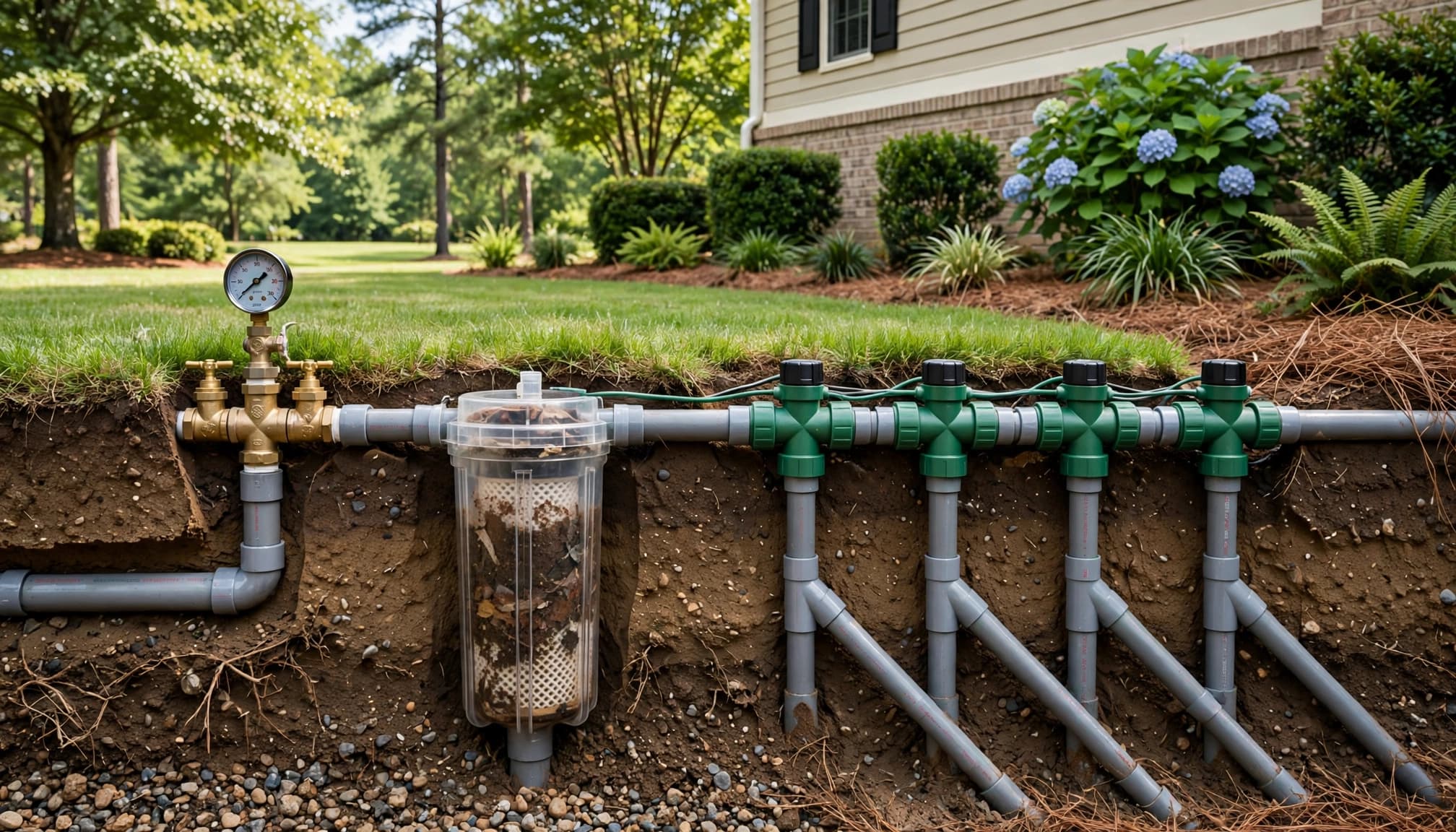
Turn the irrigation controller off before handling valve wiring. If you need to remove a filter, pressure regulator, or sprinkler component, shut off the irrigation supply first and release pressure by running a zone briefly after the supply is closed.
Never loosen a backflow preventer, mainline fitting, or pipe connection while the system is pressurized. Water can release forcefully, and old plastic fittings may crack when disturbed.
Use a simple inspection approach
Keep the first round of checks visual. Walk the lawn while each zone runs and look for weak spray, a geyser, pooling water, or a head that never rises.
Do not dig around irrigation pipe until buried utilities have been marked through Georgia 811. A low-pressure issue sometimes comes from a hidden leak, but probing the soil with a shovel can make the repair far worse.
Weak spray across a lawn may come from lost water underground. A muddy patch, sinking soil, or water bubbling up during a run cycle points to a leak, not a sprinkler-head adjustment.
Take photos or short videos of each problem area. They help you compare zones and give an irrigation professional a clearer picture if the issue needs repair.
Sprinkler Low Pressure Troubleshooting Starts With the Scope
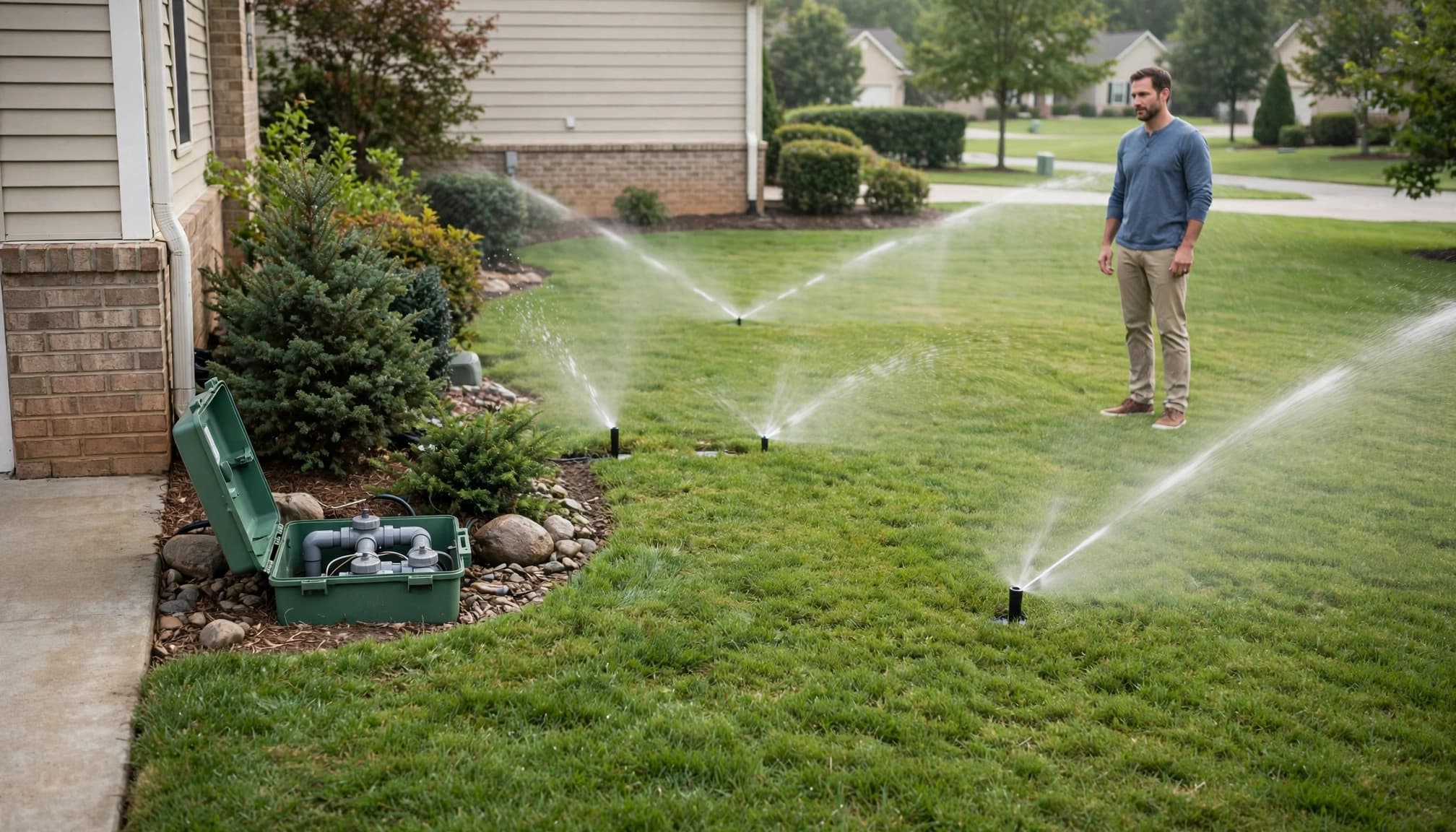
The fastest diagnostic step is determining whether the entire irrigation system has weak pressure or only one zone does. Run one zone at a time, ideally when household water use is low, and watch how the heads perform.
If every zone has short spray distance, slow pop-ups, or weak drip flow, start at the water source and main controls. If the rest of the yard works normally, focus on the affected zone, its valve, pipe, and sprinkler heads.
Record what you see during each zone
A quick set of observations keeps the search organized:
| What you notice | Most likely area to inspect |
|---|---|
| Every zone sprays weakly | Supply shutoff, backflow device, filter, pressure regulator, or mainline leak |
| One zone sprays weakly | Zone valve, damaged lateral line, clogged heads, or too many heads on that zone |
| One head is weak or absent | Nozzle, filter screen, riser, head body, or nearby root damage |
| Pressure starts strong, then falls | Supply restriction, leaking pipe, valve issue, or competing water use |
| Water appears in the yard | Broken pipe, split fitting, damaged valve, or cracked sprinkler body |
The pattern matters more than one weak head. A whole-system symptom requires a different repair path than a single-zone problem.
Check Whole-System Water Restrictions
When low pressure affects the entire yard, begin with the parts that feed every zone. Do not adjust a controller schedule to compensate. Longer cycles won't restore pressure, and they can create runoff in Atlanta's compacted clay soils.
Confirm the irrigation shutoff is fully open
Many systems have a dedicated irrigation shutoff near the water meter, house, basement, garage, or backflow device. A handle that is partly closed can reduce flow to every zone.
Check the handle's position without forcing it. If it resists, leaks, or looks corroded, stop there and schedule a repair. Turning a seized valve can break its stem or fitting.
Also check whether someone recently shut off the irrigation supply for a freeze, plumbing repair, or landscaping project. A valve may have been reopened only partway.
Look at the backflow device and filter
A backflow preventer protects the home's potable water supply from irrigation water. Its shutoff valves must be open for the system to operate correctly. However, do not take the assembly apart unless you are trained and equipped to test it.
Some systems include a filter or screen upstream of the valves. Sediment can restrict flow, especially after plumbing work or when debris enters the line. If the filter housing has a clear homeowner-accessible service method, shut off the supply, release pressure, clean the screen, and reinstall it carefully.
A damaged gasket, cracked housing, or recurring sediment problem calls for a qualified irrigation technician. The same applies to a suspected failed pressure regulator or backflow device.
Household demand can also affect performance. Avoid testing while filling a pool, running a washing machine, or using several fixtures. If the sprinklers only weaken during high indoor water use, document that pattern before calling for service.
Diagnose Low Pressure in One Sprinkler Zone
A single weak zone often has a local restriction or a leak after its valve. Start above ground, because clogged nozzles and broken heads are common and easy to spot.
Clean and inspect sprinkler heads
Turn off the water before removing a nozzle. Lift the riser gently, unscrew the nozzle, and rinse away dirt, mulch, or fine sand. Many pop-up heads also have a small filter screen below the nozzle.
Replace a cracked nozzle or damaged head rather than forcing it back into service. A tilted sprinkler body, broken riser, or head buried under soil may waste most of the zone's flow before it reaches the lawn.
Watch for plant growth as well. Shrubs, ornamental grasses, and thick mulch can block a spray pattern that worked well last season. Trim only what is appropriate for the plant, then test the zone again.
Check for a valve that is not opening fully
Zone valves usually sit in a green or black box near the ground. With the controller off, clear leaves and soil from the lid area, then open the box carefully.
Look for standing water, cracked valve parts, loose wiring, or ants nesting around the solenoid. A valve that hums, chatters, or only partly opens can starve that zone of flow.
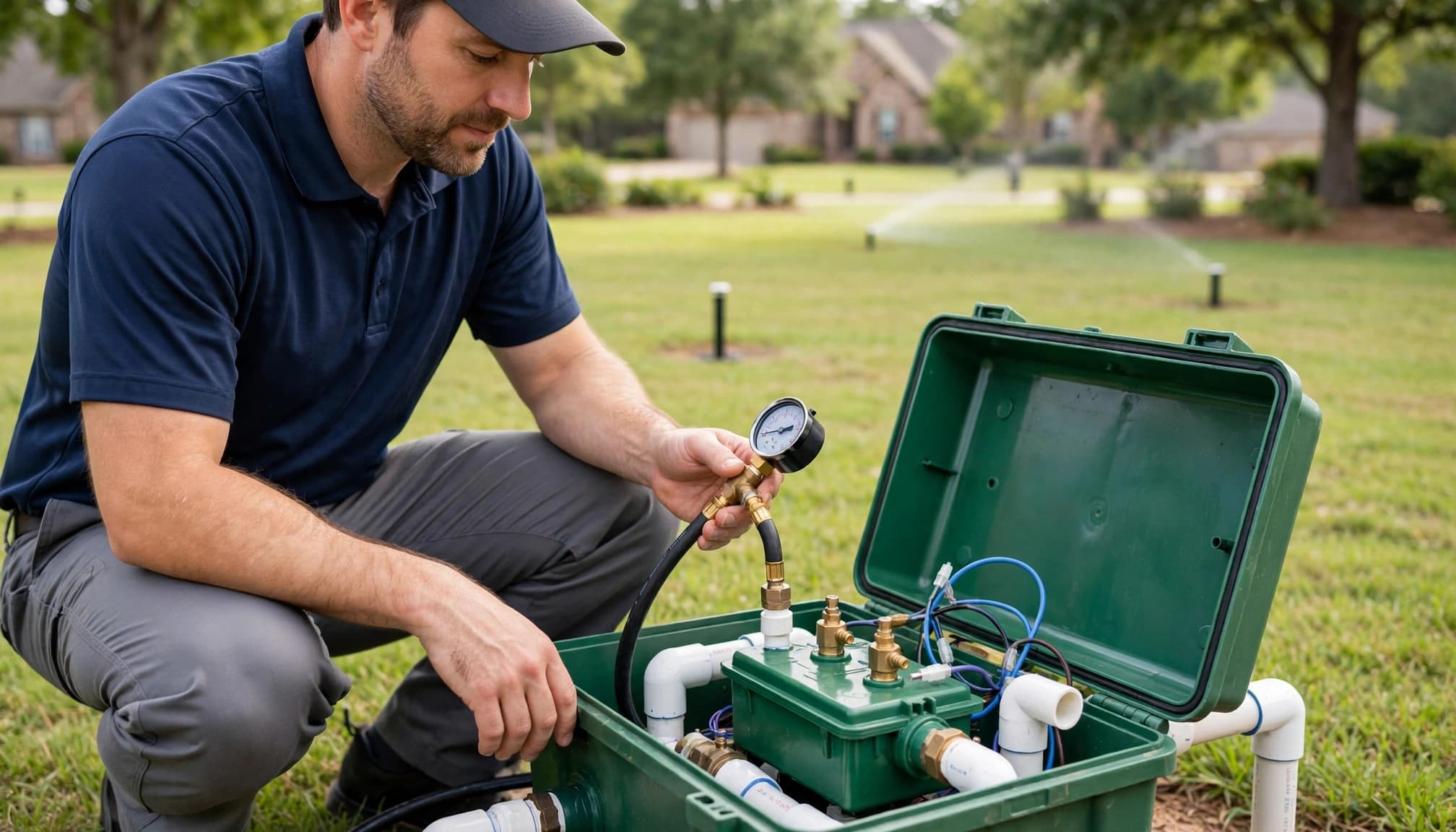
Homeowners can clear loose debris from the box and confirm that wires have not been cut. Internal valve repair, solenoid replacement, diaphragm work, and electrical testing are better left to a professional. Valve components are small, easy to misplace, and often sit beside pressurized pipe.
Consider an underground leak or pipe break
A weak zone with no obvious head issue may have a damaged lateral line. Run that zone for several minutes and inspect the entire area it serves.
Soft ground, unusual green growth, a wet mulch bed, or water flowing from the soil are strong leak clues. Turn the zone off when you find one. Continued operation can wash soil away from roots, paving, and sprinkler fittings.
Tree roots, lawn equipment, settling soil, and past digging can all damage shallow irrigation pipe. A professional can isolate the line, locate the loss, and make a repair without tearing up more turf than necessary.
Check Zone Design Before Changing Parts
Sometimes the system is intact, but one zone asks for more water than the supply can deliver. This may happen after a landscaping update, when extra heads were added, or when a lawn zone now includes both sprays and rotors.
Spray heads, rotors, drip zones, and micro-sprays have different flow needs. Mixing them on one valve can create poor coverage and pressure problems. A zone that runs several large rotors and many spray heads may also exceed the available flow.
Watch the first minute of operation
Turn on the affected zone and stand back. If heads rise and spray normally at first but weaken after a short period, the cause may be a supply restriction or hidden leak. If only the farthest heads are weak, the zone may have a pipe-size, flow, or design issue.
Don't try to correct that problem by closing heads at random. Reducing flow in one area can leave another part of the lawn dry.
A catch-can test shows whether the lawn receives water evenly after pressure problems are fixed. Use the results from an Atlanta sprinkler audit and catch-can test to set practical run times for Bermuda, Zoysia, or tall fescue.
A healthy-looking spray pattern can still leave dry spots. Measure coverage after repairs instead of guessing by how far the water appears to travel.
DIY Checks vs. Repairs for an Irrigation Professional
Basic sprinkler low pressure troubleshooting can save time when the problem is visible and limited. Still, underground pipe, electrical faults, backflow assemblies, and pressure regulation require the right equipment and experience.
DIY checks that are usually reasonable
Homeowners can safely handle simple tasks after shutting off the irrigation supply when needed:
- Remove soil, mulch, and grass that block a sprinkler head.
- Rinse a nozzle and accessible filter screen, then reinstall both carefully.
- Replace a visibly cracked sprinkler head with a matching model and nozzle.
- Confirm the irrigation shutoff is open, without forcing a stuck handle.
- Check the controller schedule and run zones one at a time.
- Look for wet soil, spray obstructions, and obvious water loss.
Keep replacement nozzles matched to the existing head's type and arc. An incorrect nozzle can throw too much water, too little water, or water in the wrong direction.
Call a professional when the repair involves the system core
Schedule qualified service when you find a mainline leak, damaged backflow device, pressure regulator problem, valve failure, severed wire, or recurring drop in pressure. Those issues can affect multiple zones and may require pressure testing, electrical diagnostics, or buried-line repair.
A professional should also inspect zones that cause pavement to shift, soil to wash away, or water to collect near the home's foundation. Water needs a planned path across an Atlanta property, especially where red clay and slopes send runoff quickly across turf.
If low pressure has already stressed the lawn, regular Atlanta lawn care and mowing can help keep recovering grass at an appropriate height while the irrigation repair and watering plan take effect.
Prevent Another Drop in Sprinkler Pressure
Inspect the system at the beginning of the watering season and after major landscaping work. A mower, aerator, trenching project, or new planting bed can damage or block irrigation equipment.
Keep valve boxes visible and free of packed soil. Avoid piling mulch against sprinkler heads or covering lids that you may need to reach during a leak.
Run each zone monthly during the active season. Check the spray pattern, listen for hissing near valves, and look for water where it shouldn't be. Small adjustments are easier than repairing a washed-out line or replacing drought-stressed turf.
Finally, review the controller after rainfall and seasonal changes. A well-maintained system applies water evenly, which protects the lawn without sending excess runoff down the driveway or into neighboring property.
Restore Even Watering Before the Lawn Suffers
Effective sprinkler low pressure troubleshooting follows the water path. First identify whether the issue affects every zone or one area. Then inspect visible heads, confirm supply valves are open, and watch for signs of leakage.
Avoid forcing stuck components or opening pressurized connections. A safe diagnosis protects both your yard and your irrigation system. When the problem involves buried pipe, valves, wiring, or backflow equipment, a qualified repair keeps a manageable issue from becoming a larger yard restoration project.