Atlanta Sprinkler Solenoid Troubleshooting for Stuck Valves
A sprinkler zone that runs nonstop or refuses to start can waste water and damage an Atlanta lawn quickly. Troubleshooting Atlanta sprinkler solenoids starts by identifying whether one zone failed or the entire irrigation system stopped.
The solenoid may be stuck, but the same symptoms can come from a controller setting, damaged field wire, clogged valve, broken sprinkler head, or weak water supply. Use this guide to narrow down the problem safely before approving a valve replacement.
Start by defining what failed
Run a short system check before opening the valve box. Write down the affected zone, what the sprinklers do, and whether the other stations operate normally.
A single dead zone usually points to a local problem, such as:
- A failed solenoid
- A damaged zone wire or splice
- A valve that will not open
- A programming error
- A clogged nozzle or broken sprinkler head
If every zone fails, check the controller display, power source, breaker, GFCI outlet, rain sensor, and irrigation shutoff. The controller may be set to Off, Rain Delay, or seasonal shutdown.
Use the controller's manual-run feature for a short test, usually two or three minutes. Stay outside and watch the affected zone. If the zone runs manually but not automatically, inspect the start time, watering days, station assignment, and run time before assuming the valve has failed.
Take safety precautions before testing
Find the irrigation shutoff before turning on a questionable system. If you find a cracked fitting, major leak, flooded enclosure, or water flowing toward a building or electrical equipment, shut off the supply and stop testing.
Turn off controller power before handling bare wires. Never open a sealed line-voltage compartment unless you're qualified to do so. Stop immediately if you see melted insulation, exposed copper, corrosion, burning, or loose conductors.
Water and electricity can create a dangerous combination, even when irrigation controls use low-voltage wiring. Keep wire connections dry, and use irrigation-rated waterproof connectors for any underground splice.
Open the water supply slowly after repairs or seasonal shutdown. A sudden pressure surge can expose weak fittings or crack aging plastic. Don't leave a valve manually opened while you walk away, because it may run continuously.
For commercial properties, property managers can record symptoms and visible damage, but electrical diagnosis, pressure testing, and valve repairs should go to qualified irrigation personnel. The Atlanta commercial irrigation maintenance guidance also recommends keeping inspection records and separating routine observations from specialized repair work.
Atlanta sprinkler solenoid troubleshooting: identify valve symptoms
A solenoid is the electrically controlled part that tells an irrigation valve to open. A stuck solenoid can imitate a controller or wiring failure, so look for patterns instead of replacing parts immediately.
Signs the valve may be stuck open
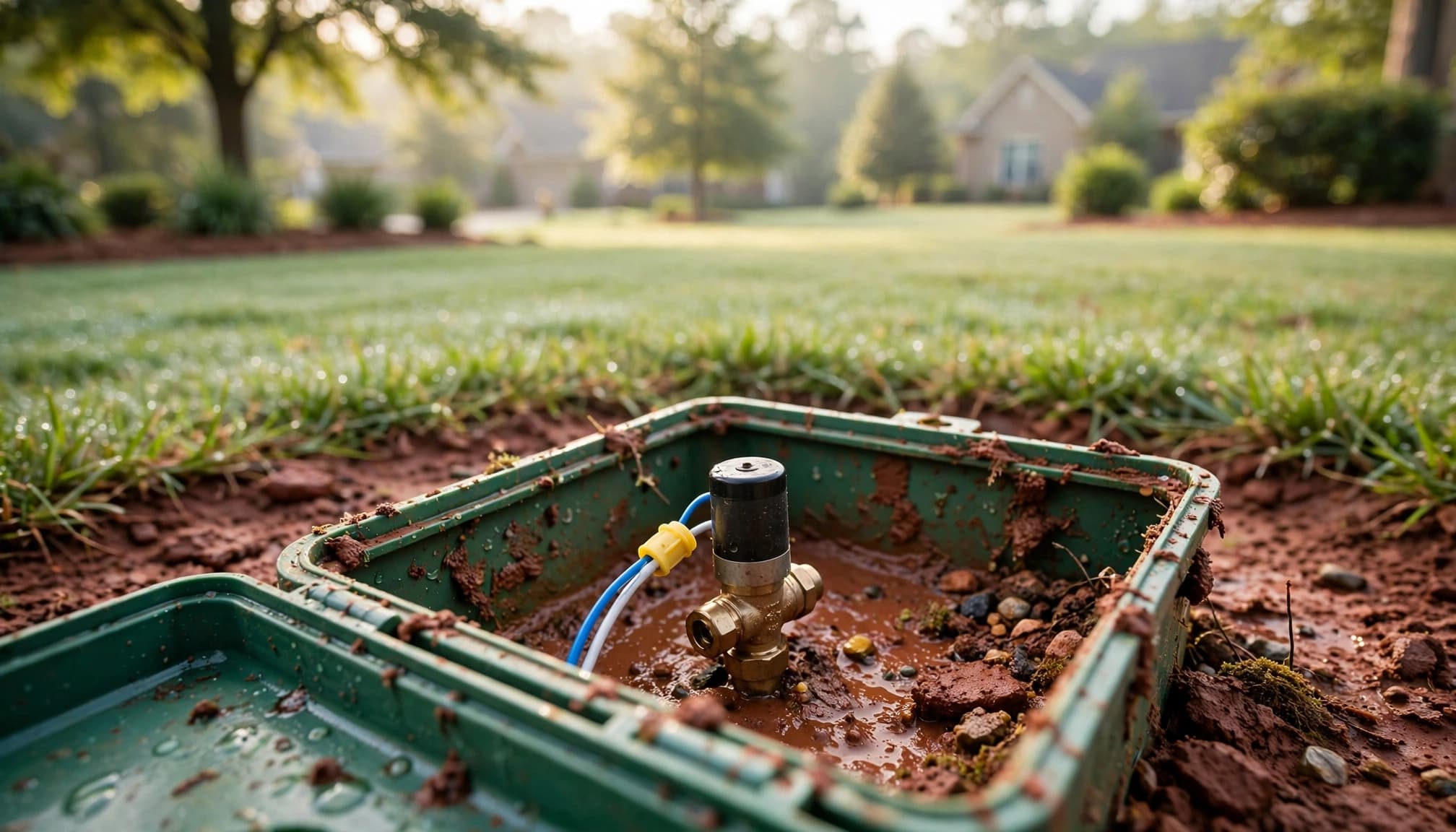
A zone that runs while the controller is off may have a valve that isn't closing fully. Water pooling inside the valve box, a faint hiss, or a constant trickle after the scheduled cycle can point to debris under the diaphragm.
The diaphragm is the flexible internal part that controls water flow. Dirt, roots, or damaged rubber can keep it from sealing. A damaged downstream pipe or sprinkler head can also leave an area wet, so inspect the whole zone.
Signs the valve may not be opening
Sprinklers that never rise, or a zone that stays completely dry, may have a failed solenoid, broken wire, controller output problem, or valve body issue.
Locate the valve box for the affected zone. It may sit beneath grass, mulch, pine straw, or compacted Georgia soil. Look for standing water, chewed wires, loose waterproof connectors, cracked fittings, and signs of recent digging. Avoid pulling on old wires because the connection may break inside the soil.
A solenoid normally has one wire connected to the station wire and another connected to the common wire. With power off, a homeowner with basic irrigation experience may test resistance across the solenoid leads. An open reading or a reading near zero can indicate a failed coil, but resistance varies by model. Compare the result with the manufacturer's specifications.
Separate the controller from wiring problems
The controller sends the operating command, but it doesn't prove that the signal reaches the valve. Good Atlanta sprinkler solenoid troubleshooting follows both the electrical path and the water path.
Check the controller before digging
Confirm the date, current time, start times, watering days, and station run time. A station set to zero minutes or assigned to the wrong program can look like a failed valve.
Check whether a rain sensor, weather feature, seasonal adjustment, or smart-controller setting is preventing the cycle. A controller that runs other stations normally has power and is communicating with at least part of the system, but the affected station can still have a bad output.
If the controller display goes blank, check its power source and breaker. Don't reset the unit until you've photographed or recorded the existing programs, because a reset may erase the schedule.
Check the field wire only if you can work safely
Inspect the station terminal and common terminal for corrosion, a loose conductor, or insulation pulled out of the connection. Turn off controller power before touching bare conductors.
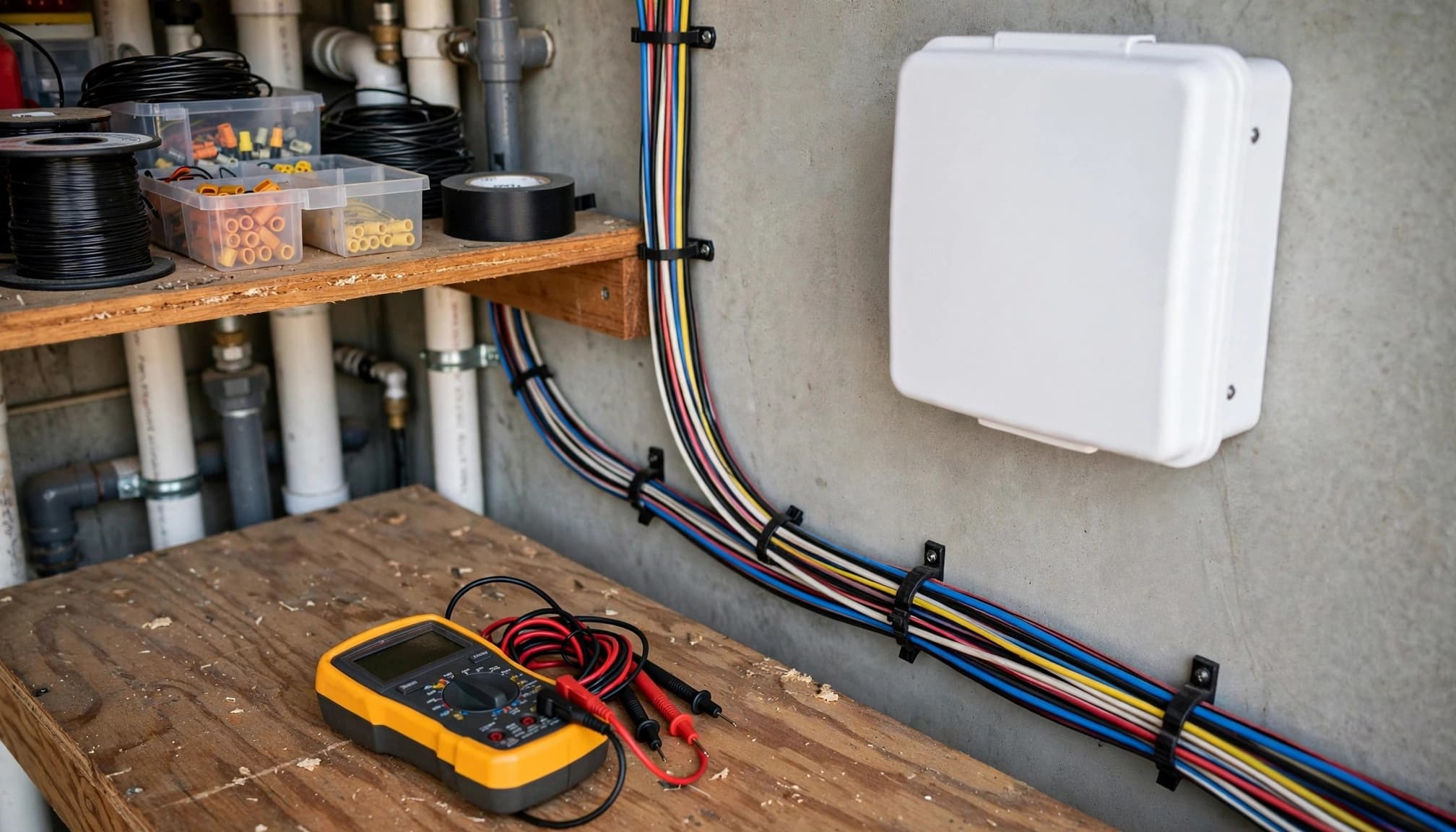
A multimeter can help compare the controller side with the valve side, but electrical testing requires the correct meter setting and safe handling. Power at the controller with no corresponding signal at the valve points toward a damaged field wire or bad splice. A signal reaching the valve while it stays closed points more toward the solenoid or valve body.
Call for service if the wiring disappears underground, several zones fail, the controller trips a breaker, or you find unsafe wiring. Tracing a buried break is broader sprinkler system repair, not a simple solenoid inspection.
Check sprinkler heads, flow, and pressure
A valve can open correctly while the lawn still receives little water. Inspect the affected zone before blaming the solenoid.
Compare the failed zone with a working zone
A zone with no water at any head may have a valve, supply, controller, or wire problem. A single dry area inside an otherwise active zone more often points to a clogged nozzle, broken head, blocked filter, or damaged lateral line.
Walk the zone during a short manual cycle. Look for heads that bubble at the soil line, spray sideways, sit below the soil, or fail to retract. Clear loose dirt carefully, but don't extend the run time to compensate for a damaged head.
Recent mulch, edging, grading, paving, or planting work can cover sprinkler heads and damage shallow pipes or wires. Keep valve boxes accessible and tell the technician about recent yard work.
Watch for pressure and drainage problems
Low pressure may come from a supply restriction, backflow problem, pump, regulator, or excessive flow demand. High pressure can strain fittings and create leaks. Don't adjust pressure blindly to compensate for a clogged nozzle or broken head.
If the whole system has weak flow, inspect the irrigation shutoff and visible backflow area. A defective backflow preventer is a separate repair scope and shouldn't be treated as a simple valve replacement.
A muddy patch, constant wet area, or water moving toward a foundation deserves prompt attention. Shut off the irrigation supply if a valve won't stop or a pipe is visibly broken.
Test Atlanta watering performance after the repair
Fixing a valve doesn't guarantee even coverage. Atlanta's clay soil, slopes, heat, and heavy rainfall can create watering problems even when the equipment works.
Use a catch-can test instead of guessing
A catch-can test places identical containers across a zone to measure how much water the sprinklers apply. It changes a statement such as "the zone runs for 20 minutes" into a measured application rate.
The result helps set runtimes for Bermuda, Zoysia, or tall fescue. It can also reveal poor distribution, blocked heads, and areas receiving too much water.
The Atlanta sprinkler audit and catch-can testing process is useful when one part of a lawn stays dry while another becomes soggy.
Adjust for Atlanta clay and slopes
For a flat Atlanta clay yard, one referenced starting example uses two watering days per week, with two cycles of 12 to 15 minutes and 30 to 60 minutes of soak time between cycles. This is a starting point, not a universal prescription.
On a slope, another example uses three 8-minute cycles instead of one 24-minute cycle. If water runs downhill, shorten each cycle and add another cycle later. Water should soak into the root zone rather than flow into a street or drainage area.
Always consider recent rainfall and current local restrictions. Georgia watering schedules can change with drought conditions, so check the current requirements for your county or water provider.
Decide whether to repair or replace
A failed solenoid doesn't automatically require a new valve assembly. Cleaning debris, replacing a solenoid, rebuilding a diaphragm, or replacing a seal may restore a valve with an intact body.
Full replacement becomes more reasonable when the valve body is cracked, fittings leak repeatedly, threads are damaged, internal parts are unavailable, or previous repairs haven't lasted. Buried valves and crowded manifolds can also expand the work beyond a simple component change.
Before approving service, ask what the diagnostic fee includes. A useful diagnostic should clarify whether the technician will locate the valve, inspect the wiring, test the solenoid, evaluate pressure, and run the zone afterward.
Record the controller brand and model, station number, manual-test result, photos of the valve box, and any recent landscaping work. These details help a technician bring appropriate parts and avoid repeating basic checks.
For homeowners who need broader outdoor upkeep after an irrigation repair, Atlanta residential lawn care services can support ongoing mowing, landscaping, mulch, and property maintenance.
Key takeaways for Atlanta property owners
- A single failed zone usually points to a local controller, wire, solenoid, valve, head, or pipe issue.
- A zone that runs when the controller is off may have debris beneath the valve diaphragm.
- A zone that runs manually but not automatically often has a scheduling, sensor, or station-assignment problem.
- Test the controller, wiring, solenoid, valve body, sprinkler heads, and water flow before replacing equipment.
- Keep electrical connections dry and use direct-burial waterproof connectors.
- Stop testing when you find exposed wiring, major leaks, unsafe electrical conditions, or water near a building.
- Use measured catch-can results and current weather instead of relying on old timer settings.
Frequently asked questions
Can a stuck solenoid stop one sprinkler zone?
Yes, a failed solenoid can prevent a valve from opening or closing. However, damaged wiring, a controller output problem, a clogged valve, or a broken supply line can cause similar symptoms. Compare the affected station with a working zone before replacing the part.
Why does a sprinkler zone keep running after the controller turns off?
The valve may have debris beneath its diaphragm, a damaged internal seal, or a mechanical failure. A controller problem can also send an unintended signal. Shut off the irrigation supply if the zone continues running and water is pooling.
Can I replace an accessible solenoid myself?
A homeowner with basic irrigation experience may be able to replace an accessible solenoid. Shut off irrigation water first, photograph the existing connections, keep the wiring dry, and use irrigation-rated waterproof connectors. Avoid the job if it requires cutting PVC, tracing underground wire, rebuilding a manifold, or diagnosing controller and pressure problems.
Why is one lawn area brown when the valve works?
A brown area can result from a clogged nozzle, broken sprinkler head, poor coverage, compacted soil, pests, or a damaged lateral line. A catch-can test and a walk-through during a short zone cycle can separate irrigation coverage problems from turf or soil problems.
Conclusion
Atlanta sprinkler solenoid troubleshooting works best when you diagnose the whole zone instead of replacing the first part that looks suspicious. Start with the controller and schedule, then follow the wiring, solenoid, valve body, sprinkler heads, water flow, and pressure.
A short, supervised test can reveal a great deal, but exposed wiring, major leaks, buried faults, and unsafe electrical conditions require professional help. The right diagnosis protects your lawn, reduces wasted water, and prevents a small valve issue from becoming a larger property repair.