Atlanta Zoysia Grass Care Calendar by Season
A healthy zoysia lawn in Atlanta depends on timing as much as effort. Apply fertilizer too early, mow dormant grass, or treat heat-stressed turf, and the lawn can struggle for weeks.
Atlanta's warm, humid summers and changing winter temperatures require a flexible schedule. Use the calendar below as a guide, then adjust each task for current weather, soil-test results, and your zoysia variety.
Key Takeaways
- Zoysia usually greens up between late March and May in Metro Atlanta.
- Apply nitrogen only during active growth, never during winter dormancy.
- Base fertilizer choices on a soil test and follow every product label.
- Mow often enough to remove no more than one-third of the blade height.
- Delay herbicides when the lawn is drought-stressed, heat-stressed, or slow to recover.
Atlanta Zoysia Grass Care at a Glance
The following windows fit typical Atlanta conditions, but exact dates can shift by several weeks.
| Season | Typical timing | Main lawn tasks |
|---|---|---|
| Late winter | February to March | Inspect turf, sharpen mower blades, apply pre-emergent when conditions fit |
| Spring | April to May | Begin mowing after green-up, test soil, fertilize based on results |
| Summer | June to August | Mow regularly, water deeply, watch for disease and insects |
| Fall | September to November | Reduce nitrogen, remove leaves, manage weeds, prepare for dormancy |
| Winter | December to February | Avoid fertilizer, limit traffic, inspect drainage and equipment |
Zoysia is a warm-season grass. It grows most actively after soil temperatures rise in spring and slows as temperatures fall in autumn. A lawn in south Atlanta may green up earlier than one in a colder, shaded area north of the city.
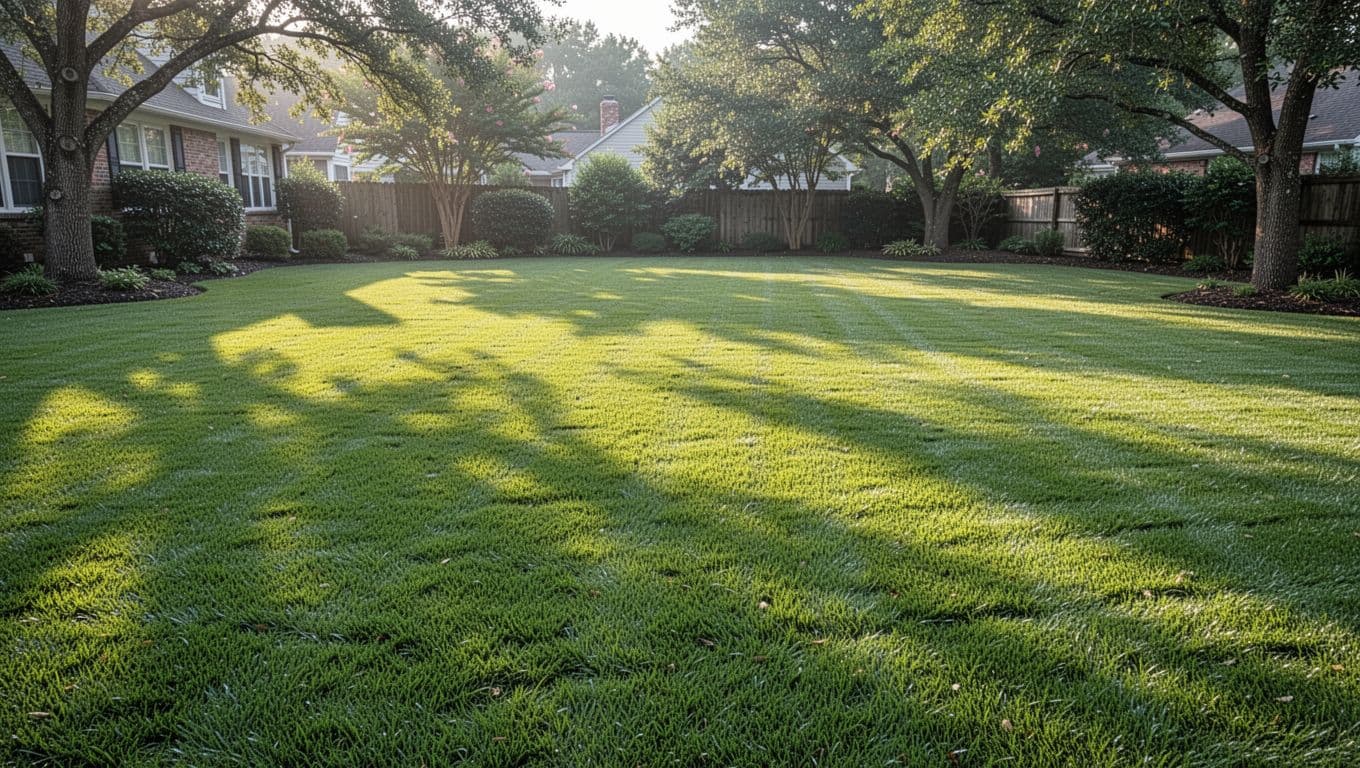
A dense, evenly mowed zoysia lawn can handle Atlanta's summer conditions when watering, mowing, and feeding stay on schedule.
Spring Zoysia Care: March Through May
Spring is the turning point for Atlanta zoysia lawns. The grass may look brown in March, then begin showing green as soil temperatures rise. Don't fertilize at the first hint of color. Wait until the lawn has greened up across most of the yard and is growing steadily.
Late February through March is often the window for a crabgrass pre-emergent treatment. Timing depends on soil temperature, weather, and the product label. Applying too early can shorten protection, while applying after weeds emerge may not provide the expected control. If you plan to seed bare areas, check the label first because some pre-emergent products can interfere with new seed.
Begin mowing when the grass is actively growing and tall enough to cut. Set the mower around 1.5 to 2 inches, depending on the variety, surface smoothness, and mower capability. Zoysia kept too tall can become dense and prone to thatch, while cutting too low can expose soil and damage crowns. Remove no more than one-third of the blade at each mowing.
Spring is also the right time for a soil test. Georgia homeowners can use the University of Georgia soil testing program through their local county extension office. The report can show soil pH, phosphorus, potassium, and other conditions that affect fertilizer decisions. Follow those results instead of applying a routine high-nitrogen product.
Once the lawn is growing well, inspect for thin areas, compacted soil, standing water, and excessive thatch. Core aeration fits late spring or early summer, when zoysia can recover quickly. Avoid aerating soggy soil because it can create more compaction around the holes.
Summer Zoysia Maintenance: June Through August
Atlanta's summer heat tests every lawn. Zoysia handles heat better than some cool-season grasses, but it still needs consistent moisture. A useful target is about 1 inch of water per week, including rainfall, when conditions are dry. Sandy soil may need shorter, more frequent watering, while clay soil benefits from slower cycles that reduce runoff.
Water early in the morning so blades have time to dry. Place a rain gauge or straight-sided container in the irrigation zone to measure output instead of guessing. If water runs onto sidewalks, pause the system, let the soil absorb moisture, and continue with another cycle.
Mow often enough to keep the lawn within its preferred height. Sharp blades create cleaner cuts and reduce the ragged, gray appearance that follows mowing with a dull blade. During a hot, dry spell, raise the cutting height slightly and avoid removing a large amount of leaf tissue at once.
June is often a suitable month for core aeration if the soil is compacted and the grass is growing actively. Follow aeration with the soil-test-based fertilizer plan, not an automatic application. Too much nitrogen can cause fast, soft growth that needs more mowing and may increase disease pressure.
Summer is also when fungal problems can become visible. Look for expanding brown patches, orange dust on blades, or areas that stay wet after irrigation. Check drainage and watering first. Avoid applying fungicides or other treatments without identifying the problem, and always follow the label for timing, rate, protective equipment, and re-entry instructions.
Herbicides deserve extra caution in hot weather. Don't spray a heat-stressed or drought-stressed lawn. Wait for cooler conditions and active recovery, then confirm that the product is labeled for zoysia. A small test area can help identify signs of injury before treating the entire yard.
Homeowners who prefer consistent mowing can arrange residential lawn care and mowing in Atlanta, especially during the weeks when grass growth and summer storms increase the workload.
Fall Zoysia Care: September Through November
Fall care helps zoysia enter dormancy in good condition. In September, continue mowing while the lawn grows, but watch the weather before applying any product. Growth slows as nights cool, so fertilizer timing matters more than the calendar date.
Avoid late-season nitrogen applications that push tender growth before cold weather. A soil test may support other nutrients, such as potassium, but apply only what the report and product label recommend. Never use nitrogen on dormant grass. The lawn can't use it effectively, and the application can increase runoff or encourage weak growth at the wrong time.
Late summer into early fall is a common window for preventing cool-season weeds, including annual bluegrass and henbit. Apply a fall pre-emergent only when the product label allows use on zoysia and weather conditions are suitable. Herbicides can injure turf during drought, high heat, or other stress, so wait until the grass has recovered.
Leaves can block light and hold moisture against the turf. Remove them regularly with a mower, rake, or blower. A thin layer of finely chopped leaves may break down on the lawn, but heavy piles should be removed rather than left through winter.
Continue mowing until growth stops. Lowering the mower sharply for a final cut can scalp the lawn and expose crowns, so keep the height within a safe range. Clean the mower deck and sharpen the blade before storing equipment for winter.
Winter Zoysia Care: December Through February
Zoysia is normally dormant through much of the Atlanta winter. Brown or straw-colored blades are expected when temperatures remain low. Dormancy doesn't mean the grass is dead, and fertilizing won't make it green during cold weather.
Keep nitrogen off dormant zoysia. Wait until spring green-up is widespread and the lawn has resumed active growth. The correct date may be late March in a warm, sunny location or later in April for shaded and colder sites.
Limit traffic when the ground is wet or frozen. Repeated walking, parking, or equipment use can compact soil and damage dormant crowns. If you notice muddy areas, blocked downspouts, or standing water, correct those drainage issues before spring growth begins.
Winter is a good time to service the mower, inspect irrigation heads, and review last season's problems. Mark thin areas, photograph suspected disease or insect damage, and plan a spring soil test. Avoid broad weed treatments simply because the lawn is brown. Only use a product when the label permits winter application on zoysia and the turf is not under stress.
Adjusting the Calendar for Atlanta Weather
A calendar gives you a starting point, but the lawn gives you the final signal. Warm spells can trigger early growth, while a late freeze can pause green-up. Watch soil moisture, blade growth, and overnight temperatures before making major applications.
Zoysia varieties also differ in green-up speed, color, texture, mowing height, and cold tolerance. A fine-textured type may respond differently from a coarser zoysia in the same neighborhood. Shaded turf usually greens up later and dries more slowly than grass in full sun.
Use these checks before each major task:
- Before fertilizer: Review a current soil test and confirm the product rate.
- Before mowing: Check that the grass is growing and the mower blade is sharp.
- Before watering: Measure rainfall and inspect soil moisture several inches below the surface.
- Before herbicide: Confirm the grass and weed are listed on the label, and postpone treatment if turf is stressed.
- Before aeration: Make sure the soil is moist enough to penetrate but not wet enough to smear.
When conditions don't match the calendar, wait. A short delay is usually safer than applying the right product at the wrong time.
Conclusion
Atlanta zoysia grass care follows the lawn's growth cycle. Feed after spring green-up, mow consistently during active growth, water deeply during dry summer weeks, reduce inputs in fall, and leave dormant winter grass alone.
Weather and zoysia variety can shift every date, so use the calendar as a guide rather than a rigid schedule. Healthy timing starts with observation, soil-test results, and careful product-label decisions.