Hairy Bittercress Control for Atlanta Bermuda and Zoysia
Small weeds can spread across an Atlanta lawn before you notice them. Effective hairy bittercress control depends on acting while this winter annual is still young, before its seed pods launch new seeds across the turf.
Hairy bittercress often appears in thin spots, damp soil, mulch edges, and areas disturbed by mowing or construction. Bermuda and zoysia lawns need different care during dormancy and spring green-up, so timing and turfgrass-label compatibility matter. First, identify the weed correctly, then choose removal or treatment based on the season.
Key Takeaways
- Hairy bittercress is a winter annual that grows during Atlanta's cool months.
- Its seed pods disperse mature seeds quickly, so control should happen before flowering and pod formation.
- Hand removal works well for small patches when you remove the entire plant.
- Herbicides must list your specific turfgrass, application timing, and use rate on the label.
- Dense Bermuda or zoysia turf, proper mowing, and improved drainage reduce future outbreaks.
How to Identify Hairy Bittercress in an Atlanta Lawn
Hairy bittercress, or Cardamine hirsuta , starts as a small rosette close to the ground. The leaves form in a circular pattern and have several rounded leaflets along a central stem. Fine hairs may appear on the leaf stems, although the plant can look nearly smooth from a distance.
As temperatures rise, thin flower stems lift above the rosette. Small white flowers appear at the tips, followed by narrow seed pods. Those pods are the main reason a few weeds can become a recurring lawn problem. When mature, they split and scatter seeds several feet from the parent plant.
The weed often grows where the soil stays moist or where turf coverage is weak. Watch for it beside sidewalks, under shrubs, around downspouts, near irrigation heads, and in shaded sections of Bermuda or zoysia. It may also appear in bare soil after grading, tree work, or heavy foot traffic.
Hairy bittercress can resemble chickweed or other cool-season weeds. However, its upright seed pods and low rosette help separate it from similar plants. Correct identification matters because different weeds respond to different control methods.
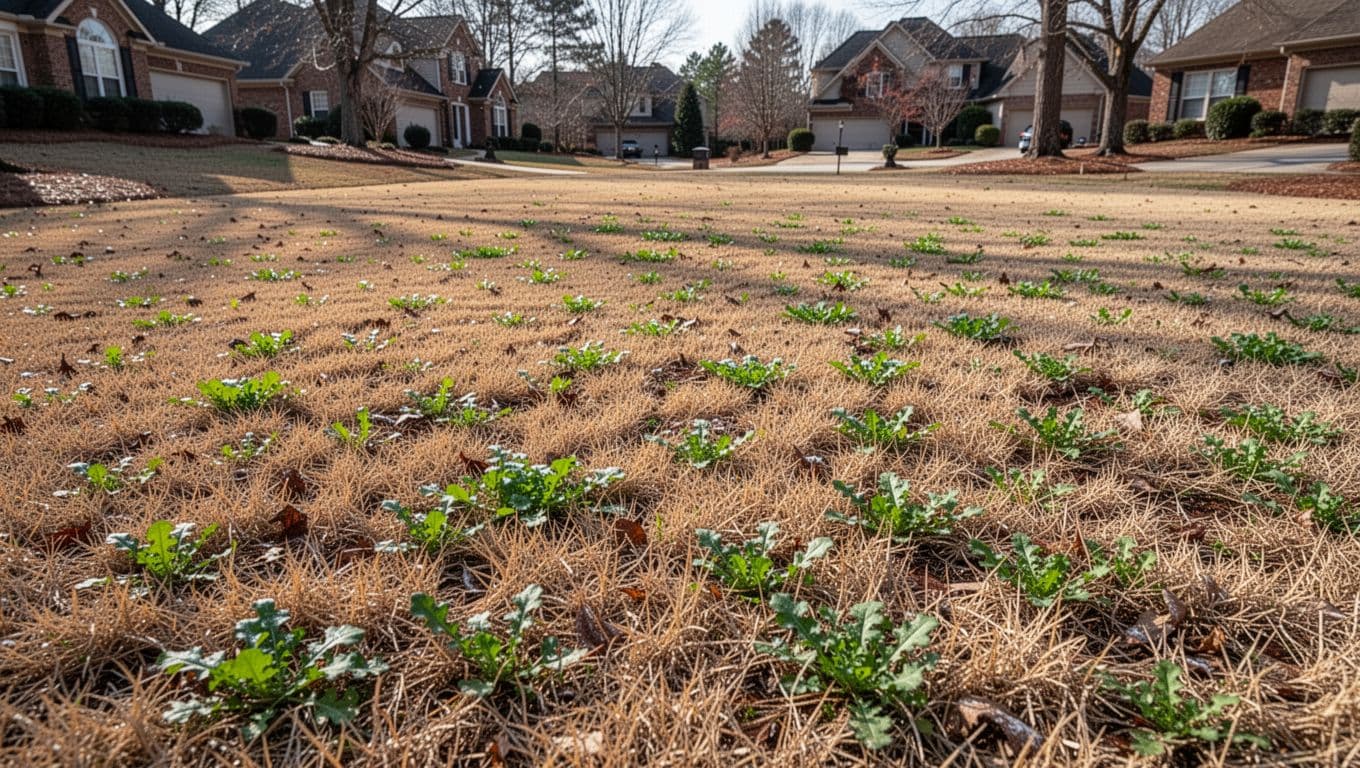
Hairy bittercress may stay low in the turf until flowers and seed pods begin to rise.
Why Seed-Pod Timing Matters
Hairy bittercress is a winter annual , not a permanent perennial weed. It germinates during the cooler part of the year, grows through winter, flowers in spring, and completes its life cycle as warm weather arrives.
In metro Atlanta, new seedlings commonly appear during fall and early winter. Mild weather can extend growth, especially in protected areas beside buildings or under trees. The plants may remain small for weeks, then grow rapidly during late winter and early spring.
Once seed pods mature, pulling or spraying the parent plant won't remove the seeds already scattered in the lawn. A single plant can spread seed when a mower, pet, boot, or strong breeze brushes against it. That makes the period before pod development the most useful control window.
The best time to inspect for bittercress is after several cool rains. Walk the property before the first spring mowing rush. Look for small rosettes rather than waiting for visible flowers.
A flowering bittercress plant is already nearing the end of its life cycle. Remove it before the pods turn narrow, upright, and ready to split.
Mowing can reduce the visible height of the weed, but it doesn't reliably prevent seed production. The plant's low growth habit lets it remain below the mower deck. Regular mowing also won't correct the soil moisture or turf-density problems that helped it establish.
Hairy Bittercress Control in Bermuda and Zoysia Lawns
Bermuda and zoysia are warm-season grasses. They slow down or go dormant during winter, while hairy bittercress continues growing. This difference gives the weed a seasonal advantage, but it also creates risks when using herbicides.
Remove Small Patches by Hand
Hand-pulling is often the safest option when bittercress is scattered through an otherwise healthy lawn. Pull after rain or irrigation has softened the soil. Grip the plant low at the base and remove the crown and as much of the root as possible.
Don't leave flowering plants on the lawn. Place pulled weeds in a yard-waste container or sealed bag, especially when pods are present. Avoid shaking the plants over the turf.
For larger patches, use a narrow weeding tool to loosen the soil around the crown. Then reseat the surrounding grass if pulling leaves small holes. Bermuda can fill minor gaps during active growth, while zoysia may recover more slowly.
Use Herbicides Carefully
Selective broadleaf herbicides can control hairy bittercress, but the product label must approve use on your exact turfgrass. A product labeled for Bermuda isn't automatically safe for zoysia. Some formulations also restrict use during spring green-up, hot weather, drought stress, or periods of active turf injury.
Before applying any treatment, check these details:
- The label must list Bermuda, zoysia, or the specific variety and use site.
- The application rate must match the lawn area and product instructions.
- The label must allow treatment during the current turf growth stage.
- You must follow re-entry, watering, mowing, and weather restrictions.
- Keep spray away from ornamental plants, vegetable gardens, ponds, and storm drains.
Avoid spraying when the grass is stressed by drought, frost, disease, scalping, or recent installation. Zoysia can be more sensitive to certain broadleaf herbicide combinations, especially when temperatures rise and the grass begins active spring growth. Bermuda also needs care during transition out of dormancy.
A professional lawn-care technician can identify the weed, measure the area, and select a treatment with the correct turf label. If you want consistent mowing and turf monitoring, Atlanta residential lawn care can help keep thin areas from becoming repeat weed sites.
Treat the Cause, Not Only the Weed
Bittercress favors open soil and persistent moisture. Chemical control may remove the current plants, but new seedlings can return if the site remains thin and wet.
Check whether downspouts discharge onto the lawn. Adjust irrigation heads that spray sidewalks or run longer than needed. Tree shade, compacted soil, and heavy thatch can also slow turf recovery.
Bermuda usually performs best with strong sunlight and active summer growth. Zoysia handles more shade than Bermuda, but dense shade can still reduce coverage. Aeration, correct mowing height, and seasonal fertilization can help the grass compete once it resumes growth.
Don't cover lawn patches with thick mulch as a substitute for turf repair. Mulch is useful in beds, but it can create a favorable growing area for bittercress when it stays wet and touches the grass edge.
A Seasonal Action Plan for Metro Atlanta
Atlanta's weather changes quickly, so use the calendar as a guide and adjust for soil conditions and turf growth.
September through November
Inspect thin areas after fall rain. Remove volunteer plants while they are small and before winter growth accelerates. Repair bare spots when conditions are suitable for your turf, and correct irrigation or drainage problems.
Bermuda is entering dormancy during late fall, while zoysia may remain green longer in mild weather. Avoid applying a weed treatment simply because the lawn is changing color. Confirm that the label allows use on the turf and during that seasonal transition.
December through February
Search for low green rosettes during mild winter stretches. Hand-pull scattered plants before they produce flowers. Keep leaves cleared from the lawn because thick leaf cover can weaken turf and hide emerging weeds.
Herbicide timing depends on the product and the grass condition. Dormant Bermuda may have different label allowances than dormant zoysia. Frost, freezing temperatures, saturated soil, and sudden warm spells can all affect an application decision.
March through April
This is the main inspection and control period. Hairy bittercress may flower quickly as days lengthen. Remove or treat plants before seed pods mature and split.
Do not mow over visible flowering patches and assume the problem is solved. Mowing may spread mature seed and leave the low rosette behind. Instead, remove plants first when practical, then mow with clean equipment.
Spring green-up deserves extra caution. If Bermuda or zoysia is beginning to produce new growth, follow all label restrictions for newly emerging turf. Never increase the rate to compensate for a missed fall application.
May through August
Most hairy bittercress plants decline as summer heat arrives. Focus on turf recovery rather than repeated treatment. Fill bare areas, manage irrigation, and maintain the mowing height recommended for your grass.
Clean mower decks after working through weedy areas, especially when seed pods have formed. Keep a record of locations where bittercress appeared so you can inspect those spots earlier the following fall.
When Professional Lawn Care Makes Sense
A few isolated plants are manageable for many homeowners. Professional help becomes useful when bittercress covers several areas, returns every year, or grows among ornamental beds and turf with different treatment needs.
A lawn-care provider should begin with identification and a site inspection. The plan should account for Bermuda or zoysia type, shade, drainage, soil moisture, mowing practices, and the current growth stage. Any herbicide recommendation should include the product label, approved turfgrass, application rate, timing, and precautions.
Ask how the service will handle mature plants with seed pods. Treatment after seed dispersal may improve the current appearance, but it won't remove seeds already present in the soil. Good follow-up includes monitoring during the next cool season, not only a one-time spray.
Conclusion
Hairy bittercress gets ahead of Atlanta homeowners when its low rosettes go unnoticed through winter. Since it's a winter annual, the strongest control window comes before spring flowers and seed pods mature.
Hand-pull small patches, improve wet or thin areas, and use herbicides only when the label approves the treatment for your Bermuda or zoysia lawn. Early control before seed dispersal is what keeps a few winter weeds from becoming next season's larger problem.