Landscape Rock Installation Cost Atlanta: 2026 Guide
A new rock bed and durable ground cover can improve curb appeal quickly, but the landscape rock installation cost Atlanta homeowners see depends on much more than the stone itself. Delivery distance, bed size, soil preparation, access, and labor can change the final estimate by hundreds of dollars.
For 2026, plan on roughly $3 to $6 per square foot for professionally installed landscape rock in many residential projects across the metro atlanta area. Material-only pricing is lower, while small beds, difficult access, drainage work, and extensive removal can push the total higher.
Key Takeaways
- Atlanta homeowners often pay $50 to $150 per ton for straightforward installed rock , while broader full-service projects commonly run $3 to $6 per square foot .
- Material-only costs vary by stone. Common delivered gravel may cost $15 to $30 per cubic yard , while river rock often costs $45 to $130 per ton .
- The overall installation cost for a 500-square-foot bed covered 3 inches deep may average about $700 , with actual project totals ranging roughly from $300 to $1,600 .
- Red clay, slope, drainage problems, narrow gates, and hand-carry access can add more preparation and labor.
- Ask for separate prices for rock, delivery, removal, grading, fabric, edging, and installation before approving the work.
Landscape Rock Installation Cost Atlanta Homeowners Can Expect in 2026
The most useful way to budget a rock project is to look at both square-foot pricing and total project size. Contractors may use either method, depending on the material and the work involved.
Current pricing information places straightforward landscape rock installation cost Atlanta projects around $50 to $150 per ton , including delivery, labor, supplies, and equipment. A broader residential planning range is $3 to $6 per square foot . That square-foot range often fits jobs that include preparation, spreading, and basic finishing rather than material delivery alone.
| Project size or pricing method | Typical 2026 planning range |
|---|---|
| Common gravel, material plus local delivery | $15 to $30 per cubic yard |
| River rock, material only | $45 to $130 per ton |
| River rock, material by cubic yard | $50 to $160 per cubic yard |
| Straightforward installed rock | $50 to $150 per ton |
| Installed rock by surface area | $3 to $6 per square foot |
| Small completed rock project | $250 to $1,500 |
| 500-square-foot river-rock bed, 3 inches deep | About $300 to $1,600 |
These figures are estimates, not fixed Atlanta rates. Actual pricing varies by material availability from your local landscaping supplier, delivery location, site access, preparation needs, and contractor choice. A job in Sandy Springs with a wide driveway may price differently than a similar bed behind a tight side gate in Decatur.
Homewyse's May 2026 national estimate for landscape rock installation cost is higher, at roughly $294 to $535 per ton. That figure can reflect different labor assumptions, project conditions, and minimum charges. Comparing quotes by ton alone can create confusion because one contractor may include grading and cleanup while another may quote only spreading.
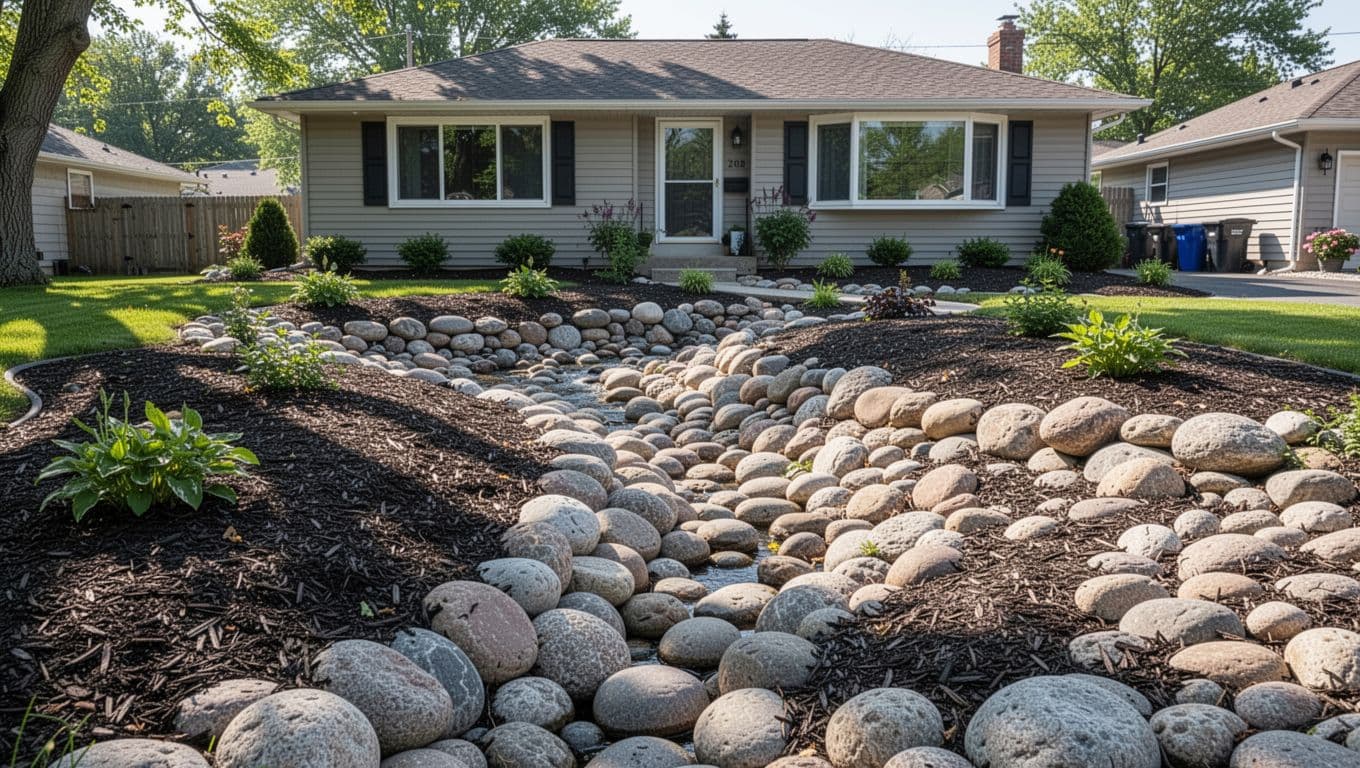
River rock and mulch can create a defined front-yard bed, but the preparation underneath affects both appearance and cost.
Material-Only Costs Versus Professionally Installed Costs
Buying rock yourself can look inexpensive at first. The material may be listed by the ton, cubic yard, pallet, or bag. However, the final DIY cost also includes dump truck delivery, unloading, tools, fabric, edging, soil removal, and your time.
For common gravel and basic aggregate and decorative gravel, Atlanta delivery guides report about $15 to $30 per cubic yard , including a standard delivery fee in some cases. That range usually applies to basic bulk materials rather than premium decorative stone. River rock costs more because of its appearance, sorting, shape, and weight. Current pricing guides place river rock around $45 to $130 per ton or $50 to $160 per cubic yard .
Professional installation adds several services:
- Removing weeds, old mulch, or existing rock
- Hauling away unwanted material
- Smoothing or grading the bed
- Installing landscape fabric when appropriate
- Moving heavy rock with wheelbarrows or equipment
- Spreading and raking the material evenly
- Creating clean edges around turf and plants
- Sweeping nearby pavement and removing excess debris
A contractor also handles the risk of ordering the wrong amount. Too little rock leaves thin spots and exposed fabric. Too much material creates unnecessary cost and can bury plant crowns or cover drainage paths.
Small jobs often carry a minimum service charge. A contractor still needs to schedule labor, load tools, travel to the property, and dispose of waste. That is why a 100-square-foot bed may cost more per square foot than a 1,000-square-foot installation.
If you prefer a DIY installation, ask your local landscaping supplier whether the delivery truck can reach the intended drop point. A load dumped at the curb may create hours of hand transport. On a sloped Atlanta lot, that labor can quickly erase the savings.
How Rock Type Changes the Atlanta Price
The right rock depends on the bed's purpose, the home's style, and how much maintenance you are willing to handle. Price also changes with color, size, source, and availability. Homeowners often choose stone instead of organic options when they want a lasting ground cover or a reliable mulch alternative.
Pea Gravel and Crushed Gravel
Pea gravel is rounded, affordable, and useful for paths, seating areas, drainage zones, and informal beds. Property owners also use decomposed granite alongside pea gravel for paths and high traffic areas because it compacts into a firm walking surface. Its small size makes pea gravel easy to spread, but it can migrate into turf during heavy rain or foot traffic.
Crushed gravel or crushed granite is more angular. You might also consider crushed limestone as a durable base or driveway material. The pieces lock together better, which helps on walkways and slight slopes. Common gravel is usually less expensive than decorative river rock, especially when ordered in bulk.
River Rock
River rock has smooth, rounded stones that create a softer appearance around shrubs and entry beds. It often costs more than basic gravel. Larger stones also require more time to place by hand.
River rock works well where you want a permanent bed surface, but it does not improve poor drainage by itself. Water still follows the existing grade. If the bed holds water beside the foundation, the project may need grading or a drainage solution before rock goes down.
Decorative Stone and Granite
Decorative granite, white stone, red stone, lava rock, and mexican beach pebbles can raise the material budget. Lava rock provides a lightweight, porous choice, while mexican beach pebbles offer a smooth, premium finish. Some colors of natural stone are available only through certain suppliers, and availability may change during the season.
Light-colored stone can brighten a shaded bed, although it may show leaves and soil more clearly. Darker rock can blend with evergreen plantings but may become hot in full summer sun. Ask to see a sample in the actual bed before ordering several tons.
Boulders and Feature Stones
Large boulders and feature elements are usually priced separately from bulk rock. Contractors often use bull rock in drainage channels alongside large natural stone pieces for stability. Equipment access matters because a boulder may require a skid steer, mini excavator, or special placement. The quote should state whether delivery, machine time, placement, and final grading are included.
For a project that combines stone with a wall or grade change, review an Atlanta retaining wall cost guide before setting a budget. A retaining wall is a structural project, not a simple rock bed upgrade.
Atlanta Site Conditions That Raise Installation Prices
Atlanta properties often have dense red clay, mature tree roots, slopes, and stormwater problems. These conditions do not affect every job, but they can change the scope quickly.
A bed with loose soil and existing mulch may need only light raking before installation. A neglected bed filled with weeds, roots, compacted clay, or old landscape fabric needs more labor. When working on front-yard areas or established flower beds, removing old rock is especially expensive because workers must separate, load, and haul heavy material.
Access is another major factor. If a truck can dump near the bed, the crew can move material faster. Narrow gates, fences, retaining walls, steps, and backyard slopes may require wheelbarrow work. The farther workers must carry each load, the more labor the project needs.
Drainage can add another layer. Rock beds should direct water away from the house, not trap it against the foundation, while also supporting proper erosion control on sloped lots. A contractor may recommend regrading, a swale, a catch basin, a French drain, or downspout adjustments. Those items should appear as separate line items because they are not included in every basic installation.
Tree roots need care as well. Heavy excavation near mature trees can damage roots, while piling rock too high around trunks can hold moisture against the bark. Good installation leaves proper clearance around trunks and keeps soil and rock below the root flare.
Rock is a surface material, not a cure for standing water. If water collects before installation, correct the grade or drainage plan first.
How Much Rock Does a Typical Atlanta Bed Need?
Material quantity depends on square footage and depth. Most decorative rock beds use a depth of about 2 to 3 inches, although paths and areas with heavy foot traffic may need a different design.
Use this basic calculation:
Cubic yards needed = square feet x depth in feet divided by 27
For a 500-square-foot bed at 3 inches deep:
- 3 inches equals 0.25 feet
- 500 x 0.25 = 125 cubic feet
- 125 divided by 27 equals about 4.6 cubic yards
The exact tonnage depends on the stone's density and size, with conversion rates varying per ton. That 500-square-foot bed featuring river rock may require roughly 5 to 7 tons, but the supplier or contractor should confirm the load for the selected material.
Ordering 5 percent to 10 percent extra can help cover irregular edges and minor settling. However, don't order a large surplus without checking the return policy. Many bulk suppliers won't accept leftover rock, and you may need to pay for a second delivery if the first load is short.
Depth also affects plant health. Rock placed too deeply in flower beds can cover low-growing plants, bury edging, and hold heat around shallow roots. Before installation, mark irrigation heads, lighting wires, downspouts, and utility covers. A crew can then set the finished grade without covering access points.
A professional quote should state the assumed depth. "Install river rock in front bed" is too vague. A clearer scope names the material, stone size, estimated quantity, coverage area, depth, edging, fabric, removal, and cleanup.
What Professional Rock Installation Usually Includes
A complete installation starts with a site review. The contractor measures the beds, checks access, identifies drainage concerns, and confirms the material choice. This visit also helps uncover obstacles that aren't obvious from a phone description.
Preparation may include mowing or trimming adjacent turf, pulling weeds, removing mulch, scraping loose soil, and shaping the edges around existing flower beds. If the ground slopes toward the home, the contractor should discuss grading before placing decorative material.
Landscape fabric is common in rock beds, but it isn't a cure-all. Fabric can separate rock from soil and slow weed growth. It won't stop every weed because seeds can land on top of the rock. It also doesn't replace proper soil preparation.
Edging gives the bed a finished line and keeps rock from spreading into grass. Options include metal, plastic, concrete, natural stone, and brick. Basic plastic edging costs less, while rigid borders and stone edging require more material and labor.
After preparation, workers place and spread the rock to an even depth. They may use wheelbarrows, rakes, shovels, or compact equipment depending on the site. Large feature stones, stepping stones, or gravel spread around an outdoor fire pit require deliberate placement so they look natural and don't create trip hazards. Contractors can also tie these installations into a nearby stone walkway for a cohesive look.
Cleanup should include removing excess soil and debris from paved surfaces. Ask whether hauling is included. Some quotes cover removal but charge disposal separately, especially when workers must haul old rock or concrete.
The final walk-through should confirm that irrigation heads remain visible, water has a clear path, and the rock line meets the turf cleanly. Take photos of underground utilities and irrigation locations before future bed work so later maintenance crews know where to avoid digging.
Rock Beds, Mulch, and Larger Bed Renovations
Rock isn't automatically the best choice for every planting bed, but it serves as a durable mulch alternative in areas where you want a longer-lasting surface and don't need to refresh the material each year. It works well to complement a stone walkway, dry creek beds, mailbox areas, and low-maintenance entry beds, or even as a clean surface surrounding a backyard fire pit.
Mulch usually costs less to install and is easier to move when plants grow. It also adds organic material as it breaks down, while rock stays in place and can expose soil during heavy rain. For a direct comparison, review this guide to Atlanta mulch installation pricing for 2026.
Rock may be a poor fit when flower beds contain many annuals or perennials that need frequent division. It can also be less comfortable around play areas, and choosing stone as a ground cover makes debris cleanup more difficult beneath deciduous trees. Leaves settle between stones, and removing them takes more effort than blowing a smooth mulch bed, though small accents like pea gravel work nicely along tight borders.
A full bed renovation costs more because the contractor is changing the planting area, not only adding a surface. The work may include removing plants, amending soil, installing new edging, reshaping the bed, adding shrubs, correcting drainage through dry creek beds, and spreading rock. For broader scope planning, compare the Atlanta landscape bed renovation cost guide.
Combining rock with mulch can control the budget. Use rock in the visible border or drainage zone, then mulch around shrubs and trees where organic material benefits the soil. The two materials should have a clear edge so the bed doesn't look mixed or unfinished.
Practical Ways to Control the Project Cost
Start with the bed shape. Straight or gently curved edges require less cutting, handwork, and edging than a bed with many tight curves. You don't need to remove every curve, but simplifying the layout can reduce labor without changing the overall design.
Choose a locally available stone. A specific imported color may require longer delivery or special ordering, so try to pick materials stocked by a local landscaping supplier instead. Selecting regional decorative gravel or common options like crushed granite, crushed limestone, lava rock, and bull rock helps keep material costs manageable.
Keep preparation separate from optional upgrades. A quote may include basic weed removal, while extensive excavation, soil replacement, drainage, or old-rock disposal costs extra. Separating these items helps you decide where the budget matters most.
Use bulk material for larger beds. Bags are convenient for small repairs, but the per-unit price rises quickly on a full installation. Arranging for a dump truck delivery also reduces packaging waste and usually gives the crew a more consistent material supply while helping you minimize a separate delivery fee.
Schedule the work when access is open. Move vehicles, toys, planters, and stored items before the crew arrives. Clear access helps workers reach the beds and lowers the chance of damage to nearby property.
Finally, don't use cheap rock as a substitute for needed grading. Saving money on preparation can leave you with puddles, exposed fabric, washed-out edges, or rock against the house. Fixing those issues later usually costs more than addressing them during installation.
How to Compare Rock Installation Quotes
Get at least two detailed estimates when the project is more than a small refresh, especially if you want to understand the complete installation cost before work begins. Each quote should describe the same coverage area, depth, rock type, and preparation work. Otherwise, the lowest price may only reflect a smaller scope.
Ask these questions before signing:
- What type, color, and size of rock is included?
- How many tons, or how many cubic yards per ton, will the crew install?
- What depth does the estimate assume?
- Does the price include delivery and placement?
- Will workers remove old mulch, rock, weeds, or soil?
- Is landscape fabric included, and what preparation comes first?
- Does the quote include edging, grading, drainage, and cleanup around specialty features like a fire pit?
- Are there extra charges for hand-carry access or disposal?
- How will the crew protect irrigation, trees, siding, and pavement?
- What happens if the selected stone is unavailable?
Look for a written scope rather than a one-line total. A dependable contractor working throughout the metro atlanta area should be able to explain why the project costs what it does and identify conditions that could change the estimate.
The contractor's insurance, communication, and workmanship standards matter as much as the material price. A neatly installed bed should have consistent depth, controlled edges, visible drainage paths, and no rock piled against plant trunks or the foundation.
Frequently Asked Questions
How much does professional landscape rock installation cost in Atlanta?
For 2026, most Atlanta homeowners pay between $3 and $6 per square foot for professionally installed landscape rock, or about $50 to $150 per ton. Total project costs for a typical 500-square-foot bed usually range from $300 to $1,600 depending on material choice, depth, and site preparation.
Is it cheaper to install landscape rock myself?
Buying material directly from a local supplier can lower initial costs, but you must account for delivery fees, tools, heavy lifting, and disposal of old material. On sloped Atlanta lots or properties with narrow side gates, the manual labor required can quickly outweigh any upfront DIY savings.
Does a rock bed help fix drainage problems in the yard?
Rock is primarily a surface material and will not stop standing water or poor drainage by itself. If water collects near your foundation, a contractor must correct the grading or install a drainage solution before placing any decorative stone.
Conclusion
For 2026, a realistic landscape rock installation cost Atlanta budget starts around $3 to $6 per square foot for many professionally installed residential beds. Material-only pricing can be much lower, but delivery, access, preparation, removal, and cleanup determine the finished cost.
A 500-square-foot river rock bed may average about $700, yet a small difficult site or a larger drainage project can fall well outside that number. The most accurate estimate names the material, quantity, depth, preparation, access conditions, and every included service.
Landscape rock can give an Atlanta property a clean, durable bed surface. The result lasts when the crew prepares the soil, manages water, protects existing plants, and installs enough material for the site and reliable erosion control.