How To Maintain A French Drain in Atlanta Clay Soil
A French drain can look fine at the surface while red clay and sediment slowly choke its path underground. In Metro Atlanta, French drain maintenance matters because dense clay holds water, summer storms arrive hard, and roots quickly seek the moist gravel around a drain line.
A few routine checks can prevent a small outlet blockage from becoming a muddy lawn, eroded slope, or wet foundation area. Start with the visible parts, then watch how the yard behaves after rainfall.
Key Takeaways
- Georgia red clay drains slowly and can send water sideways through the yard, so a French drain needs an open pipe, clean gravel, and a dependable outlet.
- Inspect inlets, catch basins, and discharge points after major storms and during leaf-drop season. Remove leaves, mulch, silt, and surface debris before they enter the system.
- A hose flush is reasonable only through a known cleanout with a confirmed pipe route. Skip high-pressure jetting when pipe condition is uncertain.
- Water that surfaces above the trench, repeated backups, erosion, settlement, or moisture near a crawl space calls for a professional drainage review.
- Keep the discharge point stable, away from foundations, neighboring property, and bare slopes that can wash out.
Why French Drain Maintenance Matters in Atlanta Clay
French drains collect water through gravel and perforated pipe, then carry it toward a lower discharge point. That simple job becomes harder in Atlanta yards because the soil, weather, and plant growth all work against clear flow.
Red clay holds water and carries sediment
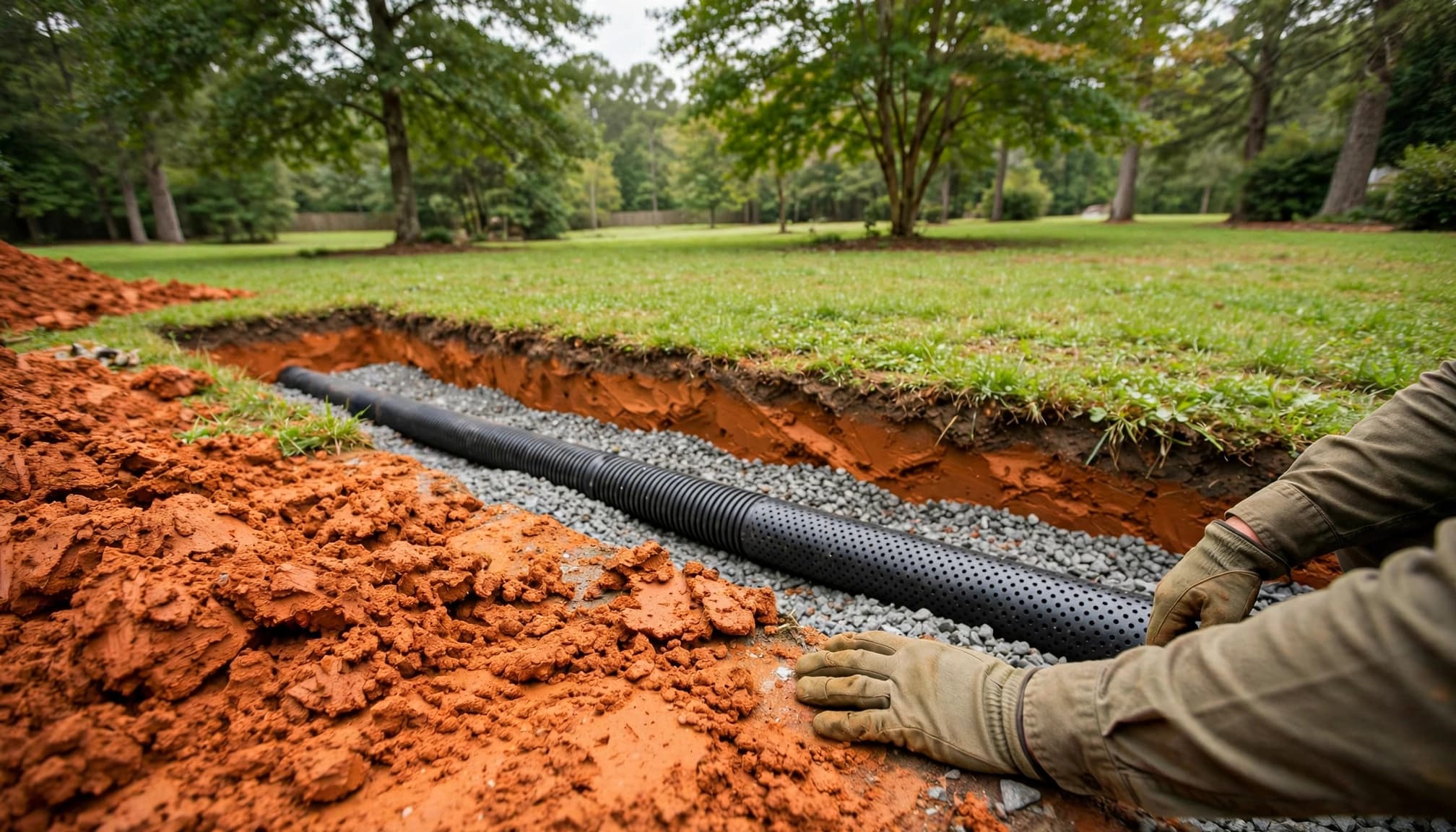
Georgia red clay has fine particles that pack tightly. After a hard rain, the top layer may look dry within hours while the soil below remains wet and low on oxygen. Water can move across compacted clay instead of soaking straight down.
As runoff enters a gravel trench, clay fines can settle in the gravel gaps and around pipe perforations. Over time, the drain may accept less water even though the visible grate looks clean. Construction traffic, repeated mower passes, and foot traffic can compact nearby soil and add to the problem.
Intense rainfall exposes weak spots
Atlanta storms can deliver a large volume of water in a short time. On July 17, 2026, NOAA's Weather Prediction Center reported potential rainfall rates near 3 inches per hour in the greater Atlanta area during a severe weather setup. That was an extreme event, not a normal rain rate, but it shows why a partially blocked outlet can fail fast.
A healthy drain should move water away without creating a new puddle, muddy channel, or washout. If roof runoff overwhelms one part of the system, consider whether downspouts, grade, and drain capacity are working together.
Roots grow toward the damp trench
Tree and shrub roots follow dependable moisture. A French drain beside mature trees, hedges, or vigorous ornamental plants can develop root intrusion at joints, perforations, or damaged pipe sections.
Don't cut major roots near a tree without guidance. Removing large roots can weaken the tree or destabilize soil on a slope. Instead, note the location and call for an inspection if roots appear inside a basin or cleanout.
Inspect the System After Storms and Each Season
Regular checks are simpler than emergency digging. Inspect after a heavy storm, before the wettest parts of spring, and after fall leaves begin to drop. Wear gloves and sturdy shoes, and wait until the ground is firm enough to walk safely.
Start at the inlet and catch basin
Remove leaves, pine straw, mulch, grass clippings, and loose soil from every visible grate or basin. A hand trowel, small scoop, bucket, and garden hose are usually enough for this work.
Look inside the basin for silt at the bottom. If you can reach it without leaning into a deep opening, scoop out the loose buildup. Replace the grate securely when finished, especially where children or pets use the yard.
Check nearby downspouts as well. A clogged gutter or short extension can dump concentrated roof water beside the drain and carry extra sediment into the system.
Follow the drain's route across the yard
Walk the trench line after rain and look for water surfacing in a narrow strip. Also watch for soft ground, sunken turf, exposed gravel, or a new low spot over the pipe.
These clues can point to a blockage, a crushed section, lost slope, or a trench that has settled. Mark the location with a small flag or take photos after each storm. A repeating pattern gives a drainage contractor far more useful information than a vague report of "standing water."
A drain that backs up at the same spot after moderate rain may have a pipe or grade problem, not a simple layer of leaves at the outlet.
For broad pooling caused by yard pitch, a drain cleaning alone won't correct the source. Compare French drains versus regrading before adding more pipe to a yard that needs reshaping.
Safe French Drain Maintenance You Can Do Yourself
Homeowner maintenance should stay above ground or use existing access points. Avoid trench excavation, cutting roots, or forcing tools into a buried line. Call 811 before any digging, even if you believe you know where utilities run.
Clear debris from the outlet
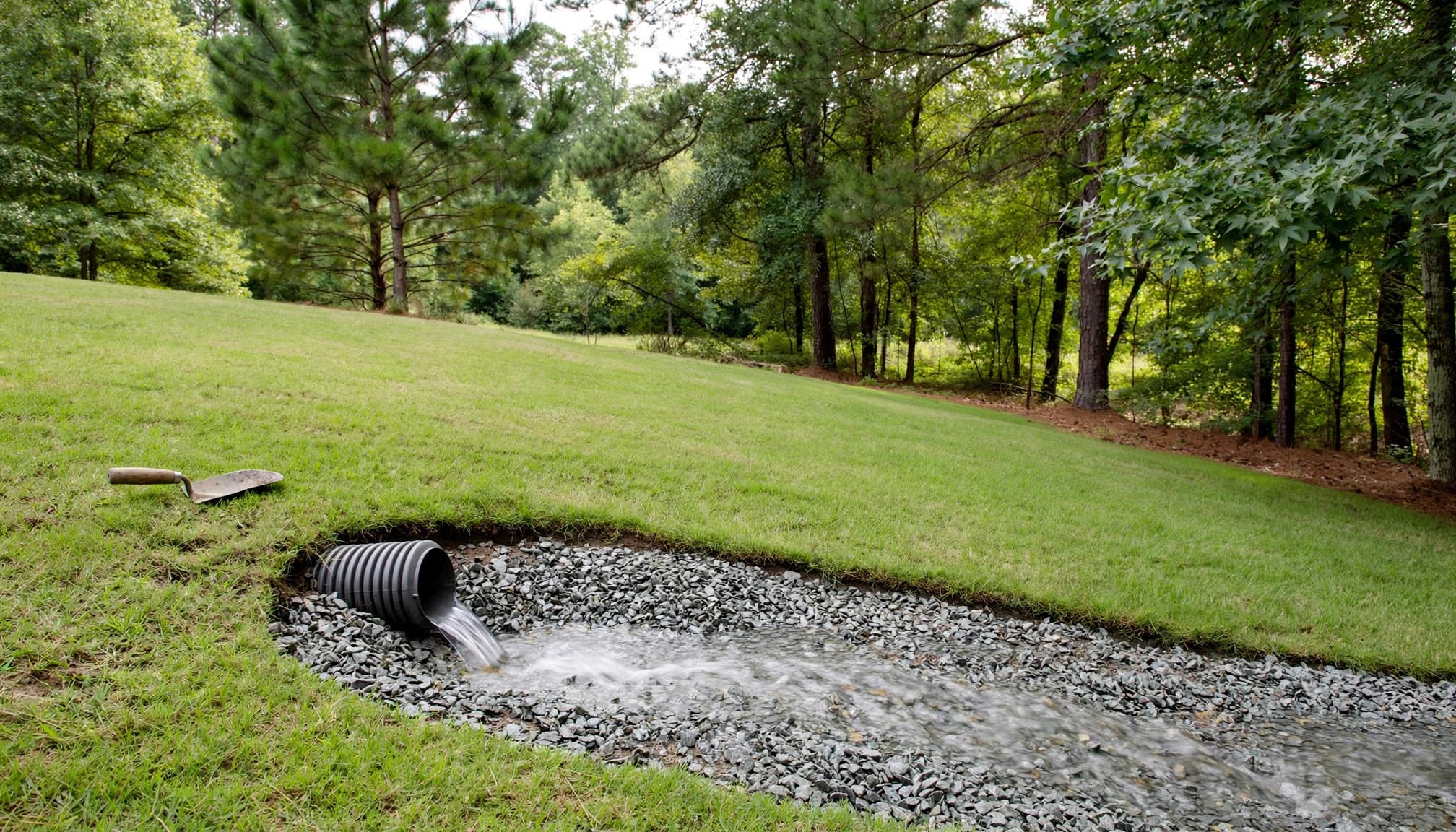
Find where the system discharges. It may end at daylight on a slope, near a wooded edge, at a pop-up emitter, or in an approved drainage feature. Remove leaves, mud, pine needles, mulch, and grass that block the opening.
Then check that the outlet has not been buried by new sod, soil, decorative stone, or a landscaping project. A pop-up emitter should rise when water reaches it and settle back afterward. If it stays submerged in a muddy depression, the area needs correction.
Flush only through a known cleanout
If your system has a visible cleanout and you understand where the line runs, use a regular garden hose at low to moderate pressure. Have someone watch the outlet while you run water for several minutes.
Stop if water returns through a basin, rises at the cleanout, or fails to reach the discharge point. Don't use a pressure washer, rental jetter, drain snake, or chemical drain opener on an unknown buried pipe. Older pipe can be cracked, separated, root-filled, or partly collapsed, and aggressive cleaning can make a damaged line worse.
Keep surface water out of the trench
Fresh mulch, bare clay, and loose gravel can wash toward a drain inlet. Keep mulch away from grates, edge planting beds so soil stays in place, and repair thin turf near the trench once drainage works properly.
Avoid piling lawn clippings over a swale, outlet, or emitter. Clippings form a wet mat that can trap sediment and prevent water from leaving the yard.
Protect a Legal, Stable Discharge Point
A French drain only works as well as its outlet. The end of the pipe must stay open and send water to a place that can handle it without threatening the house, a neighbor's lot, a sidewalk, or an unstable bank.
Directing water toward a foundation creates the same moisture problem the drain was meant to solve. Likewise, discharging onto bare clay can cut a channel into the yard during heavy rain. Gravel, a properly designed rock runout, vegetation, or another approved drainage feature can help control the exit point.
The City of Atlanta's stormwater ordinance prohibits polluted discharges and illegal connections to the storm sewer system. It lists foundation and footing drains among exempt discharge categories, but that does not give every property a blanket right to connect lines wherever convenient. Rules differ across Metro Atlanta municipalities and counties.
Keep paint wash water, lawn chemicals, oil, pet waste, and sediment out of drains. If the outlet crosses a property line, drains toward a creek, or ties into public infrastructure, confirm local requirements before changing it.
Where runoff has exposed soil or started cutting a slope, Atlanta erosion control for sloped yards can help you plan a more stable path for water.
Signs You Need Professional Drainage Work
Routine French drain maintenance handles visible debris and minor silt. It cannot repair bad grade, broken pipe, severe root intrusion, or an outlet with nowhere safe to go.
Recurring backups and foundation moisture
Call for a drainage assessment if water repeatedly stands near the home, enters a crawl space, wets a basement wall, or appears along the trench after ordinary storms. A contractor may need to inspect pipe condition, trace the route, and review the yard's overall slope.
Poor grading often drives these problems. Atlanta grading and paving services can address low areas and slopes that keep sending water toward the house.
Erosion, settling, and damaged pipe
A sinkhole-like depression, a trench that keeps settling, exposed pipe, or a washed-out outlet needs prompt attention. Keep people, pets, and mowing equipment away from unstable ground until it has been checked.
Retaining walls add another concern. Wet clay can build pressure behind a wall when drain paths clog or discharge poorly. If a wall leans, cracks, bulges, or sheds soil, avoid digging beside it. A site review and Atlanta retaining wall services are safer than a cosmetic patch.
French Drain Maintenance FAQ
How often should I inspect a French drain in Atlanta?
Check visible grates, basins, and outlets at least twice a year. Add an inspection after major storms, long leaf-drop periods, landscaping work, or any time the yard develops a new wet patch.
Properties below mature trees or beside heavy mulch beds may need more frequent surface cleaning. The goal is to stop debris before it enters the gravel and pipe.
Can I cover the outlet with mulch or decorative rock?
Keep the outlet itself clear. Decorative rock can work around a discharge area if water can still exit freely and the material stays stable during rain.
Mulch is more likely to shift, mat together, and block flow. Never hide an outlet where you cannot inspect it quickly.
Why is water coming out of the ground above my French drain?
Water surfacing above the trench often means the pipe cannot move water fast enough. Sediment, roots, a blocked outlet, pipe damage, or insufficient slope can all cause this symptom.
Start by clearing visible access points and the outlet. If the issue returns, stop adding soil or mulch over the area and arrange a professional evaluation.
Keep Water Moving Where It Belongs
French drain maintenance in Atlanta comes down to clear entry points, an open pipe route, and a discharge area that stays stable during rain. Red clay makes small clogs more serious because water has fewer easy paths through the soil.
Check the system before storm season, clear debris after heavy rainfall, and treat recurring water problems as a drainage or grading issue rather than a lawn problem alone. A drain needs a safe place to send water , not only a clean grate.