Irrigation System Replacement Cost in Atlanta in 2026
A brown strip of grass doesn't mean your whole sprinkler system has failed. But when leaks keep appearing across the yard, another small repair may feel like money spent on borrowed time.
In Atlanta, irrigation system replacement cost depends on whether you're rebuilding the entire system or replacing only its failing parts. A diagnosis is the starting point. It tells you which price range belongs in your budget and which questions to ask before approving the work.
Irrigation system replacement cost: realistic Atlanta budgets
No single published price captures what it costs to remove and replace an existing irrigation system in Atlanta. Installation estimates offer a useful starting budget, but a replacement quote must account for the equipment already in the ground and what happens to the lawn during construction.
Use installation prices as a starting point
These approximate 2026 ranges show how different the scope of work can be.
| Project scope | Approximate budget | What the figure describes |
|---|---|---|
| Typical irrigation repair | $135 to $415 | A repair estimate from RW Lawn Co, not a system replacement |
| System serving about 10,000 square feet | $1,800 to $3,400 | RW Lawn Co's installation estimate |
| System for a quarter-acre yard | $2,100 to $3,800 | A Swivl installation estimate |
| Larger or more comprehensive system | $4,500 to $8,500 | A Swivl installation estimate |
The full-system figures are installation proxies , not verified replacement prices. For comparison, another Atlanta installation guide places large-property projects as high as $16,000. Yard size and included work differ across those estimates, so they shouldn't be treated as competing quotes for the same job. RW Lawn Co's Atlanta irrigation installation cost guide gives more context for installation budgets.
Why a replacement quote can differ
An installer may be able to reuse a sound backflow assembly, controller wiring, or parts of an existing pipe network. In another yard, buried leaks, poor coverage, or deteriorated plumbing may leave little worth keeping.
Ask whether the price includes abandoning or removing old components, reconnecting the water supply, testing every zone, and repairing disturbed turf. Two contractors can quote the same lawn at different prices because they're proposing different amounts of replacement.
What counts as a full replacement?
The phrase "replace the sprinkler system" can describe anything from a new controller to a complete rebuild. Get the proposed work in writing before comparing its price with another bid.
Complete system rebuild
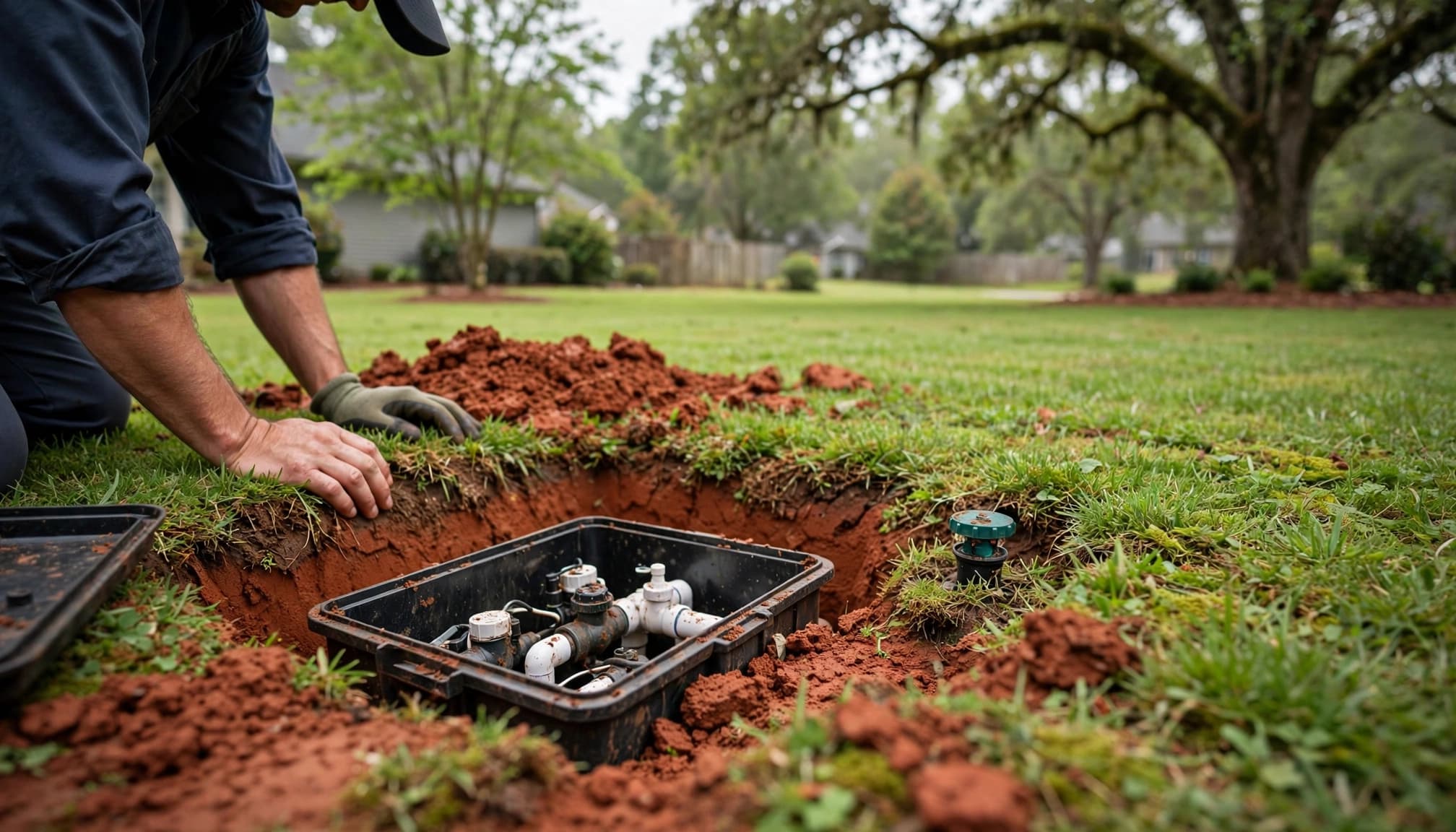
A full replacement generally means new buried piping, valves, sprinkler heads, and a controller, designed around the yard's current planting and water pressure. The contractor should also explain what happens to the old lines and whether the existing backflow equipment can remain.
For a yard with a healthy supply connection but failed distribution lines, retaining approved equipment may make sense. Still, the contractor needs to test what stays. An old component that fails after the trenches are closed can turn an apparent saving into another excavation.
Partial replacement and repairs
Replacing one head, valve, pipe section, or controller is a repair, even if the invoice says "replacement." RW Lawn Co's repair estimates put a broken head at about $59 to $150, pipe repair at $120 to $400, and controller repair at $100 to $500. Its valve guide puts an accessible residential valve replacement around $125 to $300.
Those figures are approximate and depend on access and diagnosis. A failed zone doesn't, by itself, justify rebuilding the whole system.
When is repairing the system the better deal?
Start by having each zone run while someone checks coverage, pressure, leaks, and controller operation. A reliable diagnosis can keep a small fault from turning into an unnecessary full-system proposal.
Repair when the problem is contained
One cracked head or accessible valve is usually cheaper to fix than the system around it. The same may be true of a single damaged pipe if the remaining zones water evenly and the components are serviceable.
For a closer look at individual jobs, compare the diagnosis with RW Lawn Co's Atlanta irrigation repair cost guide. Ask the technician to distinguish the known fault from any suspected problems that still need testing.
Price a rebuild when failures keep spreading
Repeated leaks in different locations, several failing zones, and coverage problems that persist after repairs make a full quote worth considering. A controller that's difficult to service can add to the case, especially when aging pipes and valves also need work.
Compare the total work ahead , not one repair bill against a whole-system price. Request a written repair option and a replacement option that cover the same yard. If the repair would leave other known faults untouched, its lower upfront cost may be misleading. An older system with one fixable fault, however, doesn't need replacing simply because it's old.
What drives the price up in an Atlanta yard?
Yard size matters, but the area that needs watering matters more than the lot size on a property record. A house, driveway, and patio may occupy much of a large parcel. Meanwhile, a smaller yard with separate turf and planting beds may need a more involved layout.
Zones, heads, and controls
A zone groups sprinklers that run together. More zones typically mean more valves, wiring, pipe connections, and controller capacity. Sunny Bermuda turf and a shaded shrub bed may need different watering, so combining them solely to cut installation cost can leave one area too wet.
Head selection also changes the materials and layout. Spray heads, rotors, and drip lines have different coverage needs. Ask how many heads and valves the bid includes, what areas each zone serves, and whether the controller is being reused or replaced.
A new controller can add expense, but replacing a working one isn't automatic. If you want weather-based scheduling, ask for the upgrade as a separate line item.
Trenching, access, and restoration
Atlanta's compacted clay and mature tree roots can slow digging. Slopes, narrow gates, retaining walls, and lines beneath established beds also affect labor. A crew may need to hand-dig near roots or work around hardscape rather than use a direct trench route.
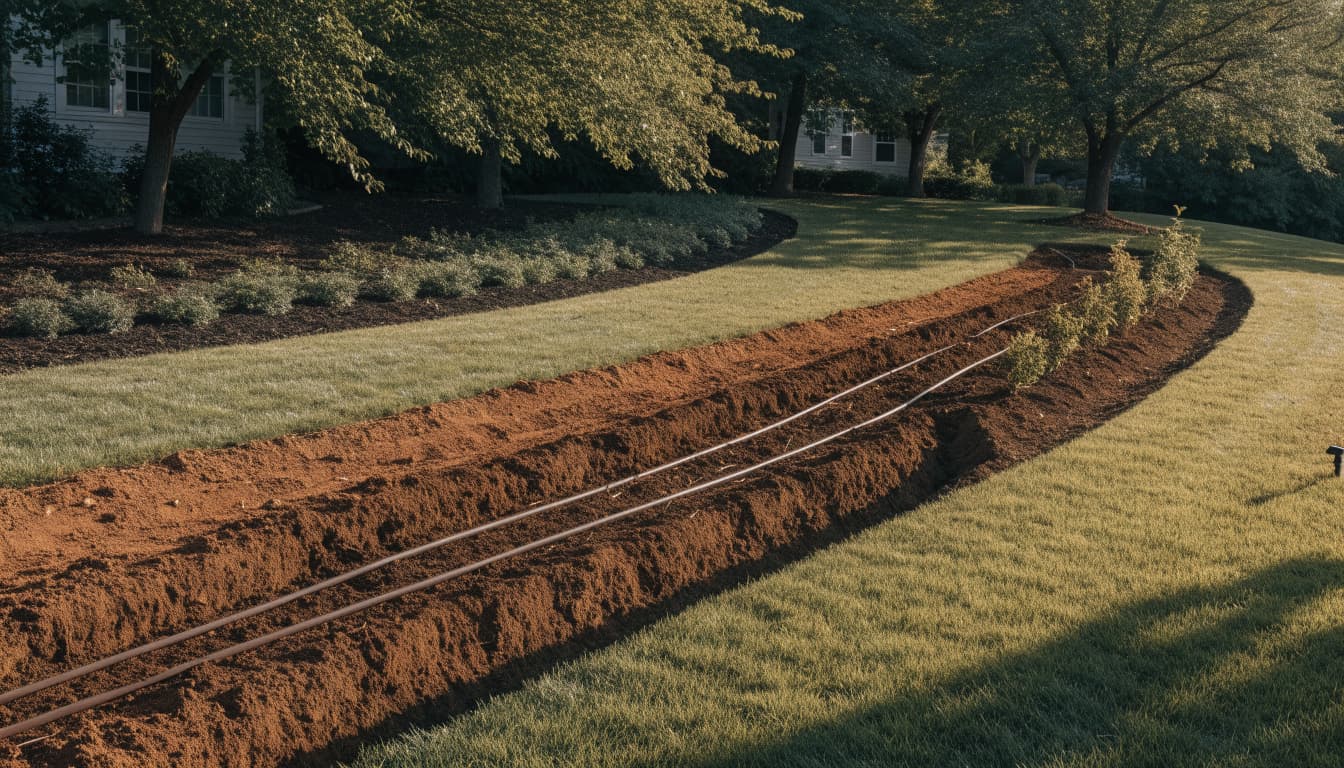
Find out who will backfill trenches and repair sod or mulch afterward. If water already pools near the house, irrigation work alone may not solve it. Yard grading for better drainage is a separate issue to discuss before new lines go in.
Water connections and watering rules affect the plan
A replacement isn't finished when the heads first spray. The water connection, testing, and final schedule need attention too.
Check backflow and approval requirements
An irrigation system connected to drinking water needs appropriate backflow protection. Ask the installer to identify the existing assembly, confirm whether it can be reused, and explain any testing required by your water provider.
Requirements depend on the jurisdiction and the work involved. A new connection or backflow assembly may need approval, while a routine head repair generally isn't the same type of project. If your quote includes water-supply changes, have the contractor confirm applicable permits and testing before work begins.
Set the controller for Atlanta's watering window
The Atlanta Department of Watershed Management says outdoor watering to maintain plants is generally allowed between 4 p.m. and 10 a.m. It lists exceptions, including drip or soaker hoses and a 30-day period for new or replanted plants. Check the current rules for your address when programming a new controller.
After installation, watch a complete cycle. Water running down a sidewalk or collecting on clay soil needs a schedule or coverage adjustment, even if every new component works.
How to compare replacement bids fairly
Ask each contractor to price the same areas and state what will be reused. A low total isn't much help if it leaves you responsible for sod repair, backflow work, or a second visit to test unfinished zones.
Compare the proposed system
A useful bid identifies the irrigated area, number of zones, approximate head count, controller, valves, pipe work, and water-supply connection. It should say whether existing equipment stays, gets disconnected, or gets removed.
Have each contractor explain how the layout handles turf, shade, and planting beds. A quote for four zones and a quote for seven zones need that design explanation before the prices mean much. If one contractor proposes keeping old pipes, ask how they'll test them for leaks and pressure problems.
Compare the work around it
Look for clear terms on trenching, cleanup, turf and bed restoration, startup testing, and warranty coverage. Ask whether diagnosis, permits when required, and backflow testing appear in the price or as separate charges.
Photograph the lawn and planting beds before work begins, then agree on what "restored" means. Replacing mulch around disturbed shrubs may be part of the scope, or it may call for separate residential landscaping and mulch services. Contractor quotes vary, and a written scope makes that variation easier to understand.
Key takeaways
- Budget for a full rebuild using installation ranges only as a guide . An existing system needs its own replacement quote.
- A single failed head, valve, controller, or pipe section is usually a repair decision. Multiple recurring failures warrant a comparison with a rebuild.
- Zone design, excavation through clay or roots, backflow work, and lawn restoration can change the total.
- Compare what each bid includes before comparing its bottom-line price.
Frequently asked questions
How much does it cost to replace an entire sprinkler system in Atlanta?
There isn't a verified, standard 2026 Atlanta price for replacing an existing entire system. Published installation estimates range from $1,800 to $3,400 for a system serving about 10,000 square feet, while a separate quarter-acre estimate runs $2,100 to $3,800. Larger or more involved installations can cost considerably more. Use those figures as approximate planning ranges, then request a quote for your yard's removal, reuse, and restoration needs.
Is replacing one irrigation zone a full-system replacement?
No. Replacing one zone is partial replacement, though it can involve several heads, a valve, wiring, and pipe. Its cost depends on what failed and whether nearby components are sound. Ask the contractor to describe exactly where the new work begins and ends.
Does a replacement price include sod and mulch repair?
It depends on the bid. Some proposals include backfilling and basic cleanup but don't promise a finished lawn or refreshed beds. Ask for turf and bed restoration in writing, especially where trenches cross visible areas.
Should I replace the controller when I replace the pipes?
Only if it lacks the capacity for the new zone layout, has a fault, or no longer suits your scheduling needs. A working controller may be reusable. Have the installer check compatibility and show the controller price separately if replacement is optional.
A sound price starts with a sound diagnosis
That brown strip in the lawn might need one head, not a new network of pipes. When failures stretch across several zones, installation ranges can help you set a budget, but they can't replace an on-site quote.
The most useful estimate shows what stays, what goes, and how the yard will look afterward . That scope makes the real cost easier to judge.