Atlanta Backflow Preventer Guide for Homeowners
An Atlanta backflow preventer protects your home's drinking water when an underground sprinkler system connects to the potable water supply. Without proper protection, irrigation water can move backward during a pressure drop and carry soil, fertilizer, or treatment chemicals toward the water main.
Atlanta homeowners must also account for local utility rules, annual testing, and occasional freezing weather. The right device depends on the irrigation setup and the water provider serving your address. Start with how backflow happens, then choose the equipment and maintenance plan that fits your property.
How an Atlanta backflow preventer protects your water
Your home's water normally flows in one direction, from the supply line to faucets, hose bibs, and irrigation zones. Backflow occurs when that direction reverses because of backsiphonage or backpressure .
Backsiphonage can happen when water pressure in the public supply drops suddenly. A water-main break, nearby firefighting activity, or heavy system demand can create that pressure change. Backpressure occurs when pressure inside the irrigation system becomes higher than pressure in the drinking water line.
Irrigation water can contain contaminants
Sprinkler lines sit underground and may collect stagnant water, sediment, organic material, and soil particles. Irrigation systems can also connect to fertilizer injectors, pesticide equipment, wells, ponds, or other water sources.
A backflow assembly creates a barrier between those sources and your household supply. Depending on the model, it uses check valves, an air inlet, or a relief valve to stop contaminated water from returning through the service line.
That protection matters even when you don't use lawn chemicals. A system that appears clean can still hold water that isn't safe to drink.
The assembly belongs near the service connection
City of Atlanta guidance identifies some residential customers, including people with irrigation systems, as customers who may need a backflow prevention assembly. The guidance places the assembly near the meter box or immediately inside the building, before the first branch line off the service line.
The exact placement depends on the approved design, local inspection requirements, and the property layout. An installer shouldn't bury the assembly where a tester can't reach it. The device needs room for shutoff valves, testing connections, repairs, and drainage when the assembly discharges water.
Atlanta backflow preventer rules homeowners should check
There isn't one single installation process for every Metro Atlanta address. Your water provider may be the City of Atlanta, a county system, or a nearby municipal utility. Each program can set its own approved models, forms, tester registration process, and inspection steps.
Georgia's statewide rules provide an important baseline. Backflow prevention assemblies covered by the rules must be field tested after installation, repair, or relocation, and at least once every year afterward.
City of Atlanta requirements can apply to residential irrigation
If your property is inside Atlanta city limits, check current information from the City of Atlanta Department of Watershed Management before installing or modifying an irrigation connection. The city's public backflow guidance includes irrigation systems among residential situations that can require protection.
The city also identifies the service-line location as a key part of the installation. A device placed after an irrigation branch or in an inaccessible location may not meet the utility's requirements, even if the sprinklers operate normally.
Keep your water bill, irrigation plans, and any notices from the utility available. Those documents can help an installer determine whether the existing connection needs testing, replacement, or a full redesign.
Nearby water systems may add their own steps
Local requirements change when you cross a county or city boundary. For example, Gwinnett County requires annual testing through approved testers and adds administrative requirements such as recognized certification, current test-kit calibration, a business license, proof of insurance, and a signed tester acknowledgment form.
That example doesn't automatically apply to every Atlanta suburb. It does show why a homeowner shouldn't rely on a neighbor's advice or an old irrigation invoice. Call the water provider listed on your account and ask:
- Does this property require a backflow assembly for landscape irrigation?
- Which device types, manufacturers, and sizes are approved?
- Is a permit or inspection required?
- How must annual test results be submitted?
- Does the tester need local registration in addition to state-recognized certification?
Get those answers before excavation or equipment installation.
Choosing an Atlanta backflow preventer for your irrigation system
The device type should match the hazard and the pressure conditions. A sprinkler contractor may recommend a model based on experience, but the water provider's rules control the final choice.
Three assembly types appear often in Georgia irrigation and cross-connection programs: the pressure vacuum breaker, double check valve assembly, and reduced pressure zone assembly.
Pressure vacuum breakers
A pressure vacuum breaker , or PVB, uses a check valve and an air inlet. It protects against backsiphonage when installed at the required height and in the correct position.
PVBs are common on some landscape irrigation systems because they provide strong protection for a relatively straightforward connection. However, they aren't designed for every pressure condition. Continuous backpressure, chemical injection, or other higher-risk connections may require a different assembly.
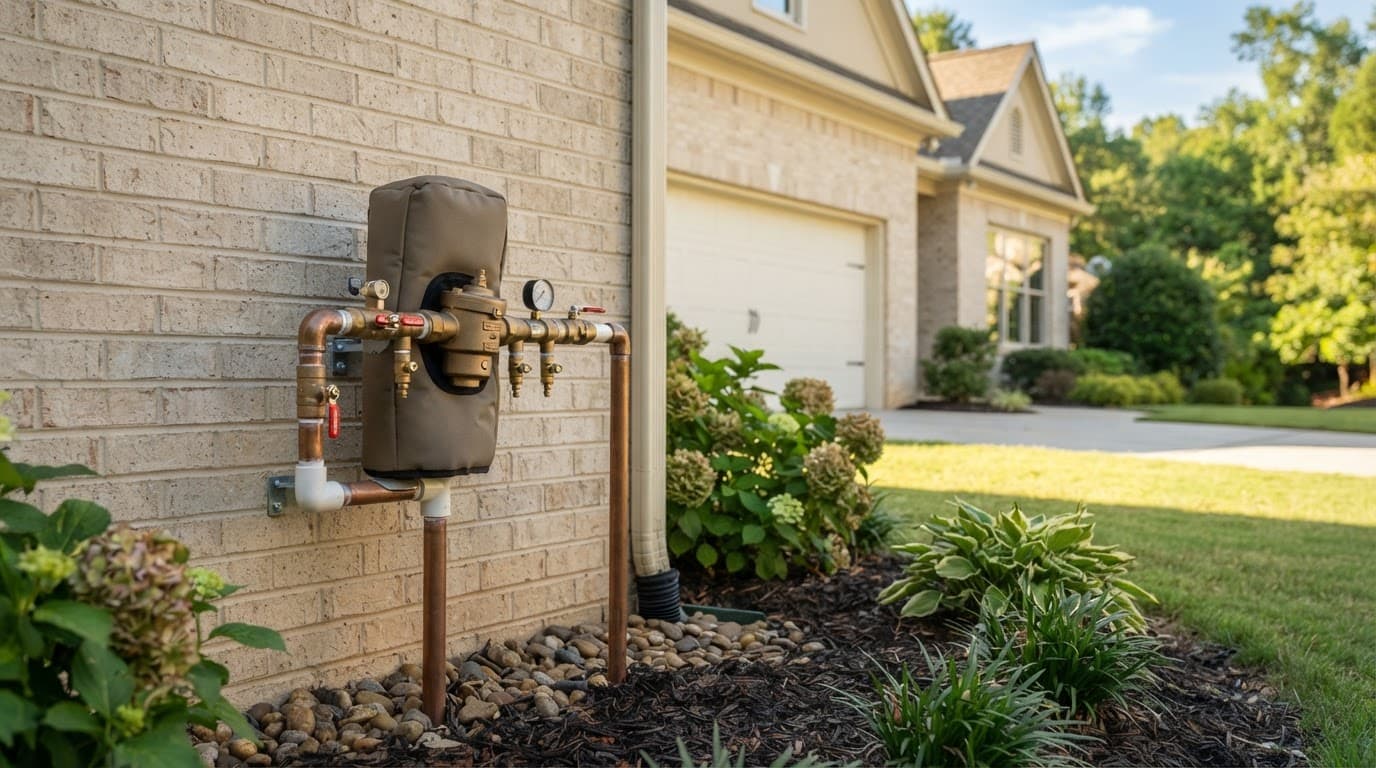
The device must remain accessible and receive protection from impact, lawn equipment, and freezing weather. A decorative enclosure is acceptable only if it still provides the clearances required for testing and service.
Double check valve assemblies
A double check valve assembly , or DCVA, contains two independently acting check valves. It can protect against backpressure and backsiphonage in situations classified as a lower hazard.
A DCVA does not provide the same level of protection as an RPZ assembly. Its suitability depends on the water source, irrigation equipment, elevation, and local cross-connection rules.
Before purchasing one, confirm the approved make, model, size, and orientation. Some local programs, including the Gwinnett County program, require assemblies to come from an approved list.
Reduced pressure zone assemblies
A reduced pressure zone assembly , or RPZ, has two check valves and a relief valve between them. The relief valve can discharge water when pressure conditions indicate a problem.
RPZ assemblies provide a higher level of protection, but they need a suitable discharge area and regular maintenance. They may be required when the irrigation system includes a pump, fertilizer injector, pesticide connection, pressurized tank, or another higher-hazard condition.
Never select an RPZ, PVB, or DCVA based only on price. The wrong assembly can fail an inspection or leave the water supply underprotected.
Plan the installation before the first trench
Backflow equipment works best when the entire irrigation connection is planned as one system. The service line, shutoff valves, assembly, irrigation main, zone valves, and drainage path all affect the final installation.
Choose a location a tester can reach
The assembly should sit in a stable location with enough room to connect test equipment. Keep vegetation, mulch, edging, and decorative rock away from the test ports and shutoff handles.
Avoid placing it where a mower, string trimmer, vehicle, or falling branch can strike it. A rigid mounting arrangement can protect exposed plumbing, while an approved enclosure can reduce damage from weather and yard work.
Don't cover the device permanently with soil or bury it under a thick mulch layer. A hidden assembly becomes harder to test, harder to drain, and easier to damage without noticing.
Confirm permits and inspections first
Some local utilities require a permit, inspection, or review before a new irrigation connection becomes active. Requirements can also change when you replace the service line, add a pump, install chemical injection, or move an existing backflow assembly.
Ask the water provider what it needs before work begins. A contractor should be able to explain who handles the permit, who schedules the inspection, and who submits the test report.
An existing device doesn't automatically remain acceptable after a remodel. Relocation, repair, or a change in irrigation equipment can trigger another test or a new review.
Annual testing keeps the protection dependable
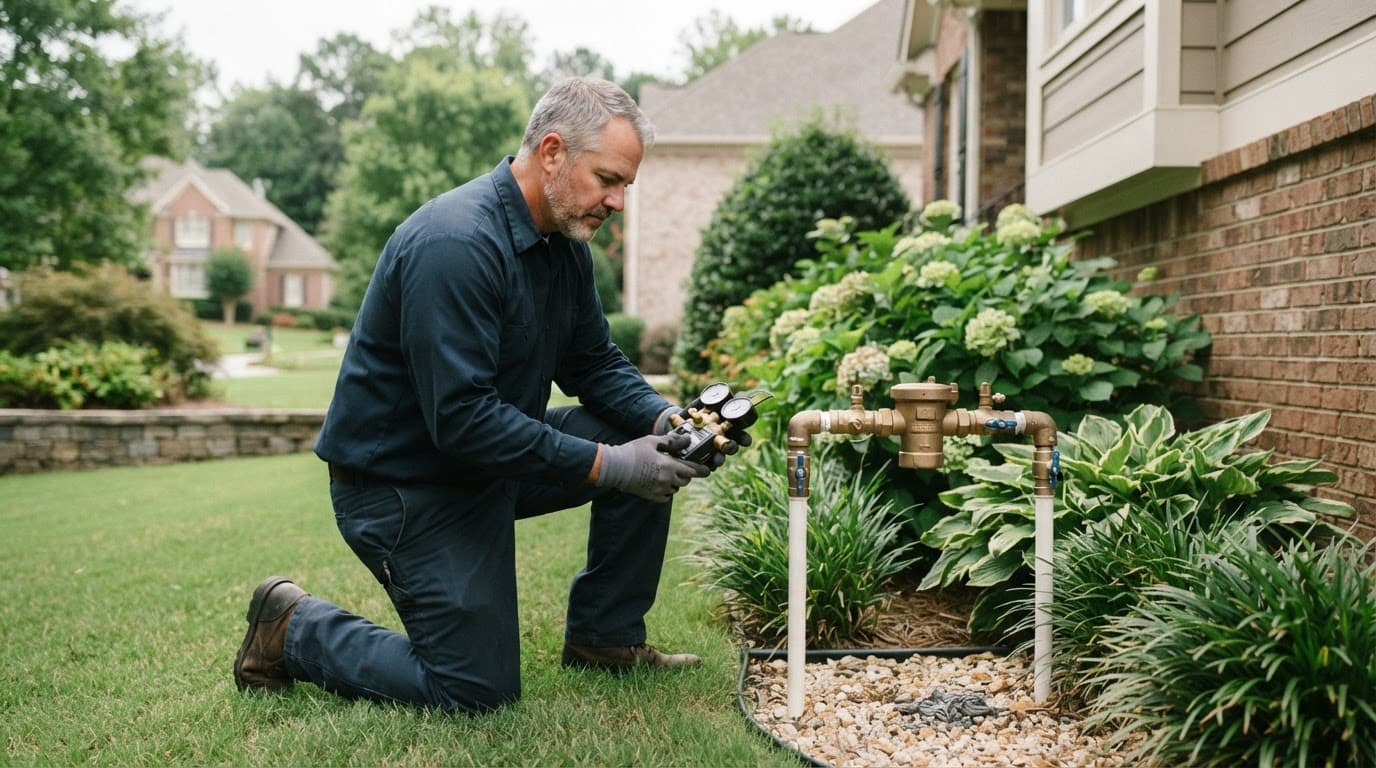
A backflow assembly can look fine while a check valve is worn, clogged, or stuck. Annual testing measures how the internal parts respond under controlled pressure.
What the tester checks
A certified tester uses a differential pressure gauge and the assembly's test cocks to check the internal valves. The procedure varies by device type, but it can show whether the check valves hold pressure and whether an RPZ relief valve opens when it should.
The tester records the assembly's make, model, size, serial number, location, test date, and results. Test reports may also identify repairs or replacement parts.
Georgia's statewide program recognizes testers certified through the Georgia Statewide Backflow Prevention Assembly Certification Program approved by the Georgia Environmental Protection Division. Georgia rules also recognize certifications through the American Backflow Prevention Association, the American Society of Sanitary Engineering, or the University of Florida TREEO Center.
Your local utility may require additional registration. For example, a county program can limit reports to testers on its approved list.
What happens when a test fails
A failed test doesn't mean you should remove the assembly or bypass it. The tester should explain which check valve, relief valve, shutoff, or connection caused the failure.
Some problems come from sediment, worn rubber parts, corrosion, or freeze damage. The tester may clean or repair the assembly, but the device must be tested again after the repair.
Ask for a copy of the completed report. Keep it with your irrigation records and note the next due date. If the utility sends a compliance notice, follow the deadline on that notice rather than waiting for the next sprinkler service visit.
Watch for leaks and pressure changes
Routine observation helps you spot trouble between annual tests. Walk past the assembly during irrigation startup and after the system shuts down. Look for water around the device, damaged fittings, corrosion, or a steady discharge from an RPZ relief port.
A small leak can point to a larger problem
A brief discharge during a pressure change may occur on some assemblies, but continuous leaking needs attention. Water pooling around the device can erode soil, damage nearby landscaping, or hide a cracked fitting.
A dripping test cock or shutoff valve may need a replacement washer or valve. A cracked body often requires assembly replacement, especially after a freeze.
Don't tighten random parts while the system is pressurized. Incorrect adjustments can damage the device or interfere with the next test.
Low sprinkler pressure has several causes
Poor spray coverage doesn't always mean the backflow preventer failed. A clogged filter, partially closed shutoff valve, damaged irrigation pipe, leaking zone valve, or undersized supply line can create the same symptom.
Start by checking whether the problem affects one zone or the entire system. If every zone has low pressure, have the service connection and backflow assembly inspected. If one zone struggles, the issue may be farther downstream.
A properly working assembly can still reduce pressure slightly because water passes through check valves. Your installer should account for that pressure loss when selecting sprinkler heads and designing zones.
Protect the assembly from Atlanta freezes
Metro Atlanta has mild winters, but short cold snaps can freeze exposed pipes. Water expands when it freezes, and the resulting pressure can split a valve body, crack a test port, or damage an internal check valve.
Prepare before cold weather arrives
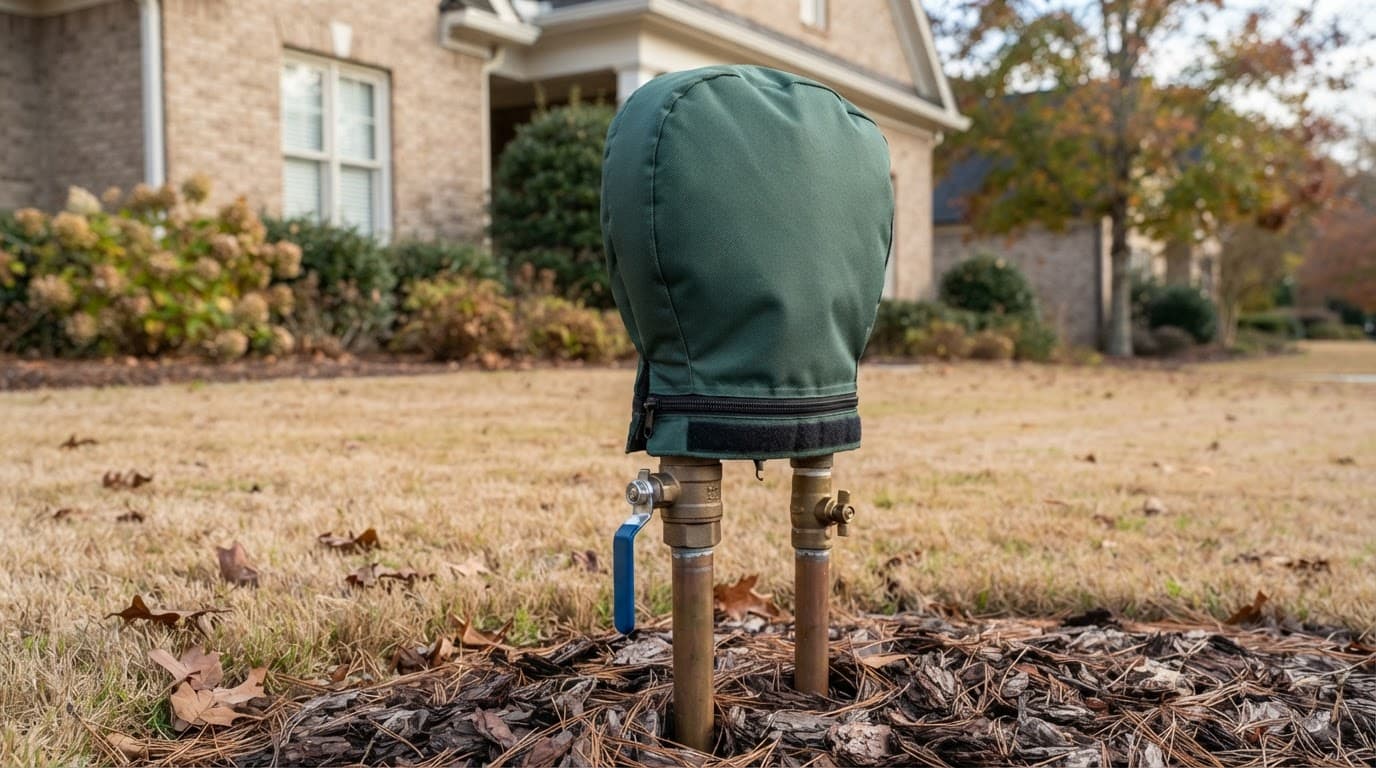
Winter protection begins with shutting down the irrigation system according to the equipment manufacturer's instructions. A qualified irrigation professional can close the correct supply valve, drain trapped water, and prepare the assembly without disturbing required settings.
An insulated cover reduces exposure, but insulation alone may not remove water from the assembly. The cover should fit without pressing against valves or blocking the discharge path.
Keep the area clear of leaves and wet mulch. Those materials can hold moisture against metal parts and hide a slow leak.
Inspect after a hard freeze
Before spring startup, look for split housings, cracked unions, loose fittings, or water escaping from the relief port. Open the irrigation supply slowly after inspection. A sudden surge can expose damage that developed during winter.
If the assembly leaks or the sprinklers fail to pressurize, close the shutoff and arrange a professional inspection. Don't wrap a damaged body with tape or operate the system around a known leak.
Keep the whole irrigation system safe
Backflow prevention protects the water supply, but it can't correct poor irrigation design. Sprinklers should distribute water across the lawn without creating runoff, standing water, or soil movement.
Keep chemicals and other water sources separate
Never connect fertilizer injectors, pesticide equipment, ponds, rain barrels, or wells to a potable irrigation line without a properly approved protection method. Chemical injection can change the hazard classification and may require an RPZ assembly or additional controls.
Hose connections also need care. A hose left in a bucket, pool, chemical container, or pet-water dish can create a cross-connection if pressure drops. Use an approved hose-bib vacuum breaker where required, and don't leave hoses submerged.
When adding irrigation equipment, tell the installer about every connected component. A new pump or injector can change the device requirement even if the sprinkler zones themselves remain unchanged.
Manage runoff as well as water supply
Overwatering can wash mulch onto sidewalks, create muddy areas, and expose shallow irrigation lines. Clay-heavy Atlanta soil often absorbs water slowly, so short irrigation cycles may work better than one long cycle.
Use an Atlanta lawn watering schedule to adjust watering for Bermuda, Zoysia, or tall fescue. Then check the system during operation to confirm that water reaches the lawn instead of running into the street.
Backflow equipment won't solve standing water caused by poor grading. Repeated pooling may call for Atlanta drainage fixes for soggy lawns alongside irrigation adjustments.
Hire the right person for testing or repair
A general lawn service can notice a leak, but annual backflow testing requires the right certification, equipment, and reporting process. Ask for the tester's credential before scheduling the appointment.
Check certification and local approval
Georgia's certification pathway includes a 32-hour backflow prevention assembly tester class, a hands-on proctored exam, and experience requirements. The program guidance also lists a high school diploma, GED, or equivalent as part of the qualification process.
Homeowners don't need to manage that training themselves. They should confirm that the tester holds a credential accepted by the local water provider.
Ask whether the tester has current test-kit calibration and whether the utility requires registration or an approved-tester list. A valid credential alone may not satisfy a county or city reporting program.
Get the full scope in writing
A useful quote should identify the annual test, report submission, repair labor, parts, retesting, and any permit or inspection charge. It should also state whether the contractor will winterize the assembly or only test it.
Before work begins, confirm the assembly's location and model. Ask what happens if it fails. A low testing price can become expensive if repairs, a second visit, or utility paperwork appear later.
Choose a professional who leaves you with the test report and clear instructions for the next service date. Good records make future maintenance easier, especially when you sell the home or replace the irrigation controller.
What homeowners can safely do themselves
You can handle simple observation and recordkeeping without opening the assembly. Keep the device visible, remove weeds that block access, and check for puddles after irrigation runs.
Take a photo of the model and serial number. Write down the last test date, the tester's name, and any repair completed. Store the report with your home maintenance records.
Avoid removing test-port caps, changing valve settings, bypassing the assembly, or installing a replacement without approval. Those actions can create a health risk and may invalidate the device's compliance status.
When a sprinkler project adds a new zone, pump, chemical injector, or water source, contact the utility or a qualified backflow professional before connecting the equipment. A small change downstream can affect the required protection upstream.
Conclusion
An Atlanta backflow preventer protects more than the sprinkler system. It helps keep irrigation water, soil, and lawn chemicals from moving into the drinking water supply when pressure changes occur.
Start by confirming your local utility's requirements. Then use an approved device, place it where testing and maintenance are practical, schedule annual testing, and protect exposed plumbing during freezes.
The safest irrigation system is one that waters the lawn efficiently while keeping every connection to the potable supply visible, tested, and properly maintained.