Atlanta Bermuda Scalping Guide, when to scalp, how low to go, and how to avoid spring damage
The first warm stretch in Atlanta makes Bermuda look like it’s waking up, but early spring is when a lot of lawns get hurt. Bermuda scalping can help your yard green up faster and look cleaner, yet timing and height matter more than the act itself.
Think of scalping like peeling off a winter coat. If you rip it off during a cold snap, you’re going to feel it. Bermuda is the same way. Cut too early and you expose crowns to freezes. Cut too low and you shave into living tissue, then the lawn stalls for weeks.
This guide is written for Metro Atlanta homeowners (Zone 7b/8a) who want practical, safety-first steps, plus conservative height ranges that work with real-world mowers and uneven clay soil.
When to scalp Bermuda in Atlanta (and why “too early” is the big risk)
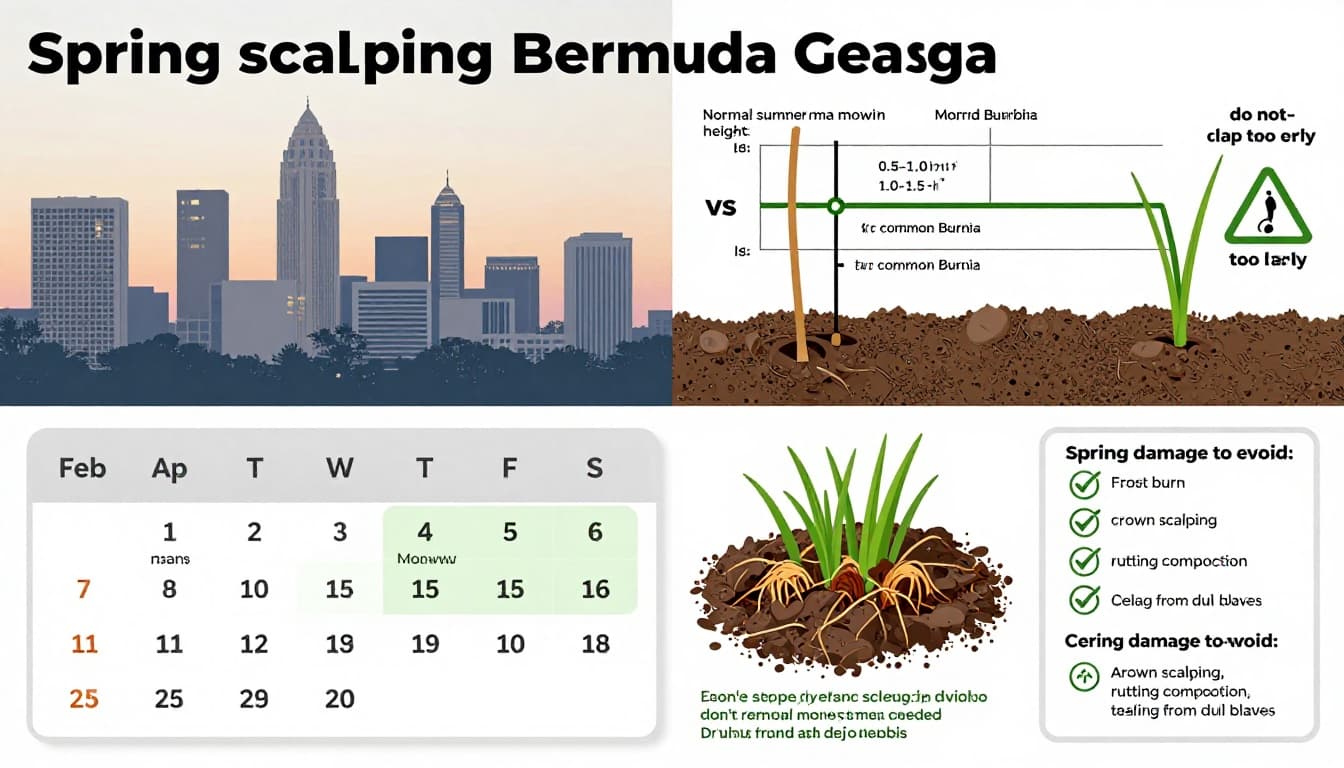
Infographic showing timing cues, safe height ranges, and common spring scalping mistakes, created with AI.
In Atlanta, the safest scalping window is usually late March into April , but don’t use a calendar as your main trigger. Our weather swings hard, and microclimates can shift the right timing by 1 to 3 weeks . A sunny front yard near pavement in College Park can wake up faster than a shaded backyard in Tyrone.
Use these cues instead:
- Green-up is underway: wait until Bermuda is roughly 50 percent green across the lawn, not just a few bright edges near the driveway. Scalping before that can “wake” the grass right before a cold night. Walter Reeves gives a Georgia-specific warning about pushing Bermuda too early in his guidance on Bermuda dormancy and scalping timing.
- Soil is warming: a good target is 55 to 65°F soil temps near the surface for scalping (warmer is safer). Air temps can fool you because a warm afternoon does not mean warm soil.
- Hard-freeze risk is fading: a late freeze after scalping can burn tender shoots and slow green-up. If the forecast is flirting with freezing, wait.
One more safety point: don’t scalp during full dormancy. The brown top growth is not pretty, but it’s insulation. Removing it too soon exposes crowns and stolons to cold nights and drying winds.
For broader timing context across the season, the University of Georgia’s Bermudagrass lawn calendar PDF is a solid baseline for Georgia lawns.
| Situation | Atlanta timing cues | Conservative scalp height range | Equipment notes | Post-scalp care |
|---|---|---|---|---|
| Common Bermuda (typical home lawns) | 50% green-up, warm soil, freeze risk low | 1.0 to 1.5 inches | Rotary mower is usually fine if sharp | Bag clippings, water lightly if dry, resume normal spring height after 1 to 2 mows |
| Hybrid Bermuda (finer turf) | Same cues, but wait for steadier warmth | 0.5 to 1.0 inches | Reel mower preferred for clean low cuts | Keep traffic light, avoid sudden fertilizer, mow again soon to prevent scalping high spots |
| Uneven yards or lots of thatch | Green-up started, but lawn has bumps | Stay on the higher end of ranges | Rotary at very low height can scalp crowns | Consider a two-step cut, then tidy with a second pass |
| Any lawn with freeze in the 7-day forecast | Tender shoots may be emerging | Delay scalping | Low cut increases frost exposure | Wait it out, mow at normal spring height instead |
How low to go: scalp height for common vs hybrid Bermuda (rotary vs reel)
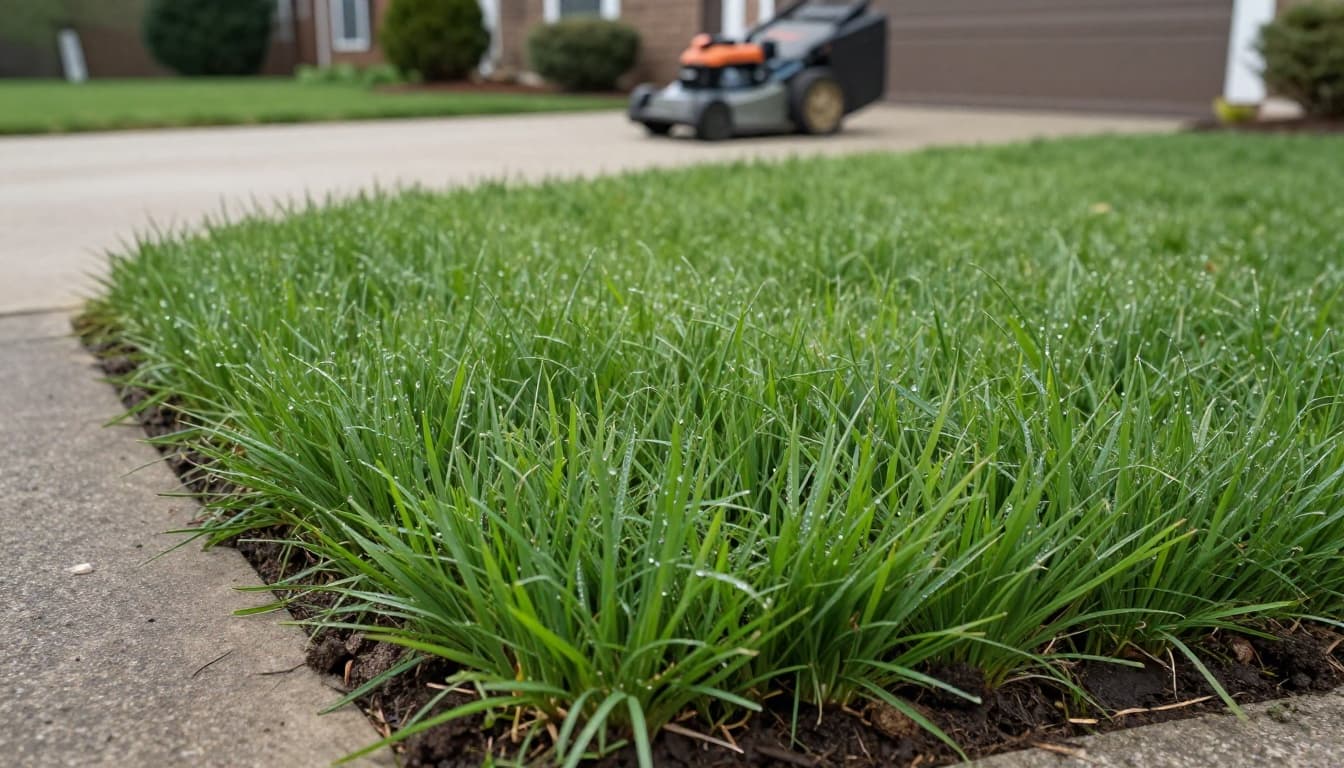
Example of a carefully scalped Bermuda lawn with visible cleanup and protected crowns, created with AI.
The goal of scalping is simple: remove dormant, tan leaf tissue so sunlight hits the new green shoots. The goal is not to shave the lawn down to soil.
Here’s how height choices change based on Bermuda type and mower style:
Common Bermuda (most Atlanta neighborhoods) Common Bermuda has a coarser blade and usually lives at higher mowing heights. Most homeowners maintain it with a rotary mower, which means scalping has to stay conservative. In practice, 1.0 to 1.5 inches is a safer scalp range for many uneven lawns. If you try to go lower with a rotary mower, the deck can dip on high spots and scalp into crowns.
Hybrid Bermuda (finer cultivars) Hybrid Bermuda (often installed as sod, sometimes used on higher-end properties) tolerates lower mowing and looks best tighter, but it also expects tighter management. A cautious scalp range is 0.5 to 1.0 inches , and it’s usually best done with a reel mower on a level yard.
Rotary vs reel mowing (why it matters) A reel mower cuts like scissors and stays cleaner at low heights. A rotary mower can cut well at normal heights, but down near an inch it’s more likely to tear, bounce, and scalp high spots. If you’re using a rotary, don’t chase reel-mower heights. A slightly higher scalp that keeps crowns safe beats a “perfectly low” cut that leaves bare soil.
If you want a deeper read on keeping Bermuda in the right range through the whole season, use this Atlanta Bermuda grass mowing height guide and then circle back to scalping as a one-time spring reset.
How to scalp Bermuda without causing spring damage
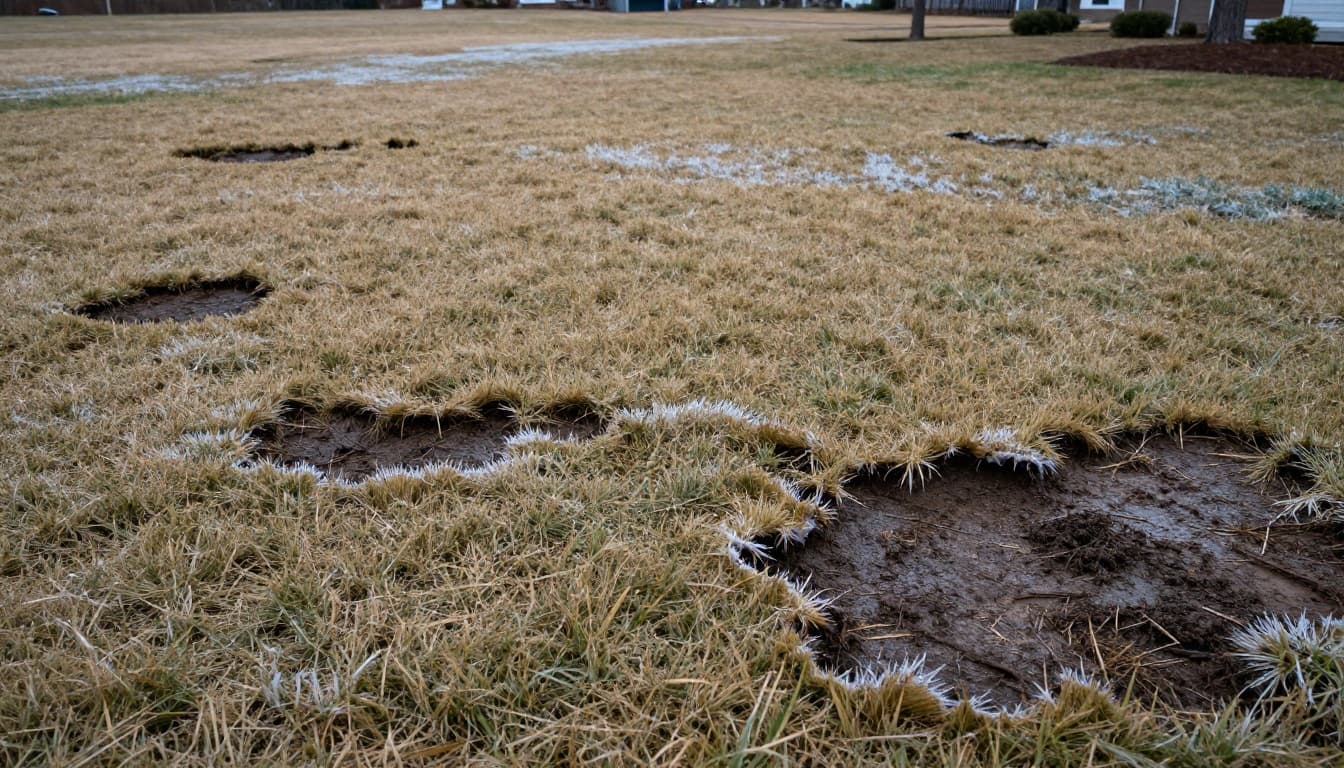
Examples of what spring scalping damage can look like, including crown exposure and rutting, created with AI.
Most scalping damage comes from three things: cutting before stable green-up, cutting too low on uneven ground, and mowing when the yard is wet and soft.
A safe, homeowner-friendly approach looks like this:
- Pick a dry day with a stable forecast. Avoid mowing right after rain. Atlanta clay ruts easily, and those ruts can last into summer.
- Sharpen blades first. A dull blade shreds. Shredded tips brown out and make the lawn look worse, even if timing was right.
- Drop height in steps, not one dramatic cut. If the lawn is tall from winter, take it down once, then lower the deck and go again.
- Bag clippings for the scalp pass. Scalping creates a lot of debris, and piles can smother new shoots.
- Mow slow and overlap passes. This reduces “deck dip” scalps and keeps the cut more even across bumps.
- Clean up, then wait a few days before doing anything aggressive. Let the lawn respond before you add extra stress.
One short list to keep you out of trouble:
- Do: scalp only after clear green-up, mow when the soil is firm, stop lowering the deck if you start exposing crowns, and keep kids and pets off muddy turf to prevent compaction.
- Don’t: scalp dormant Bermuda, scalp ahead of a freeze, chase golf-course heights with a rotary mower, or keep mowing lower just to remove every last straw blade.
Watch for these warning signs that you went too far:
- Exposed crowns or stolons (you can see the plant’s growing points, not just tan leaf tissue).
- Bare soil “shaved” spots , especially on high points and slopes.
- Straw-colored patches that don’t improve after 2 to 3 weeks of warm weather.
- Wheel ruts and squishy footprints that stay visible after the lawn dries.
If you see those, raise your mowing height back to a normal spring setting, stop stressing the lawn, and give it time. Bermuda often recovers, but repeated low cuts on damaged crowns can turn a small scalp into a thin area that fills with weeds.
Conclusion
A good scalp makes Bermuda look cleaner and helps sunlight hit new growth, but the best results come from patience. Wait for real green-up, keep an eye on late freezes, and stay conservative with height, especially with a rotary mower. Done right, Bermuda scalping is a spring tune-up, not a gamble. If your yard is bumpy, shaded, or slow to wake up, your smartest move is often a higher scalp or no scalp at all.