Atlanta Thatch Check and Removal Guide for Bermuda and Zoysia, how to measure thatch, when to dethatch, and when to leave it alone
Your Atlanta lawn can look green from the sidewalk, yet feel like a sponge when you walk across it. Water beads up, the mower “floats,” and the grass still acts thirsty two days after a good soak. That’s when most homeowners start hearing the word thatch .
The tricky part is that thatch isn’t always the villain. A little is normal in Bermuda and Zoysia. This guide walks you through how to measure it, when to act, and when to leave it alone so you don’t stress the turf at the worst possible time.
What thatch looks like in Bermuda and Zoysia (and why it builds up in Atlanta)
Thatch is the brown, fibrous layer that sits between green grass blades and the soil. It’s made up of stems, runners, and roots that haven’t broken down yet. In warm-season lawns, that layer can build faster than microbes can digest it, especially in Metro Atlanta’s on-and-off rain, heat, and heavy clay.
A thin layer can actually help. It cushions traffic, reduces temperature swings at the soil surface, and slows evaporation. Problems start when the layer gets thick enough to block water, air, and fertilizer from moving into the root zone. Clemson’s turf team explains the “good vs too much” balance in their guide on controlling thatch in lawns.
In Atlanta, thatch tends to get worse when a few habits stack up:
- Mowing too high, then mowing too infrequently (the lawn “lays over” and traps humidity).
- Heavy nitrogen feeding that pushes top growth faster than breakdown.
- Frequent, shallow watering that keeps roots near the surface.
- Compact soil that limits oxygen, which slows decomposition.
Before you jump to thatch removal, fix the easy stuff first. Proper mowing is the foundation, especially for Zoysia, which can get that spongy feel when it’s kept tall for too long. If you want a local baseline, bookmark this Atlanta lawn mowing height guide for Bermuda and Zoysia.
How to measure thatch thickness (and avoid confusing it with scalping)
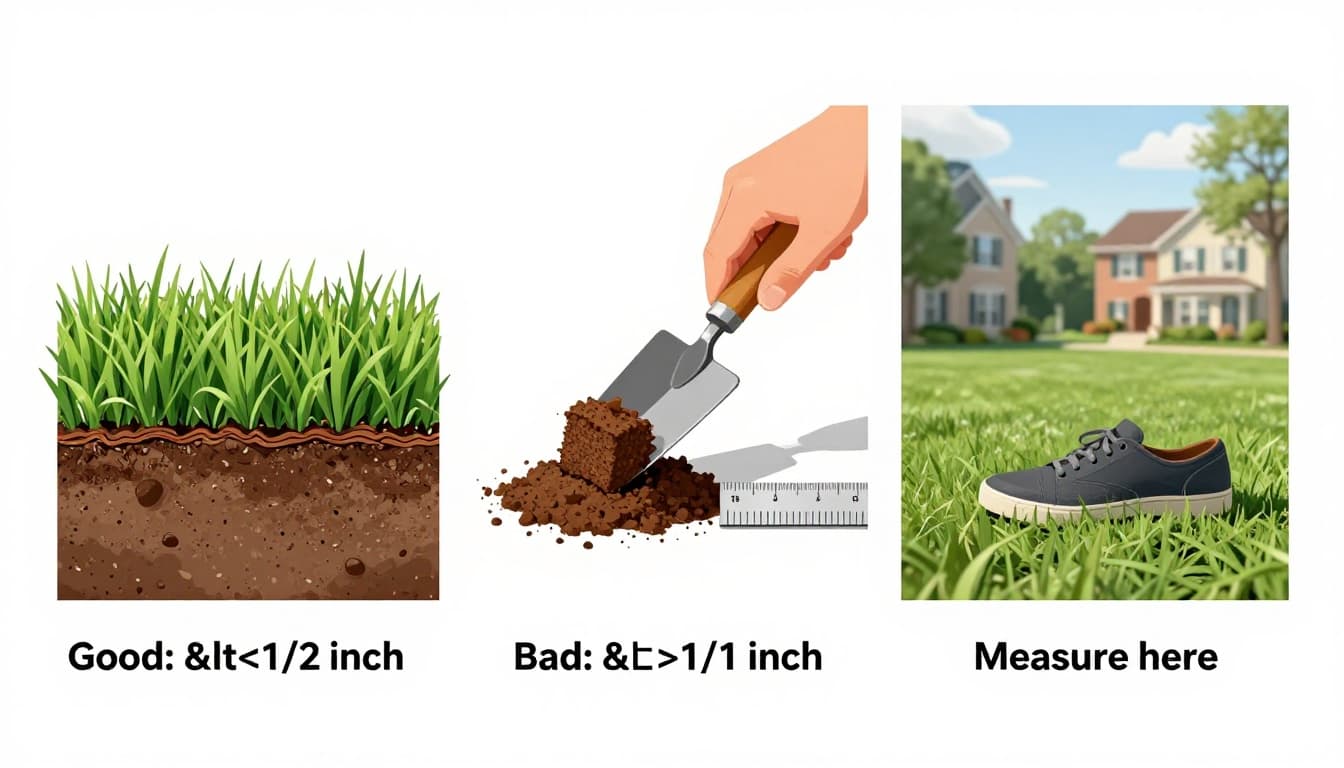
Three ways to spot and measure thatch at ground level, created with AI.
“Thatch” gets blamed for a lot. The fastest way to get clarity is to cut a small plug and measure what’s really there, not what it feels like.
A simple thatch measurement method (10 minutes)
- Pick 3 spots (front, back, and a problem area).
- Use a spade, soil knife, or a hand trowel to cut a small wedge or plug about 3 inches deep.
- Look at the side profile. You’ll see green blades on top, then a brown mat (thatch), then soil.
- Measure only the brown mat with a ruler. Don’t count loose leaf clippings sitting on top.
Here’s a practical rule of thumb for Bermuda and Zoysia lawns in the Atlanta metro:
| Thatch thickness | What it usually means | What to do next |
|---|---|---|
| Less than 1/2 inch | Normal and often helpful | Leave it alone, focus on mowing and watering habits |
| About 1/2 to 3/4 inch | Starting to restrict water and air | Try core aeration, adjust mowing, consider light dethatching if turf is growing strong |
| Over 3/4 inch (or over 1 inch in spots) | Likely causing stress and shallow roots | Plan a careful dethatch/verticut, possibly in phases |
Quick troubleshooting (is it thatch, or something else?)
| Symptom | More likely cause | How to check fast |
|---|---|---|
| Brown streaks after mowing | Scalping on high spots | Look for exposed stems or bare soil on bumps |
| Spongy feel underfoot | Thatch buildup, or overly tall turf | Pull a plug and measure, don’t guess |
| Mower wheels “sink” | Thatch, wet soil, or soft grade | If soil is wet and squishy, wait for it to dry before doing anything aggressive |
| Water runs off or puddles | Compaction or drainage issue | Screwdriver test: hard to push in means compaction |
If your plug shows thin thatch but you still have runoff, compaction is often the real culprit, not thatch.
When to dethatch in Atlanta (and how to do it without wrecking your lawn)
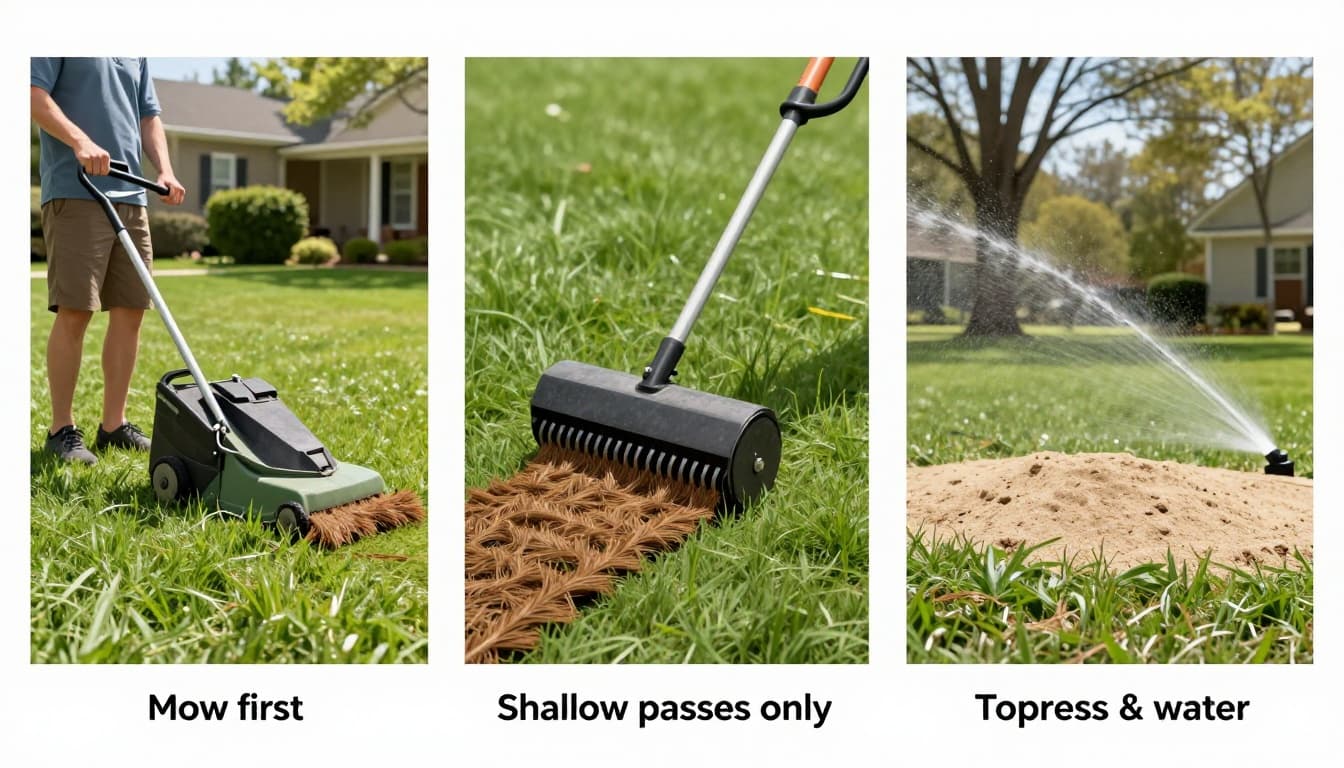
Prep, shallow passes, then cleanup and aftercare, created with AI.
For thatch removal Atlanta homeowners get the best results when the turf can heal fast. That means active growth , not dormancy, and not stress.
Best timing for Bermuda and Zoysia
- Do dethatch: late spring into early summer, once the lawn is fully green and growing.
- Don’t dethatch: winter dormancy, spring green-up that’s still patchy, or during drought and heat stress.
- Zoysia note: Zoysia recovers slower than Bermuda, so be more conservative (lighter passes, fewer directions, and better aftercare). Clemson’s seasonal guidance in their Zoysiagrass maintenance calendar lines up well with that approach.
Before you rent a machine, check soil moisture. If the ground is powder-dry, dethatching can shred crowns. If it’s soggy, you’ll tear and rut the lawn. Aim for soil that’s lightly moist.
Safe dethatching and verticutting steps (shallow is the goal)
- Start with the least invasive fix: correct mowing height and frequency, deep and infrequent watering, and core aeration. Many lawns “thin the sponge” without ever needing blades.
- Mow first (and bag): mow at your normal height (not a scalp) and collect clippings so the machine hits thatch, not a blanket of debris.
- Mark hazards: flag sprinkler heads, shallow drains, and cable lines.
- Set the machine high: on a power rake or dethatcher, begin at the highest setting, then lower only enough to comb thatch. For verticutters, set blades shallow so they barely reach into the thatch, not down into soil.
- Make 1 to 2 shallow passes: one direction first, then a second pass at a right angle only if the lawn is healthy and thatch is still thick.
- Rake and remove debris: thatch piles fast. Rake into windrows, bag it, and haul it off. Leaving piles smothers turf.
- Optional but helpful: core aerate after dethatching (or instead of a second aggressive pass), then topdress lightly with compost or sand where appropriate to help the surface break down thatch over time.
- Aftercare: water lightly for the first few days to keep the surface from drying out, then shift back to deep watering. Hold off on heavy fertilizer until you see steady new growth, then use a light feeding based on the product label. Overseeding isn’t typical for Bermuda or Zoysia, so focus on recovery and density instead.
For more Georgia-specific dethatching notes, Walter Reeves has a solid overview on Bermuda grass dethatching.
When it’s smarter to call a pro
If you have a large yard, thatch over 1 inch, steep slopes, uneven ground that scalps easily, or known irrigation and grading issues, professional equipment and technique can prevent expensive damage. Severe thatch often needs a phased plan, not one aggressive weekend.
Conclusion
Thatch is like insulation: a thin layer helps, a thick layer causes trouble. Measure first, then decide. If the thatch layer is under 1/2 inch, leave it alone and tighten up mowing, watering, and nitrogen habits. If it’s thick, plan thatch removal Atlanta lawns can recover from, which means warm weather growth, shallow passes, and careful aftercare. Your lawn will tell you the truth a few weeks later: firmer footing, better soak-in, and stronger color without fighting the mower.