Atlanta Large Patch Disease Guide For Zoysia Lawns
You look out at your zoysia and see big, straw-brown circles that weren't there before. It's frustrating, especially when the lawn looked "fine" heading into fall. In Metro Atlanta, that pattern often points to zoysia large patch , a Rhizoctonia disease that likes cool, wet turf and slow-growing grass.
The good news is you don't have to guess your way through it. With a smart diagnosis, a few moisture fixes, and the right timing (timing matters most), you can stop it from spreading and reduce repeats next year.
How to spot large patch in an Atlanta zoysia lawn (without fooling yourself)
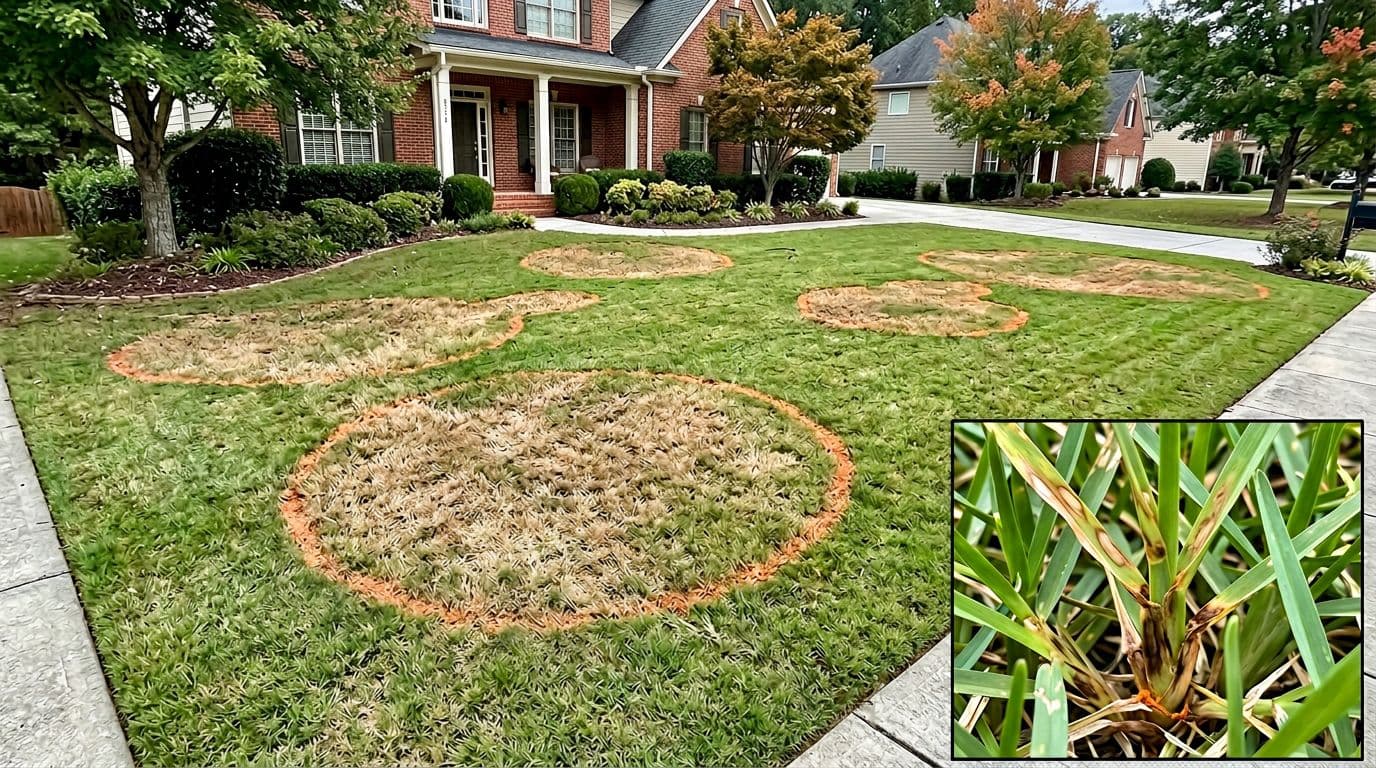 Large, expanding circles with a subtle copper edge are a classic large patch clue, created with AI.
Large patch usually shows up as big circles (often 3 to 15 feet wide) that look thin, dull, or straw-brown. Sometimes the edge has a faint orange or copper ring where it's actively expanding. In early spring, the circles can look even sharper because healthy zoysia starts to green up first, while infected areas lag behind.
Don't judge from the dead center. Walk to the outer edge of a patch and part the turf. Large patch often blights the lower leaf area and sheath near the soil line, so the top can look "off" before you see much spotting up high.
Before you treat, rule out common look-alikes. This quick table helps you keep your diagnosis honest:
| What you're seeing | More likely… | Quick check at home |
|---|---|---|
| Large circles, thin or straw-brown, may have copper edge | Large patch | Expanding ring at edge, worse in cool, wet periods |
| Irregular dull areas that bounce back after deep watering | Drought stress | Blades feel dry and crispy, no defined ring |
| Small dead spot with dark green ring | Dog urine | Spots stay small, scattered, often near pet paths |
| Turf peels up like a loose rug | Grubs | Check for larvae in soil, damage often mid to late summer |
If the problem hits during Atlanta's peak summer humidity instead (July and August), it may be a different disease. This Atlanta lawn disease ID guide helps compare summer fungus symptoms that homeowners mix up with large patch.
Why zoysia large patch shows up here (and why it repeats in the same spots)
Large patch is most active when zoysia is slowing down . In Atlanta, that usually means fall and the cool stretch into spring. Warm-season turf doesn't "outgrow" damage then, so the disease gets time to spread.
Moisture is the fuel. Anything that keeps leaves wet longer raises risk, especially in clay-soil neighborhoods where water sits.
The most common Atlanta triggers look like this:
- Overwatering during cool weather , when the lawn barely needs irrigation.
- Shade and poor airflow , especially along fence lines and under trees.
- Low spots and drainage issues that stay soggy after rain.
- Thatch and compaction , which trap moisture near the crown.
If you keep seeing patches in the same low area, fix the water problem first. A yard doesn't have to flood to be "too wet." This Atlanta drainage fix guide breaks down practical options like regrading and drains, based on what your yard is actually doing during storms.
Mowing also plays a role. Scalping stresses zoysia and exposes crowns, while mowing too high can hold humidity in the canopy. If your height has been inconsistent, use this Atlanta mowing height guide for zoysia as a baseline and adjust slowly.
Gotcha: large patch is often "treated" in spring when you finally notice it, but fall prevention is usually the bigger win .
What to do when you find large patch: start low-risk, then get precise
First, shift your goal. You're not trying to "green up" a patch overnight. You're trying to stop spread and set the lawn up to recover when heat returns.
Step 1: Dry the lawn faster
Keep leaf wetness short, because Rhizoctonia likes long, damp nights.
Water only in the early morning , and only when the lawn truly needs it. In many Atlanta fall and winter weeks, rainfall covers it. Also, avoid watering on days when the yard already feels soft underfoot.
Step 2: Don't push fall growth with nitrogen
Heavy fall nitrogen can make the lawn tender and more disease-prone. If you fertilize late in the season, keep it modest and avoid "extra-green" programs when nights cool down.
Step 3: Keep mowing steady and not too low
Maintain a consistent height and follow the one-third rule. Also, mow when the lawn is dry if you can. Wet mowing clumps and smears disease around.
Step 4: Decide if fungicide timing makes sense
Fungicides can help, but only when you use the right product and apply at the right time. For most Atlanta homeowners, the best results come from preventive applications as zoysia heads into the cool season (late summer into fall), sometimes followed by a second application a few weeks later if conditions stay wet.
Always follow the label, use the listed PPE, and keep kids and pets off until the product is dry and the label allows re-entry. For Georgia-specific guidance on identification and timing, use the UGA Extension large patch publication, and consider contacting your county extension office if you want help confirming the diagnosis.
Simple seasonal action plan for Metro Atlanta zoysia lawns
Use this as a practical checklist you can follow year to year.
- Late summer (August to early September)
Check irrigation coverage , then cut back frequency as nights cool. Watch for low spots that stay damp after storms. - Fall (September to November)
Avoid heavy nitrogen , keep mowing consistent, and remove leaf piles quickly. If large patch is a yearly problem, plan preventive control during this window based on weather and label timing. - Winter (December to February)
Don't overwater dormant zoysia. Keep traffic light on soggy areas, and fix drainage plans while the lawn is dormant. - Spring (March to May)
In March 2026, you may see rings clearly as green-up starts. Be patient. Rake out matted turf lightly, keep water conservative, and wait to fertilize until the lawn is actively growing. - Summer (June to July)
Focus on deep, infrequent watering and steady mowing. Healthy summer growth helps the lawn store energy, so it rebounds better after a rough spring.
Common mistakes that keep large patch coming back
- Overwatering in cool weather , especially at night.
- Heavy fall nitrogen to "push color," then patches show up anyway.
- Mowing too low (scalping high spots and stressing crowns).
- Ignoring drainage in Atlanta clay, where water lingers.
- Treating too late , after the disease has already moved through the area.
Conclusion
Large patch can make a great zoysia lawn look guilty fast, but it's a fixable pattern once you respect the timing. Focus on drying the turf , steady mowing, and fall prevention instead of spring panic. If you're unsure, confirm the diagnosis before treating, and use Georgia extension guidance for product labels and timing. Get those basics right, and your zoysia has a much better shot at a thick, even green-up.