Atlanta Large Patch In Zoysia Identification And Fall Treatment Plan
Those orange-rimmed circles showing up in your Zoysia can feel personal. One week the lawn looks solid, the next it's dotted with patches that won't green back up.
In Metro Atlanta, zoysia large patch is one of the most common fall and spring troublemakers. The good news is you can usually confirm it at home, then stop it from spreading with a simple plan.
This guide covers what to look for, what triggers it here, and exactly what to do this fall (plus what to handle next spring).
How to identify zoysia large patch (and avoid common look-alikes)
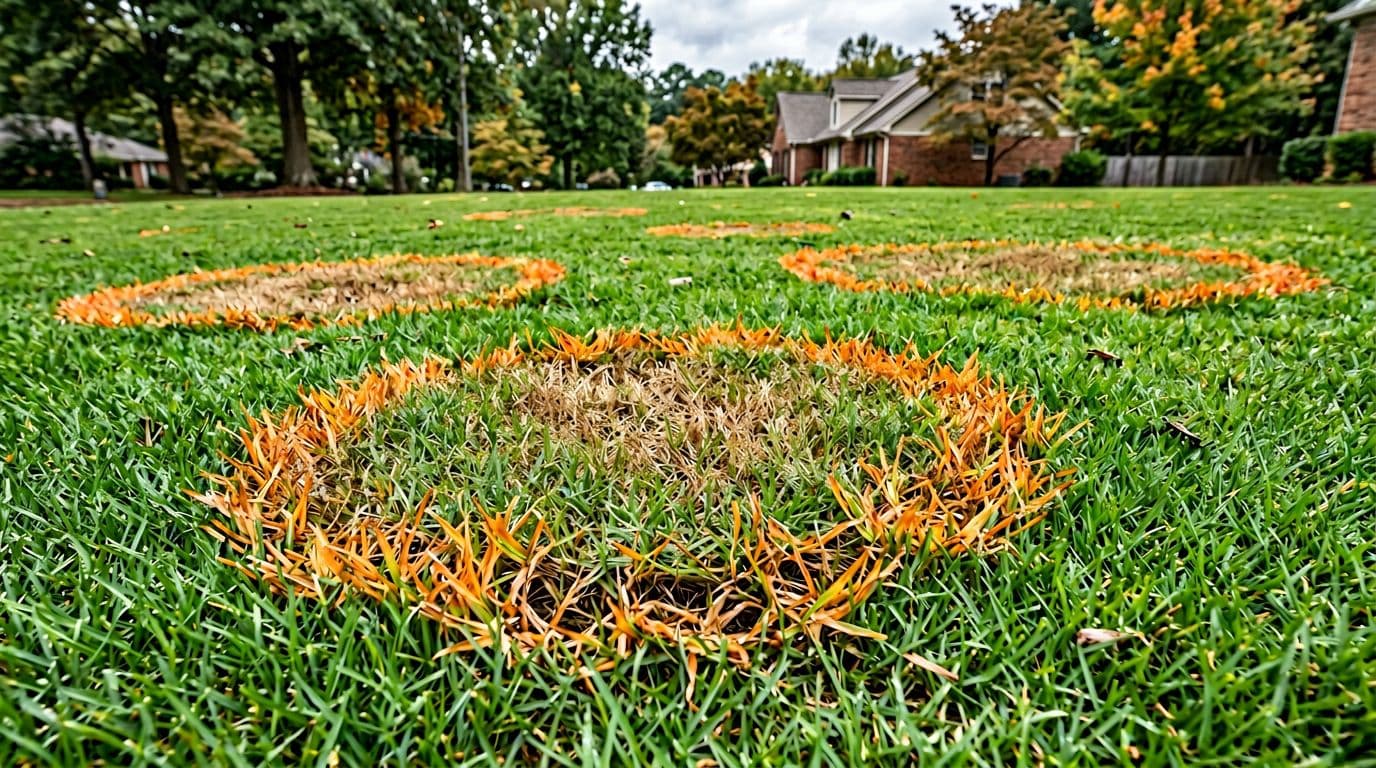 Large Patch often shows irregular rings with orange-bronze edges in early fall, created with AI.
Large patch (caused by Rhizoctonia solani ) tends to show up as circular to oval patches , often 3 to 10 feet wide. In early fall, the edge may look orange or bronze, while the center looks tan, thin, or off-color.
A quick way to check yourself is the "edge test." Don't inspect the dead center. Instead, look at the outer edge where green meets damaged turf . That's where active disease shows.
Here's what points toward large patch in Atlanta Zoysia:
- Patch pattern : Rings or blobs that slowly expand, not tiny specks everywhere.
- Color at the margin : Orange-bronze border is a classic clue in fall.
- Location : It often starts where turf stays damp, shade lines, low spots, thick thatch areas, or near downspouts.
- Timing : You'll see it in fall as temperatures cool, then again in spring during green-up.
What it's not: dog urine (small spot with a dark green halo), grub damage (turf peels up easily), or drought (large uniform stress that improves after deep watering). If you're sorting through other patch diseases, RW Lawn Co's guide to spotting and treating fungal patches in Atlanta turf can help you rule out the usual imposters.
If the patches have a brighter, orange-looking edge in fall, treat it like active large patch until proven otherwise.
Why large patch flares in Atlanta: soil temperature, moisture, and mowing height
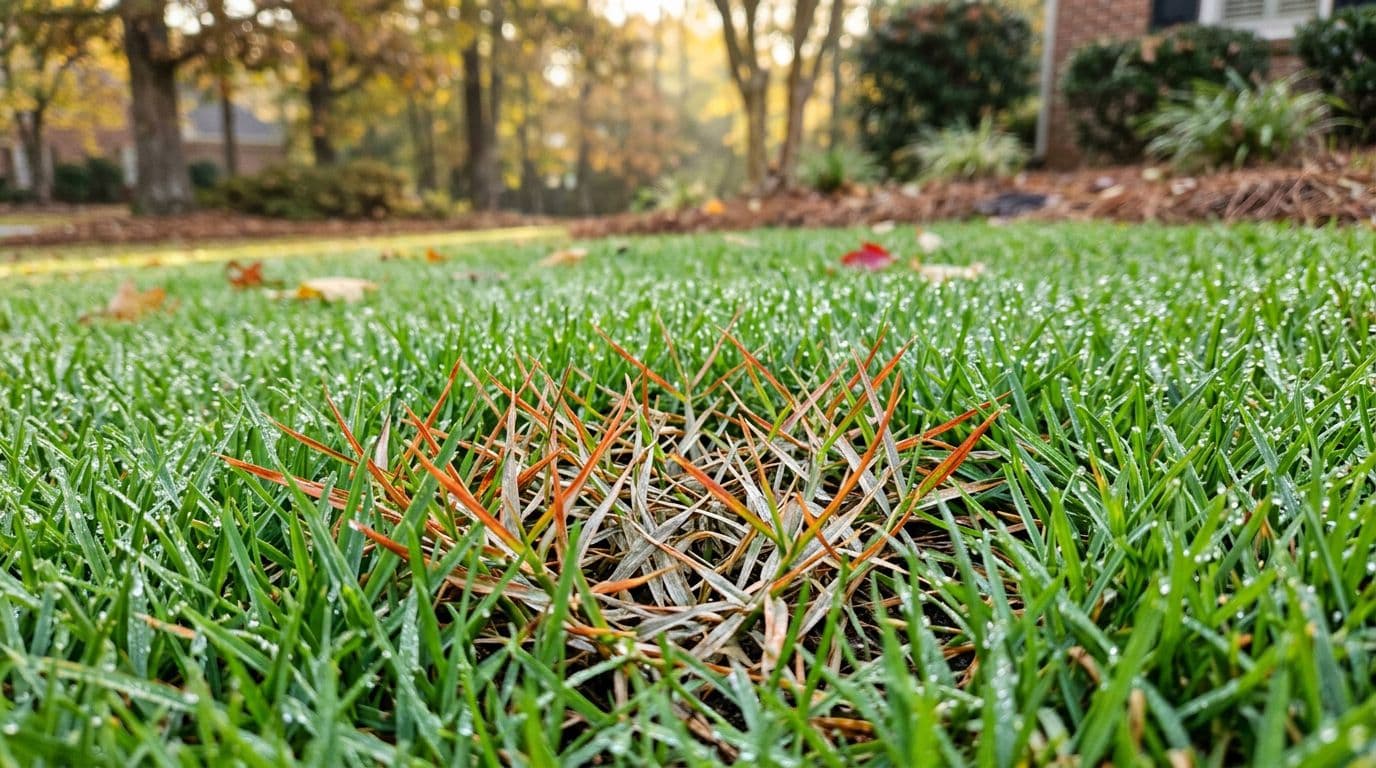 Close-up symptoms at the edge of a patch, created with AI.
Think of large patch like mold in a bathroom. It doesn't need constant rain, it needs long damp periods and the right temperature window.
In the Atlanta area, large patch risk climbs when soil temperatures fall into the upper 60s to low 70s°F and the lawn stays wet overnight. Many lawns get hit right as mornings turn dewy, days stay warm, and nights cool off.
A practical trigger is this: start paying close attention when your 2-inch soil temperature drops to about 70°F and keeps sliding . A basic soil thermometer is more reliable than guessing by air temps.
Moisture mistakes speed it up:
- Overwatering in fall (especially evening irrigation)
- Poor drainage in Georgia clay
- Dense shade that holds dew
- Thatch that acts like a wet sponge
Mowing also matters because it controls airflow. Zoysia cut too high can trap humidity near the soil, while Zoysia scalped too low can stress the turf and slow recovery.
Here are homeowner-friendly mowing ranges for common Zoysias (rotary mower), with the "best" choice depending on sun, shade, and lawn smoothness:
- Zeon Zoysia : about 1.0 to 2.0 inches (lower end only if the lawn is very level)
- Empire, Meyer, Emerald : about 1.5 to 2.5 inches
- Shady lawns : stay toward the higher end for better leaf area, but avoid letting it get puffy and matted
For a deeper local breakdown, use RW Lawn Co's Atlanta Zoysia mowing height guide to avoid disease pressure.
Fall treatment plan for zoysia large patch: culture first, then fungicide timing (if needed)
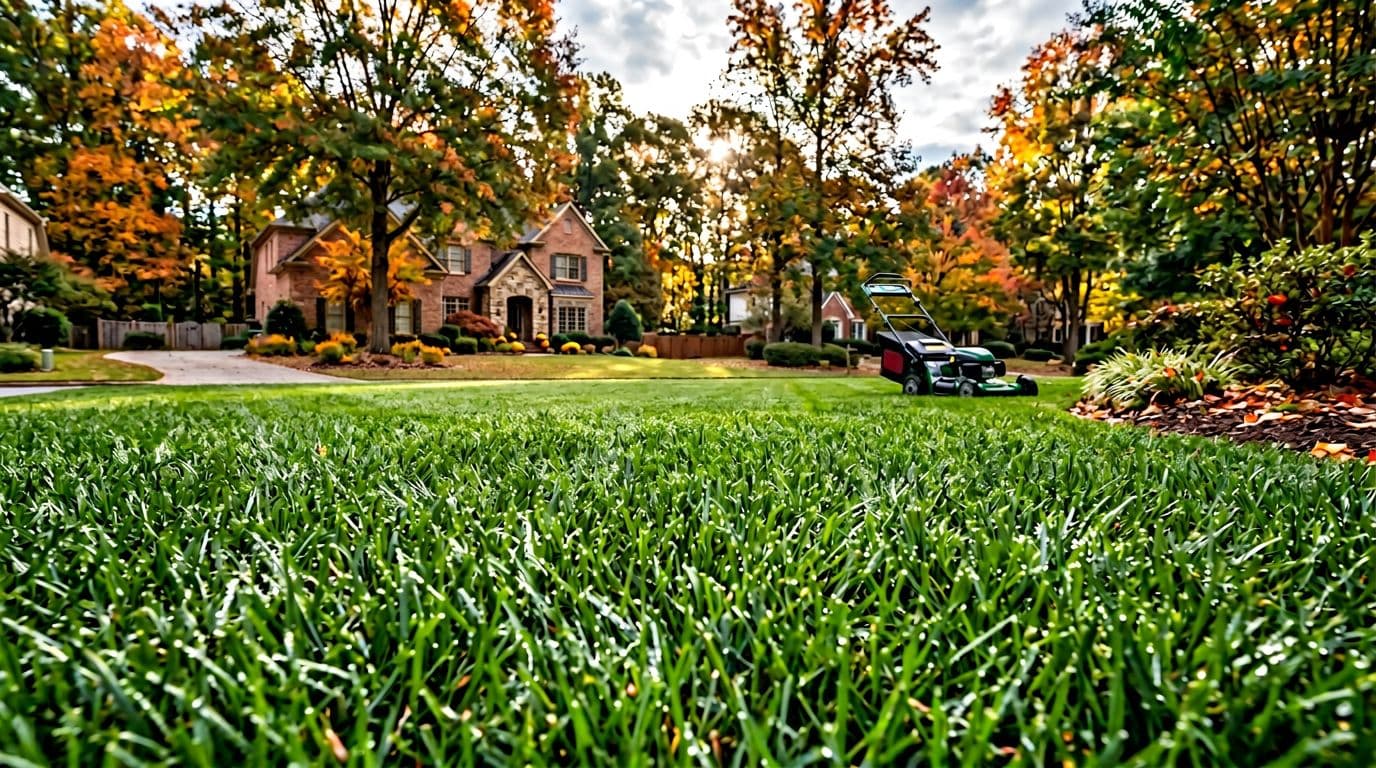 Healthy Zoysia after a fall treatment routine, created with AI.
Start with the moves that change the environment, because that's what slows disease long-term.
First, tighten up watering. Water only in early morning , and only when the lawn actually needs it. In fall, many Atlanta Zoysia lawns need far less irrigation than homeowners think. Also, avoid "just in case" watering after sunset.
Next, be careful with nitrogen. Fall nitrogen can push soft growth and raise disease pressure. If you fertilize, keep it modest and follow a soil test. Many homeowners do best by avoiding quick-release nitrogen once growth slows and nights cool off.
Then check thatch. If the lawn feels spongy, large patch has a perfect hiding place. Still, don't dethatch aggressively in fall . Plan that work for late spring to early summer when Zoysia is actively growing and can recover.
Fungicide can help, especially if the disease returns every year or the patches are spreading. The key is timing and rotation, not repeat-spraying the same thing.
A simple fall approach is to apply preventively around the soil temperature window:
- Application window #1 : when 2-inch soil temps trend near 70°F (fall cool-down)
- Application window #2 : about 3 to 4 weeks later if conditions stay wet and cool
For resistance management, rotate FRAC groups across applications when the label allows. Common large patch actives often fall into these groups: FRAC 3 (DMI), FRAC 7 (SDHI), FRAC 11 (QoI), FRAC 1 (MBC) . Don't repeat the same FRAC group back-to-back all season.
Before you choose anything, read the label for turf species, residential site use, rate, watering-in instructions, and re-entry guidance . Also follow local regulations and keep kids and pets off treated areas until the product has dried and the label allows access.
Here's a quick cost and effort snapshot to help you decide:
| Option | Best for | Effort level | Typical cost range (Atlanta homeowners) |
|---|---|---|---|
| Cultural fixes only (watering, mowing, drainage tweaks) | Mild cases, first-time outbreaks | Medium | Low ($0 to $50) |
| DIY fungicide program (1 to 2 fall applications) | Repeat problems, active spread | Medium | Medium ($40 to $140) |
| Professional diagnosis and treatment | Large lawns, recurring disease, time savings | Low | Medium to high (varies by lawn size) |
A clear action checklist (this week, this month, and next spring)
Small steps add up fast with large patch, especially in Atlanta's stop-and-go fall weather.
This week
- Confirm the pattern : walk the patch edges, take photos, and mark the outer ring with a small flag.
- Change watering today : early morning only, and skip irrigation if rain and dew are heavy.
- Set mowing height correctly : stay in the right range for your Zoysia type, and sharpen the blade.
- Pause nitrogen : if you were planning a "fall green-up" feeding, hold it until you're sure it's appropriate.
This month (fall prevention mode)
- Track soil temps at 2 inches for a week so you stop guessing.
- Improve dry-down : clear blocked downspouts, fix soggy low spots, and trim shrubs that block airflow.
- Consider fungicide if the ring expands : rotate FRAC groups across applications, and follow the label exactly.
Gotcha: large patch can infect in fall even when damage looks minor. Waiting until spring usually means you're reacting, not preventing.
Next spring
- Don't rush early nitrogen during green-up, especially where large patch hit last fall.
- Plan recovery work when Zoysia is growing : leveling, thatch control, and aeration fit better in late spring to early summer.
- Use RW Lawn Co's spring green-up plan for Atlanta Zoysia lawns to time your first mow and early-season choices.
Conclusion
Large patch doesn't mean your Zoysia is "done." It means conditions stayed wet during the wrong temperature window. Once you spot the ringed pattern and confirm it at the edges, you can slow it down fast with smarter watering, correct mowing height, and a well-timed fall plan. If you want the best odds next year, focus on fall prevention and spring restraint, not extra nitrogen.