Atlanta Lawn Fungicide Plan For Bermuda And Zoysia

RW Lawn Co • February 24, 2026

Share this article

Atlanta summers don't play fair. Warm nights, sudden storms, and heavy humidity can turn a healthy lawn into a spotted mess fast. That's why a good Atlanta lawn fungicide plan isn't about constant spraying, it's about timing, scouting, and fixing the conditions that keep grass wet.

This guide lays out a practical plan for Bermuda and Zoysia lawns in Metro Atlanta. You'll know what to watch for, when fungicide actually helps, and how to rotate products so they keep working year after year.

Start with the right targets: Bermuda vs Zoysia disease pressure in Atlanta

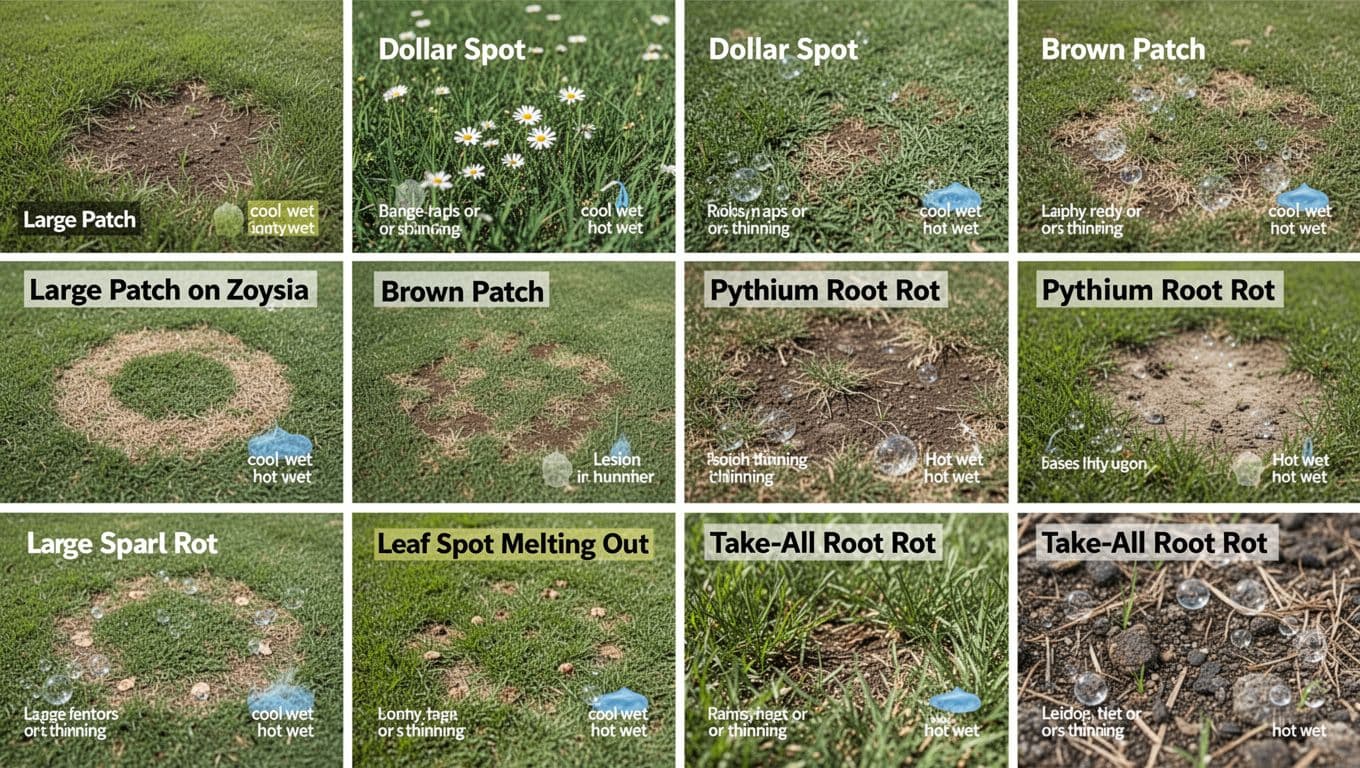
Clean realistic infographic in a 2x3 grid showing close-up lawn patches of six common warm-season turf diseases in Atlanta: Large Patch on Zoysia, Dollar Spot, Brown Patch, Pythium Root Rot, Leaf Spot Melting Out, Take-All Root Rot, with symptoms like rings, lesions, thinning, and notes on cool wet or hot wet conditions. Common warm-season turf diseases Atlanta homeowners run into, illustrated for quick ID (created with AI).
Bermuda and Zoysia are both warm-season grasses, but they don't get sick the same way. Atlanta's clay soil, shade pockets, and long dew periods add fuel to most fungus problems. Still, your grass type sets the "usual suspects" and the best timing.

Use this table as your starting map:

Topic Bermuda (common in full sun) Zoysia (often part sun)
Mowing height (typical rotary mower) 1.25 to 2.0 inches in summer 1.75 to 2.5 inches in summer
Fastest common outbreaks Leaf spot, dollar spot, occasional Pythium in saturated areas Large patch in spring/fall, plus dollar spot and leaf spot
Recovery speed Faster fill-in during peak summer Slower recovery, damage can linger
Thatch risk Moderate, depends on mowing frequency Higher risk if kept tall and overwatered

Mowing height and leaf wetness matter more than most people think. A lawn cut too low "sunburns," while a lawn kept too tall can trap humidity like a wet blanket. For local ranges and what goes wrong when height is off, use this Atlanta mowing height for Bermuda Zoysia.

A step-by-step fungicide plan (and when to skip spraying)

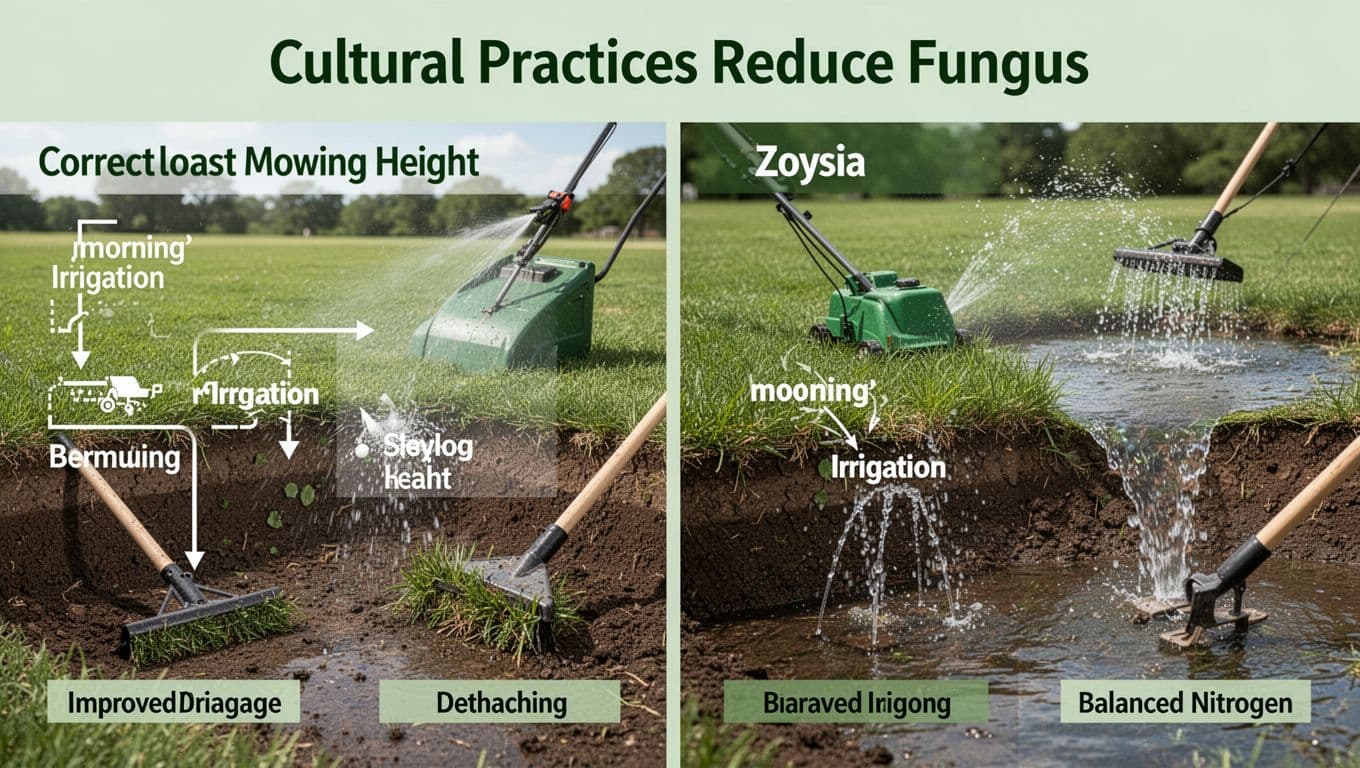
Split-panel infographic detailing correct mowing height, morning irrigation, improved drainage, dethatching, aeration, and balanced nitrogen to prevent fungus on Bermuda versus Zoysia lawns. Clean, realistic style with high-resolution natural colors, readable labels, and focus on grass, tools, and water features. Every fungicide plan works better when mowing, watering, and drainage reduce leaf wetness (created with AI).
Think of fungicide like an umbrella. It helps during the storm, but it won't fix a leaking roof. In Atlanta, most outbreaks start because the lawn stays wet too long.

Here's a simple plan that avoids unnecessary blanket applications:

  1. Set cultural "defaults" first (March to October).
    Water early morning only. Mow with a sharp blade. Avoid heavy nitrogen right before a rainy stretch. Fix low spots that stay soggy after storms.
  2. Scout weekly, and scout smarter after weather triggers.
    Check the lawn 24 to 72 hours after multi-day rain, warm muggy nights, or irrigation mistakes. Walk the edges of any thinning areas and pull a few blades to look for lesions.
  3. Treat based on spread, not panic.
    Hold off if you only see minor speckling and the forecast turns dry. Treat when patches expand each week, or when you're protecting high-value turf (fresh sod, front yard, heavy foot traffic).
  4. Spot-treat when you can.
    Many lawns only need the problem zone treated, especially shaded corners, areas near downspouts, and low drainage pockets.

Biggest Atlanta "fungus accelerators": evening watering, tall wet canopy, and thick thatch over clay.

Labels vary by product and by what's approved for home lawns. Focus on the active ingredient and follow local label directions for rates, intervals, watering-in rules, and safety.

FRAC rotation in plain language (so fungicides keep working)

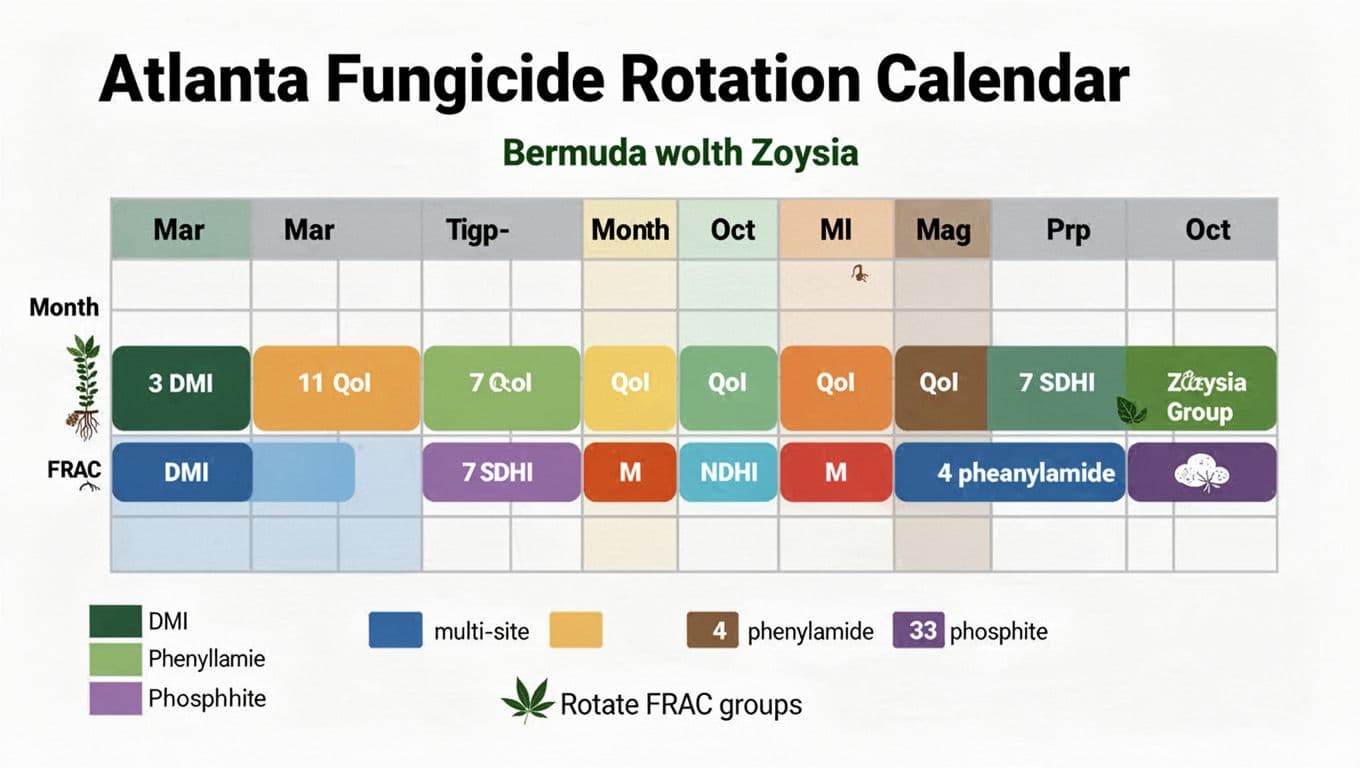
Month-by-month timeline from March to October for fungicide rotation on Bermuda and Zoysia grasses in Atlanta, featuring color-coded blocks by FRAC groups including DMI, QoI, SDHI, and others, with a legend noting to rotate FRAC groups. Clean infographic style with natural colors and readable labels. A simple rotation calendar concept for Atlanta's main disease season (created with AI).
FRAC groups are like "families" of fungicides. If you keep using the same family, the fungus can adapt. Rotating FRAC groups lowers that risk, and it also keeps you from leaning on one product all season.

Here's a practical cheat sheet for common turf actives you'll see on labels (availability and home-lawn approval can vary):

FRAC group Common actives (examples) Often used for Rotation note
3 (DMI) propiconazole, myclobutanil many foliar diseases, some patch diseases Don't repeat back-to-back if disease pressure stays high
11 (QoI) azoxystrobin, fluoxastrobin dollar spot, leaf spot, some root stress help Avoid overuse, resistance risk is real
7 (SDHI) varies by product (SDHI active) broad support, often strong in rotations Great "third step" after 3 and 11
1 (MBC) thiophanate-methyl (where allowed) some leaf spots Use carefully, resistance can be common
M (multi-site) chlorothalonil (where permitted for turf) broad protection Multi-site tools help rotations, but may be restricted
33 (phosphites) phosphite/phosphonate salts stress support, some root and patch programs Not a cure-all, best as a partner tool
4 (phenylamide) mefenoxam (where appropriate) Pythium-type issues in saturated soils Targeted use only, not for routine foliar spots

Two sample FRAC rotation sequences (examples, not label instructions):

  • Rotation A (summer foliar pressure, Bermuda or Zoysia): FRAC 3 (propiconazole or myclobutanil) → FRAC 11 (azoxystrobin or fluoxastrobin) → FRAC 7 (an SDHI product)
  • Rotation B (root or saturated-area risk): FRAC 4 (mefenoxam, when Pythium is likely) → FRAC 33 (phosphites) → FRAC 3 or 7 (depending on the disease you confirmed)

With any Atlanta lawn fungicide program, repeat applications should be driven by weather and active spread, not a fixed calendar.

Application basics plus "If you see X, do Y" troubleshooting

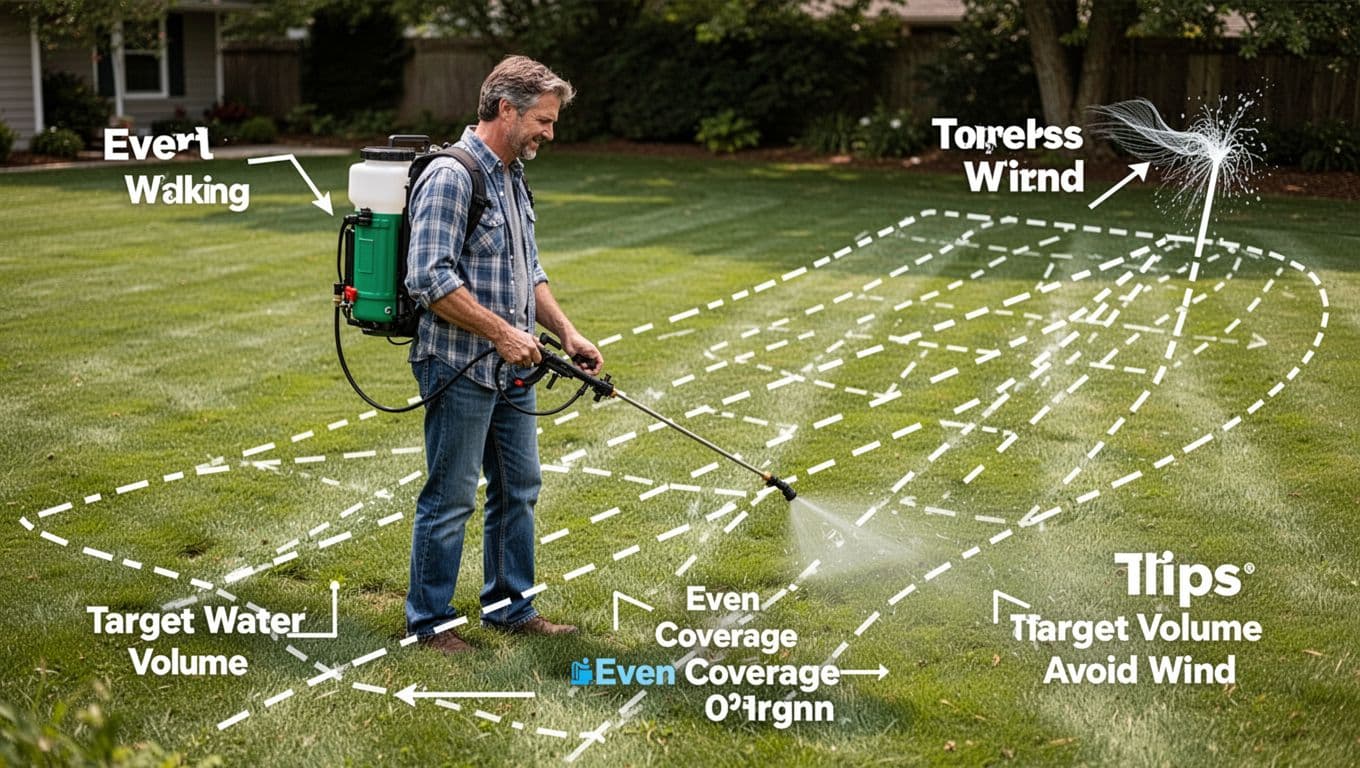
Clean realistic infographic of a homeowner using a backpack sprayer on a lawn, featuring dashed coverage patterns that illustrate correct walking pace, overlap, target water volume, even coverage, and tips to avoid wind. Even coverage matters, because streaky spraying creates "zebra stripe" results and misses active disease edges (created with AI).
Coverage is the difference between "it worked" and "it didn't." Calibrate your sprayer, keep a steady pace, and overlap passes slightly. Also match watering-in to the target:

  • Foliar diseases (spots, blights): You usually want the product to stay on the leaf. Avoid heavy irrigation right after, unless the label says otherwise.
  • Root or crown issues (Pythium-type problems): Many products require watering-in to move the active into the root zone.

Now the quick workflows Atlanta homeowners ask for most:

  • If you see large circular patches during cool, wet spring or fall on Zoysia, do this: suspect large patch . Stop evening watering, mow only when dry, and treat the advancing edge (not just the dead center) with a rotated FRAC plan (often a FRAC 3, then rotate to 7 or 11 if a follow-up is needed).
  • If you see greasy, dark, fast-spreading collapse after heavy rain and heat, do this: suspect Pythium-type trouble in a low, soggy area. Improve drainage first, then consider FRAC 4 (mefenoxam) only when the label fits the disease and site.
  • If you see small straw "coins" that multiply in sunny areas, do this: suspect dollar spot. Dial in nitrogen (not heavy, just balanced), reduce leaf wetness, and rotate FRAC groups if fungicide is warranted.
  • If you can't tell brown patch vs dollar spot vs leaf spot, do this: confirm with leaf symptoms before buying anything. This Atlanta summer lawn disease guide walks through what to look for up close.

When the same area gets hit every year, treat the cause too (shade, thatch, poor drainage, compaction). Fungicide can help you stop the bleeding, but cultural fixes keep it from coming back.

Conclusion

Atlanta fungus problems feel sudden, but a calm plan wins. Scout first, correct moisture, and use Atlanta lawn fungicide applications only when disease is active or highly likely. Rotate FRAC groups, follow the local label, and focus treatments on the edges where disease spreads. If you want the lawn to stay thick all season, make "dry leaves by mid-morning" your north star.

By RW Lawn Co February 25, 2026
A sharp bed edge is like a picture frame for your yard. It makes mulch look cleaner, plants pop more, and mowing feels easier. If you've tried bed edging atlanta style before, you already know the challenge: our heavy rains, fast-growing warm-season grass, and compacted soil c...
By RW Lawn Co February 23, 2026
You walk outside and the lawn looks "bronzed" in patches, almost like it got singed overnight. In Atlanta, that kind of fast damage often points to armyworms , especially on Bermuda and Zoysia during warm, wet stretches. The bottom line: a good armyworm treatment starts with t...
SHOW MORE