Atlanta Lawn Watering Restrictions: A Homeowner Guide
Atlanta lawn watering restrictions are easier to follow when you separate Georgia's statewide rule from local drought instructions. For most homeowners, the baseline is clear: landscape watering is allowed between 4 p.m. and 10 a.m. , even when no mandatory drought schedule is active.
The difficult part is knowing whether your city or water provider has added a conservation request, watering schedule, or special exemption. Check the provider listed on your water bill before you program an irrigation controller or hire someone to water the lawn.
What Atlanta lawn watering restrictions mean in August 2026
Georgia's statewide window is 4 p.m. to 10 a.m.
Georgia's year-round baseline allows outdoor watering only from 4 p.m. until 10 a.m. The rule covers lawns, ground cover, trees, shrubs, and other landscape plants supplied by an EPD-permitted water system.
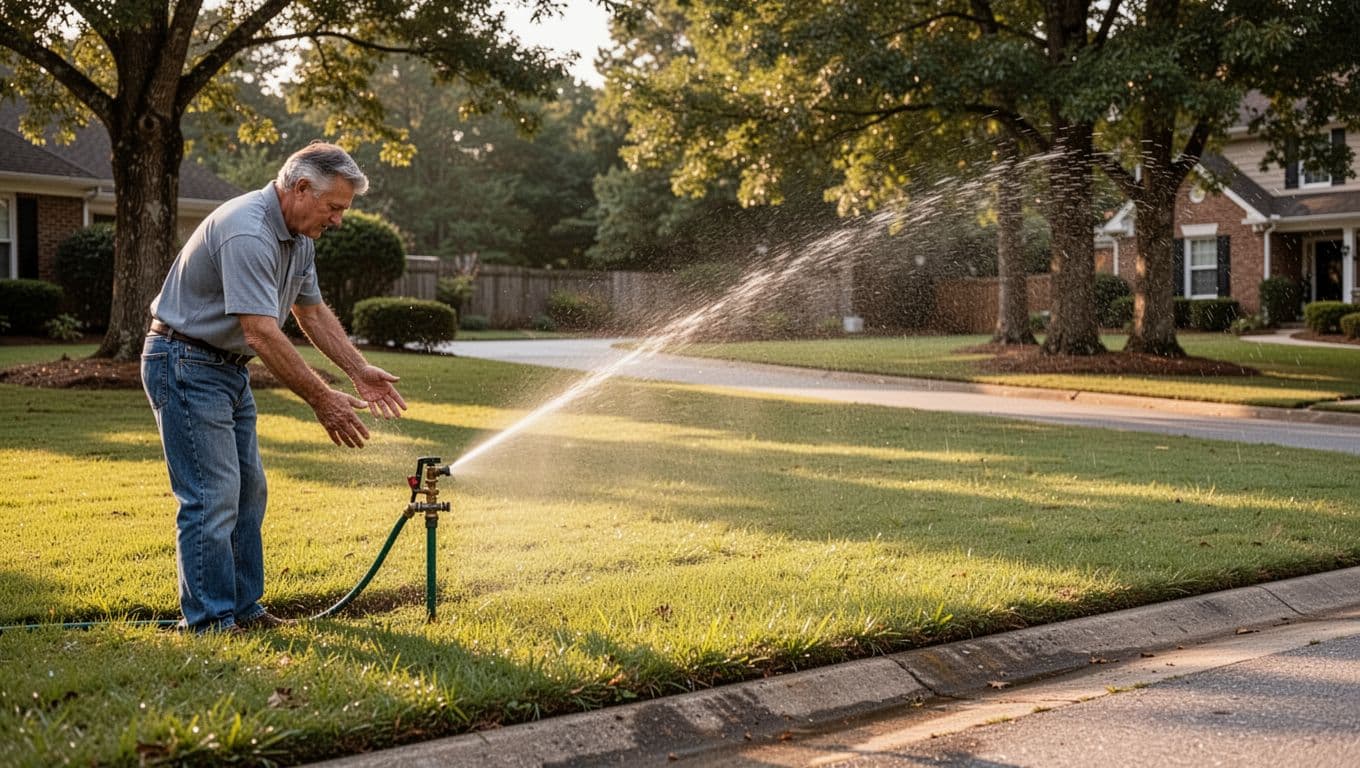
That means a sprinkler should not run during the hottest part of the day. A controller set for noon can violate the statewide schedule, even if the lawn looks dry.
The baseline does not automatically limit watering to certain weekdays. Odd-numbered and even-numbered address schedules belong to more severe drought responses or local conservation notices. Don't treat an odd-even calendar as the default rule for every Atlanta-area address.
Level 1 drought response does not mean a watering ban
Georgia announced a statewide Level 1 Drought Response in April 2026. Atlanta Watershed Management described that stage as a voluntary conservation request, not a new mandatory outdoor watering cutoff.
The year-round 4 p.m. to 10 a.m. window still matters. At the same time, drought conditions can change during the season. Check the latest notice from Georgia's Environmental Protection Division and your water provider before relying on an older announcement.
A drought declaration and a watering ban are different things. Level 1 encourages conservation, but it does not automatically create an odd-even lawn schedule.
Atlanta Watershed customers should check the city guidance
For customers served by the City of Atlanta's water system, Atlanta Watershed Management identifies the 4 p.m. to 10 a.m. period as the permitted outdoor watering window. Its April 2026 Level 1 notice did not add mandatory outdoor restrictions beyond the existing statewide framework.
That guidance applies to Atlanta water customers, not every homeowner who lives in the larger metro area. A nearby property may receive water from DeKalb County, Fulton County, Cobb County, Gwinnett County, Fayette County, or a city utility with a separate customer notice.
Why Metro Atlanta watering schedules can differ
Your water provider matters more than your mailing address
Metro Atlanta crosses multiple cities, counties, and water systems. Two homes on opposite sides of a county line can have different customer notices, even when both properties follow Georgia's statewide baseline.
Look at a recent water bill or search your utility account for the provider's name. Then check that provider's official conservation or drought page. A neighborhood association post or an old lawn-care calendar may describe rules that no longer apply.
Fayette County Water System, for example, announced a voluntary two-day-per-week odd-even approach during its April 2026 drought response. That request was more specific than the general statewide schedule, but it was not a reason to apply the same schedule to every Atlanta-area home.
Verify the rule before setting your irrigation controller
Before watering, confirm four details:
- The water utility serving the property.
- The current drought response level.
- Whether the notice is mandatory or voluntary.
- Any listed exemptions or approved watering methods.
A utility notice may use terms such as "conservation request," "drought response," or "mandatory restriction." Those terms carry different practical weight. Read the complete notice instead of relying on a headline or a social media summary.
If your home sits near a city boundary, verify the address directly with the utility. County names alone may not identify the correct rule.
Exemptions need careful handling
Atlanta Watershed guidance identifies hand watering with a hose and shutoff nozzle and drip irrigation among methods treated differently under the baseline framework. Food gardens can also receive different treatment during drought restrictions.
However, an exemption may apply to a method, plant type, or drought stage without removing every time-of-day requirement. Don't assume that new sod, new shrubs, or a vegetable garden automatically permits unrestricted watering. Georgia EPD or the local utility should confirm the current exception before you depend on it.
The official guidance also does not support using a generic fine amount for every Atlanta-area property. Penalties and enforcement procedures depend on the applicable utility or local code, so contact the provider if you receive a warning or have a special situation.
How to water an Atlanta lawn within the rules
Use the legal window, then adjust for weather
The most practical watering period is often early morning, before 10 a.m. The air is cooler, wind is usually lower, and grass has time to dry during the day. Late afternoon and evening watering also fall inside the statewide window, but saturated grass that stays wet overnight can face more disease pressure.
Rain should change your plan. Turn off automatic irrigation after a meaningful rainfall, then check the soil before restarting it. Atlanta clay soil can hold water near the surface while the lawn still looks uneven because of compaction or poor sprinkler coverage.
Watering every dry-looking spot may hide a drainage or soil problem. Check whether the brown area is under a tree, beside a driveway, or outside the sprinkler's actual pattern.
Measure sprinkler output instead of guessing
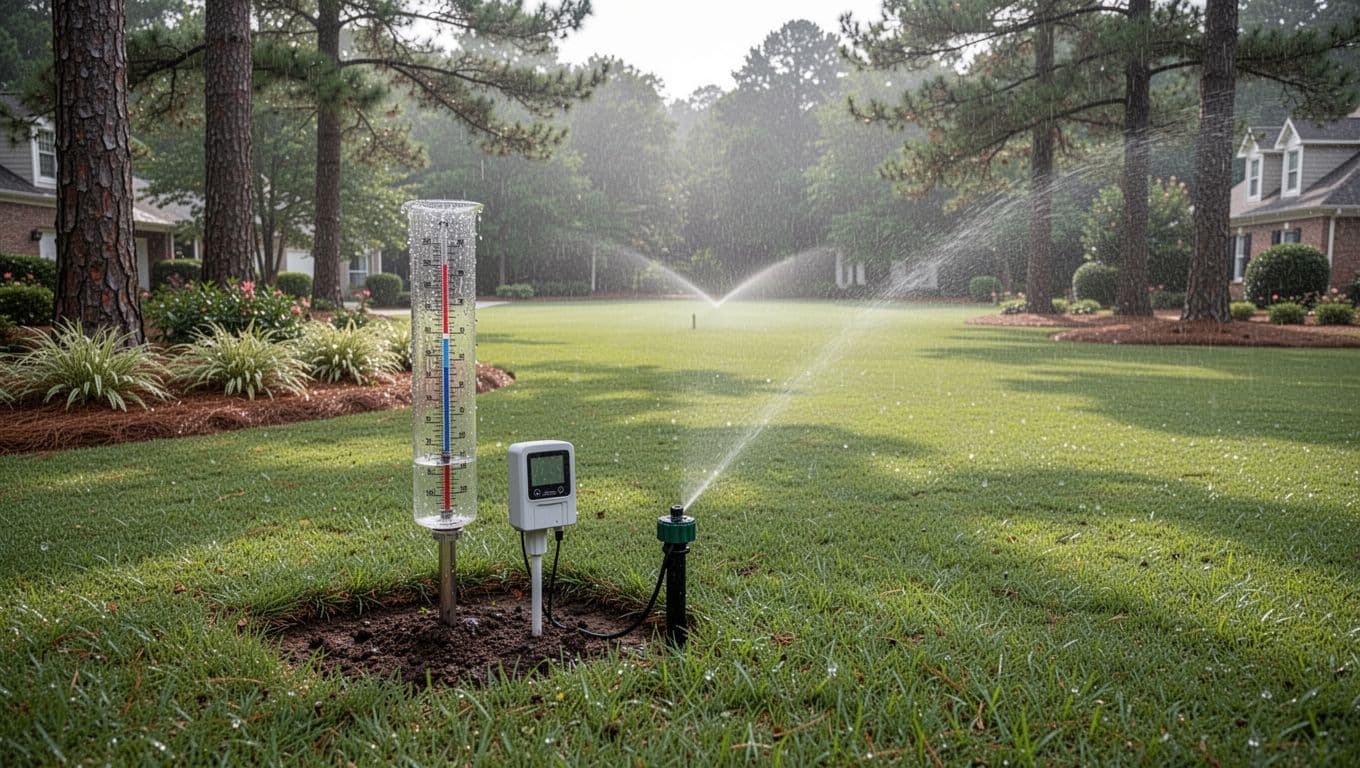
Place several shallow, straight-sided containers across the lawn while the sprinkler runs. Compare the amount collected in each container. Uneven depths show that some areas receive too much water while others stay dry.
Short cycles with pauses can help clay soil absorb water without runoff. If water flows onto a sidewalk or street, reduce the cycle length and allow the soil to absorb each application before running another cycle.
A rain gauge or soil moisture sensor can also prevent unnecessary irrigation. The goal is to water based on soil and plant conditions, not on a timer that runs regardless of rain.
Match the plan to your grass type
Bermuda and zoysia are common warm-season grasses in Metro Atlanta. They grow most actively during warm weather and can enter dormancy during colder months. Tall fescue follows a different pattern and often needs more attention during fall, spring, and periods of summer heat.
Grass type affects watering frequency, mowing height, soil preparation, and expectations for summer color. A seasonal plan for watering Bermuda, Zoysia, and tall fescue can help you adjust care without treating every lawn the same way.
Newly seeded areas and recently installed sod may need more frequent attention while roots establish. Before using a special schedule, confirm any applicable watering exemption with the local water provider.
Mistakes that waste water or stress grass
Confusing legal hours with a full watering schedule
A homeowner may hear "water before 10 a.m." and assume every morning is allowed without restriction. The statewide baseline sets the time window, but a local drought notice may also limit the number of watering days.
The opposite mistake is just as common. Some homeowners stop watering altogether when they hear about drought response, even though the current stage is voluntary. Follow the official notice, then adjust the amount of water to the lawn's actual needs.
Running irrigation for a few minutes every day
Daily light sprinkling wets the surface but may not move water into the root zone. It can also encourage shallow roots and create runoff on compacted soil.
A better routine uses longer, controlled cycles with pauses when needed. Let the soil condition guide the next application. Footprints that remain visible, folded grass blades, and dry soil below the surface can indicate stress, while soft, saturated ground suggests that irrigation should stop.
Cutting grass too short
Scalping removes leaf area that grass needs for energy and exposes soil to heat. A short lawn can look dry sooner, which may lead homeowners to water more often.
Use a height suited to the turf type and avoid removing more than one-third of the blade at a time. If mowing is part of your weekly routine, review this Atlanta lawn mowing height guide before lowering the mower deck.
When professional lawn care makes sense
Ask for watering-aware service
If you hire a mowing or landscaping company, tell the crew which utility serves the property and whether the utility has issued a local conservation notice. The provider can then schedule visits without disturbing irrigation runs or driving equipment across saturated soil.
A professional crew should also watch for exposed sprinkler heads, standing water, bare patches, soil compaction, and runoff. These problems can waste water even when the controller follows the correct hours.
Keep the irrigation controller accessible and label its zones for your own records. If a service provider recommends a schedule change, ask which grass type, soil condition, and weather pattern support that adjustment.
Fix the cause of dry or thin grass
Water is not always the answer to a struggling lawn. Shade, compacted soil, dull mower blades, disease, pests, poor drainage, and incorrect mowing can all create brown or thin areas.
A lawn care visit can identify whether the problem affects the entire yard or only one zone. Correcting the underlying issue often reduces the need for extra watering. Larger drainage or grading problems may require a separate property assessment before new turf or planting beds are installed.
Conclusion
Atlanta lawn watering restrictions start with one statewide rule: use landscape irrigation between 4 p.m. and 10 a.m. Then check your specific water provider for drought-stage instructions, voluntary conservation requests, and exemptions.
For August 2026, Georgia's Level 1 response does not automatically create a mandatory odd-even schedule. Still, local rules can differ, so verify the address before changing your irrigation controller. Legal watering works best when it is also measured, adjusted for rain, and matched to the grass and soil.