Atlanta Sprinkler Head Placement for Even Lawn Coverage
Brown grass beside soggy turf usually points to uneven irrigation, not thirsty grass alone. Poor Atlanta sprinkler head placement leaves dry shadows, creates runoff, and wastes water in areas that already receive too much.
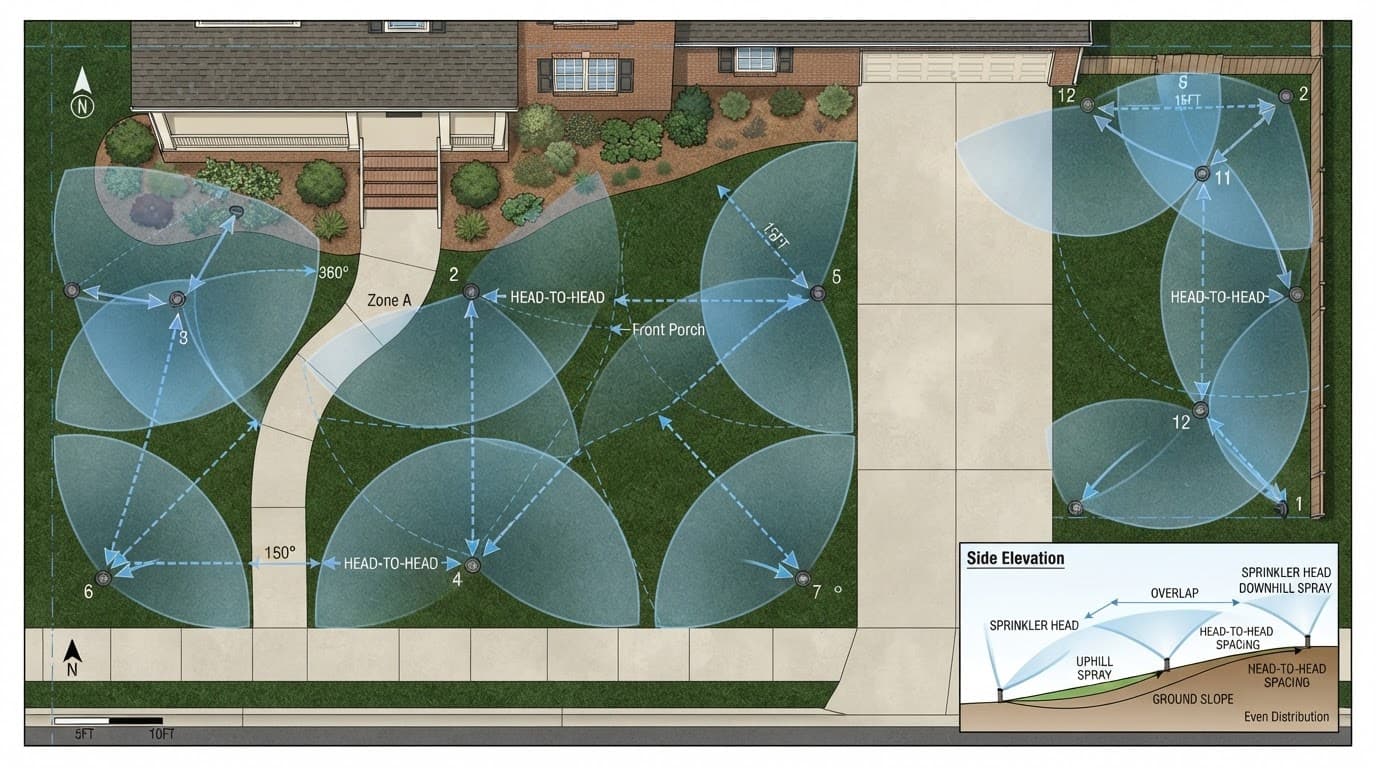
Good coverage begins with a simple plan: match each nozzle to the lawn's shape, space heads for head-to-head coverage, then test the results. Atlanta's clay soil, slopes, wind, plantings, and changing weather all affect the final layout.
Atlanta sprinkler head placement starts with the lawn map
Before digging, sketch the lawn and mark the house, driveway, sidewalks, planting beds, fences, trees, slopes, and property lines. Draw each irrigation zone separately because one zone may have different pressure, nozzle types, or coverage needs than another.
Also mark existing heads, valves, hose bibs, and visible utility features. Contact Georgia 811 before digging to locate underground utilities. Irrigation lines, low-voltage lighting, drainage pipes, and electrical wiring may cross areas that look clear.
Divide the yard by shape and water needs
A large rectangular turf area may work well with a regular grid. Narrow side yards, curved beds, tree roots, and sloped sections need a different arrangement. Keep turf zones separate from flower beds when possible because plants often need different watering patterns.
Sprinkler heads should sit at finished grade, with the top level with the soil or turf surface. A head that sits too low can become blocked by grass. A head that sits too high can get hit by mowers or become a trip hazard.
Use head-to-head coverage as the starting point
Head-to-head coverage means water from one sprinkler reaches the next sprinkler. The spray pattern should overlap across the entire lawn, rather than stopping halfway between heads.
Do not treat one spacing distance as universal. A nozzle's listed radius depends on operating pressure, flow, arc setting, and manufacturer specifications. Wind, turf height, slope, and nearby plantings can reduce the useful reach.
Place heads closer together when wind breaks up the spray or when a slope causes water to run downhill. Use the manufacturer's performance chart at the pressure available in that zone, then confirm the result with a coverage test.
Match sprinkler patterns to each lawn area
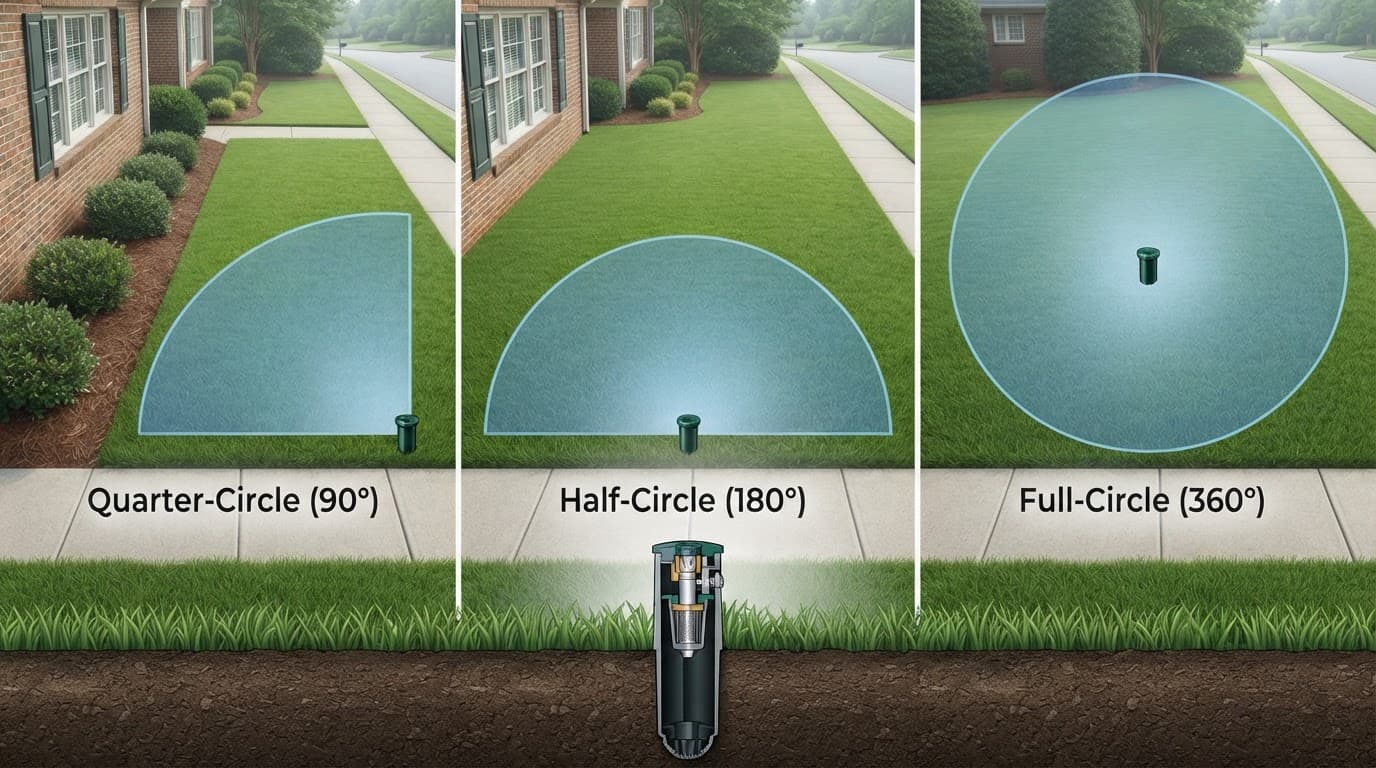
Sprinkler placement works best when the nozzle pattern follows the lawn's boundaries. A full-circle nozzle in a corner may send water onto the driveway, while a quarter-circle nozzle in the center leaves large dry areas.
| Yard location | Common pattern | Placement goal |
|---|---|---|
| Inside corner | Quarter-circle | Cover both lawn edges with limited overspray |
| Straight edge | Half-circle | Water inward across the turf |
| Open center | Full-circle or rotary | Reach surrounding turf with overlapping coverage |
| Narrow strip | Strip or adjustable nozzle | Keep water inside the strip |
The exact nozzle choice still depends on pressure and the manufacturer's specifications. A pattern that looks correct on paper may perform differently once several heads run together.
Use quarter-circle heads in corners
Corner heads should cover the two adjoining lawn edges. Aim the spray away from the house, sidewalk, driveway, or neighboring property. Adjustable nozzles can help with unusual angles, but check for excess water near the nozzle.
For a foundation bed, avoid spraying directly onto siding, windows, or the house wall. Repeated wetting can stain surfaces and add moisture where it isn't needed. If shrubs sit near the corner, use a separate drip or low-volume system instead of forcing a turf spray pattern around them.
Use half-circle and strip patterns along edges
Half-circle heads work along straight boundaries because they direct water toward the lawn. Place them near the edge, but leave enough room for the spray to clear the curb, pavement, or bed border.
Narrow strips often need strip-pattern nozzles or carefully adjusted spray heads. A standard half-circle may water too much pavement on a four-foot side yard. Check the full arc while the system runs, then adjust the screw or nozzle according to the manufacturer's instructions.
Full-circle heads belong in open turf, where water can travel in all directions. Avoid mixing heads with very different precipitation rates in the same zone. Even if their arcs overlap, one area may receive much more water than another.
Account for Atlanta soil, slopes, and weather
Metro Atlanta yards often include heavy clay, rolling grades, mature trees, and compacted areas near driveways. These conditions change how water moves after it leaves the nozzle.
A flat lawn can accept water at one rate. A sloped lawn may shed water before it reaches the root zone. Clay can absorb water slowly, while compacted soil may form puddles even when the overall lawn looks dry.
Check pressure before changing spacing
Low pressure can shrink spray distance and produce weak, uneven patterns. High pressure can create fine mist that drifts in the wind instead of reaching the turf. Both conditions can make a layout appear incorrectly spaced.
Run one zone at a time while checking the spray. If several heads lose distance when they operate together, the zone may have too many heads, an undersized supply line, a clogged filter, or a pressure problem.
Clean clogged nozzles and replace damaged heads before moving them. A broken riser, tilted body, or worn nozzle can create a dry patch that looks like a spacing mistake.
Adjust for slopes, trees, and wind
Place heads across a slope so uphill and downhill areas receive overlapping coverage. Avoid relying on one sprinkler at the top of a hill to water the entire grade. Water naturally moves downhill, so short cycles can reduce runoff.
Use cycle-and-soak scheduling on clay or slopes. Run the zone for a shorter period, pause while water soaks in, then repeat. This approach applies water more slowly and reduces puddling.
Trees and shrubs can block spray as they grow. Dense foliage also intercepts water before it reaches the ground. Keep heads outside planting beds when possible, and inspect coverage after pruning, bed expansion, or new construction.
Windy conditions may require closer spacing, lower spray heights, or a different nozzle. Test the system during a calm period, then observe it on a typical breezy day before making a final adjustment.
If runoff from a slope or downspout is washing across the lawn, sprinkler changes alone may not solve the problem. Review Atlanta drainage solutions for soggy lawns before adding more irrigation.
Test coverage with tuna cans
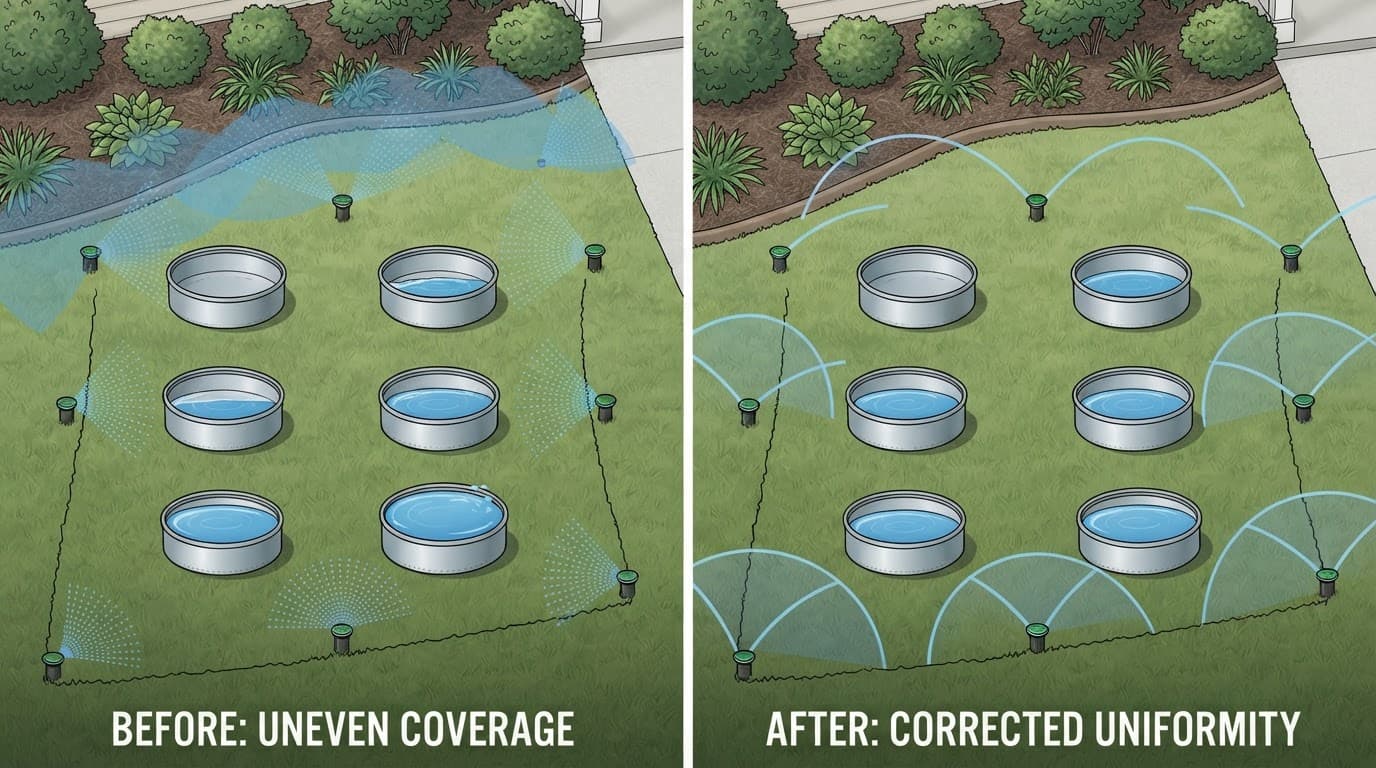
A catch-can test shows how much water reaches different parts of one irrigation zone. Clean, empty tuna cans work well because their sides are short and their bottoms are flat.
Use the same type of can throughout the test. Place cans in a grid across the lawn, including areas that look dry, wet, shaded, sloped, or close to pavement.
Follow these catch-can testing steps
- Turn off other zones and run only the zone you want to inspect. Check that all heads rise fully and spray without obvious clogs.
- Place at least six tuna cans across the turf. Keep them upright and spread them between heads, near edges, in the center, and near any problem spots.
- Run the zone for 10 minutes as a starting point. Extend the test if the cans collect too little water to measure accurately.
- Measure the water depth in each can with a ruler. Record the results instead of relying on visual impressions.
- Compare the readings. Similar depths show more even coverage. A can with much less water identifies a dry area, while a can with far more water may reveal overspray or a nearby head problem.
- Correct one issue at a time. Clean a nozzle, adjust an arc, level a head, change a nozzle, or move a head. Run the test again after each adjustment.
The goal isn't to make every can perfectly identical. Small differences are normal, but large differences indicate that the lawn receives water unevenly.
For a deeper measurement process, use this catch-can sprinkler testing for lawns guide to calculate output and set run times based on measured water.
Improve efficiency after the layout is right
A good schedule cannot repair poor coverage. Fix the physical layout first, then set watering times based on the measured output.
For many established Atlanta turf plans, about 1 inch of total water per week, including rainfall, is a common starting point during active growth. Bermuda and Zoysia usually need the most attention during hot-season growth. Tall fescue has different seasonal needs and often struggles during Atlanta's hottest months.
That target is a lawn-care guideline, not a legal watering schedule. Check current Georgia and local water-use requirements before programming automatic irrigation. Local restrictions can change with drought conditions, municipal rules, or utility notices. This seasonal watering guide for Atlanta lawns can help you compare grass types and seasonal timing.
Reduce waste at the controller
Install or use a rain sensor when the system supports one, and pause irrigation after meaningful rainfall. Inspect the system at least a few times each season for broken heads, leaking valves, blocked nozzles, and overspray on hard surfaces.
Water during the cooler part of the day when local rules allow it. Avoid frequent short watering that keeps the surface damp but fails to wet the root zone. On slopes or clay, cycle-and-soak settings usually work better than one long cycle.
Keep spray away from sidewalks, streets, driveways, and buildings. Water on pavement is wasted and may create slippery surfaces or erosion near the edge of the lawn.
Know when to call an irrigation professional
Some placement problems are easy to correct. Others require pressure testing, trench access, zone redesign, or repair below grade.
Professional help makes sense when the system has mixed nozzle types, poor pressure, repeated dry spots, leaking valves, or several heads that fail at once. It also helps when a new patio, retaining wall, driveway, or planting bed has changed the original irrigation layout.
Before work begins, ask for a zone-by-zone review. The inspection should cover nozzle type, arc, head height, pressure, overlap, drainage, and controller settings. A clear plan can prevent repeated adjustments and protect new hardscaping or plantings.
Safety matters during every repair. Shut off the controller and water supply before opening a head or valve. Keep electrical connections dry, use caution around pressurized lines, and mark irrigation locations before mowing, aerating, planting, or digging.
Conclusion
Even coverage depends on more than placing heads a set distance apart. Atlanta sprinkler head placement should account for nozzle performance, pressure, wind, slopes, clay soil, plant growth, and the shape of each lawn area.
Map the zones, match the spray patterns, install heads at grade, and test with tuna cans before changing run times. When the readings are uneven, adjust the equipment first. Then schedule watering around measured output, rainfall, grass needs, and current local requirements.