Atlanta Pet Turf Maintenance Guide for Dog Yards
A reliable pet turf maintenance routine keeps an Atlanta dog yard cleaner, safer, and easier to use in every season. Artificial grass doesn't need mowing, seeding, or fertilizer, but it still collects pet waste, pollen, leaves, clay, and odor-causing residue.
Atlanta's heat, humidity, heavy rain, and compacted red clay can create problems below the surface. The right schedule focuses on quick waste removal, regular rinsing, safe cleaning products, and early drainage checks.
Why Atlanta Dog Yards Need a Maintenance Plan
Artificial turf doesn't grow, but its blades, infill, backing, seams, and drainage base still need care. Dog urine can pass through the surface, yet repeated use in one area may leave residue in the infill or below the turf. That residue can produce an odor, especially during humid weather.
Summer sun creates another concern. Synthetic turf can become hotter than nearby natural grass on a bright afternoon. A shaded section, good access to drinking water, and careful timing for play can make the yard more comfortable for your dog. Always check the surface with your hand before allowing extended use.
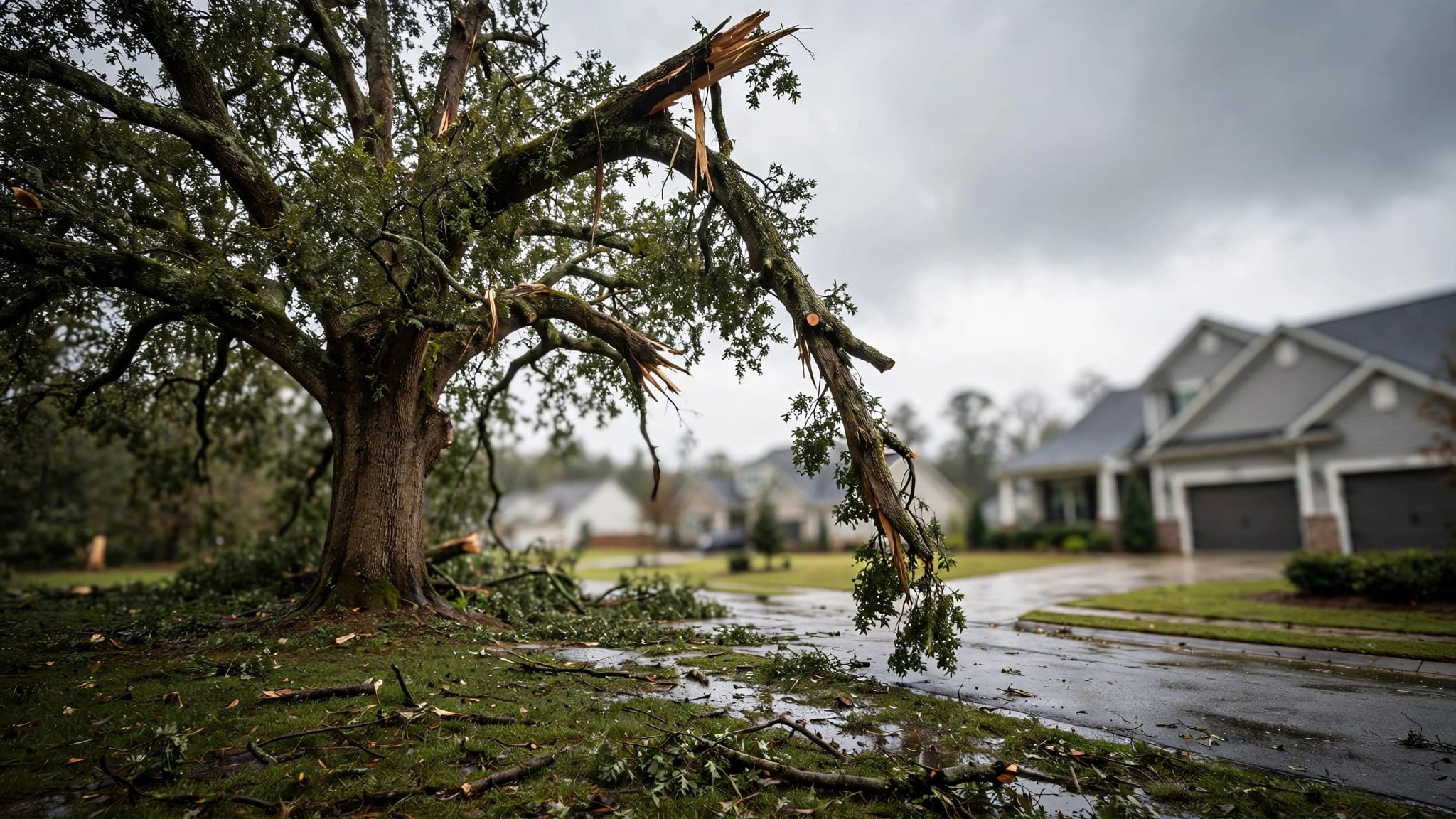
Atlanta rain adds a different set of problems. A quick shower may wash away loose pollen or dirt, but it won't correct a low spot or a clogged drainage base. Heavy storms can also move red clay, mulch, and other debris onto the turf.
Rain can rinse the surface, but it cannot fix poor grading or saturated soil beneath the turf.
Spring pollen often settles into the blades and infill. Fall leaves can block drainage points when they stay wet for several days. A consistent routine prevents these seasonal materials from turning into a damp layer that traps odor.
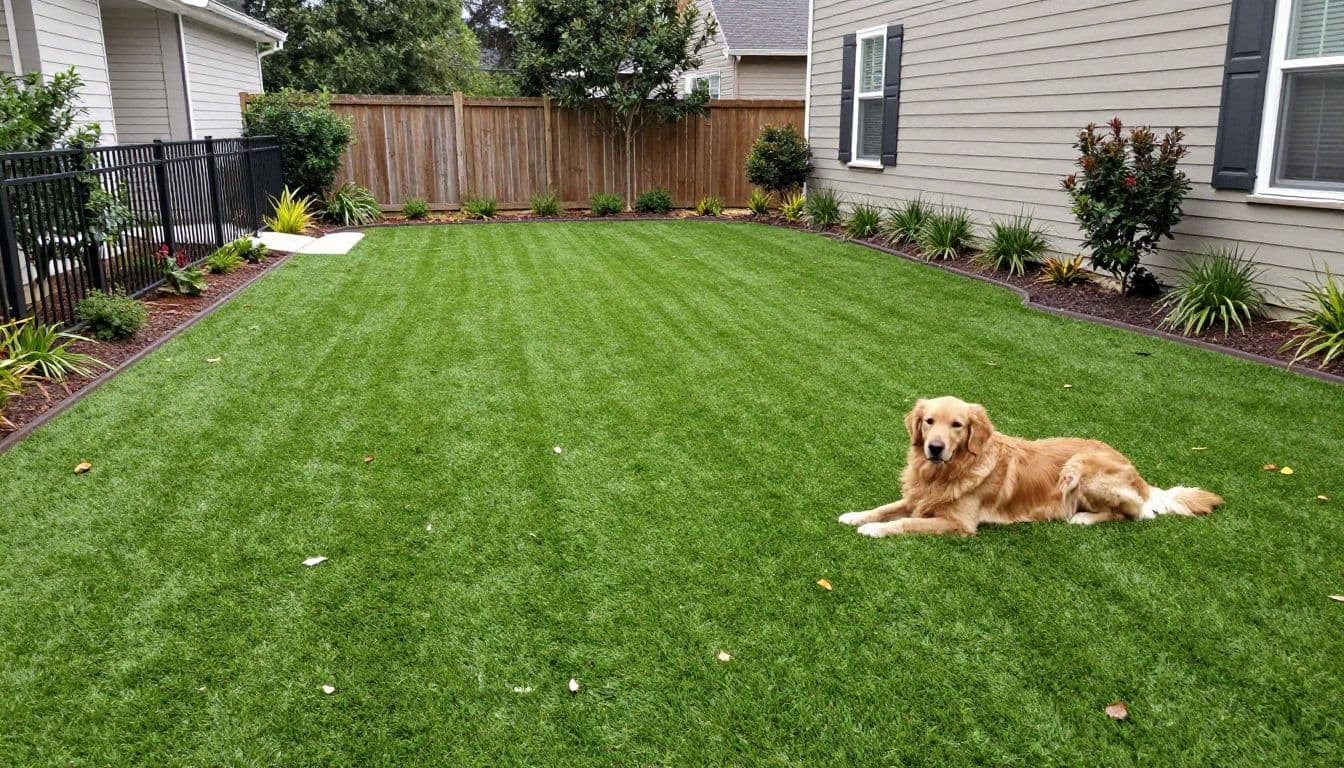
An Atlanta pet turf maintenance schedule for dog yards
The best schedule depends on the number of dogs, yard size, shade, and drainage. A small relief area used by two dogs needs more frequent rinsing than a large yard used occasionally.
| Task | Recommended frequency | What to do |
|---|---|---|
| Remove solid waste | Every visit | Scoop waste promptly with a smooth plastic tool. |
| Inspect urine areas | Daily in high-use yards | Look for odor, residue, or discolored infill. |
| Clear leaves and pollen | Two to three times weekly in peak seasons | Use a leaf blower on a low setting or a soft broom. |
| Rinse the surface | Weekly, and more often in summer | Use a garden hose with low or moderate pressure. |
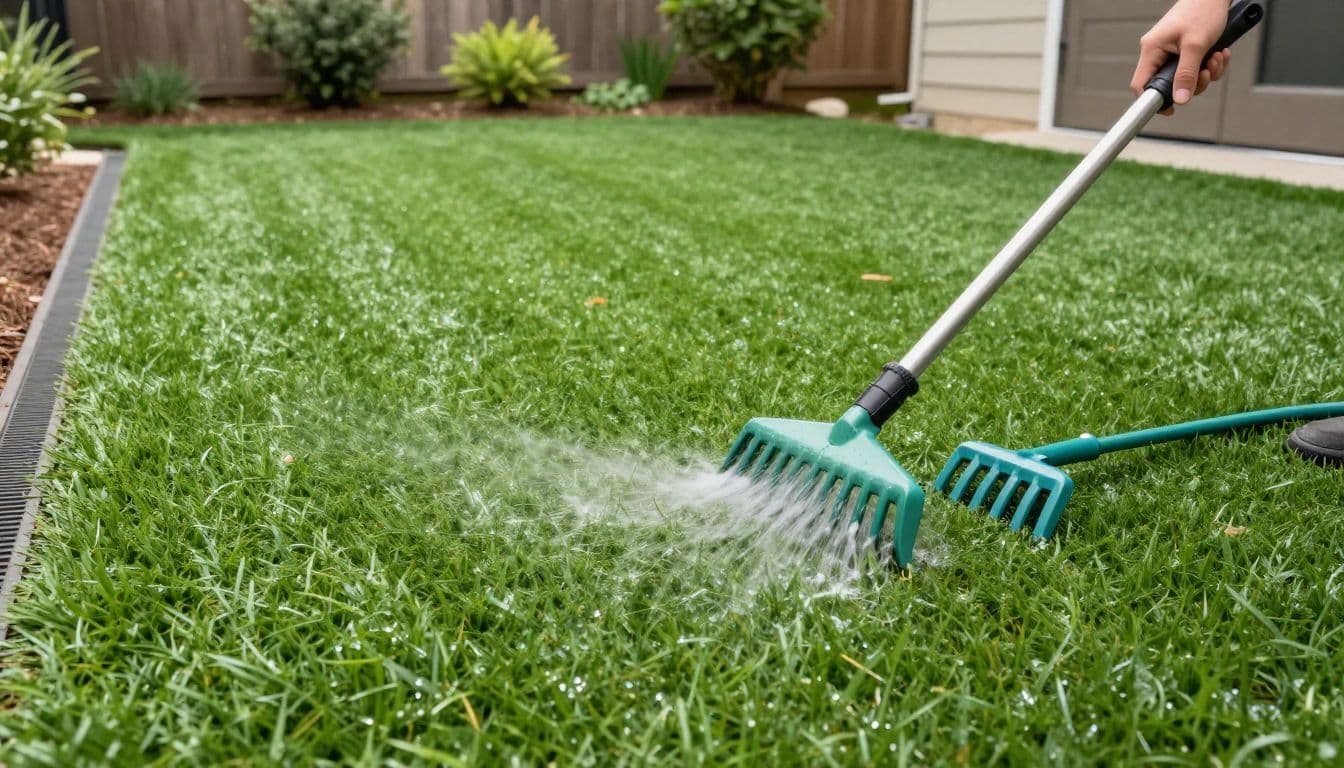
| Brush high-traffic areas | Weekly or every two weeks | Lift flattened blades with a soft-bristle broom or turf rake. |
| Wash odor-prone areas | Every two to four weeks as needed | Apply a cleaner labeled for pets and synthetic turf. |
| Inspect drainage and edges | Monthly, plus after major storms | Check seams, edging, puddles, and runoff paths. |
Start by removing solid waste before it dries or breaks apart. Use a plastic scoop with a smooth edge so you don't pull at the turf or disturb the infill. If residue remains, rinse the area with clean water.
During hot, humid periods, urine zones may need rinsing several times each week. Rinsing works best when water can move freely through the turf and base. If water sits on the surface, more rinsing won't solve the underlying problem.
Brush areas near the back door, gate, and favorite play path more often than low-use sections. Brush against the direction of the flattened blades with a soft tool. Metal rakes can damage the backing, catch seams, and remove infill.
Drainage and red clay deserve close attention
Atlanta's clay-heavy soil drains slowly when it becomes compacted. Artificial turf has drainage holes, but those openings still need a clear path through the base and soil below. If the subgrade stays saturated, the turf can hold water even when the surface appears properly installed.
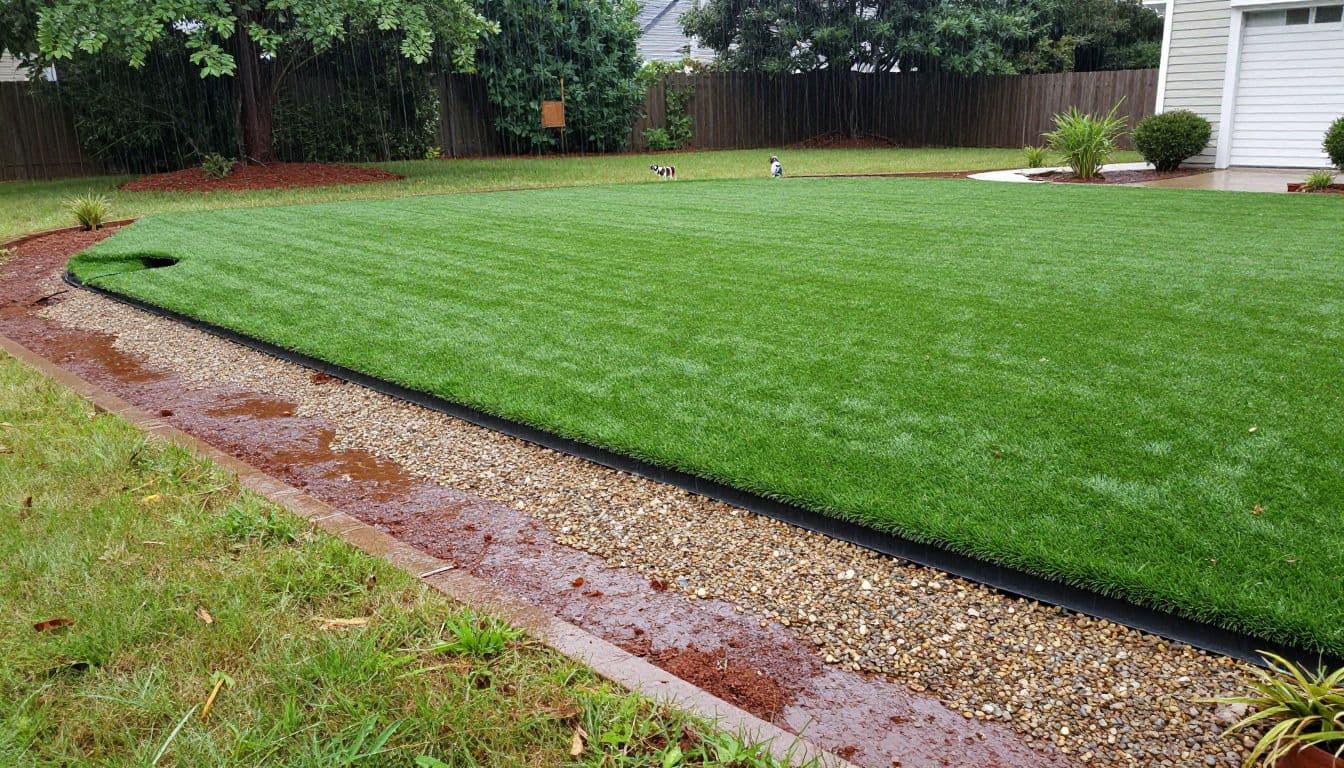
Walk the yard after a major thunderstorm. Look for standing water, muddy edges, water flowing across the turf, or a section that stays wet long after nearby areas dry. Pay close attention to downspouts. Roof runoff should not discharge directly across a dog run.
Turf edges also collect clay when rain washes soil out of nearby beds. Keep mulch and loose soil from spilling onto the surface. If a border repeatedly erodes, the property may need better edging, a small grade adjustment, or a separate runoff path.
Before installing turf, confirm that the yard has the right excavation depth, compacted aggregate base, slope, and drainage plan. The Atlanta artificial turf cost guide covers preparation items that can affect a project quote, including red clay and drainage work.
When the yard already puddles, turf alone won't correct it. Review Atlanta drainage repair options before covering a known wet area. The correct solution may involve grading, a French drain, a dry creek bed, or a downspout adjustment.
Use pet-safe products for urine and odor control
Pet waste cleanup should protect both the dog and the turf system. Start with physical removal, then rinse the area before applying any product. A cleaner labeled for pet areas and synthetic turf is a better choice than a strong household disinfectant.
Follow the product label and the turf manufacturer's care instructions. Keep pets away while the product is wet if the label requires it. Never mix cleaners, even if each product is safe when used alone.
A simple cleaning process works well for most routine buildup:
- Remove solid waste and loose debris from the area.
- Rinse the turf with clean water to move surface residue through the drainage holes.
- Apply a pet-safe enzyme cleaner made for synthetic turf, using the label's dilution and dwell time.
- Rinse again when the directions call for it, then allow the area to drain and dry.
Avoid bleach, ammonia, solvent-based cleaners, harsh degreasers, and unapproved homemade mixtures. These products may irritate paws or leave residue that attracts dirt. Avoid high-pressure washing unless the turf manufacturer approves it, because strong spray can move infill and stress seams.
A scented spray may cover an odor for a short time without removing the source. Persistent odor after proper rinsing often points to residue in the infill, blocked drainage, or contamination below the surface.
If an odor returns soon after cleaning, inspect the drainage path instead of applying stronger chemicals.
Heavy-use relief areas benefit from a predictable rinse schedule. Mark the spots your dog uses most and check them before the rest of the yard. That small habit helps you catch odor and drainage changes early.
Manage heat, pollen, leaves, and play wear
Direct sunlight can make turf uncomfortable for paws during Atlanta's hottest afternoons. Check the surface before play, especially after several hours of sun. If it feels too hot to keep your hand on comfortably, provide shade or wait until the surface cools.
A light rinse can cool the blades for a short time, but it doesn't replace shade or a cooler play schedule. Use a clean hose without chemical additives. Avoid leaving hoses, metal objects, or dark outdoor items on the turf in direct sun.
Spring pollen deserves more attention than a quick glance. Dry pollen can often be removed with a low-setting blower or soft broom. Once pollen mixes with rain and humidity, it may form a sticky film that needs gentle rinsing.
Remove leaves before they become wet and compacted. Wet organic material can block drainage openings and hold moisture against the turf. Clear the area around edges, seams, drains, and gates first.
High-traffic paths often flatten near doors and fences. Brush those areas regularly, and consider a dedicated route with stable pavers if your dog repeatedly runs through one corridor. For help comparing durable materials and dog-yard layouts, see this guide to the best artificial grass for Atlanta dog yards.
Keep nearby clay, mulch, and mud out of the dog area as much as possible. A clean transition at the gate reduces tracking and gives you fewer contaminants to rinse away.
A quick inspection can prevent expensive repairs
Once a month, walk the entire yard rather than checking only the area near the back door. Look for lifted edges, open seams, flattened blades, exposed backing, missing infill, and areas where water drains slowly.
After severe rain, inspect the turf border and the ground around downspouts. A new puddle may come from a blocked outlet or shifted soil rather than a turf defect. Clear leaves from drainage points, but don't pull at the turf while doing so.
Record recurring trouble spots with a phone photo. A pattern is easier to identify when you compare the same area after several storms. If a seam continues to lift or water remains trapped below the turf, have the installation assessed before the damage spreads.
Maintenance also includes the space around the turf. Trim nearby plants so branches don't drop excessive debris onto the yard, and keep mulch beds from washing into the dog area. Clean surrounding hard surfaces so dirty runoff doesn't return to the turf during the next storm.
Conclusion
Atlanta pet turf stays easier to manage when small tasks happen on a set schedule. Remove waste promptly, rinse urine areas, clear pollen and leaves, brush heavy-use paths, and inspect drainage after strong storms.
Heat and humidity call for extra attention during summer, while red clay and heavy rain can expose problems below the surface. The strongest pet turf maintenance plan combines pet-safe cleaning with a drainage system that matches the yard's soil and slope.