Japanese Beetle Damage on Atlanta Roses and Shrubs
Japanese beetle damage can turn a healthy Atlanta rose into a lacy, ragged plant within days. The same beetles also attack crape myrtles, Japanese maples, hibiscus, and other ornamental shrubs during the warmest part of the growing season.
These metallic green insects are easy to miss until leaves lose their soft tissue and flowers develop chewed, brown-edged petals. Early identification helps you act before the damage spreads, while careful treatment protects bees and other helpful insects. Start by checking what the feeding actually looks like.
How to Recognize Japanese Beetle Damage on Roses and Shrubs
Japanese beetles usually feed on exposed flowers and upper foliage. They often gather where sunlight hits the plant, especially on warm mornings and afternoons.
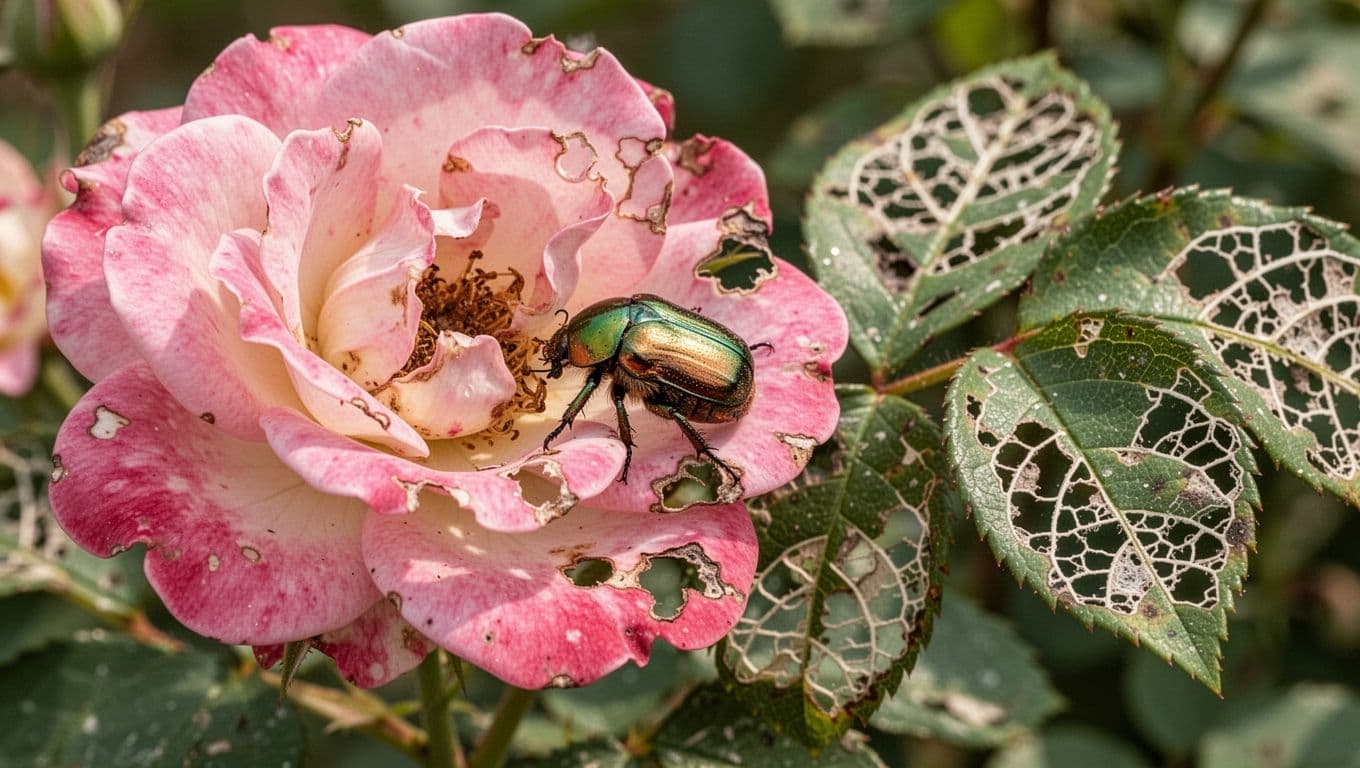
The adults have metallic green bodies, copper-colored wing covers, and small white hair tufts along the sides and rear of the abdomen. Their feeding pattern is usually more distinctive than their appearance.
Leaves develop a skeletonized pattern
The most common sign is a lace-like leaf with the veins still intact. Beetles eat the softer tissue between the veins, leaving behind a thin network that looks shredded or transparent.
Light feeding may create small windows in several leaves. Heavy Japanese beetle damage can leave only major veins and brown, drying tissue. Affected leaves may curl, scorch, or drop early if the feeding continues.
Check both sides of the plant, but begin with the top leaves and newest flowers. Beetles often cluster together, so finding one can lead you to several more nearby.
Rose petals show irregular chewing
Japanese beetles chew directly on rose petals, stamens, and flower centers. Blooms may look ragged, partially opened, or browned around the edges. Several damaged flowers can make a healthy rose appear diseased.
Shrub damage varies by plant. Crape myrtle leaves may show skeletonized patches, while Japanese maple foliage can develop irregular holes along the outer canopy. Hibiscus, dahlia, zinnia, and some fruiting plants may also attract adults.
Don't confuse holes with rose rosette disease. Rose rosette usually causes distorted red growth, crowded shoots, excessive thorns, or unusual cane development. Use this Atlanta rose rosette disease guide when your rose looks misshapen rather than chewed.
When Atlanta Plants Face the Greatest Beetle Pressure
Adult Japanese beetles are most active in Georgia from late spring into midsummer. UGA Extension guidance places the main feeding window around June through August, although weather can shift the exact dates.
Watch closely during June through August
Adults often appear first on sunny days after the soil warms. Peak activity commonly occurs four to six weeks after the first beetles emerge.
During that period, inspect roses and shrubs at least once or twice each week. Pay close attention after a stretch of warm, humid weather, when adults may gather quickly on open flowers.
Early morning is the easiest inspection time because beetles are less active. You can often find them resting on petals or leaves before they fly away.
Understand why beetles return
Japanese beetles don't stay on one property. Adults can fly in from nearby yards, wooded edges, gardens, and turf areas. Removing every beetle from your roses may reduce local feeding, but new adults can still arrive.
Females lay eggs in July and August. The grubs develop in soil and feed on tender turf roots before overwintering deeper underground. As a result, repeat pressure may come from both nearby properties and suitable soil on your own property.
This pattern explains why treating one rose rarely solves the problem for the entire neighborhood. It also makes unnecessary lawn-wide pesticide applications a poor first response when the damage is limited to a few ornamental plants.
What to Do Immediately After Finding Beetles
Quick action works best when the infestation is still small. Walk around the plant, inspect nearby shrubs, and remove visible adults before deciding whether stronger treatment is needed.
Hand-pick beetles in the morning
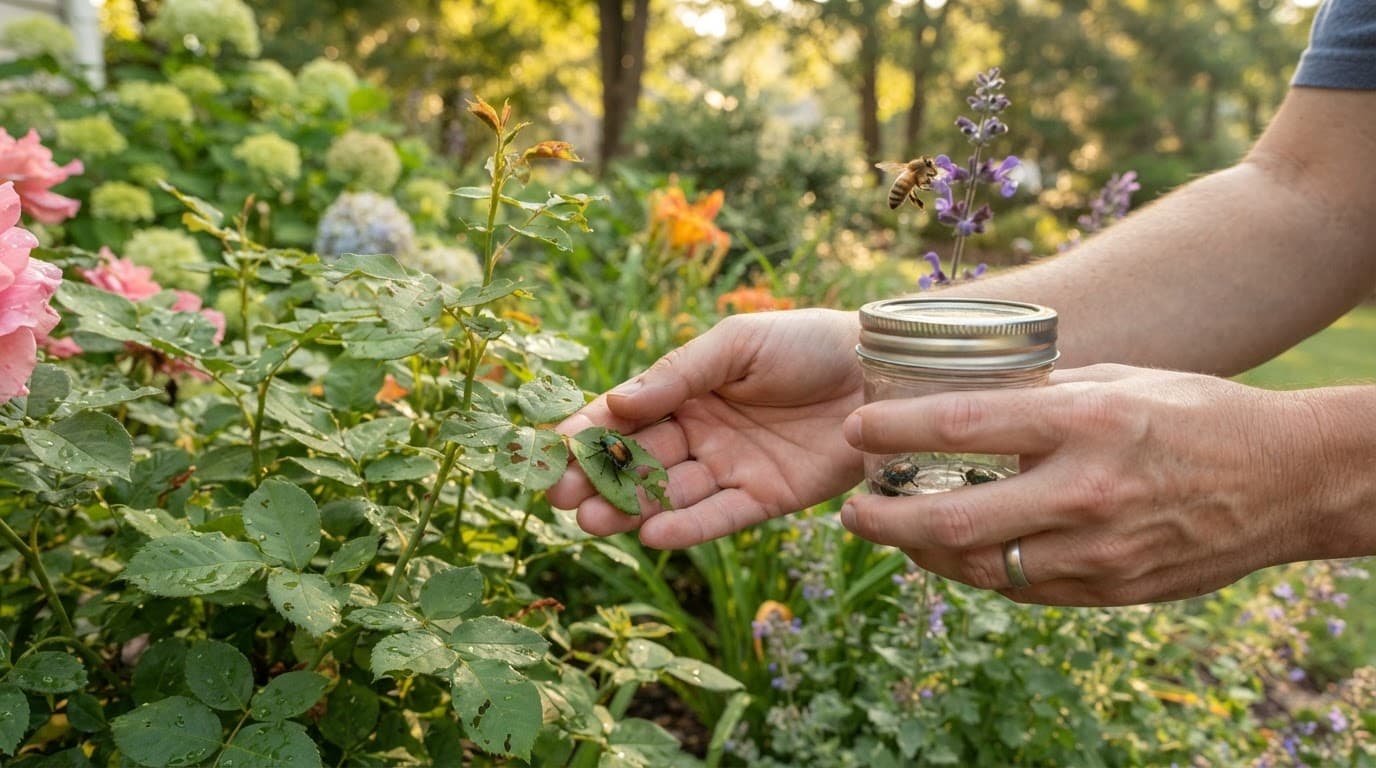
Hold a cup or bucket of soapy water beneath the affected branch. Then brush or shake the beetles into the water. A sheet placed under the rose can make collection easier, especially when several adults are feeding at once.
Repeat the inspection each morning while beetle numbers remain low. This method avoids exposing flowers, bees, butterflies, and predatory insects to a broad treatment.
Wear garden gloves if you prefer, and avoid crushing beetles directly on petals. Their odor may attract more beetles to the area.
Help the plant recover
Keep the rose or shrub watered during dry weather, but soak the root zone rather than spraying the leaves. Mulch can help maintain more even soil moisture, provided it stays several inches away from stems and trunks.
Deadhead ruined flowers for appearance, but don't remove large amounts of healthy foliage. Leaves still produce energy that helps the plant recover and prepare for future growth.
Remove fallen petals and badly damaged plant debris from the bed. This won't eliminate beetles, but it keeps the planting area easier to inspect and improves its appearance.
Safer Treatment Choices for Heavy Feeding
If beetles cover the plant every day or damage continues despite hand-picking, a treatment may be reasonable. Choose the least disruptive option that matches the plant, pest, and level of damage.
Protect bees before considering a spray
Roses and flowering shrubs attract pollinators, so spraying an open bloom can expose bees directly. Avoid treating flowers while bees are visiting. Also check the product label for restrictions involving blooming plants, pollinators, temperature, wind, and re-entry.
UGA county guidance recommends applying certain landscape sprays during the hottest part of the day, around noon to 5 p.m., when fewer pollinators may be active. Follow the current product label first, because label directions control the application.
Products containing carbaryl, malathion, or permethrin may be labeled for Japanese beetles on some ornamental plants. The label must list both the insect and the host plant. A product approved for one shrub, vegetable, or fruit tree may not be approved for another.
Spraying on a fixed schedule can create unnecessary exposure. Treat only when feeding is heavy enough to justify it, and avoid spraying plants with heat or drought stress.
Be cautious with systemic products
Systemic insecticides move through plant tissue and can provide longer protection, but they require more care around flowering plants. A systemic applied to a blooming rose may expose insects that feed on the plant.
Imidacloprid is one active ingredient used in some Japanese beetle programs. However, products vary by formulation, plant, timing, and legal label. Some systemic products also aren't labeled for plants that produce edible fruit.
Don't apply a soil or foliar insecticide based only on the product name. Confirm the label, use the stated rate, wear the required protective equipment, and keep children and pets away as directed.
A flowering plant can be attractive to bees and beetles at the same time, so pest control timing matters as much as product choice.
How to Reduce Repeat Japanese Beetle Damage
No single treatment can prevent every adult beetle from flying into an Atlanta yard. Long-term control comes from regular inspection, sensible plant care, and avoiding practices that draw more beetles toward the bed.
Skip pheromone traps near ornamental beds
Pheromone traps can capture beetles, but UGA Extension doesn't recommend them for general home control. Their attractant may pull more beetles into the area than the trap removes, increasing feeding near roses and shrubs.
Instead, inspect susceptible plants and remove adults directly. If one shrub attracts heavy activity, check the plants beside it before beetles spread through the bed.
You can also reduce stress by watering during dry periods, correcting compacted soil, and keeping plants pruned according to their normal schedule. Healthy plants tolerate some leaf loss better than drought-stressed plants.
For Atlanta beds, use a professional landscape upkeep and mulch service when overgrown edges, heavy debris, or poor mulch placement make inspections difficult.
Treat grubs only when there is a real reason
Japanese beetle grubs live in soil, but their presence doesn't automatically justify treating the whole lawn. If ornamental plants have damage but turf looks healthy, a blanket grub application may provide little value.
Soil-based preventive products are used in early summer for grub control, while milky spore works slowly and may be inconsistent when neighboring properties contain untreated soil. UGA Extension notes that milky spore works best when many nearby homeowners use it, since adult beetles and larvae move across property lines.
Before treating turf, look for signs of a separate grub problem, such as thinning grass, loose sod, or animals digging for larvae. Use only a product labeled for that site and pest.
When to Get Professional Help
Call a landscape professional when damage is severe, beetles return daily, or tall shrubs make inspection and treatment unsafe. A professional can identify whether beetles are responsible and separate insect feeding from drought stress, disease, nutrient problems, or another pest.
Regular bed maintenance also helps. Open planting areas make it easier to spot insects, remove damaged growth, and notice problems before they spread. Seasonal cleanup can clear fallen leaves, branches, and overgrowth around roses and shrubs. RW Lawn Co offers Atlanta spring and fall yard cleanup for homeowners who need help keeping landscape beds accessible and orderly.
A good service plan should address the actual problem rather than defaulting to repeated pesticide applications. Ask what will be treated, why it is needed, which plants are included, and how pollinators will be protected.
Keep Japanese Beetles Manageable in Atlanta
Japanese beetle damage is easiest to control when you catch it early. Look for skeletonized leaves, ragged rose petals, and clusters of metallic green adults on sunny upper growth.
Begin with morning inspections and hand-picking when numbers are low. If feeding becomes severe, choose a product labeled for the pest and plant, follow every precaution, and avoid exposing bees on flowers. Regular watering, sensible bed care, and targeted decisions can keep Atlanta roses and shrubs attractive through the beetle season.