Atlanta Retaining Wall Repair Cost Guide for 2026
Most Atlanta homeowners will pay $450 to $950 for common retaining wall repairs in 2026, with many jobs landing near $700 . But that quick range only fits smaller fixes. If your wall is leaning, holding water, or losing soil, the cost can rise into the low thousands fast.
That gap frustrates people because two walls can look similar from the front and need totally different work behind them. Atlanta's clay soil, heavy rain, and sloped lots make that even more common. Here's how to price the problem before you call for quotes.
Typical retaining wall repair costs in Atlanta for 2026
When people search for retaining wall repair atlanta pricing, they usually want one clear number. The honest answer is that the price depends on whether the job is cosmetic, drainage-related, or structural.
This quick table gives a practical starting point:
| Repair type | Typical 2026 cost |
|---|---|
| Basic repair visit, many common jobs | $450 to $950 |
| Crack or crumbling repair | $335 to $1,100 |
| Leak or seepage repair | $220 to $990 |
| Drainage upgrades or anchors | Often $50 to $80 per sq. ft. of wall area |
| Engineer review, when needed | $100 to $220 per hour |
| Full rebuild of a 50-foot x 4-foot wall | $6,000 to $14,000 |
The big takeaway is simple: surface damage is cheap compared with water pressure . A white stain, a small crack, or a loose cap block may stay in the hundreds. Once the fix calls for excavation, pipe, gravel, anchors, or partial teardown, the price climbs.
In Atlanta, drainage is often the line between a repair bill and a rebuild bill.
There's another local clue. New retaining walls in the Atlanta market often fall around $3,500 to $9,000 , so a repair only makes financial sense when it solves the root problem. If the wall still lacks drainage or has lost its base, patching it can feel like painting over a roof leak.
Costs also vary by lot conditions, wall size, and city rules. Always confirm pricing with an on-site inspection and written local quotes.
Why one wall costs $700 and another costs $7,000
A retaining wall works like a shield for your yard. If the shield has a scratch, repair is simple. If the ground behind it is pushing hard, the whole system needs help.
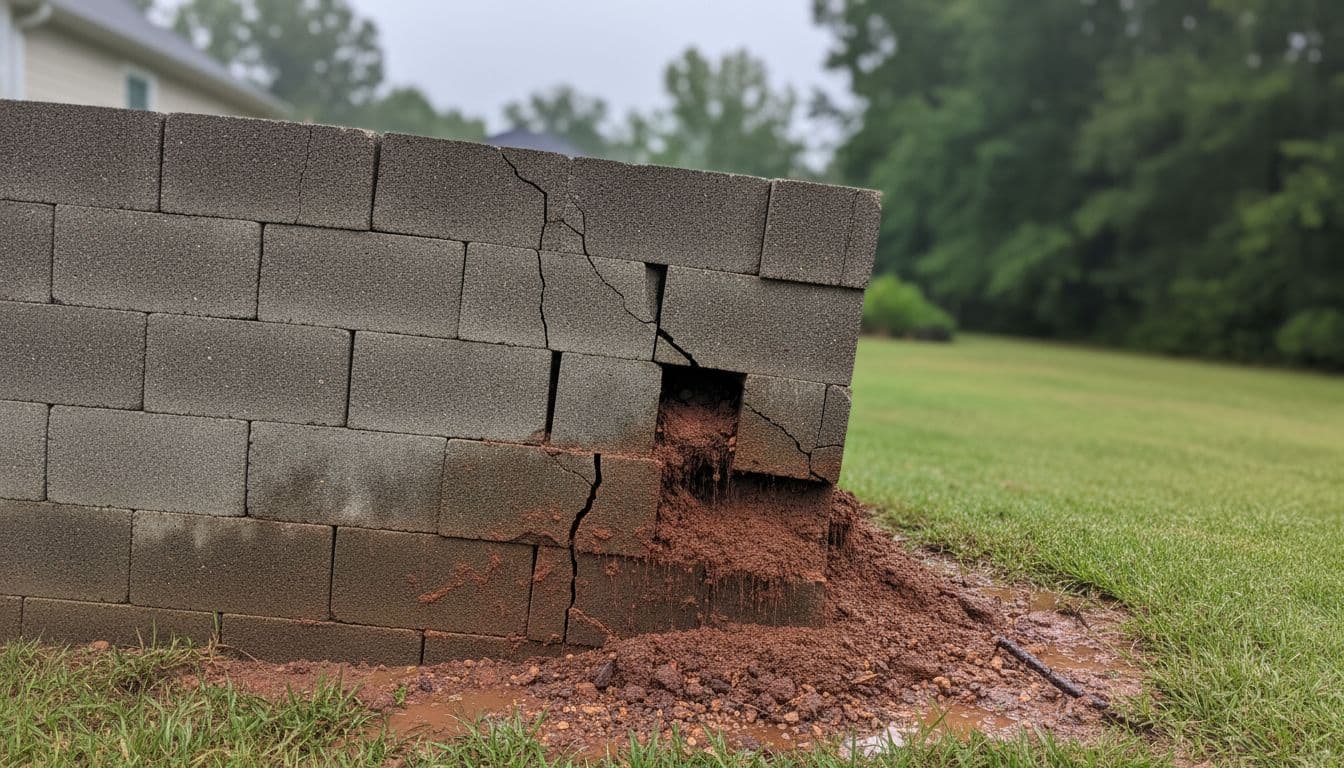
First, height and length matter. A short garden wall is cheaper to repair than a tall wall holding back a slope beside a driveway. Taller walls carry more soil load, and that means more labor, more material, and sometimes engineering.
Next, drainage issues often drive the price more than the visible damage. In Metro Atlanta, clay-heavy soil traps water. Then pressure builds behind the wall. As a result, a wall can bow, lean, crack, or push blocks out of line. If that sounds familiar, this retaining wall leaning diagnosis and repair guide helps explain what movement usually means.
Material also changes the number. Timber walls can be cheaper to patch, but rot often spreads farther than expected. Segmental block walls can sometimes be repaired in sections. Poured concrete or natural stone can cost more because matching, demolition, and reinforcement take longer.
Then there's access . A narrow side yard, steep hill, fence line, or buried utility path can force a crew to work by hand. That adds labor fast. In some Atlanta neighborhoods, access is the hidden cost nobody sees in the first photo.
Finally, what's above the wall matters too. A patio, driveway, parked car, shed, or even a heavy wet slope puts extra force on the wall. More force means more repair work.
When repair is enough, and when rebuilding saves money
A repair usually makes sense when the wall has a limited problem and the structure is still doing its job. Think small cracks, minor seepage, a few shifted blocks, or one area where drainage failed. In those cases, fixing the drain path, resetting blocks, and replacing damaged material can stop the issue before it spreads.
Repair is also the better bet when the wall hasn't moved much over time. Take photos after heavy rain. Watch for bulging, widening cracks, or soil washing out. If movement stays stable, a targeted fix often works.
Rebuilding becomes more cost-effective when the wall is leaning badly, bowing along a long section, or failing at the base. The same goes for repeated repairs that never solve the wet soil behind the wall. Paying twice for patch jobs is like putting new tires on a car with a bent axle.
A full rebuild may also be smarter if the original wall was underbuilt. Common examples include no drain pipe, little gravel backfill, poor footing depth, or the wrong material for the height. If you're already near replacement territory, it makes sense to look at Atlanta hardscaping and retaining walls as a longer-term solution instead of a short-term patch.
Questions to ask before you hire a contractor
Price matters, but the plan matters more. A low bid can turn expensive if it skips the cause of the failure.
Ask these questions before you sign:
- What caused the damage? Look for a clear answer about drainage, soil pressure, footing failure, or wall design.
- Are you repairing the face, the drainage, or both? A face-only fix may not last.
- Will you reuse material or replace it? Matching old block or stone can affect price and appearance.
- Do I need engineering or permits? Taller walls or structural repairs may require both.
- How will access affect labor? Tight yards and steep grades often change the quote.
- What warranty do you offer on workmanship? Get it in writing.
Also ask for a line-item estimate. You want to see demolition, drainage, backfill, material, haul-away, and cleanup broken out.
The smart next step
Retaining wall costs in Atlanta stay reasonable when you catch the problem early. Once water, movement, and poor access pile up, the bill grows fast.
Take clear photos, note any lean or cracking, and get local quotes before the next stretch of heavy rain. The best money-saving move is often the simplest one: fix the cause , not only the symptom.