Zeon vs Emerald Zoysia for Sunny Atlanta Lawns
A sunny Atlanta lawn can look perfect in June and struggle by August. Heat, red clay, uneven rainfall, and poor mowing expose weak turf quickly.
If you're comparing Zeon vs Emerald Zoysia , both can work well in bright yards, but they don't behave identically. Zeon usually appeals to homeowners who want fine texture and quicker establishment, while Emerald attracts those who prefer dense, dark-green turf and can wait longer for it to fill in. Your soil, irrigation, mowing habits, and installation quality can matter as much as the cultivar. Start with the property, then choose the grass.
Atlanta sun is a good starting point
Zeon and Emerald are warm-season zoysias. They grow actively during Atlanta's warm months, then slow down and may turn tan as temperatures fall. Green-up timing varies with spring temperatures, exposure, and site conditions, so a winter-brown lawn isn't automatically unhealthy.
Full sun narrows the gap between these cultivars. A yard with several hours of direct light and open air gives both grasses room to thicken. However, tree canopies, fences, homes, and neighboring properties can create afternoon shade that isn't obvious during a quick visit.
Hot, west-facing sections can dry faster than the rest of the yard. Low areas may stay wet after storms. Both problems can create thin or discolored turf even when the sod itself is suitable.
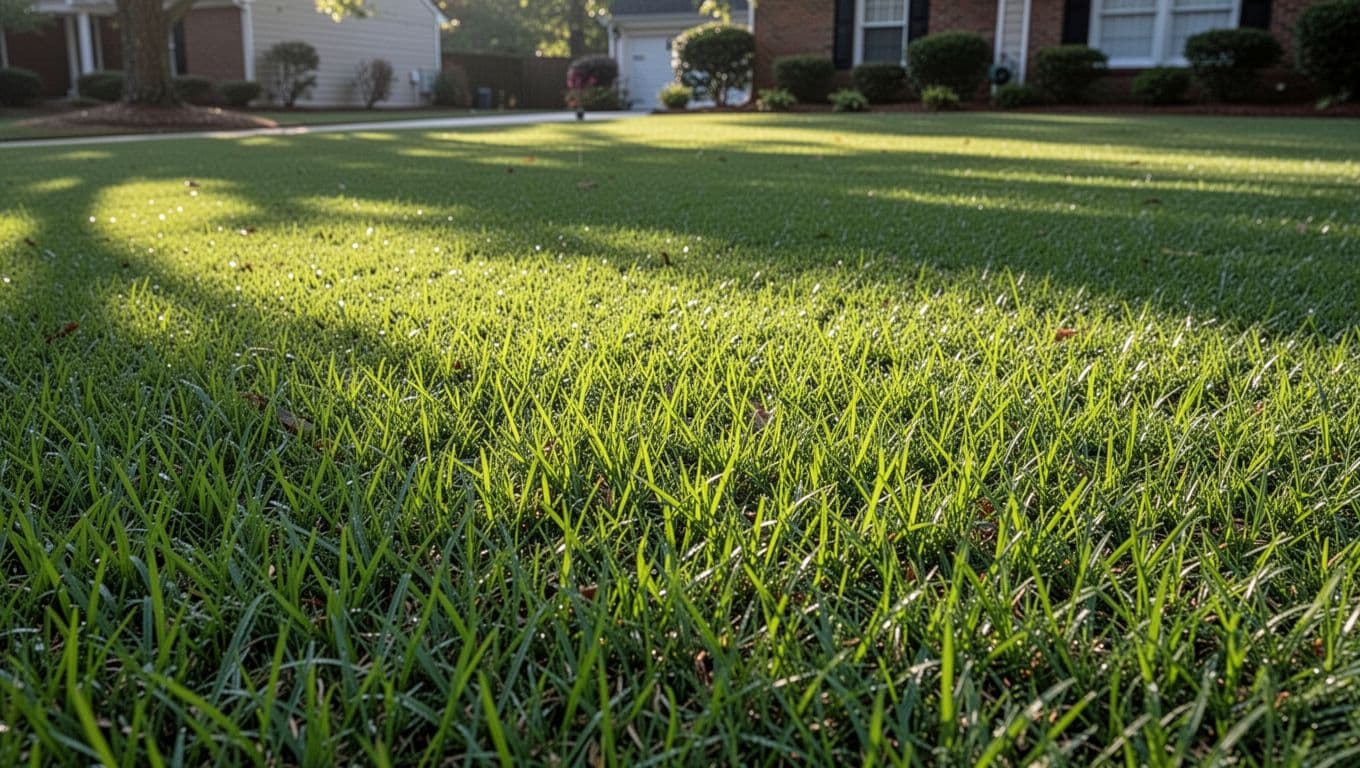
If water drains reasonably well and irrigation reaches the whole area, either cultivar can produce a dense finish. When a property has standing water, deep shade, heavy traffic, or compacted soil, changing varieties won't solve the underlying issue.
Where Zeon tends to fit
Zeon is a fine-bladed Zoysia matrella cultivar with a soft feel and uniform green appearance. Its texture works well near patios, walkways, and front entries where homeowners notice the lawn up close.
It generally tolerates some filtered shade and short periods of drought stress after roots establish. That doesn't remove the need for regular irrigation during hot, dry Atlanta weather. Zeon also tends to establish and spread more readily than Emerald under good growing conditions, so it can be practical when you want seams to disappear sooner.
Growth still slows in cool spring weather, poor soil, or areas where water runs off before it soaks in. Quick establishment depends on healthy sod, firm soil contact, and proper watering during the first several weeks.
Where Emerald tends to fit
Emerald is a hybrid zoysia known for fine blades, dense growth, and a rich green finish. Many homeowners choose it for a closely knit appearance that looks polished when mowing is consistent.
Compared with Zeon, Emerald often takes longer to establish. That slower start makes sod preparation and early watering important. Once rooted, it handles sunny conditions well, yet dense growth can produce thatch when mowing is infrequent or fertilizer pushes excessive top growth.
Emerald can fit a sunny Atlanta lawn, especially when the owner accepts a slower fill-in period and keeps the surface level enough for regular mowing.
Zeon vs Emerald Zoysia: side-by-side for sunny yards
These are general tendencies, not guarantees. Sod source, soil depth, irrigation coverage, mowing height, and seasonal weather can change the result.
| Factor | Zeon | Emerald | What it means in Atlanta |
|---|---|---|---|
| Blade texture | Fine and soft | Fine and dense | Both provide a smooth, refined appearance |
| Establishment | Generally quicker | Often slower | Emerald may need more patience after installation |
| Shade response | Tolerates some filtered shade | Tolerates some filtered shade | Full sun reduces the practical difference |
| Drought response | Handles short stress after rooting | Handles short stress after rooting | Both still need irrigation during dry periods |
| Mowing needs | Consistent mowing prevents scalping | Consistent mowing controls thatch and height | Uneven ground makes low mowing risky |
| Typical fit | Fine texture and faster coverage | Dense finish and slower fill-in | Choose based on expectations and site care |
On a sunny front yard, establishment speed and texture usually matter most. Zeon may suit a homeowner who wants quicker coverage and a soft surface. Emerald may suit someone who values a dense, dark finish and can give the lawn more time.
Neither cultivar is a substitute for good grading or irrigation. A well-installed Emerald lawn can outperform poorly installed Zeon, and the reverse can also happen.
Check the property before ordering sod
Walk the yard at different times, ideally during summer when tree leaves are full. Mark places shaded by tree canopies or structures. A lawn that receives morning sun may not receive enough direct light once afternoon shade arrives.
Also watch how water moves. Downspouts, compacted paths, and clay soil can send runoff across a slope. If puddles remain after a normal storm, correct the grade or drainage before installation. Adding sod over a wet, compacted base hides the issue briefly, but roots still lack oxygen.
Remove competing vegetation and loosen the soil to the depth recommended for the project. Smooth high and low spots, keep finished grades away from structures, and check sprinkler coverage before the first pallet arrives. Tight seams and firm soil contact help sod root. Gaps and air pockets dry quickly.
A soil test through UGA Cooperative Extension can help identify pH and nutrient needs before you add amendments or fertilizer. Don't guess based on soil color alone. Atlanta properties can differ within the same neighborhood, especially where construction has disturbed the original soil.
Pay attention to foot traffic, too. A narrow side yard used as a daily walkway may need stepping stones or a different surface treatment. Constant traffic can thin either zoysia cultivar, even when the grass receives plenty of sun.
If the project includes major grading, poor drainage, tree-root conflicts, or a new irrigation zone, ask a local turf professional to review the site before installation.
Mowing and watering decide the long-term result
Even the better choice can thin under the wrong mower setting. RW Lawn Co's Atlanta lawn care and mowing heights gives general zoysia ranges of 1.5 to 2.0 inches in spring and fall, and 1.75 to 2.5 inches during summer. Use those as starting points, then adjust for the cultivar, terrain, and mower.
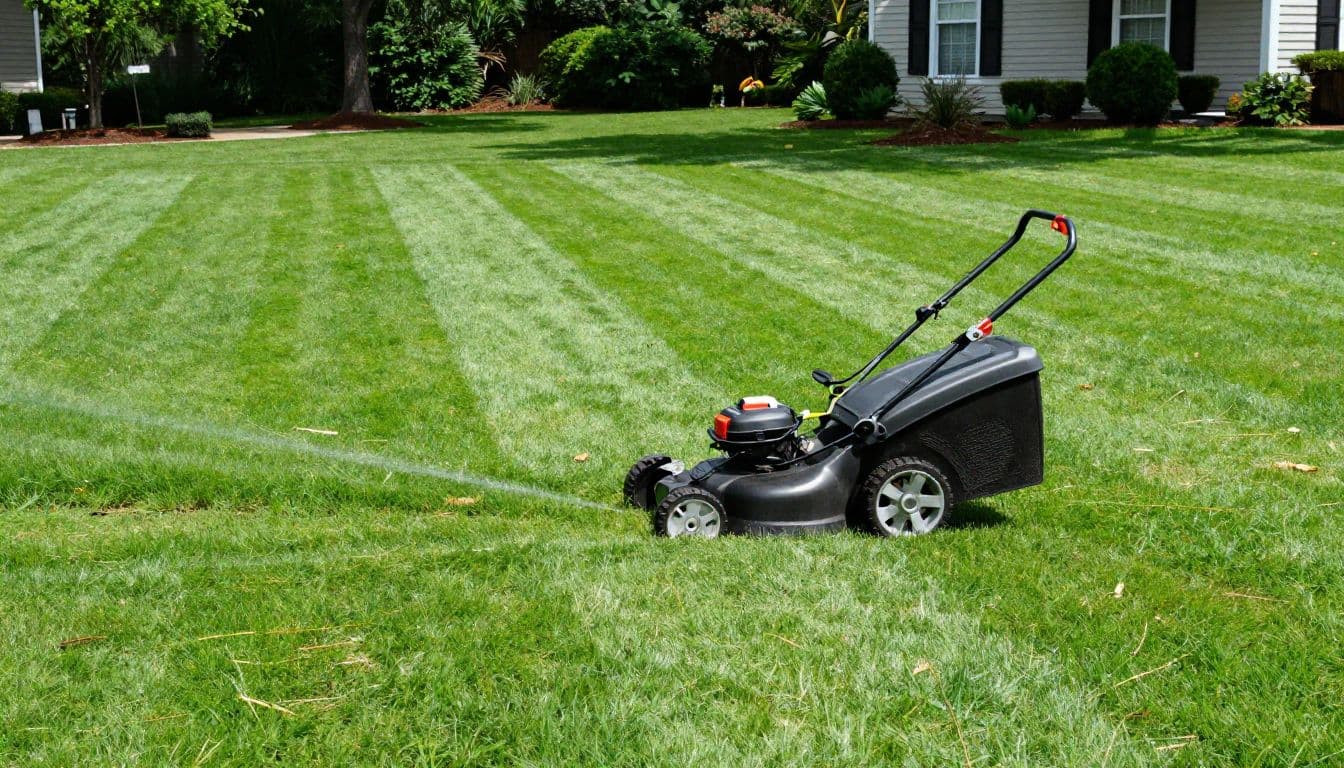
Never remove more than one-third of the leaf at one mowing. Low cuts on uneven ground scalp high spots and expose brown crowns. Mow when the grass is dry, keep blades sharp, and vary direction so repeated wheel tracks don't compact the same soil.
Established zoysia often needs about 1 inch of water per week during active growth, including rainfall, but that number is a starting benchmark. Clay soil may need slower cycles to prevent runoff. Measure sprinkler output with catch cans, then adjust run time until water reaches the root zone rather than pooling at the surface.
The Atlanta lawn watering schedule recommends a different approach for new sod. During the first 14 days, keep it moist with short, frequent irrigation. Over the next two weeks, stretch the time between waterings while applying more water per cycle. After roots take hold, move toward deep, less frequent watering. Follow current local watering rules.
Too much fertilizer can push soft top growth and add to thatch. A soil test and a local seasonal plan are safer than applying a heavy dose because the lawn looks pale. Pale color can also result from poor drainage, compacted roots, drought stress, or uneven irrigation.
Installation quality affects the price
Zoysia sod usually costs more than lower-cost warm-season options. The Atlanta zoysia sod installation cost guide lists roughly $1.10 to $1.60 per square foot for Zoysia sod as a reference. For 1,000 square feet, that equals about $1,100 to $1,600 before labor, delivery, removal, grading, soil work, or irrigation changes. Treat it as a planning range, not a full quote.
Ask installers to separate those line items. Confirm the cultivar on the estimate, measure the square footage, and ask how they will handle old turf, seams, slopes, and first-week watering. A lower bid can lose its advantage if the base remains compacted or the irrigation misses corners.
Installation during active growth usually gives roots better conditions, although weather and supplier availability affect scheduling. If you're unsure whether the yard is suitable, a local turf professional can inspect light, drainage, and soil before you commit to Zeon or Emerald.
The right choice depends on the whole yard
Both Zeon and Emerald can suit a sunny Atlanta lawn. Zeon often fits homeowners who want fine texture and quicker establishment, while Emerald suits those who want dense, rich-green turf and can manage a slower start.
Before ordering sod, verify summer sun, drainage, soil condition, irrigation coverage, and mowing height. The practical answer to Zeon vs Emerald Zoysia is the cultivar that matches those conditions and the care you can provide. Good preparation gives either grass a fair chance to stay thick through Atlanta's summer heat.