Effective Virginia Buttonweed Control for Atlanta Bermuda and Zoysia Lawns
Virginia buttonweed turns thick Atlanta lawns into patchy messes fast. You spot those low-spreading stems in your Bermuda or Zoysia, and suddenly bare spots mock your efforts. This perennial broadleaf weed roots at nodes and scatters seeds, so it bounces back unless you hit it right.
Homeowners in Metro Atlanta fight it every summer because our warm, humid spells suit it perfectly. Luckily, smart timing and spot treatments work well on both grass types. You can regain control without harming your turf, but expect repeat work.
Follow these local steps, and your lawn stays dense through heat waves.
Spotting Virginia Buttonweed in Your Atlanta Lawn
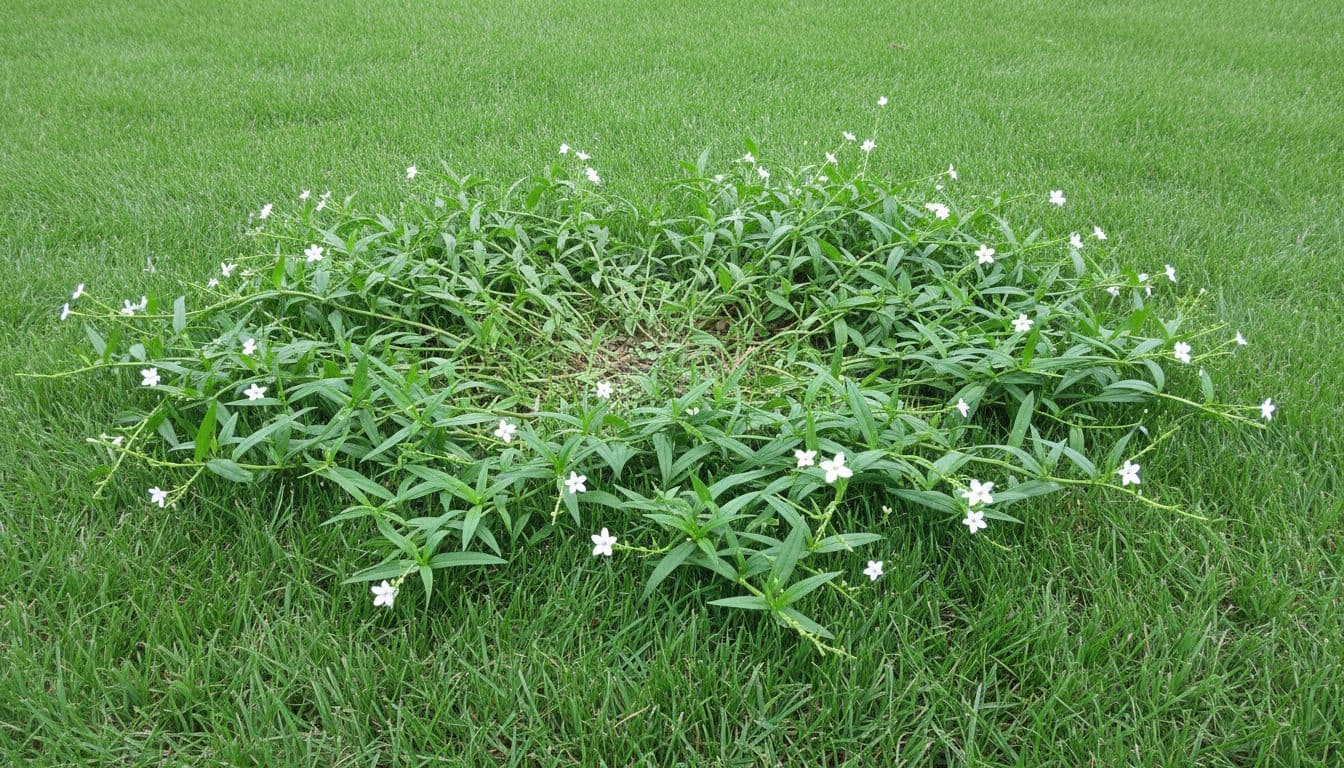
Look for sprawling stems that creep low across the soil. Virginia buttonweed has opposite, narrow elliptical leaves and tiny white four-lobed flowers by midsummer. In Bermuda, it hides under mower height; in Zoysia, it mats thicker because grass grows slower.
Atlanta clay holds moisture, so patches cluster near downspouts or low spots. Pull a stem, and you'll see white roots forming at joints. That's why hand-pulling fails; fragments regrow.
Early detection matters here. Scout after rain when it greens up fastest. Compare it to doveweed, which has shinier leaves. If you mow too low, it spreads wider before you notice.
Purple tinges on young leaves help too, especially in spring. Mark spots with flags. Dense turf crowds it out, but once established, it competes for water and sun.
Why Virginia Buttonweed Loves Atlanta Warm-Season Lawns
This weed thrives in our Zone 7b/8a summers. It spreads via seeds, roots, and stems, so one plant becomes ten by fall. Bermuda recovers fast from stress, yet thin spots invite invasion. Zoysia stays plush but builds thatch, trapping moisture buttonweed craves.
Check our Bermuda vs Zoysia guide for Metro Atlanta lawns to match care to your grass. Buttonweed exploits compacted clay and overwatering common here.
It survives winter roots, then explodes in May heat. Unlike annuals, it needs persistent control. Healthy turf resists better, so fix basics first.
Cultural Practices That Starve Virginia Buttonweed
Strong lawns win without sprays alone. Water deeply once a week if rain skips, early morning only. Shallow daily cycles keep soil soggy, feeding the weed.
Mow at proper heights to shade soil and block light. Our Atlanta mowing height guide for Bermuda, Zoysia, and tall fescue prevents scalping that opens doors to weeds. Aerate yearly; it loosens clay so roots dive deeper.
Fertilize per soil test after green-up. See the Atlanta fertilizer plan for Bermuda and Zoysia. Overfeeding pushes weak growth buttonweed exploits.
| Consideration | Bermuda | Zoysia |
|---|---|---|
| Tolerance to sulfonylureas | High; quick recovery | Good; watch for yellowing |
| Mowing impact | Low cuts spread fragments | Taller cuts reduce thatch |
| Heat stress risk | Lower; tolerates apps | Higher; delay in 90°F+ |
| Repeat apps needed | Often 2-3 | Same; space 4 weeks |
Verify labels always. These steps cut weed pressure 50% before chemicals.
Best Timing for Control in Metro Atlanta
Hit it in warm weather, June through August. Spring apps work less because growth slows. Our Atlanta post-emergent weed control calendar for Bermuda, Zoysia, and tall fescue times it right.
Spot-treat young plants before seeds set. Avoid 85°F+ days; stressed turf absorbs poorly. Wait 1-2 days pre-mow, same after. No rain for 4 hours post-spray.
Fall cleanup apps fade survivors before dormancy. Repeat every 4-6 weeks; one shot rarely kills roots.
Step-by-Step Spot Treatment Guide
Spot-spray only; blanket apps waste product and stress grass. Choose turf-safe sulfonylureas like trifloxysulfuron or metsulfuron where labeled. Both suit Bermuda and most Zoysia, but check cultivars.
Mix per label; add surfactant if called for. Use a pump sprayer for precision. Cover weeds fully, overlap 20%. Treat evenings in mild temps.
Expect yellowing; turf rebounds in weeks. Reapply after 4 weeks on survivors. Avoid overapplication; it burns crowns.
Summer heat stresses everyone, so water well pre-treatment. Don't mow soon after if label warns. Track progress; full control takes summer.
Realistic Expectations and When to Call Pros
Virginia buttonweed control demands patience. Roots persist, so 80-90% kill first pass improves with repeats. Dense turf post-treatment fills gaps.
If patches cover half your yard, pros handle it safely. They match products to your grass and avoid drift. Book now for summer success.
Your Atlanta lawn deserves clear green. Start cultural fixes today, time treatments right, and enjoy the win.