
How to Clear a Clogged Catch Basin Before Heavy Rain
A clogged catch basin can turn a hard rain into standing water on a driveway, lawn, or street. Clearing loose leaves and debris from the surface may restore flow, but a blockage inside the basin or pipe needs a different response.
Work only when the area is safe and the debris is within easy reach from above. Wear gloves and eye protection, never enter the basin or reach into standing water, and stop if the grate is unsafe to lift, the water looks contaminated, or the blockage is deep.
Key Takeaways
- Remove leaves and loose debris from the grate before heavy rain, and keep the material out of the opening.
- Wear gloves and eye protection. Don't enter the basin or put your hands into it, even if the water appears shallow.
- Don't use chemical drain cleaners. They won't remove leaves and can create hazards.
- Public catch basins and private drainage systems may have different maintenance responsibilities. Contact the municipality about a street or right-of-way drain.
- If water remains after surface debris is gone, or you see deep sediment, damaged parts, or recurring backups, contact the responsible agency or a drainage professional.
Why Clear a Catch Basin Before Heavy Rain?
A catch basin collects surface water at a low point and directs it into buried pipe toward an outlet. It can collect runoff from a driveway or yard, but the basin is only one part of the drainage route. If leaves cover the grate, water may not enter freely. If the pipe or outlet is blocked, removing surface debris alone won't solve the problem.
Inspect the grate before a period of heavy rain, especially when leaves, mulch, grass clippings, or sediment are gathering nearby. A clean, unobstructed inlet gives surface water a better chance to enter the system. It doesn't guarantee that the buried pipe can carry all the runoff, so watch for signs of a deeper problem after clearing.
For a recurring low spot, consider whether the basin is part of a larger drainage issue. Our catch basin drainage cost guide explains how the basin, pipe, and outlet work together.
Find Out Who Maintains the Basin
A basin near a curb may look like part of a private yard, but its location alone doesn't establish who is responsible for it. Determine whether it belongs to a public drainage system or to a privately maintained property system before moving a grate or attempting a repair.
Public street and right-of-way drains
For a catch basin in a street, sidewalk, or public right-of-way, contact the city or county public works or stormwater department about a blockage, damaged grate, or flooding. Don't step into traffic to clean it, remove its cover, or try to clear a deep obstruction.
If loose leaves can be removed from the grate safely from the sidewalk or yard, do so without pushing them into the opening. Otherwise, report the location and leave the work to the municipality.
Private basins on a property
A basin serving a private driveway, yard, or business may be maintained by the owner, property manager, or homeowners association. Check who is responsible before opening a basin on shared property.
If it's privately maintained, limit homeowner work to visible surface debris that you can remove safely. A buried-pipe blockage, persistent backup, or damaged structure calls for a drainage professional.
Put Safety Before Clearing
Choose a dry, calm period when you can see the grate and stand on stable ground. Wear sturdy gloves and eye protection because leaves can hide sharp litter, insects, or other debris. Keep children and pets away from the work area.
Never enter a catch basin, lean into it, or reach into standing water. The water may conceal sharp objects, contaminants, unstable material, or a sudden drop. Don't use chemical drain cleaners. They're not designed to remove leaves and can leave hazardous liquid in the basin.
If the grate is cracked, loose, stuck, unusually heavy, or positioned where lifting it would expose you to traffic, stop. Don't pry it open or try to move it by yourself. The same rule applies if the water appears oily, discolored, or contaminated, or if you can't see where the debris ends.
Steps to Remove Leaves and Debris
Surface cleanup is appropriate only when the grate and surrounding area are safe to approach. Keep the work focused on debris you can reach from above.
Clear the grate and surrounding area
First, look for loose leaves, twigs, grass clippings, mulch, and litter on the grate and around its edges. Use a rake or grabber to lift material from the surface rather than pushing it through the slots. Put the debris in a yard-waste container or bag, and keep it out of the street gutter and other drains.
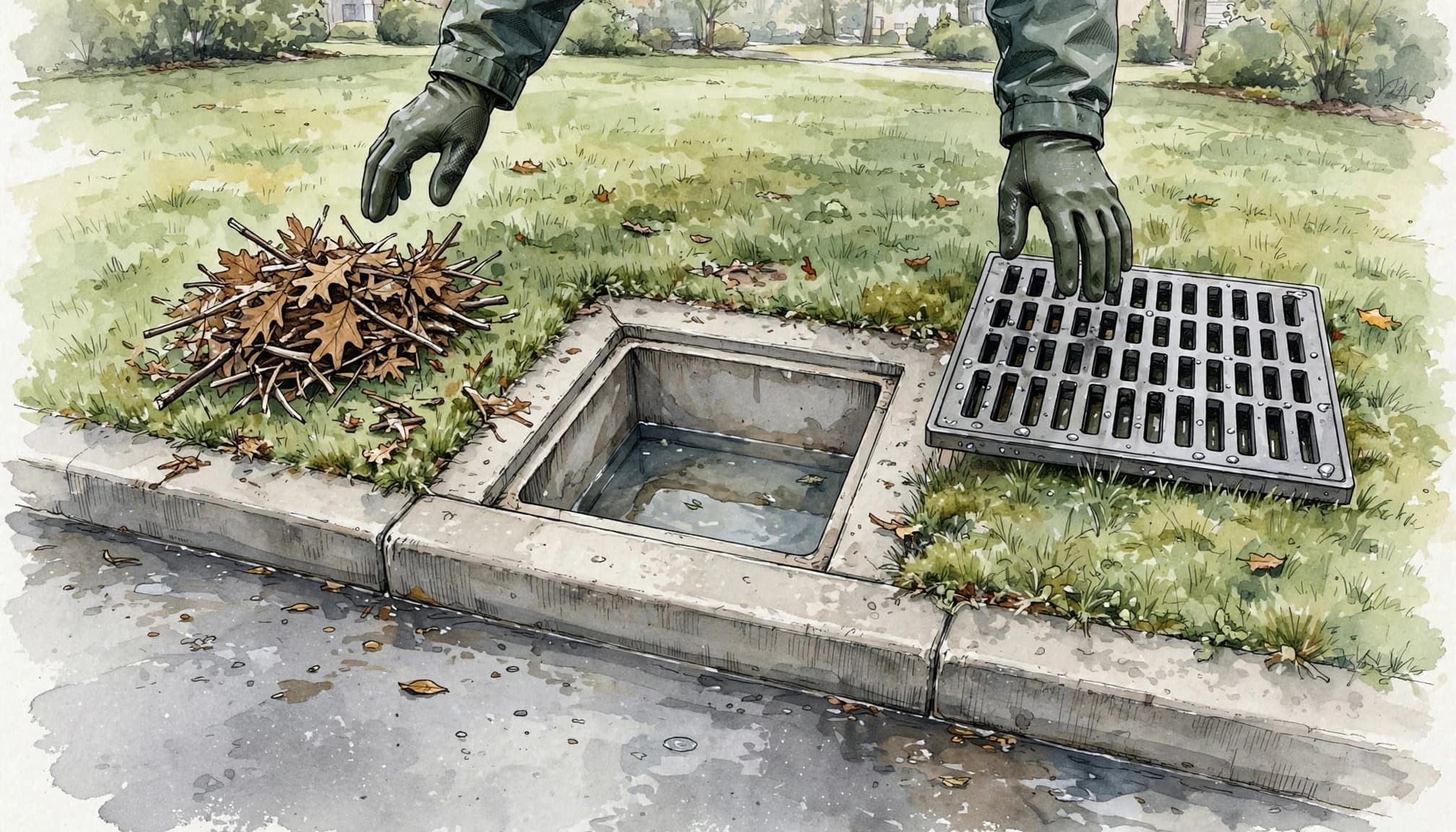
If the grate needs to be lifted to remove visible debris at the top, proceed only when it is designed to lift and you can move it safely with stable footing. Don't strain, pry, or leave the opening exposed. If anything about the grate feels unsafe, stop and contact the responsible party.
Keep the material out of the basin
Once the visible debris is gone, look again from above. Remove only material that is clearly accessible without reaching into the chamber or water. Don't scoop, probe, or pull at debris below the surface. Replace a safely lifted grate in its proper position before leaving the area.
Avoid using a hose or chemical product to force material down the pipe. That can move leaves or sediment farther into the system, where they may be harder to remove. If water still can't drain after you've cleared the grate, treat the remaining blockage as a deeper drainage issue.
Know When Surface Clearing Isn't Enough
A clear grate doesn't prove that the whole system is open. The pipe may be blocked, the outlet may be restricted, or the basin may have accumulated sediment below the area you can safely inspect.
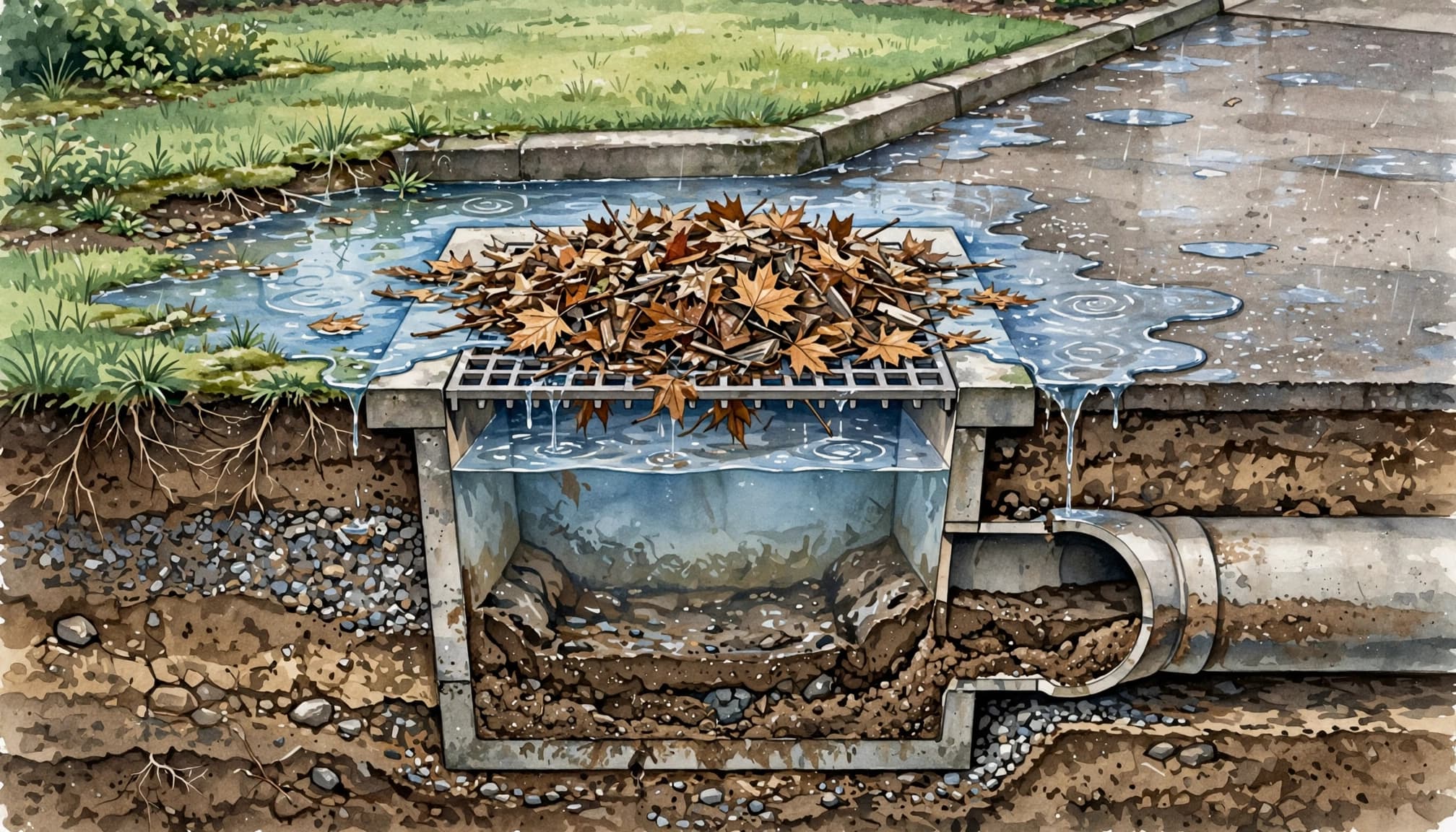
Watch for water backing up near a downspout, a soggy patch above the buried line, slow drainage after ordinary rain, lawn settlement over the trench, or erosion near an inlet or outlet. Water that remains for a long time after rain can also point to a system or soil problem. These signs don't identify the exact cause, but they do show that surface cleanup may not be enough.
For more warning signs related to persistent yard drainage, see our dry well installation cost guide. A catch basin can collect water, but the pipe still needs a workable route and outlet.
When to Contact the Municipality or a Drainage Professional
Contact the municipality or county when the basin is in a public street or right-of-way, when a public grate is damaged or missing, or when flooding is affecting a roadway. Give the department the location and describe what you can see, such as standing water or a grate covered with debris. Don't enter the road or remove the cover while waiting for help.
Call for help with a public basin
Report a public catch basin when water is pooling around it despite a clear grate, the structure appears damaged, or the blockage is below the surface. If the basin is near traffic or the grate is unstable, stay clear and report it rather than attempting any cleanup.
Hire a professional for a private drainage problem
For a private basin, contact a drainage professional if the blockage is deep, sediment has built up inside, water continues to back up, or the system drains slowly after routine rainfall. Stop immediately if the water may be contaminated or if you can't safely lift the grate.
A professional can assess the basin and connected pipe without requiring you to reach into the chamber. If the problem covers a wider part of the yard, the cause may involve grading or the route water takes across the property. RW Lawn Co provides grading and landscaping services in Metro Atlanta and nearby communities.
Inspect Before and After Heavy Rain
Check the grate before heavy-storm periods, then inspect it again after the storm has passed and the area is safe. Look for fresh leaves, displaced mulch, sediment, or pooling that wasn't present before. Clear loose material from the surface, but don't try to inspect an underground pipe by reaching into the basin.
If water drains slowly after ordinary rainfall, note where it collects and whether it backs up at a downspout or low spot. That information can help a municipality or drainage professional assess the problem. Regular attention to gutters, downspouts, and nearby yard debris also reduces the amount of material that reaches the inlet.
Frequently Asked Questions
Can I remove leaves from a public catch basin?
You can remove loose leaves from the grate only when you can do so safely from outside the roadway and without lifting the grate or pushing debris into the opening. Report a deep blockage, damaged cover, or street flooding to the municipality.
Should I lift the grate to clear the basin?
Only lift it if it is designed to be lifted and you can do so safely, with stable footing and no traffic hazard. Don't pry up a stuck or heavy grate, and don't leave the opening uncovered. When in doubt, stop and contact the responsible party.
How often should I inspect a catch basin?
Inspect it before heavy rain and again after storms when conditions are safe. Basins near trees, lawns, or unpaved areas may collect leaves, clippings, mulch, and sediment more quickly. Clear only surface debris you can reach without entering or reaching into the basin.
Keep the Inlet Clear and Know When to Stop
Removing leaves from the grate can help a catch basin accept runoff before heavy rain, but it won't clear a buried pipe or fix a failing outlet. Work from the surface, protect yourself, and keep debris out of the drain.
When the blockage is deep, the water looks contaminated, or the grate isn't safe to move, leave the basin alone. Contact the municipality for a public drain or a drainage professional for a private system.