Why Tree Bark Splits in Atlanta and When to Act
Bark splitting on Atlanta trees can follow weather stress, drought, sun exposure, disease, or physical injury. A crack deserves attention when it widens, exposes damaged tissue, or appears alongside declining branches, but the bark alone rarely identifies the cause.
Atlanta tree bark splitting can look alarming, yet some trees naturally shed outer bark as they grow. The difference lies in the pattern and the condition of the trunk beneath it. Here's how to read the signs and decide when to call a qualified arborist.
Common causes of bark splitting in Atlanta
A split may develop when the bark and wood respond differently to changes in temperature, moisture, or growth. Atlanta's weather can shift from wet periods to heat and dry spells, placing different stresses on trees over one growing season. That timing may offer clues, but it can't confirm a cause.
Temperature swings and sunscald
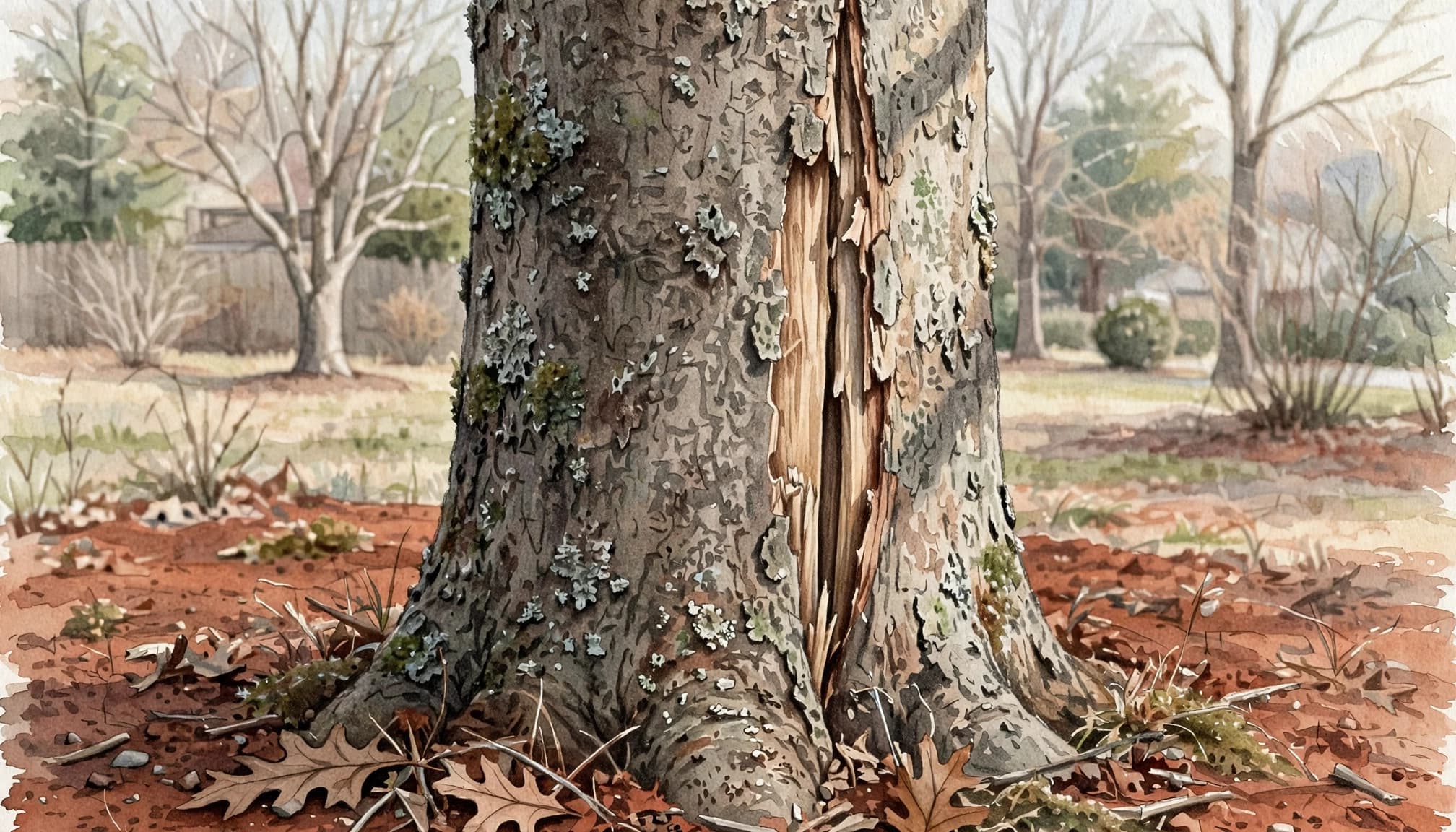
During a cold spell, daytime sun can warm exposed bark while shaded areas remain much colder. If temperatures drop quickly, the warmed tissue may cool at a different rate from the wood beneath it. This stress can contribute to a vertical crack, often called a frost crack.
Sunscald is related but not identical. It occurs when intense sun heats bark, commonly on the south or southwest side, and the tissue is injured by temperature changes. Damage may become visible later as discolored, cracked, or loose bark. Location and timing can help explain a pattern, but neither proves the cause.
Drought stress and moisture changes
Extended dry weather can stress a tree's roots and canopy. When drought follows a wet spring, a tree may face multiple pressures in the same season. Drought can weaken the tree's ability to recover from other damage, although dry leaves or a bark crack alone don't establish that drought caused the split.
Check the soil several inches below the surface rather than judging moisture from the top layer. Dry, curled leaves or crispy edges across much of the canopy can point to water stress. If leaf spots, cankers, or progressive twig dieback also appear, another problem may be present.
Disease and injury can damage bark
Disease and physical damage may create cracked, sunken, or dead patches that look different from a simple split. These signs can also appear alongside drought stress or other conditions, so a visual check from the ground can't settle the diagnosis.
Cankers and other disease symptoms
A canker is a damaged or dead area on bark or stem tissue. It may look sunken, discolored, or cracked, and the affected area can enlarge over time. If damage extends around a branch or trunk, it may interfere with the movement of water and nutrients.
Look at the whole tree, not only the damaged spot. Leaf scorch, early leaf drop, twig dieback, or dead branches can help an arborist assess whether the tree is under broader stress. Atlanta's warm, wet periods can also favor some plant diseases, while hot, dry weather may add water stress. Both can occur in one season.
Lawn equipment, storms, and other wounds
A mower or string trimmer can injure bark near the base. Storms may break branches or strike the trunk, while construction, digging, or grade changes can disturb roots and affect the tree's condition. Damage that follows a clear impact or work activity may be related to that event, but an inspection is needed to assess how far it extends.
Avoid peeling loose bark, cutting into the trunk, or applying a product to test a theory. These steps can enlarge the wound or make the area harder to assess. If the split appeared after a storm or nearby work, note the timing and share it with the arborist.
Bark shedding or a concerning split?
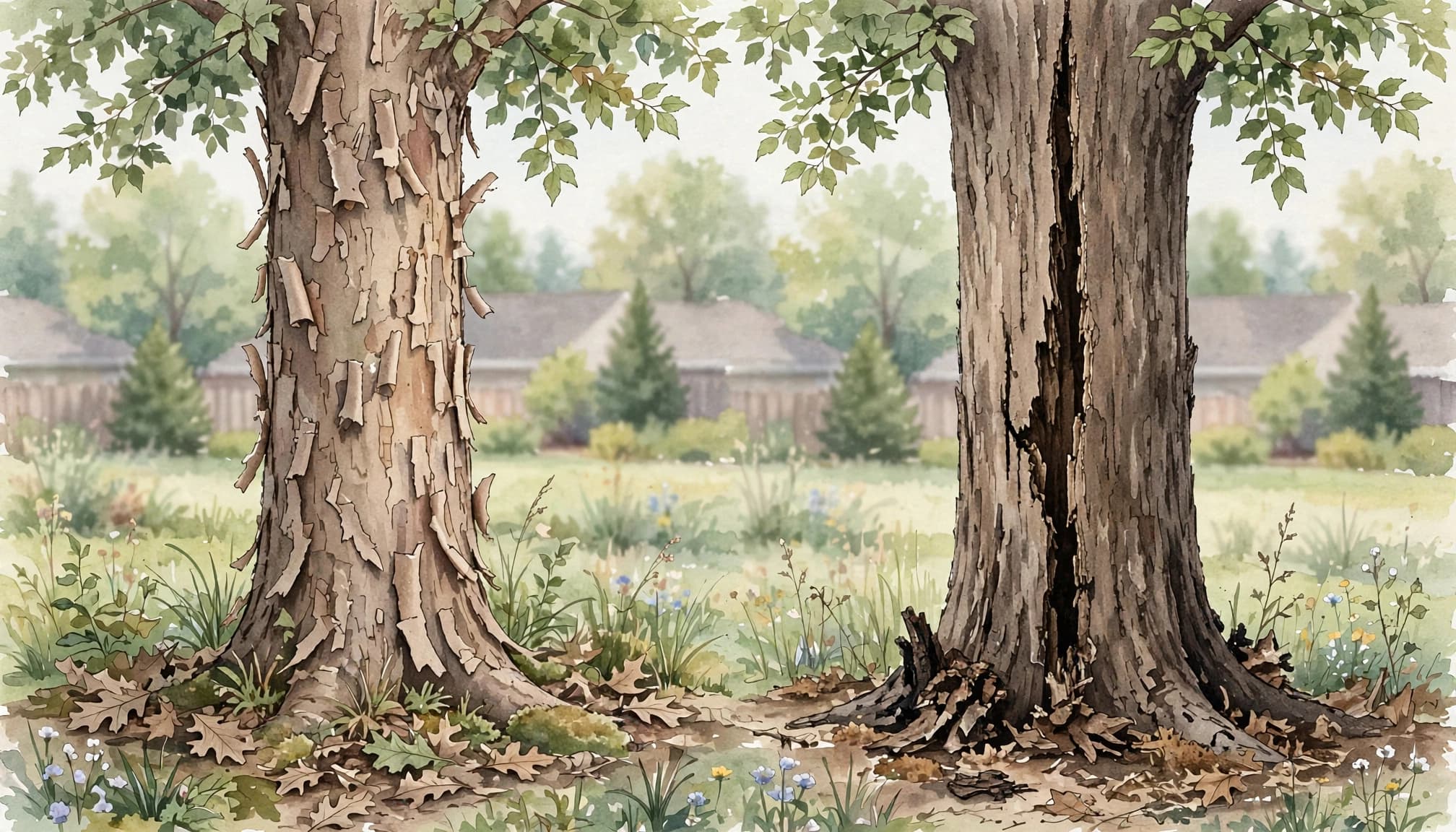
Some trees naturally shed outer bark in patches, strips, or plates. The process can look dramatic while the trunk remains healthy. A true crack usually involves a break in the bark surface, and may expose inner tissue or continue into a branch union or the trunk.
Signs of normal shedding
Natural bark shedding tends to happen gradually and in a pattern typical of that tree. The underlying bark often looks intact, and the canopy may remain full without sudden dieback. Some mature trees have outer bark that flakes or peels as the trunk expands.
Bark loss by itself isn't proof of a disease or structural failure. However, if you see a new deep crack, exposed wood, a sunken patch, or dead branches at the same time, treat it as a separate concern rather than assuming it's routine shedding.
Signs that need closer attention
A split is more concerning when it appears to widen, runs through a major trunk or branch junction, or comes with loose bark and visibly damaged tissue. A cavity, fungal growth, extensive deadwood, exposed roots, or a noticeable lean also warrants an arborist's assessment.
No single feature, including a crack's length or position, can establish whether a tree is unsafe from a distance. In a separate pest issue, crape myrtle bark scale can cause white or gray waxy bumps, sticky residue, and black sooty mold. Those signs point toward a possible scale problem, not proof that the trunk is splitting. See our guide to identifying bark scale on crape myrtles for more on those symptoms.
Warning signs that call for an arborist
A split trunk can affect a tree's stability, especially if the tree also has dead limbs, a cavity, or a lean. Dead, declining, or unstable trees can drop branches or fail at the trunk, even on calm days. Keep people, pets, and lawn equipment away from a tree that looks unstable until it's assessed.
Look for changes across the whole tree
Check the canopy from the ground. Note whether branches have died suddenly, leaves are thinning across a large area, or symptoms are spreading. Also look for a fresh crack, hanging limb, loose bark, or new movement in the trunk. These details help describe what changed without requiring you to diagnose the tree.
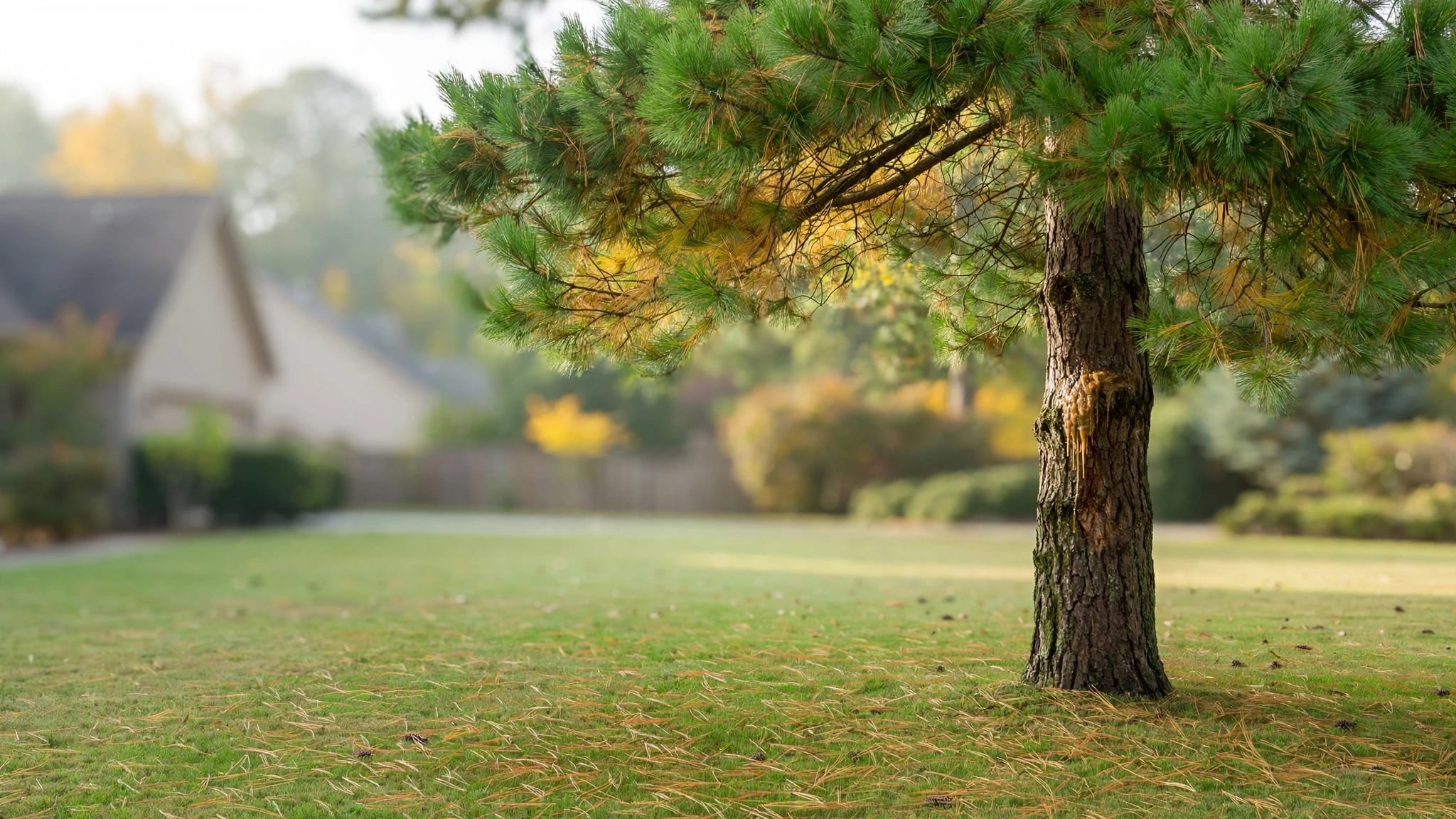
Pines may also show pest signs that deserve prompt attention, including pitch tubes, boring dust, bark loss, or a changing crown. Those clues can have more than one explanation, so don't identify beetles from a single symptom. Our guide to southern pine beetle damage in Atlanta covers signs that call for a closer look.
Keep clear of possible hazards
If the tree leans toward a house, driveway, sidewalk, or play area, stay out of the likely fall zone and arrange a professional assessment. Don't climb the tree or stand beneath damaged limbs to take a closer look. A photograph from a safe distance can help document the crack and surrounding canopy.
A qualified arborist can inspect the trunk, branch unions, root area, and nearby targets. That broader view matters because the split may be one sign among several, and a photo alone can't establish the tree's structural condition.
What to do when you find a split
Start by recording what you can observe without touching the damaged area. Take clear photographs from a safe distance, including one of the whole tree and one showing the bark. Note when you first saw the crack and whether it appeared after a freeze, dry spell, storm, or nearby yard work.
Avoid testing or treating the crack yourself
Don't peel bark, drill the trunk, fill the crack, or cut limbs to see whether the tree is sound. These actions can cause further injury and won't tell you whether the trunk is structurally stable. Avoid applying chemicals unless a qualified professional recommends a treatment for an identified problem.
Meanwhile, check for obvious water stress in the surrounding soil and canopy. A dry root zone may contribute to stress, but watering won't repair a split or resolve a disease. Don't pile soil or mulch against the trunk, since covering the trunk base can hide changes and hold moisture against the bark.
Get an assessment before major work
Arrange an on-site assessment when the split is deep or changing, the trunk has a cavity, or the tree shows extensive deadwood, a lean, or exposed roots. A qualified tree-care professional can consider the full structure and the area around it before recommending pruning, monitoring, or removal.
If pest signs appear on pines, keep away from loose bark and don't remove it to look underneath. An arborist can evaluate the trunk and surrounding trees without putting you under a damaged canopy. For broader yard work around established trees, residential landscaping and mulch services in Atlanta can help maintain beds without hiding the trunk base.
Key takeaways
Bark can split after temperature shifts, sunscald, drought stress, disease, or physical injury, but appearance alone rarely identifies the cause. Natural shedding is usually gradual, while a new, widening crack or damage accompanied by canopy decline deserves closer attention.
Keep clear of trees with signs of instability, and don't probe or treat a crack yourself. A qualified arborist can assess the trunk, canopy, and root area before you decide what to do.
Frequently asked questions
Can drought cause tree bark to split?
Drought can stress a tree and reduce its ability to recover from injury or other problems. A split may have more than one contributing factor, so dry soil or scorched leaves don't confirm that drought caused the crack.
Is peeling bark always a sign of disease?
No. Some trees shed outer bark as part of normal growth. A gradual pattern with intact bark beneath it differs from a new crack, sunken area, or exposed tissue, which may need assessment.
Should I remove loose bark from a split?
No. Pulling bark away can worsen the wound and won't show whether the tree is stable. Leave the damaged area alone and keep people away if the tree appears unsafe.
When should I call an arborist?
Contact a qualified arborist when a split is widening, the trunk has a cavity, or damage occurs with deadwood, a noticeable lean, exposed roots, or sudden canopy decline. A professional can inspect the tree on site and assess the risk.
Conclusion
A bark split is a clue, not a diagnosis. Weather stress, disease, and injury can overlap, while natural shedding can look alarming without indicating a serious problem.
Pay attention to changes in the crack and the rest of the tree. When the trunk or canopy shows additional warning signs, keep clear and arrange an arborist's assessment.