Atlanta Gravel Driveway Washouts: Causes and Repair Options
A washout is a sign that water is moving gravel or weakening the driveway beneath it. For lasting gravel driveway repair , find out where the water comes from and where it should go before adding fresh stone.
In Metro Atlanta, a small rut may need only surface work, while recurring erosion can point to a grading or drainage issue. The visible damage offers clues, but it doesn't prove the cause on its own. Start by tracing the runoff, then match the repair to the problem.
Key Takeaways
- Follow the damaged area uphill to find where runoff enters, then look downhill for a safe outlet.
- Small, isolated ruts may be suitable for a homeowner to fill and compact if the base is firm and drainage works.
- Repeated washouts, soft spots, broad areas of damage, and water crossing the drive may need professional grading or drainage work.
- Replacing gravel without correcting the water route often leaves the original problem in place.
- A durable repair depends on a stable, compacted base and a surface that sheds water without sending it toward a home or neighboring property.
What a Gravel Driveway Washout Looks Like
Read the damage pattern
A washout can appear as a narrow channel, a depression, or gravel piled along one side of the driveway. A groove that follows the slope may indicate that water is traveling over the surface and carrying loose stone with it. A low spot that holds water can signal a different issue, such as poor drainage or a weak area beneath the gravel.
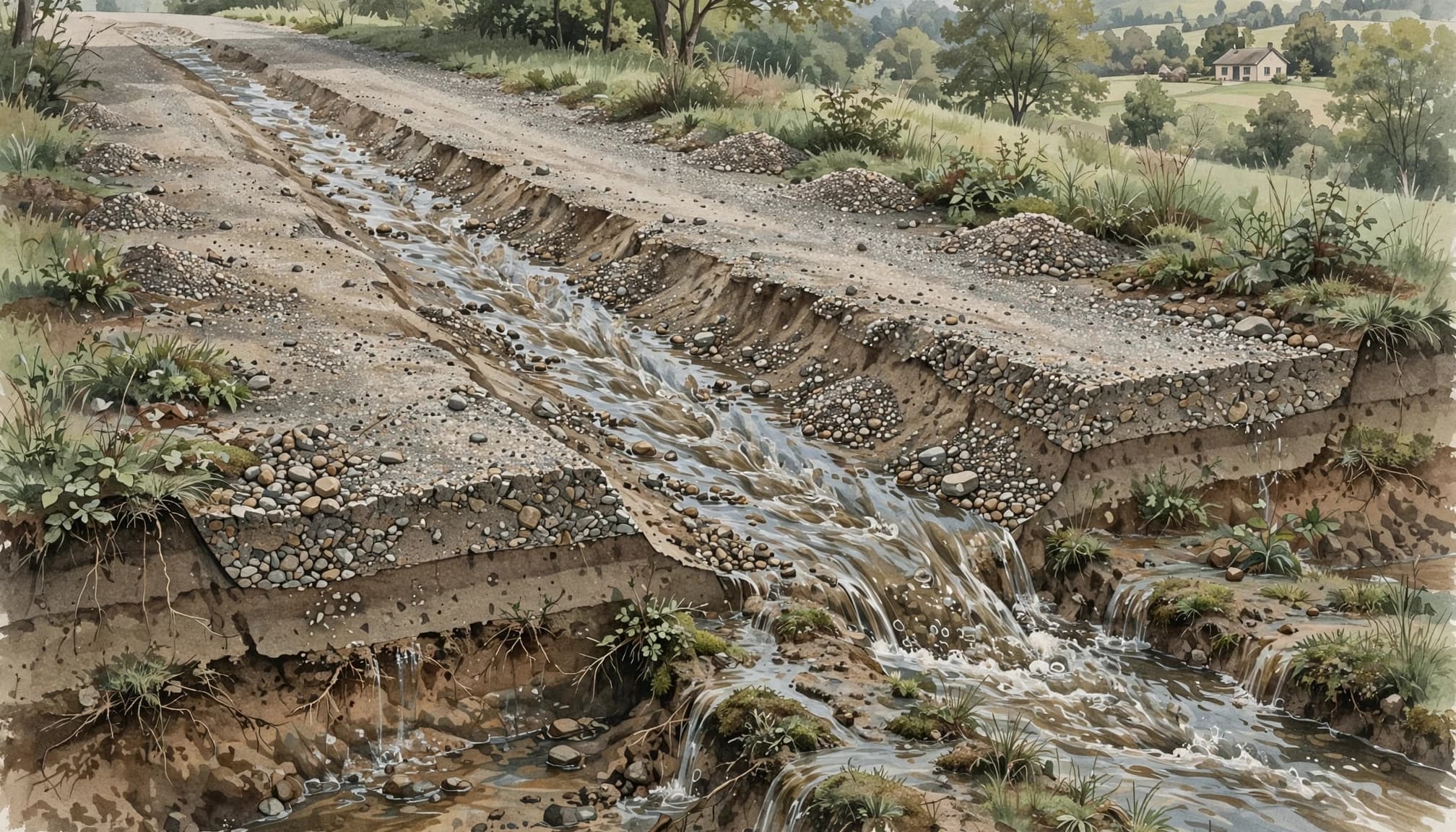
Look for displaced gravel at the bottom of the slope, along the driveway edge, or where runoff leaves the drive. Those deposits help show where material is traveling. However, the pattern alone can't confirm whether the cause is surface flow, a blocked drain, or a failing base.
Check whether the problem is limited to the surface
If the gravel is loose but the ground beneath feels firm and the rut is shallow, the damage may be confined to the top layer. In contrast, a depression that returns after repeated filling, or an area that feels soft underfoot, may involve the base or subgrade.
Also note whether damage appears after water crosses the driveway, collects at its edge, or runs down the center. The location can help narrow the cause before you choose a repair.
Identify the Cause Before Repairing the Washout
Trace the water uphill and downhill
After rainfall, observe the driveway from a safe location. Follow the visible flow uphill to see whether it begins on the drive, enters from a yard or slope, or comes from an outlet such as a downspout. Then trace it downhill. Water needs a route away from the driveway, but that route shouldn't create a new erosion problem or send runoff toward a building or neighboring property.
Check low points and drainage openings for leaves, sediment, or gravel that could restrict flow. If a pipe runs beneath the drive, inspect its visible ends for blockage or signs of collapse. Don't enter a pipe or dig around buried utilities.
Look for signs of a grading or base problem
A long channel that follows the driveway's grade may mean water is traveling along the surface instead of leaving it at a suitable point. Broad uneven areas, soft patches, or ruts that return soon after a repair can suggest that the base needs attention, not just more gravel.
Around Atlanta, red clay can hold water and become difficult to compact when saturated, according to RW Lawn Co's culvert guidance. That doesn't make clay the cause of every washout. It does mean the condition of the ground and the timing of compaction matter when a repair involves the underlying layer.
Our Atlanta grading and paving services include slope correction and water-flow management, work that may be part of a broader repair.
Gravel Driveway Repair Options
Rebuild a small surface washout
For a shallow, isolated rut with a firm base, rake away loose material and remove debris from the damaged area. Add suitable aggregate in manageable layers, then compact it so the repair ties into the surrounding surface. Simply pouring loose gravel over the depression can leave a soft spot that settles again.
Shape the finished surface so it sheds water toward an appropriate outlet. Avoid creating a ridge that traps water or a channel that concentrates it farther downhill. If runoff continues to cut through the same area, surface filling is unlikely to solve the cause.
Repair the base and restore drainage
When the base has softened or washed away, a lasting repair may require removing unstable material, reshaping the area, adding and compacting base aggregate, then replacing the wearing surface. The compacted base provides support; the top gravel affects how the drive looks and feels under tires. The layers need to work together.
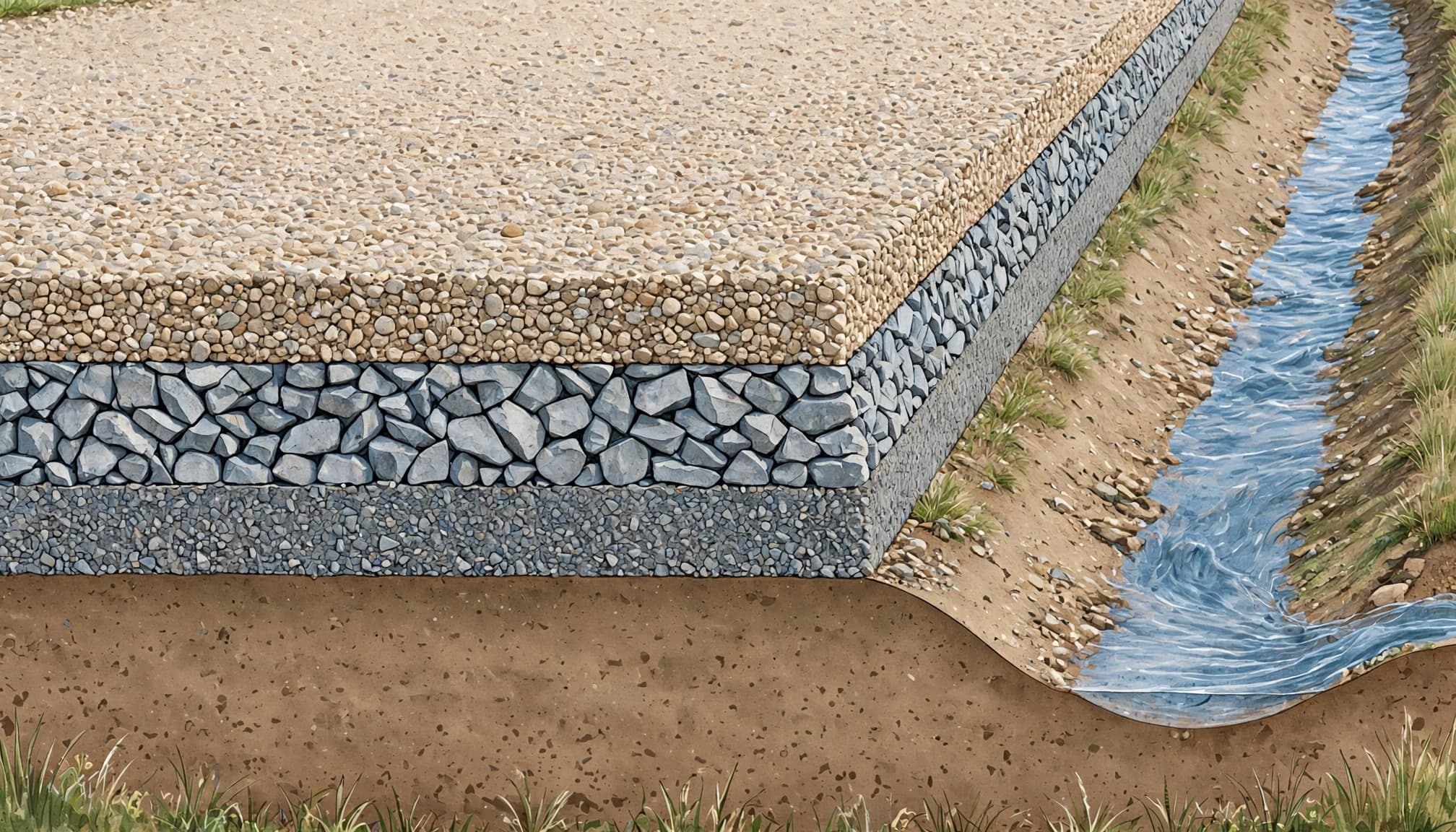
If water keeps crossing the driveway, grading alone may not be enough. A swale, culvert, or channel drain may help in some settings, but the right option depends on the route water takes and where it can discharge. Pipe work may also require rebuilding the driveway surface above it. RW Lawn Co's Atlanta culvert installation guide discusses how drainage work can overlap with aggregate replacement, reshaping, or base stabilization.
Decide Whether to DIY or Call for Help
When a homeowner repair may be reasonable
A homeowner may be able to fix a small, shallow rut when the base remains firm, the damaged area is easy to access, and water already drains away without cutting a channel. Rake the surface, add gravel suited to the driveway, compact the repair, and watch how water moves after the next rainfall.
This approach is best for routine surface upkeep, not recurring erosion. If the rut returns, the material shifts downhill, or the area stays wet, stop adding gravel and investigate the underlying condition.
When professional work makes sense
Get professional help when washouts cover a large area, return after repeated repairs, affect the driveway's full width, or expose soft ground. A drainage issue may call for grading, a culvert, or another system that involves excavation and a planned outlet. A steep slope or water flowing near a home also calls for more than a quick top-up.
RW Lawn Co provides grading and paving work in the Atlanta metro area. For drainage beyond the driveway, our guide to Atlanta drainage options compares regrading, French drains, and dry creek beds.
Prevent Washouts from Returning
Keep water paths open
Clear leaves, sediment, and loose gravel from the driveway's drainage paths and any visible culvert openings. Check them after heavy rainfall, especially if water has carried debris downhill. If runoff enters from a yard or bank, stabilizing that area may reduce the amount of soil and gravel reaching the drive. See our erosion control guide for sloped Atlanta yards for options around bare slopes and banks.
Also watch where roof or yard drainage reaches the driveway. A concentrated discharge can erode a small area even when the rest of the surface drains normally. Keep the outlet directed to a suitable location rather than letting it carve a new channel.
Maintain the surface and base
Inspect the driveway after storms and address shallow ruts before water deepens them. When adding material, use aggregate that fits the surface and compact it instead of leaving a loose layer. Gravel types behave differently: some compact more tightly, while smoother stone may shift more on slopes.
A crown or cross-slope can help shed water, but the shape must fit the site and direct runoff responsibly. If the driveway repeatedly develops the same rut, maintenance alone won't correct the grade or weak base causing it.
What Affects the Repair Scope
The damage may extend below the visible rut
The amount of work depends on whether the problem is limited to the wearing surface or has affected the base. A shallow repair may need modest material and compaction. A deeper washout could require excavation, new aggregate, reshaping, or drainage work. If old material is mixed with mud or debris, removal may also be needed.
RW Lawn Co's Atlanta gravel driveway cost guide explains how grading, drainage, access, and aggregate choices can affect driveway work. The price of gravel alone doesn't describe the scope of a repair.
Access and drainage can change the work
Narrow access can limit equipment and material delivery. A repair that includes a culvert or channel drain also involves work beyond the driveway surface, including managing the water's outlet. If the damage extends into a slope, retaining edge, lawn, or landscape bed, restoration may be part of the job.
When comparing repair proposals, look for a clear description of the damaged area, base work, aggregate, grading, drainage, and removal. That makes it easier to understand whether the quote addresses the cause or only covers replacement gravel.
Frequently Asked Questions
Can I fill a washout with gravel?
Yes, when it's a small surface rut, the base is firm, and water already drains properly. Remove loose debris, add suitable aggregate, and compact it. If water keeps cutting the same channel, filling it alone will likely leave the underlying problem untouched.
Why does a washout return after I add gravel?
The water route may still be concentrating flow in the same place, or the base may remain soft or unstable. New gravel can disappear into a weak area or wash downhill. Watch the site after rainfall and identify whether the damage begins at the surface, an outlet, or a low point.
Does every driveway washout need a culvert?
No. A culvert is one possible option when water needs to pass beneath a driveway, but other situations may call for regrading, a swale, or a channel drain. The solution depends on the flow path, the grade, and a suitable discharge point.
Repair the Water Problem, Not Just the Rut
A lasting gravel driveway repair starts with tracing runoff and checking whether the base remains stable. Small, isolated surface damage may be manageable with careful filling and compaction. Recurring washouts or water crossing the drive call for a closer look at grading and drainage.
Fresh gravel can restore the appearance, but water control keeps the same damage from returning.