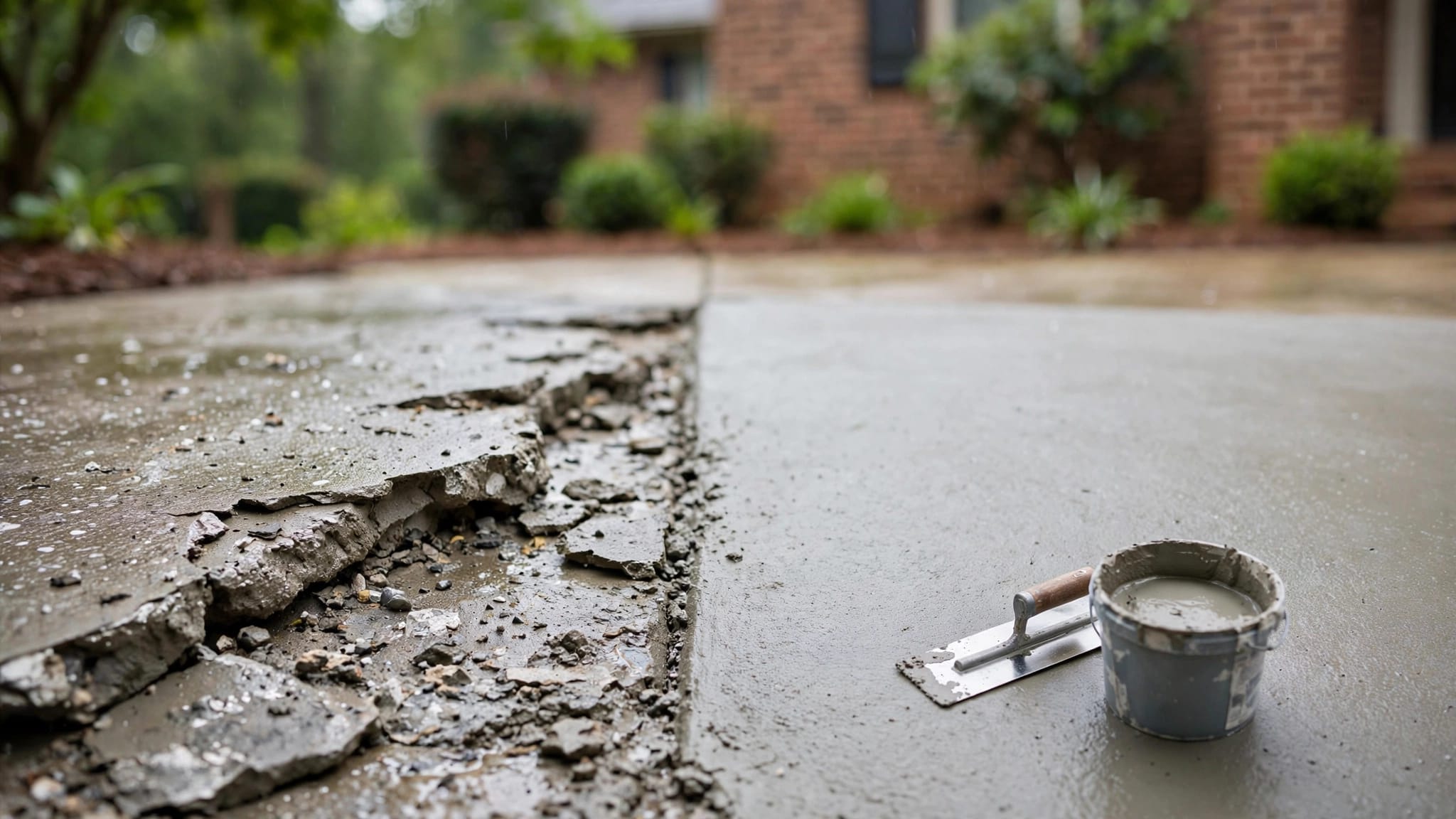
Atlanta Culvert Installation Cost for Driveway Drainage
A driveway culvert can look like a simple pipe in a ditch, but a poor installation can wash out a driveway, drown a lawn, or send runoff toward the house. Your Atlanta culvert installation cost depends on more than pipe length. Soil, slope, water volume, access, permits, and driveway restoration often carry as much weight as the pipe itself.
For most Metro Atlanta homes, a culvert project needs excavation, a stable gravel base, correct slope, compacted backfill, and a protected outlet. Planning the whole water path prevents a quick repair from becoming a recurring erosion problem.
Start with the drainage issue, then price the work around the site conditions.
Atlanta Culvert Installation Cost: Planning Estimates
For 2026, an Atlanta culvert installation cost can range from roughly $1,800 to $15,000 or more . These are planning estimates, not guaranteed prices. A short pipe under a gravel driveway sits near the lower end. A long crossing with pavement replacement, headwalls, utility conflicts, or right-of-way approvals can move well beyond it.
This table helps separate common project scopes.
| Project scope | Typical planning estimate | Often includes |
|---|---|---|
| Short private-drive culvert | $1,800 to $4,000 | Basic excavation, 18-inch pipe, gravel bedding, backfill, light grading |
| Standard driveway crossing | $4,000 to $8,000 | Longer 18 to 24-inch pipe, equipment work, end treatments, driveway-base repair |
| Complex drainage correction | $8,000 to $15,000+ | Deep digging, concrete or larger pipe, headwalls, erosion control, paving repair, difficult access |
The lower range usually fits a straightforward site with open equipment access and a usable ditch. The higher range often includes problems that are not visible from the driveway surface.
A culvert price should cover a complete drainage crossing, not only the pipe. Water needs a stable inlet, supported pipe bedding, compacted cover, and a protected place to exit.
Pipe material is only one line item. Excavation, hauling, stone, compaction, labor, restoration, and permit-related work may take up most of the budget.
What a Driveway Culvert Should Accomplish
A driveway culvert carries water through a driveway embankment without allowing the drive to act like a dam. It may cross a roadside ditch, a shallow swale, or a natural drainage path on private property.
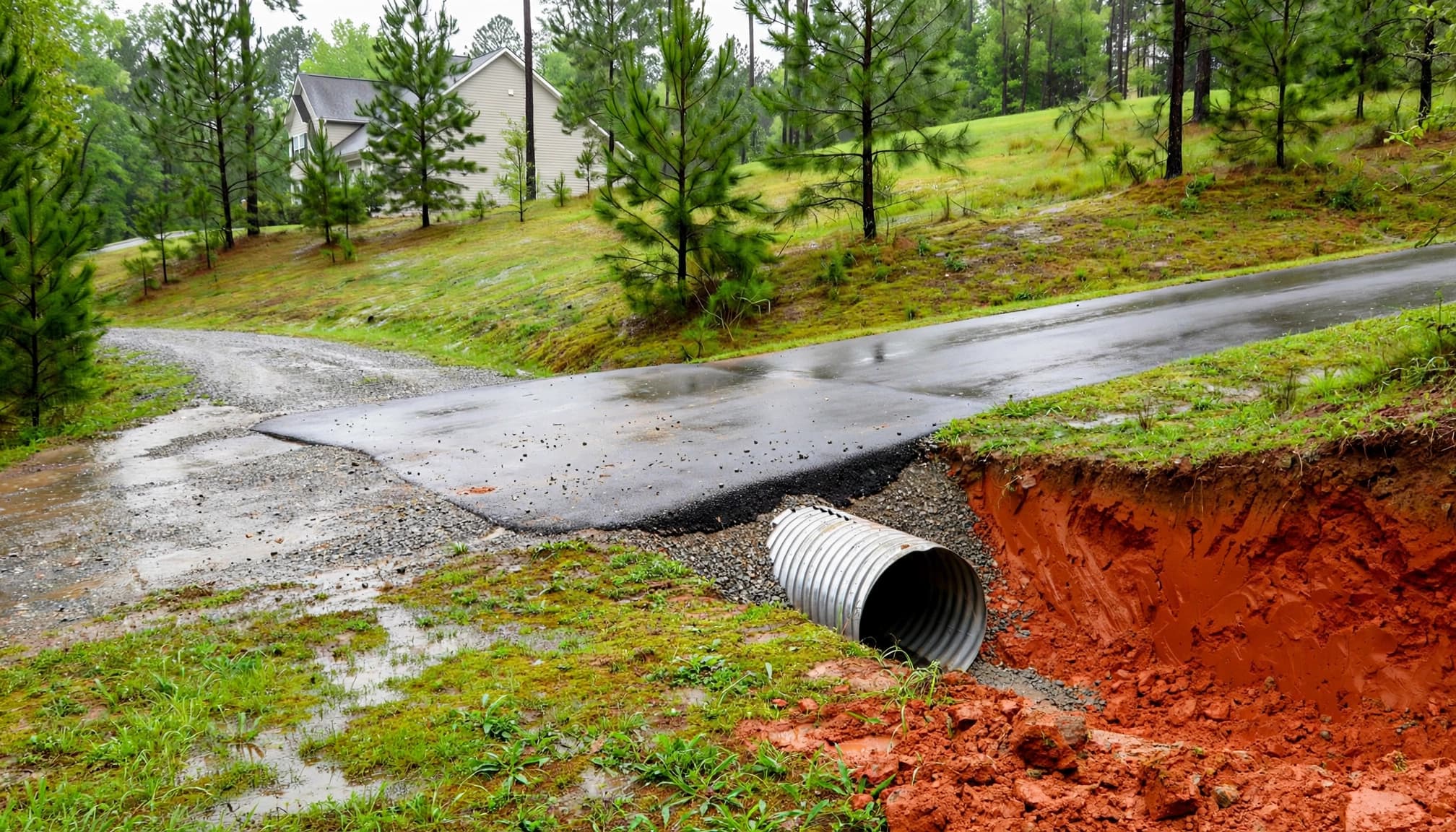
Water needs a continuous route
The inlet must receive runoff without clogging with leaves, soil, or gravel. Then the pipe needs a consistent grade so water keeps moving. At the outlet, the flow needs room to disperse without cutting a channel into the yard.
A culvert that sits too high can leave water standing in the ditch. One installed too low may collect sediment and become difficult to clean. Therefore, crews should establish elevations before digging, not guess from the driveway edge.
The driveway needs structural support
The pipe supports the soil above it, but soil also supports the pipe. Contractors usually excavate a trench, place suitable bedding material, set the pipe to grade, backfill in lifts, and compact the material before rebuilding the driveway base.
Loose backfill creates voids. After a few heavy storms, the driveway can settle over the pipe and crack asphalt or concrete. For gravel drives, ruts often return because water follows the depressed area.
What Typical Culvert Quotes Include, and What They May Exclude
A detailed quote usually includes mobilization, excavation, pipe installation, gravel bedding, backfill, compaction, rough grading, and site cleanup. It should state the pipe diameter, material, length, and the planned inlet and outlet treatments.
However, every contractor defines "installation" differently. Ask for the written scope before comparing totals.
Common items included in a complete quote
A solid driveway drainage estimate should identify the work rather than rely on a single lump sum. It may include:
- Removal and disposal of failed pipe, collapsed driveway material, or sediment.
- Delivery of pipe, aggregate, fill dirt, and erosion-control materials.
- Machine excavation, trench shaping, pipe bedding, and compacted backfill.
- Rebuilding a gravel driveway base or preparing an area for asphalt or concrete repair.
- Finish grading that directs runoff away from the drive and adjacent lawn.
If water has damaged the entire drive, pipe work may be only part of the project. Review Atlanta gravel driveway cost guidance when the repair also requires new aggregate, reshaping, or base stabilization.
Costs that often appear outside the base price
Pavement cutting and replacement may cost extra. So can retaining walls, curb-and-gutter removal, tree removal, hauling contaminated soil, landscaping repairs, and repair of an unknown utility line.
A quote may also exclude permit fees, engineering, survey work, utility relocation, and work beyond the stated pipe length. Those exclusions are not automatically a red flag, but they must be clear before equipment arrives.
Atlanta Conditions That Raise Culvert Prices
Atlanta's red clay can hold water, smear during wet weather, and become difficult to compact when saturated. It also sheds surface water quickly on sloped lots. As a result, a driveway problem can involve the surrounding yard, not only the ditch line.
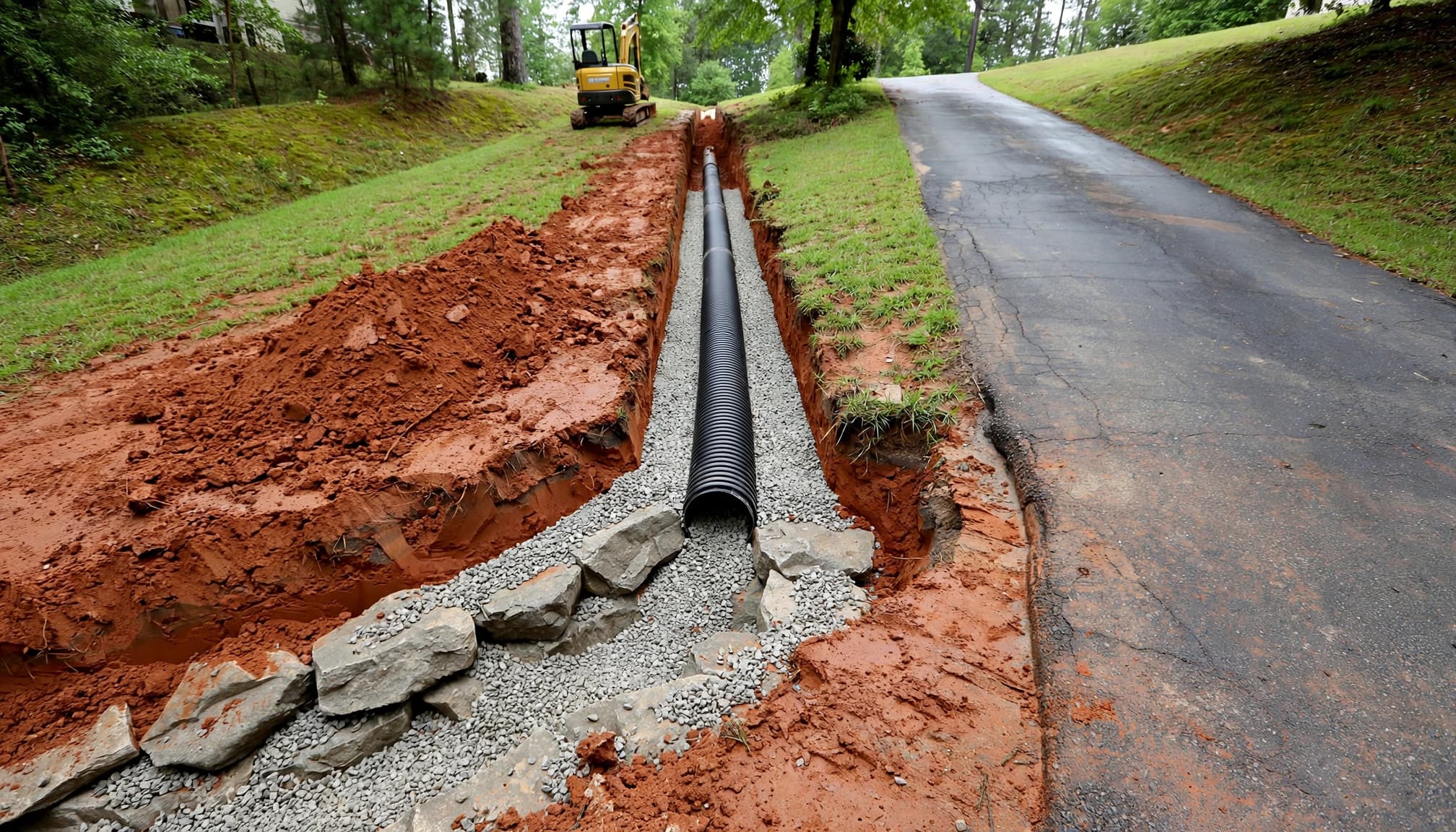
Red clay and heavy rainfall change the excavation plan
After a hard Georgia rain, soft trench walls can cave in and equipment can rut the lawn. Crews may need more stone, stabilization fabric, additional soil removal, or a delay until the site dries enough for proper compaction.
Heavy runoff can also scour the outlet. Riprap, flared end sections, concrete aprons, or headwalls add cost, yet they can prevent washouts that would otherwise damage the lawn and driveway edge.
Slopes, access, and utilities add labor
A steep driveway may require more careful machine positioning and added erosion control. On narrow intown lots, fences, parked vehicles, mature trees, or tight turns can limit access for an excavator and dump truck. Smaller equipment and hand labor take longer.
Underground utilities require care as well. Georgia 811 should mark public utility lines before digging. Georgia Department of Transportation guidance calls for clearance between drainage structures and underground utilities, so a conflict may require a revised route, added depth, or coordination with the utility owner.
When runoff crosses broad sections of the yard, a culvert alone may not solve it. Property regrading for better drainage can redirect surface water before it reaches the driveway.
Pipe Size and Material Affect the Budget
Most residential driveway pipes use corrugated metal, reinforced concrete pipe, or dual-walled HDPE. The best choice depends on the load above the pipe, ditch conditions, expected flow, local rules, and the approved installation detail.
Why 18 inches often sets the starting point
Georgia Department of Transportation driveway and encroachment guidance lists 18 inches as the minimum for new cross-drain and side-drain pipes under roadway or driveway crossings. Hall County also requires a minimum 18-inch driveway pipe in its right-of-way rules.
That does not mean every Metro Atlanta property automatically qualifies for an 18-inch culvert. The proper diameter depends on drainage area, ditch depth, pipe length, road classification, and the controlling authority's requirements. A larger pipe costs more to buy and install, but an undersized pipe can back water up across the driveway.
Material choices have tradeoffs
Dual-walled HDPE is lightweight, corrosion-resistant, and often practical for many residential applications. Its smooth interior can help water move through the pipe, but it still needs correct bedding and compaction.
Corrugated metal pipe handles driveway loads well when properly installed. It is commonly used, although site moisture and soil conditions can affect long-term corrosion resistance.
Reinforced concrete pipe is heavier and may need larger equipment. It can make sense where durability, load capacity, or local specifications call for it. The material cost and handling needs can raise the total bid.
Georgia DOT guidance also calls for inlet and outlet headwalls on pipes 48 inches and larger. Smaller pipes may still need safety grates, flared ends, or outlet protection depending on location and local standards.
Permits and Right-of-Way Approval in Metro Atlanta
The location of the culvert matters as much as the property line on a survey. A pipe entirely on private property may have fewer approval steps. A pipe in a roadside ditch or county right-of-way usually needs permission before construction.
Hall County Public Works and Utilities requires permits for new and replacement driveways and culverts in county right-of-way or easements. Pike County and Barrow County also require approval for driveway culvert work on county roads. Rules differ across Metro Atlanta, so homeowners in Atlanta, Fulton, Cobb, DeKalb, Gwinnett, and nearby cities should verify requirements with the relevant public works, engineering, transportation, or permitting office.
Ask the authority who controls the road
County roads, city streets, and state routes have different standards. If the driveway connects to a state highway, contact Georgia DOT before any work starts. For a city or county road, contact that jurisdiction directly.
Ask whether you need a driveway permit, right-of-way encroachment approval, drainage plan, inspection, or approved pipe size. Also ask who supplies the pipe, because some authorities have material specifications or inspection requirements.
When a drainage assessment is worth the cost
A professional drainage assessment makes sense when water reaches the home, crosses a neighbor's property, undermines a retaining wall, or comes from a large uphill area. It is also useful when the existing culvert repeatedly clogs or overtops during storms.
A drainage plan may combine a driveway pipe with swales, grading, downspout changes, or outlet protection. For standing water beyond the driveway, compare Atlanta drainage solutions for soggy lawns before committing to a single pipe as the answer.
How to Compare Culvert Installation Quotes
Get at least three detailed written quotes. The lowest bid can be a good value, but only when it covers the same pipe, depth, base work, restoration, and outlet protection as the others.
A contractor should inspect the site rather than price the job from a driveway photo. During that visit, point out where water enters, where it stands, where it exits, and any past washouts.
Details to request in writing
Ask each bidder to list the pipe's diameter, material, and total length. The quote should also state trench depth, bedding material, cover depth, backfill method, compaction plan, end treatments, erosion-control work, and driveway restoration.
Request clear allowances for unknown conditions. Rock, buried concrete, saturated soil, and unmarked private lines can change the work. A good estimate explains how the contractor will document and price approved changes.
Avoid a quote that treats water as an afterthought
Be cautious when a proposal only says "install culvert pipe" without a drainage path, elevation plan, or outlet treatment. Also question a price that omits restoration of the driveway base. The pipe may be new, while the driveway above it remains weak.
For larger projects involving extensive digging or soil removal, compare the proposed scope with typical Atlanta residential excavation costs. The comparison can reveal whether hauling, access limits, and finish grading are fully accounted for.
Final Thoughts on Driveway Culvert Budgeting
A realistic Atlanta culvert installation cost starts with the whole drainage route, not the price of pipe alone. Red clay, steep grades, heavy rainfall, access limits, erosion control, and permits can turn a small trench into a larger site project.
Detailed written quotes give you a better basis for comparison and help prevent surprise charges. The strongest result is a driveway crossing that carries water safely, protects the lawn, and stays stable after the next hard rain.